
A wistful glimpse at a time when commercial television was still committed to “educational entertainment,” cultural enrichment, and the broader good. Leonard Bernstein on conducting, on “Omnibus.” The series won dozens of awards, including eight Emmys and two Peabodys.
Tag: Leonard Bernstein
-
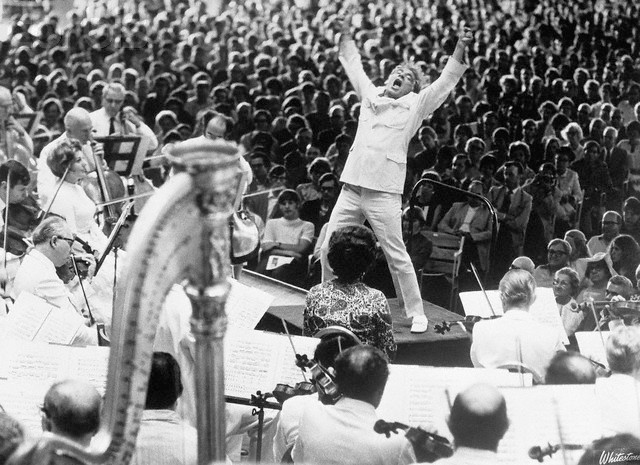
Happy Birthday Lenny Bernstein Candide Lives
Happy birthday, Lenny!
Leonard Bernstein has seen the future… and it is YES.
When Lenny and “Candide” were still young:
-
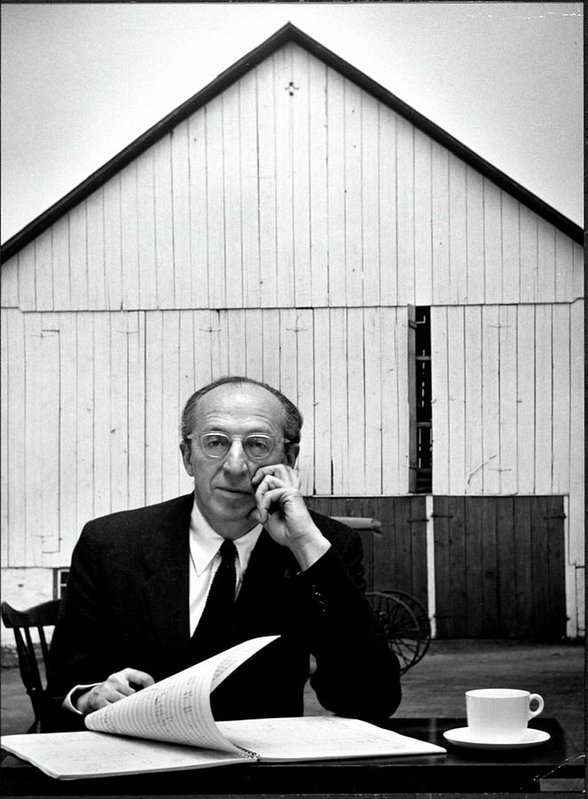
Aaron Copland: A Lazy 4th of July Portrait
Having a lazy Fourth? Enjoy these portraits (and snapshots) of the “Dean of American Composers,” Aaron Copland!
Copland assists Leonard Bernstein in a demo record of music from Bernstein’s “Fancy Free” (for Jerome Robbins):
Rare home movies of Copland on a wintry day in New York City in 1938:
Documentary, “Aaron Copland: A Self Portrait”:
PHOTO: Copland portrait by Gordon Parks
-
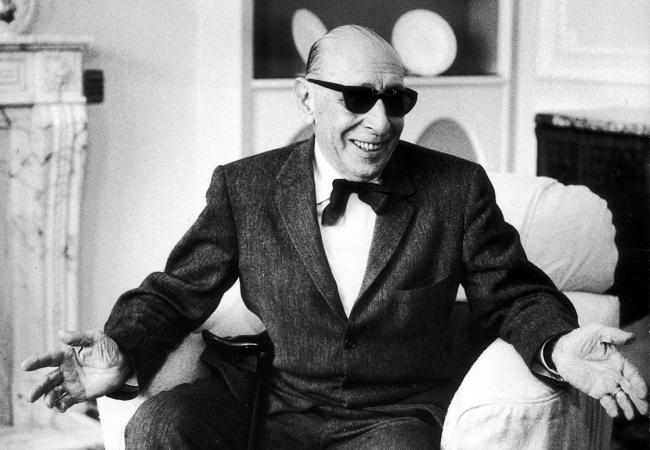
Stravinsky Birthday A Celebration in Spring
“Igor Stravinsky was born in the spring and died in the spring. In a sense, he lived his whole life in a springtime of creativity. All his music is spring-like, newly budding, rooted in the familiar past, yet fresh and sharp, with that stinging, paradoxical combination of the inevitable and the unexpected.”
On Stravinsky’s birthday, enjoy this brief appreciation, narrated by Leonard Bernstein, assembled not long after Stravinsky’s death:
I especially got a kick out of the cowboy reception, around the 9-minute mark.
Also on this date, in 1908, Stravinsky’s “Fireworks” was first performed, at the wedding of Rimsky-Korsakov’s daughter, Nadezhda, to Stravinsky’s professional rival, Maximillian Steinberg. The wedding took place a few days before Rimsky-Korsakov’s death. Stravinsky received the commission for his breakthrough ballet, “The Firebird,” in part because Serge Diaghilev heard the piece and was impressed with his orchestration.
Stravinsky conducts “Fireworks,” from his Russian nationalist period, in Japan:
Stravinsky, in his last public appearance, conducts his neoclassical masterpiece, “Pulcinella”:
Stravinsky conducts one of my favorite works from his serial period, “Agon”:
Stravinsky’s final masterpiece, “Requiem Canticles,” was first performed at Princeton’s McCarter Theatre in 1966. Against expectations, Stravinsky again conducted. The performance is led here by his assistant, Robert Craft:
“Requiem Canticles” would be repeated at Stravinsky’s funeral five years later.
As a bonus, here’s an article I wrote on Stravinsky in Princeton for the Trenton Times in 2016:
https://www.nj.com/times-entertainment/2016/12/classical_music_puo_pugc_so_pe.html
Happy birthday, Igor Stravinsky, and happy anniversary, Maximillian and Nadezhda Steinberg (née Rimskaya-Korsakova)!
-
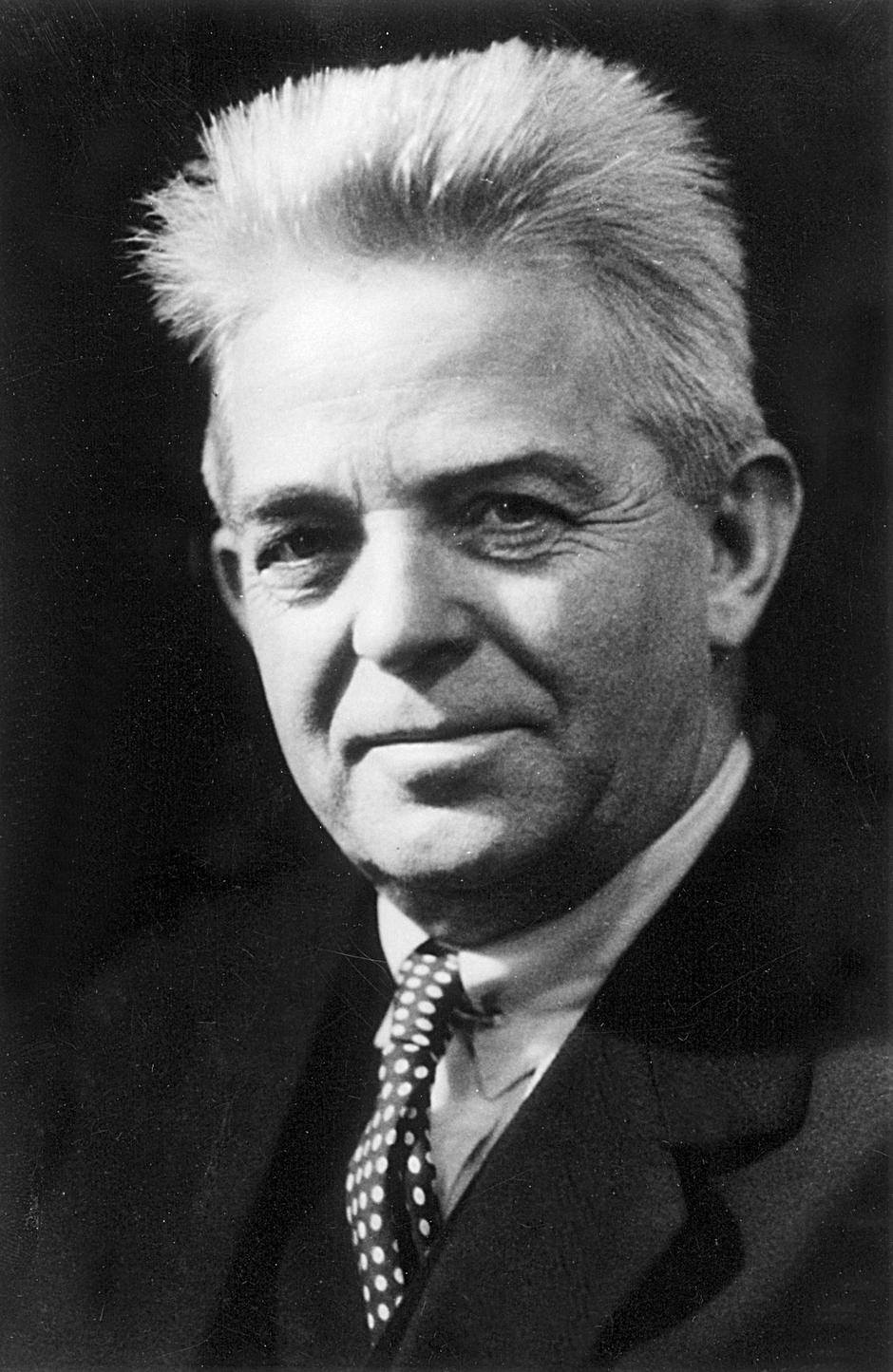
Carl Nielsen The Underrated Northern Composer?
With the specter of COVID looming over the prospect of a trip to the hair salon, perhaps the time is ripe for a resurgence of the Carl Nielsen haircut?
Of the great composers of the North, why is Sibelius so widely lauded (in Scandinavia, England, and the United States, anyway), while Nielsen continues to languish as the Ugly Duckling of Danish music?
Far from being a simple Sibelius knock-off, Nielsen forged his own, immediately-recognizable style – which can’t always be said, with as much conviction, about a lot of other fin de siècle Scandinavian composers. Not that I don’t love their music.
Leonard Bernstein believed Nielsen’s rightful place was as Sibelius’ equal:
“I think many people are in for pleasant surprises as they get to know Nielsen,” he said at a centennial celebration of the composer’s birth, “his rough charm, his swing, his drive, his rhythmic surprises, his strange power of harmonic and tonal relationships – and especially his constant unpredictability – all these are irresistible. I feel confident that Nielsen’s time has come.”
That was in 1965. Yet, fifty-five years on, with many more recordings and performances to choose from, Nielsen continues stubbornly to be an acquired taste.
What’s not to like? There’s struggle in the music and harmonic ambiguity – key relationships don’t always play out the way you expect they should (they don’t always in life, either, so why should they in music?) – there is conflict and violence, anxiety, but also great beauty and even humor. At its core, and at the end of the journey, there is, for me, an optimism in much of Nielsen’s output, a love for life, a belief that there is indeed, as the subtitle of his Fourth Symphony professes, something “Inextinguishable” in all of us, that I find inspiring.
A tip of the blond brush cut to Carl Nielsen on his birthday!
Take a gander at the Duckling on film! This is the only known surviving footage of Denmark’s greatest composer. You’ll find translations of the intertitles when you click on “show more” beneath the video.
Tag Cloud
Aaron Copland (94) Beethoven (95) Composer (114) Film Music (149) Film Score (143) Film Scores (255) Halloween (97) John Williams (197) KWAX (232) Leonard Bernstein (105) Marlboro Music Festival (125) Movie Music (164) Mozart (91) Opera (215) Philadelphia Orchestra (90) Picture Perfect (174) Princeton Symphony Orchestra (110) Radio (90) Ross Amico (244) Roy's Tie-Dye Sci-Fi Corner (290) The Classical Network (101) The Lost Chord (269) Vaughan Williams (107) WPRB (397) WWFM (881)