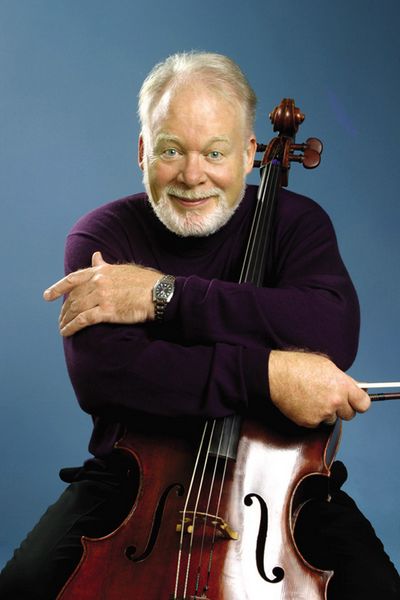
Leonard Slatkin is fourscore today. In celebration of the maestro’s 80th birthday, here are ten of my favorite Slatkin recordings. Or rather, I tried to keep it to ten, but there may be one or two inadvertent, additional recommendations along the way.
You have to remember, following the death of Leonard Bernstein, there really wasn’t much action, in terms of major American conductors recording American composers for the major labels. Slatkin was one of the few with the chops and the clout to keep the flame burning. I will be forever grateful for his RCA albums, in particular those devoted to Walter Piston, William Schuman, and especially Samuel Barber. John Browning’s classic account of Barber’s Piano Concerto, with George Szell and the Cleveland Orchestra, took decades to reach compact disc, during which it maintained the aura of a holy relic. You know what? When it finally WAS reissued, I was amazed by just how well the remake stacks up. It may lack the last degree of ferocity exhibited in the earlier version, but Browning still manages to hold fast to his laurels. In addition to Barber’s Symphony No. 1 and the now much-easier-to-find “School for Scandal Overture,” there is also a delightful performance of the composer’s “Souvenirs,” a nostalgic throwback to the Palm Court music recollected by Barber from his boyhood, with Browning and Slatkin playing piano four-hands. For me, the latter makes this disc essential.
Again, to fully appreciate Slatkin’s importance to American music, you have to really remember the context. At the time of his release (on EMI) of Samuel Barber’s Violin Concerto, coupled with Howard Hanson’s Symphony No. 2 (subtitled “Romantic”), finding good recordings of music by American composers by reputable performers on big labels was like stumbling across a watercooler in the desert. Isaac Stern’s recording of the Barber Violin Concerto (with Bernstein) hadn’t even made it to CD yet. Now there must be a few dozen recordings of the concerto available. Back then, I was SO GRATEFUL for this one. Thankfully, the performance, with Elmar Oliveira the soloist, happens to be pretty damn good. To my knowledge, this was also the first digital recording of Hanson’s enduring “Romantic Symphony,” the composer’s best-loved work. If you didn’t have it on LP, you were out of luck, unless it happened to turn up on the radio. What a rewarding Romantic wallow this disc is! It’s one of those purchases that had me approaching the sales counter with sweaty palms and racing heart.
Slatkin also recorded a highly-praised disc of Barber orchestral works for EMI, another devoted to music of Gershwin, performances of the complete (as opposed to suites from) Copland ballets, and violin concertos of Schuman and Bernstein (his “Serenade”), again with Oliveira.
Of the American composers we now regard as classic, Slatkin recorded Copland, Barber, Bernstein, Ives, Piston, Schuman, and Barber for RCA. I already mentioned the Barber, perhaps my favorite of the series. The Piston album is also superb. A two-time Pulitzer Prize winner for the excellence of his symphonies, none of them really seem to have stuck in the public consciousness. Here, we get the Symphony No. 6, the “Three New England Sketches,” and my favorite recording of the suite from the ballet “The Incredible Flutist,” written for the Boston Pops and unlike anything else Piston ever wrote. Listen sharp to the cheers in the crowd scene for the contribution of Slatkin’s dog, Bud!
The William Schuman disc is also very special. Like Piston, Schuman enjoyed a reputation as a major American symphonist, but seriously, how often do we hear any of his works in the form, beyond the Symphony No. 3? (Parenthetically I heard Slatkin conduct the 3rd in Philadelphia in the 1990s. I attended the concert with one of my housemates at the time, who was Japanese, and I look back on the experience with amusement, as he thought we were going to hear Robert SCHUMANN! He did not like the symphony.) The featured work on Slatkin’s disc is the world premiere recording of the Symphony No. 10, subtitled “American Muse.” I won’t pretend the Symphony No. 10 is one of Schuman’s best, but I was elated to have it in such a fine performance. Also included are the lively “American Festival Overture,” unmistakably cut from the same cloth as the Symphony No. 3, and perhaps his most frequently encountered work, at least on radio (if we don’t count his orchestration of Ives’ organ piece “Variations on America”), the “New England Triptych,” based on tunes by Revolutionary Era composer William Billings. Slatkin’s recording is one of the best.
Even now, when we’re more spoiled for choice, how many recordings of Piston’s 6th or Schuman’s 10th are there?
There are those who swear allegiance to Slatkin’s RCA recording of Copland’s 3rd (coupled with the lesser-heard, aggressively modern, and undeniably thrilling “Music for a Great City”), but I can’t get Bernstein out of my ears. Another enjoyable Slatkin Copland album, however, includes a selection of the composer’s film music, including a transporting world premiere recording of a suite assembled from his Academy Award winning score to “The Heiress.” The program also includes Copland’s “Prairie Journal (Music for Radio).” In general, I prefer Copland’s own interpretations of his lesser works. Other conductors may have surpassed him in the big symphony and ballets, but Copland never recorded any music from “The Heiress” or “Prairie Journal.”
I should add that all the RCA issues, in their original releases, were further distinguished by cover art selected from the paintings of the great Thomas Hart Benton, giving them a heightened flavor of Americanness. Slatkin and the St. Louis Symphony leave nothing to be desired on any of these discs.
Please keep in mind, all of these recordings have been repackaged in various permutations and with different cover art over the years. My comments pertain to the original releases. For me, perhaps perversely, the original packaging is as important to my overall enjoyment as the actual music the CDs contain!
Before his brilliant run with RCA (there are those who swear by his Vaughan Williams symphony cycle, and he recorded a surprisingly fine Schubert 9th), Slatkin’s primary outlet was the VOX label. In common with a great many other albums on VOX, if you can look past the lackluster packaging, the musicmaking is of impressive caliber. The performances, I should add, were recorded in analogue, but the sound is good.
Slatkin knocked it out of the park with his recordings of Prokofiev’s concert works arranged from the composer’s film scores (a 2-CD set including the cantatas “Alexander Nevsky” and “Ivan the Terrible” and the suite from “Lieutenant Kijé”). “Kijé” includes the rarely-heard parts for bass-baritone, as they were employed in the film. (From what I understand, Prokofiev himself sang on the film’s actual soundtrack.) Not everyone will consider this their benchmark, but I think the vocal contributions are refreshing and fun, especially in the famous “Troika.” The performances are by the St. Louis Symphony Orchestra and Chorus.
I am also very fond of their Rachmaninoff set, full of unexpected delights. I can’t speak to Slatkin’s recordings of the symphonies, because I haven’t heard them, but judging from the works reissued on another double-CD devoted to the composer’s choral and orchestral music, I’m confident that the conductor has an excellent feel for the idiom. The major pieces are “The Bells” (sung in English) and the Symphonic Dances, but for me the real discoveries are the shorter orchestral works and “Three Russian Songs.” These are recordings that have frequently been played on my radio programs.
On a related note, Slatkin’s Vox Gershwin recordings (newly reissued on Naxos) have also had an enduring hold on listeners and collectors.
Back to RCA, I also get a charge out of Slatkin’s recording, with the London Philharmonic and London Philharmonic Choir, of Walton’s gaudy cantata “Belshazzar’s Feast.” If you delight in the composer’s coronation marches or are a John Williams fan, stick it out through the somber introduction (the baritone soloist is Thomas Allen), because there are some passages that will definitely have you swaggering. What a thrilling piece! Of course, there are a number of excellent recordings, but none of them are coupled with Slatkin’s performance of Walton’s “Partita for Orchestra,” which outstrips Szell’s world premiere recording at every turn.
Even more orgiastic, in its way, than the blasphemous Belshazzar is William Bolcom’s “Songs of Innocence and Experience.” Not that the mood is unremittingly celebratory. Bolcom’s crazy quilt of Blake settings took 25 years to compose and encompasses a dizzying array of styles, from avant garde to musical theater to country fiddle. In performance, it spans about two and a half hours. It’s nice to hear Bolcom’s wife, Joan Morris, sing something other than cabaret songs for a change. She’s joined by any number of other soloists and musicians of the University of Michigan, including multiple choruses. This is not a work for every day, maybe (it’s not every day that you can carve out two and a half hours), but really, to my knowledge there is nothing else like it in American music. It contains multitudes.
John Williams’ concert pieces are nothing like his film scores, but they are built to last, often offering up their rewards only gradually over several listenings. Having lived with his Violin Concerto (now his Violin Concerto No. 1) for decades, I can confidently state that Slatkin’s recording, on Varèse Sarabande with violinist Mark Peskanov and the London Symphony Orchestra, is far and away the most satisfying. It is also the only recording to document Williams’ original thoughts, as much later he revised the piece, tightening it up and getting it to a more manageable length. In my opinion, this was a mistake. The piece is much more powerful in its original form. It is not background music, by any means. At Brahmsian length (it’s over 40 minutes long), it demands your full attention. Do not go into it expecting to be coddled. The Korngold concerto it ain’t! For as well-played as the most recent recording is, with James Ehnes (excellent when I heard him play it live in Philadelphia) and the St. Louis Symphony conducted by Stéphane Denève, Peskanov and Slatkin, as purveyors of the original version, are still the team to beat.
Finally, Slatkin recorded a disc for Chandos records of transcriptions of music by Johann Sebastian Bach. This is not a program that plumbs any great musical depths. Sure, Bach is Bach, but trust me, you won’t be listening for the content, but rather for the dazzling colors and invention of those other than Leopold Stokowski (already well-represented elsewhere) who had the audacity to orchestrate his music. These include Ottorino Respighi, Sir Granville Bantock, Arthur Honegger, Max Reger, Sir Edward Elgar, Ralph Vaughan Williams, Joachim Raff, Gustav Holst, and Arnold Schoenberg, all very well sold by the BBC Philharmonic, under Slatkin’s baton. Don’t just sit there – order it now!
I’m not asserting that these are Slatkin’s greatest recordings, but they are ten (or so) that have given me a lot of enjoyment over the years. As suggested, the performances have been reissued occasionally and mixed and matched as labels have been bought and sold. So you might have to do a little research, if you’re interested, to be sure you’re really getting what you’re looking for. EMI was swallowed by Warner, RCA is now part of Sony, and some of the Vox stuff has started to turn up on Naxos. In fact, Naxos has issued for the first time many of Slatkin’s recordings with the Detroit Symphony Orchestra (including a cycle of John Williams concertos featuring the orchestra’s principals, which, alas, appears to be available only as digital downloads) and the Orchestre National de Lyon (for which he recorded the complete orchestral works of Maurice Ravel, including some fascinating rarities).
Any others? Feel free to leave your favorites in the comments.
Happy hunting! And happy birthday, Leonard Slatkin!