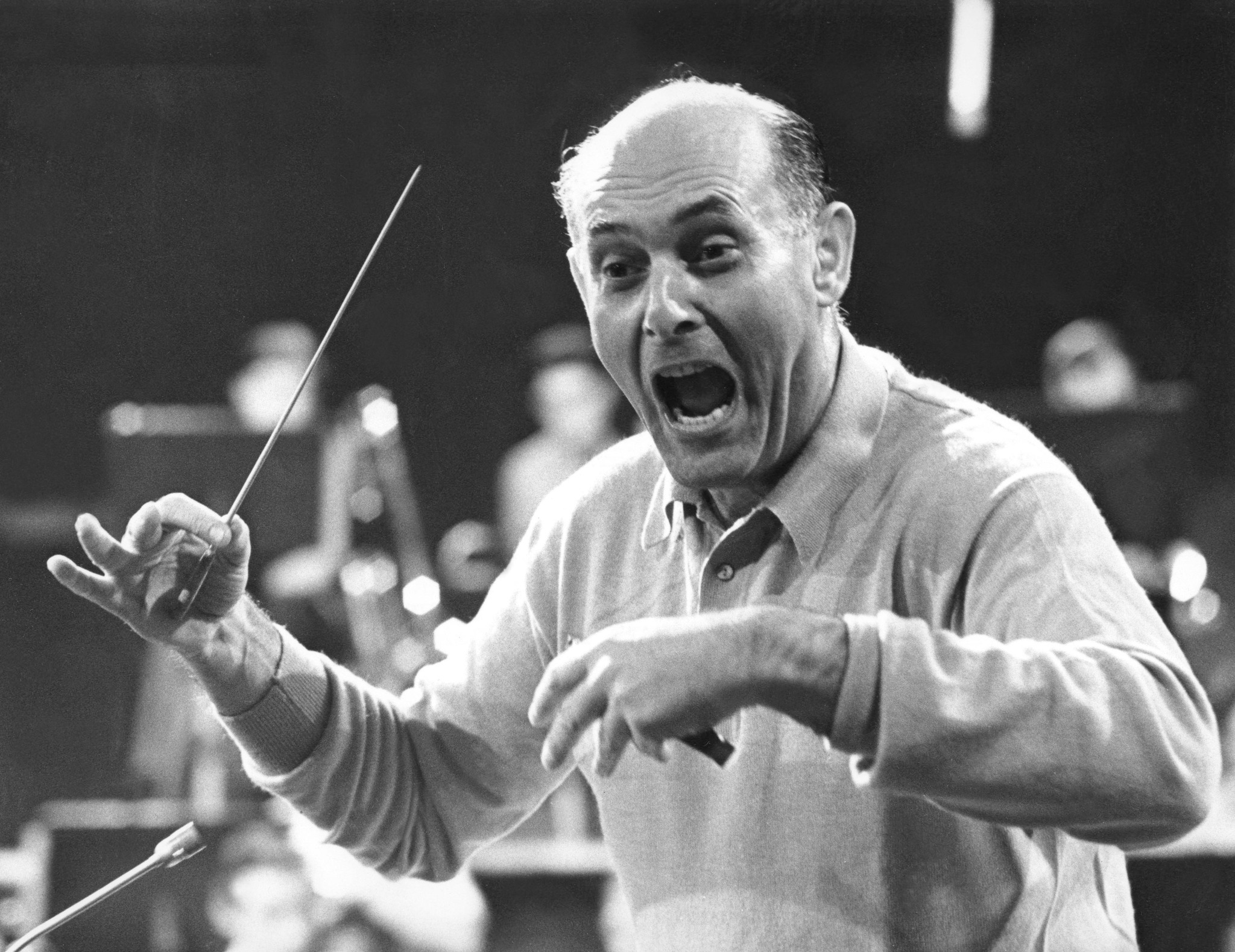
His musicians dubbed him “The Screaming Skull.” Can’t get much more Halloween than that. I enjoyed listening to Sir Georg Solti’s recording of Liszt’s “A Faust Symphony” while driving around this afternoon. Perhaps you’ll like it too.
Tag: Liszt
-

Cat Halloween Costume Ideas Fur Hats & Spooky Music
It’s that time of year again. With less than two weeks until Halloween, you may be starting to experience that low-level anxiety. How exactly are you going to dress your cat?
For those in need, here are some great tips on crafting hats and hairstyles out of your little one’s own fur.
Now that you’ve got brush in hand, how about some appropriate background music? Some altruistic chap took the effort to compile all the classical music adapted for use in “The Back Cat” (1934), with Boris Karloff and Bela Lugosi.
Liszt features prominently, with an orchestration of his Piano Sonata in B minor, the orchestral version of his “Hungarian Rhapsody No. 3,” the symphonic poem “Tasso: Lament and Triumph,” and of course “Les Preludes.”
There’s more Liszt in this “faux” trailer (with Bach and Schubert and near-Tchaikovsky too):
MEEEEEOWWWWW…
-
Franz Doppler Bicentennial: A Flute Celebration
Here’s a bicentennial NOBODY is going to celebrate. Perhaps I should say, nobody who doesn’t play the flute. Today is the 200th anniversary of the birth of Franz Doppler.
Doppler was a successful composer of operas and ballets – now never performed – but today he is remembered, as he should be, for his contributions to the flute. He was a popular virtuoso on the instrument, composing flute concertos and showpieces, and he gave instruction on the flute at the Vienna Conservatory.
With his brother, Karl, he formed a flute duo. Karl was also the composer of several operas. In addition, he served as music director at the Theater of Budapest and as conductor at the court chapel in Stuttgart. Franz served for a time as chief conductor of the Vienna Court Opera. Together, they helped found the Hungarian Philharmonic in 1853.
An interesting footnote: As a student of Liszt, Franz Doppler was given the assignment to orchestrate six of Liszt’s “Hungarian Rhapsodies.” While Liszt’s mastery at the keyboard was unparalleled, he sometimes turned to others for assistance when orchestrating some of his earlier works, as he had a rather full plate at the time as Kapellmeister Extraordinaire at the Weimar Court. Liszt never charged any of his pupils. Furthermore, he made no secret of Doppler’s assistance. With characteristic generosity, even after Liszt went back and extensively revised the pieces for publication, he insisted on leaving Doppler’s name on the title page.
A doff of the hat to Franz Doppler. Happy birthday!
“Duettino on Hungarian Themes”
Julius Baker and Jean-Pierre Rampal play Doppler on Dick Cavett!
Doppler’s orchestration of Liszt’s “Hungarian Rhapsody No. 2”
Liszt’s revision
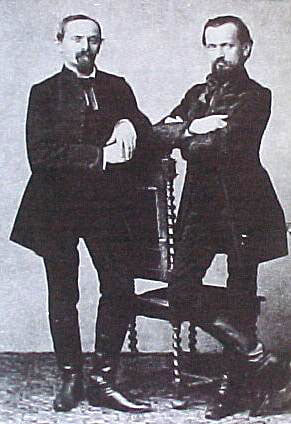
PHOTO: The hairiest flutists in Europe: Franz, right, with brother Karl
-
Martha Argerich Still Unstoppable at 80
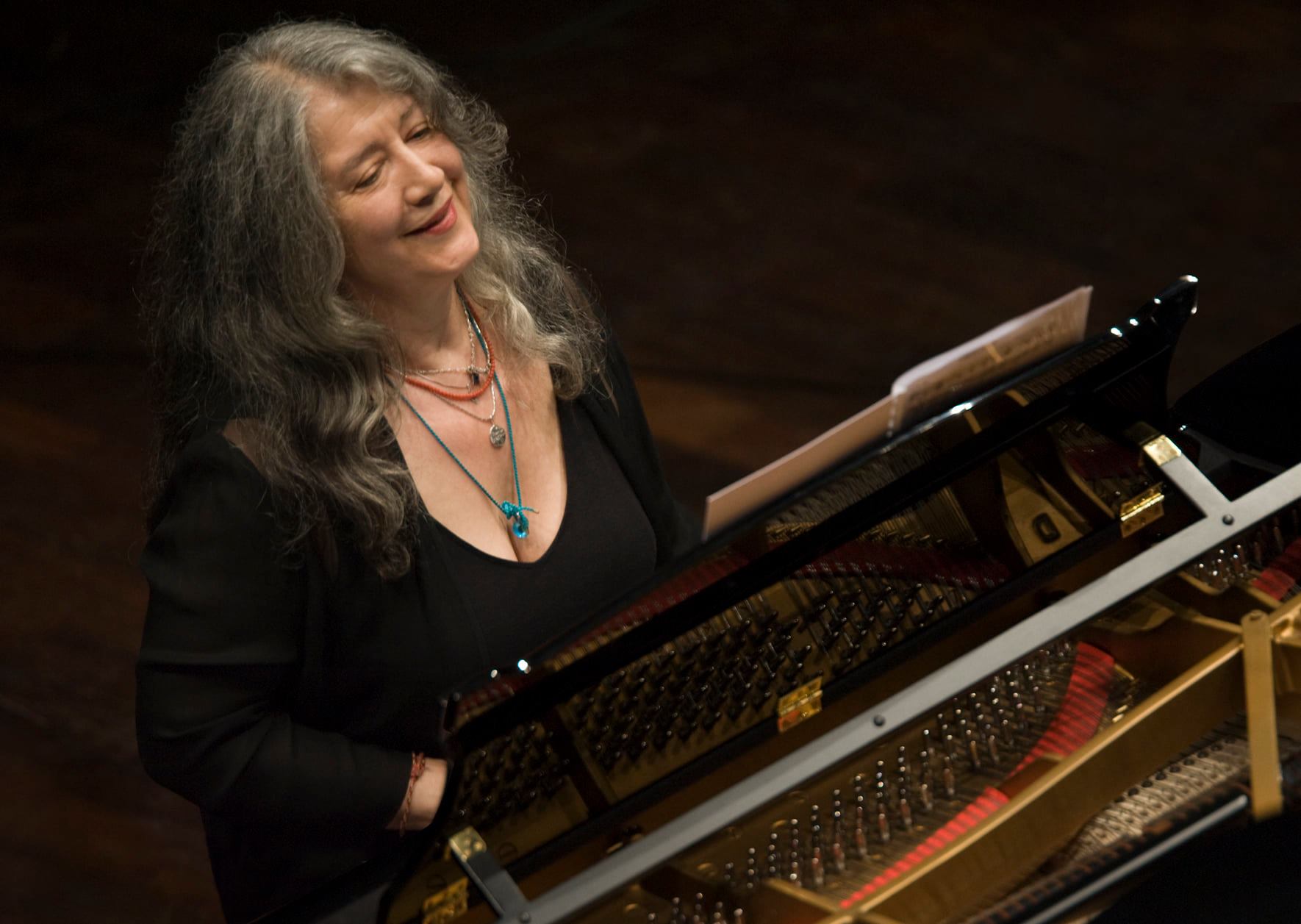
Martha Argerich, the super-virtuoso, who nonetheless plays with lyricism and feeling, is 80 years-old today. Conquering depression, conquering nerves, conquering failed marriages, conquering cancer, Argerich is unstoppable. At 80, she still has lava in her veins.
Argerich at 25, playing Liszt’s Hungarian Rhapsody No. 6
Argerich at 77, playing Prokofiev’s Piano Concerto No. 3, a work she’s stated, matter-of-factly, is easy for her
Argerich rehearsing Ravel with her ex-husband, Charles Dutoit
Argerich demonstrating how to smoke while playing the piano
Smoking hot Martha Argerich. Happy birthday to one of our great pianists, and many happy returns!
-
Hungary’s 1848 Revolution in Music
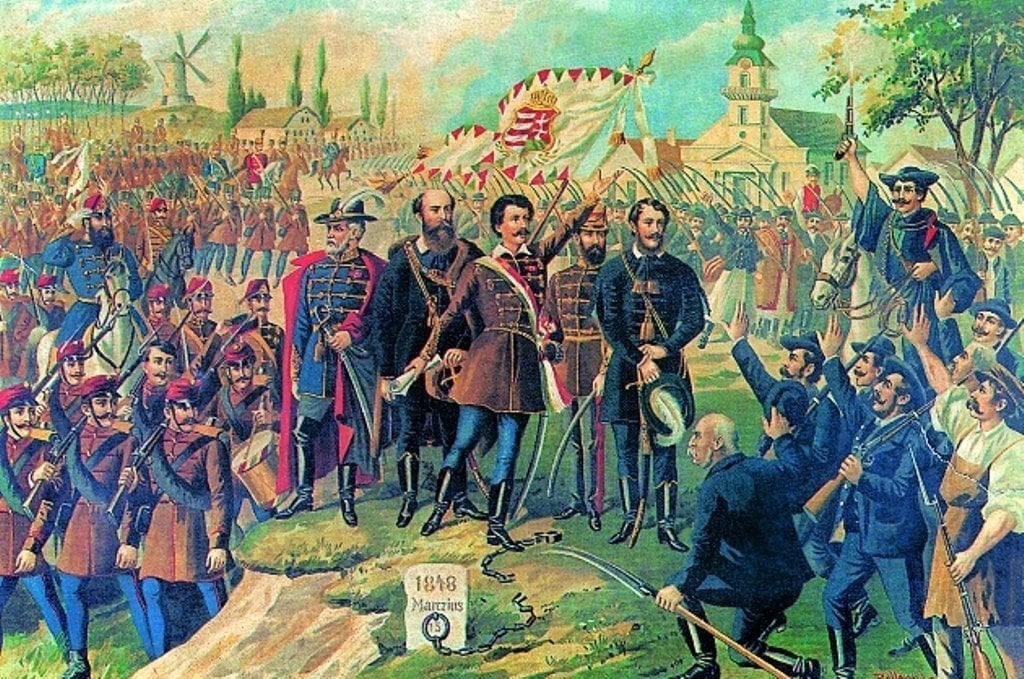
March 15 may not have worked out so well for Julius Caesar, but it is a festive day in Hungary. It is the day Hungarians mark the Revolution of 1848 and the subsequent War of Independence from Austrian-Habsburg rule. It is one of the most prominent of Hungarian national holidays, though this year, because of coronavirus concerns, public celebration is understandably muted.
The uprising began as a peaceful demonstration in Pest-Buda. It wasn’t until autumn that armies clashed. Official secession didn’t take place until March 1849, when Franz Joseph moved to subdivide the Kingdom of Hungary. In April, an independent government was formed, with firebrand Lajos Kossuth elected as governor and president. Unfortunately, the new government would be short-lived.
Here’s Liszt’s symphonic poem “Hungaria.” While Liszt offered no overt program to the piece, its patriotic intent is right there in the title. Listeners at its first performance would have associated the funeral march, based on the work’s B-theme, to the defeat of Kossuth’s revolt. Liszt conducted the piece for the first time at the Hungarian National Theater in what is now Budapest in 1856. At the end, he reported, the audience was in tears.
Béla Bartók began his symphonic poem “Kossuth,” his first mature orchestral work, in 1903. He had only just attended the Budapest premiere of Richard Strauss’ “Also sprach Zarathustra,” which he found electrifying.
Broadly speaking, the difference between Liszt’s “symphonic poems” and Strauss’ “tone poems” is that Liszt more often than not attempts to convey the ideas behind the music’s inspiration, while Strauss frequently ties moments in his scores to specific actions. At his best, Strauss can be understood without knowing the program. At his worst (and I still love him at his worst), his music is so closely tied to the action that his tone poems are like precursors to movie music.
Here is Bartók’s stab at the Straussian tone poem. The work begins with a character portrait of its subject. The Austrian national anthem is parodied to convey the approach of enemy troops. Then comes the battle and Hungarian defeat. In common with Liszt, toward the end, there is a funeral march. Again, the work caused a stir when it was given its first performance by the Budapest Philharmonic Society in 1904.
Despite the funereal overtones, Kossuth himself escaped. He toured Britain and the United States where he was received as a revolutionary hero, though there were some who bristled at his perceived arrogance and ambition. He died in Turin in 1894. His body was sent home to Pest, where it was interred, amid national mourning, and a bronze statue erected in his honor.
It’s so easy to accept music, even music that has meant so much to so many, with a degree of complacency, as an abstraction, or as mere entertainment. A broad awareness of the back story to pieces such as these imbues them with something extramusical. It allows a listener to leap across time and distance to truly empathize with the dreams, struggles, and spirit of the Hungarian people.
Tag Cloud
Aaron Copland (94) Beethoven (95) Composer (114) Film Music (149) Film Score (143) Film Scores (255) Halloween (97) John Williams (197) KWAX (232) Leonard Bernstein (105) Marlboro Music Festival (125) Movie Music (164) Mozart (91) Opera (215) Philadelphia Orchestra (90) Picture Perfect (174) Princeton Symphony Orchestra (110) Radio (90) Ross Amico (244) Roy's Tie-Dye Sci-Fi Corner (290) The Classical Network (101) The Lost Chord (269) Vaughan Williams (107) WPRB (397) WWFM (881)