Tag: Mozart

  • Remembering Flutist Robert Stallman

    Remembering Flutist Robert Stallman

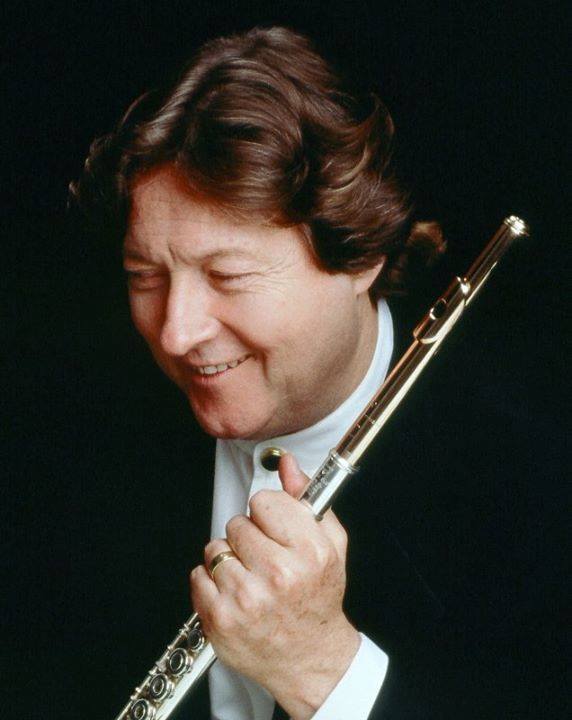
    I’m very sorry to learn of the death of my friend, the flutist Robert Stallman. Bob was one of several artists I got to know while living in Philadelphia, as a proprietor of an antiquarian book business. I scored big points by being able to identify him (“…like the flutist?”) by his name on his credit card.

    Bob and I palled around and ate a lot of lunches together. He was always neck-deep in some project or other, producing his own CDs and creating arrangements of the works of his beloved Mozart and Schubert. These went beyond mere transcriptions. They involved all sorts of creative decisions, and Bob inevitably arrived at polished and ingenious solutions to every kind of puzzle.

    I absolutely recommend his recording of Mozart “New” Quintets for Flute and Strings, on his own label, Bogner’s Café.

    Stallman studied with Jean-Pierre Rampal, recorded with Placido Domingo, and championed the music of his friend, the English composer Stephen Dodgson. In addition, he gave first performances of works by John Harbison, Karel Husa, William Thomas McKinley, and Burr Van Nostrand, among others.

    He was crazy about music, of course, but he was also fond of literature and good food. His apartment walls were adorned by letters and autographs of the great composers, which he collected.

    We started to drift apart after he and his wife, Hannah, moved to Massachusetts, maybe four or five years ago. We did do a telephone interview over the air in 2015. Prior to that, he was my guest several times on “The Lost Chord.”

    Bob was 73 years-old. I will always remember him as cheerful, garrulous, and boundlessly enthusiastic. Often, he seemed almost boyish. He was certainly far younger than his years.

    I’ll honor Bob with one of his recordings, following Otto Klemperer’s performance of Beethoven’s “Miss Solemnis” – which is to say around 3:40 p.m. EDT, on WWFM – The Classical Network and wwfm.org.

    http://www.aboutrobertstallman.com/

  • Alexander Quartet’s NYC Concert: Mozart Penderecki Dvořák

    Alexander Quartet’s NYC Concert: Mozart Penderecki Dvořák

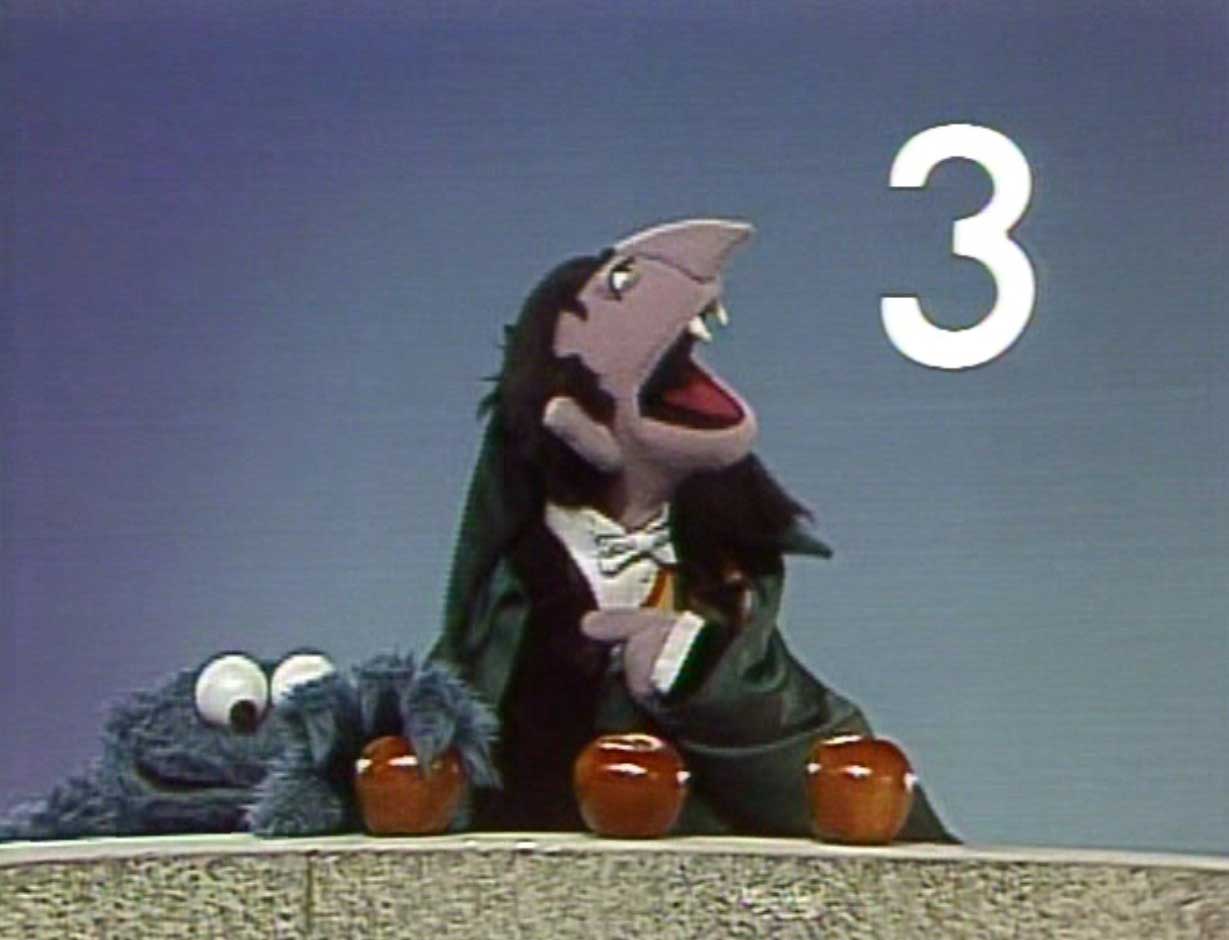
    There must be something in human nature that pleases us in the idea that good things come in threes.

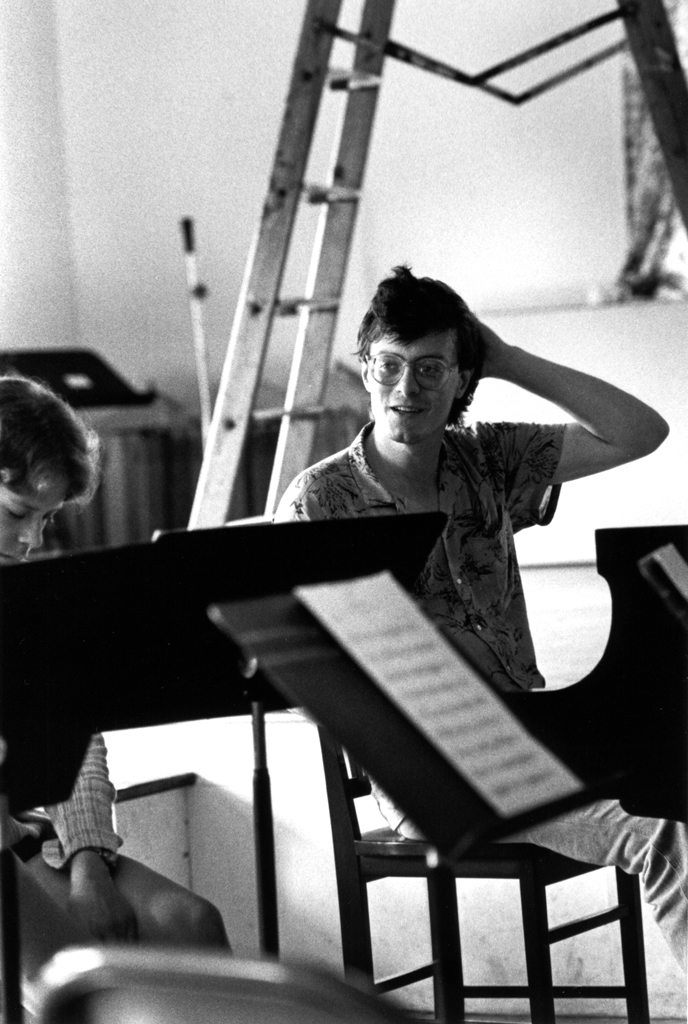
    Even so, this afternoon on The Classical Network, I’ll be interviewing violinist Frederick Lifsitz, one of four musicians that comprise the very fine Alexander String Quartet.

    The Alexander Quartet will appear on Thursday at 8 p.m. at the Baruch Performing Arts Center in New York City. On the program will be works of Mozart, Penderecki, and Dvořák. The concert will cap a day of lectures and panel discussions on the topic of Poland and the Jewish people, to coincide with the observation of Yom HaShoah, Holocaust Remembrance Day in Israel. The Alexander’s recital will include Penderecki’s poignant String Quartet No. 3 “Leaves of an Unwritten Diary.”

    The Alexander Quartet has been Baruch’s quartet-in-residence since 1986. My interview with Lifsitz will take place at 5:00 this afternoon.

    But if “three” is indeed your thing, then there will be plenty else to satisfy your organizational impulses, including the observations of the birthdays today of three notable conductors – Sir Thomas Beecham, Sir Malcolm Sargent, and Zubin Mehta – and three American composers – Wallingford Riegger, Harold Shapero, and Duke Ellington.

    I hope you’ll join me today from 4 to 7 p.m. EDT (that’s THREE hours), with the interview at 5. We’ll take the time to count our musical blessings, on WWFM – The Classical Network and wwfm.org.

  • Mozart, Allegri’s Miserere, and a Stolen Masterpiece

    Mozart, Allegri’s Miserere, and a Stolen Masterpiece

    It was on this date in 1770 that the Mozarts, father and son, attended a Holy Week service in Rome. Young Wolfgang, then only 14, was intrigued by what he heard.

    Gregorio Allegri composed his “Miserere mei, Deus” – or “Miserere,” for short, a setting of Psalm 51 – in the 1630s. The piece was designed for exclusive performance in the Sistine Chapel, as part of the Tenebrae service of Holy Wednesday and Good Friday.

    Allegri’s conception was a striking one, for two choirs, one intoning a simple chant, and the other, spatially separated, providing ornamentation. The pièce de résistance was the inclusion of a stratospheric top C, which has the effect of making the “Miserere” one of the most haunting works in the choral literature of the late Renaissance.

    The Vatican, realizing it had a good thing, forbade performance of the piece outside its walls or copies of the score to leave the premises, under threat of excommunication. But Mozart couldn’t help himself. A couple of hours later, he copied the work down from memory. Not long after, he handed it off to author and music historian Charles Burney, who published it without delay.

    Mozart was summoned before the Pope, but rather than being excommunicated, he was showered with praise for his feat of musical genius, and the ban on the “Miserere” was lifted.

    But did Mozart ever actually hear that famous “top C?”

    In 1831, Mendelssohn made his own transcription of the “Miserere,” but, for whatever the reason, the performance he heard was sung a fourth higher than intended.

    Leap ahead half a century to the first edition of “Grove’s Dictionary of Music and Musicians,” published in 1881. An editorial error resulted in a passage from Mendelssohn’s transcription being incorporated into a musical example used to illustrate one of the entries. The article was widely reproduced, until Grove’s error came to be established as the preferred version of the “Miserere.”

    A good thing, too! I wouldn’t trade that top C for the world.


    Here is Allegri’s “Miserere,” performed by the ensemble Tenebrae:

    Franz Liszt also made an arrangement, which is most frequently encountered on the organ – sometimes the piano – but apparently he also orchestrated it. His version cleverly juxtaposes the “Miserere” with Mozart’s own “Ave verum corpus.”

    For context, Mozart’s “Ave verum corpus:”

    Liszt’s “À la Chapelle Sixtine” for piano:

    https://www.youtube.com/watch?v=tkAMKzRSrjc

    And for orchestra:


    Clockwise from left: Allegri; happy Mozarts, father and son; Mendelssohn; and the Abbé Liszt

  • WWFM Thanks Our Listeners

    WWFM Thanks Our Listeners

    Thank you for the flowers.

    I’m speaking figuratively, of course. Maybe it was my pep talk using the skull of St. Valentine.

    Whatever the case, we were successful in making our goal yesterday. We crossed the finish line last night with about ten minutes to spare and managed to mop up the shortfall from last month’s Mozart campaign. So it’s celebratory bonbons for breakfast this morning.

    As we get back to our regular programming, please enjoy it in the knowledge that it’s made possible because of concerned and engaged listeners just like you. Thanks once again for keeping WWFM – The Classical Network close to your heart. We love our listener-members! xoxoxoxo

  • WWFM Mozart Campaign Thanks & Figaro Sunday!

    WWFM Mozart Campaign Thanks & Figaro Sunday!

    Thank you to all of you who contributed to yesterday’s Mozart campaign. It’s because of listeners just like you that we at WWFM are privileged to be able to do what we love to do – share great music with the community. And that community is huge! Yesterday, someone called in all the way from Nikiski, Alaska.

    Unfortunately, we still came up considerably short of our projected goal, which means that we’ll have to come back and do it again sooner than we had hoped. If you had been meaning to contribute and did not have an opportunity to do so, you may still donate online at wwfm.org.

    Tomorrow (Mozart’s actual birthday), the “Sunday Opera” will be devoted to a special presentation of “The Marriage of Figaro,” hosted by Michael Kownacky and David Osenberg. The performance, captured at the 1962 Glyndebourne Festival, will feature Heinz Blackenburg as Figaro and Mirella Freni as Susanna. Silvio Varviso will conduct. If you find you like it, the recording is still available as one of our thank you gifts. Search for it under the thank you gift drop-down box, when you make your online contribution.

    There are also options to obtain all of the offered Mozart recordings as a bundle, with or without the handsome and durable WWFM tote bag.

    Again, thank you for all that you do to help keep great music on the air on WWFM – The Classical Network.


    As a token of my gratitude, please enjoy this duet from “The Magic Flute” rendered by actual birds:

Tag Cloud

Aaron Copland (93) Beethoven (95) Composer (114) Film Music (129) Film Score (143) Film Scores (255) Halloween (94) John Williams (192) KWAX (229) Leonard Bernstein (103) Marlboro Music Festival (125) Movie Music (144) Mozart (88) Opera (206) Philadelphia Orchestra (89) Picture Perfect (174) Princeton Symphony Orchestra (108) Radio (88) Ross Amico (244) Roy's Tie-Dye Sci-Fi Corner (290) The Classical Network (101) The Lost Chord (268) Vaughan Williams (103) WPRB (396) WWFM (881)

DON’T MISS A BEAT

Receive a weekly digest every Sunday at noon by signing up here


RECENT POSTS