Tag: Music from Marlboro

  • Leppard Remembered Rorem Celebrated on WWFM

    Leppard Remembered Rorem Celebrated on WWFM

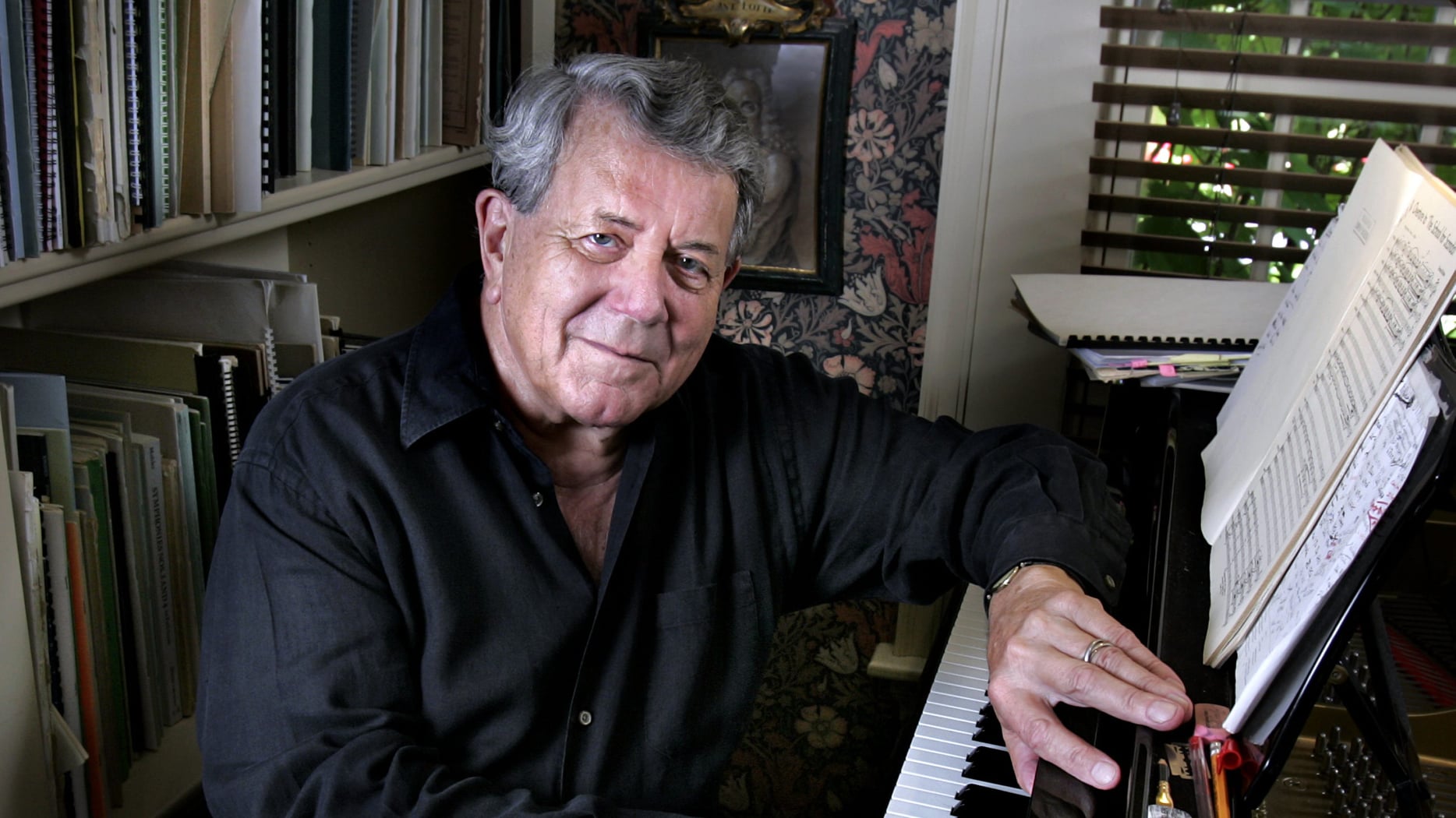
    Coming up, between 4 and 6 p.m., we remember conductor Raymond Leppard (top), who died yesterday at the age of 92, and celebrate composer Ned Rorem, who is 96 years-old today.

    At 6:00, it’s “haunting” music Beethoven and Henri Dutilleux (including Beethoven’s “Ghost” Trio), on “Music from Marlboro.”

    Plenty to raise your spirits, from 4 to 7 p.m. EDT, on WWFM – The Classical Network.

  • Halloween Music Beethoven’s Ghost Trio & Dutilleux

    Halloween Music Beethoven’s Ghost Trio & Dutilleux

    Halloween is only eight days away. On this week’s “Music from Marlboro” we’ll get into the spirit with some ghostly utterances by Beethoven and Henri Dutilleux.

    Beethoven had already been dead for fifteen years at the time his star pupil, Carl Czerny, remarked that the slow movement of one of the piano trios reminded him of Banquo’s ghost. It turns out, Czerny may not have been all that far off the mark.

    In 1808, while Beethoven was at work on his Piano Trio in D major, Op. 70, No.1, he was actually contemplating writing an opera on the subject of Macbeth. The words “Macbett” and “Ende” were scrawled near sketches for the Largo in one of his notebooks. Some scholars speculate that the composer may have been working out ideas for a projected scene with the three witches.

    The mood is certainly ominous, heightened by eerie and mournful passages, sudden pauses and outbursts, and a kind of ghostly tremolo. Beethoven would abandon the opera, when his librettist, Heinrich Joseph von Collin (to whom he had dedicated the “Coriolan Overture”), begged off the project, thinking it too dark.

    Allegedly, the “Ghost Trio” contains the slowest of all slow movements in Beethoven’s output. By some standards, it might also be said to be the most impressionistic. All the more appropriate, then, that we hear it coupled with Dutilleux’s “Ainsi la nuit” (“Thus the Night”).

    Dutilleux’s seven-movement string quartet, meticulously crafted between 1973 and 1976, has often been described as Impressionist. However, subjectively speaking, it must be Impressionism by way of Guillermo del Toro. Let’s face it, folks, masterpiece or no, this “Night” can be a little creepy.

    Dutilleux claimed he wrote the work after coming off intensive studies of the scores of Bartók, Webern, and yes, Beethoven. I think he may have been hitting the cheese plate a little too close to bed time.

    We’ll hear a performance from the 2001 Marlboro Music Festival, with violinists Joseph Lin and Harumi Rhodes, violist Richard O’Neill, and cellist Marcy Rosen.

    Beethoven’s “Ghost Trio” was performed in 2015, by pianist Dénes Várjon, violinist Michelle Ross, and cellist Brook Speltz, on tour in Washington, DC.

    The first of this season’s Marlboro tours is already underway. Remaining performances will take place tonight, at the Perleman Theater in the Kimmel Center for the Performing Arts in Philadelphia; tomorrow, at the Freer Gallery’s Meyer Auditorium in D.C.; and Sunday, at Longy School of Music in Boston. On the program are works by Mozart, Beethoven and Brett Dean. For more information, visit marlboromusic.org.

    Then join me for an hour of weird music and uncanny performances on the next “Music from Marlboro,” this Wednesday evening at 6:00 EDT, on WWFM – The Classical Network and wwfm.org.

    Marlboro School of Music and Festival: Official Page

  • Kreisler & Schoenberg: Vienna’s Odd Couple

    Kreisler & Schoenberg: Vienna’s Odd Couple

    Fritz Kreisler, the sweet-toned confectioner and purveyor of violin bonbons, and Arnold Schoenberg, the dour high priest of twelve tone music. Vienna’s fin-de-siècle odd couple reunite on this week’s “Music from Marlboro.”

    Both artists were born in Vienna, only five months apart – Schoenberg on September 13, 1874, and Kreisler on February 2, 1875. Kreisler’s father was a doctor. Schoenberg’s sold shoes.

    Both had Jewish parents. Kreisler, whose mother was Catholic, was baptized into the faith at the age of 12. Schoenberg converted to Lutheranism at 24. However, just when it would have been most dangerous to do so, he roared back to Judaism and – with the rise of Hitler in 1933 – defiantly embraced his heritage.

    In general, Kreisler seems to have enjoyed the easier life. He had a more comfortable start and a happier disposition. As a musician, he was content to entertain.

    Schoenberg was a revolutionary and probably a bit of a hard-nosed contrarian. He had a turbulent marriage, seldom smiled for photos, and indulged in expressionist painting. Also, he was superstitious. He especially suffered from triskaidekaphobia, fear of the number 13.

    On the other hand, he did orchestrate his share of Viennese operettas, arranged Strauss waltzes for performance with his friends, played tennis with George Gershwin, and was a fan of Hopalong Cassidy.

    Both men came to be regarded in some circles as mountebanks. Kreisler ruffled a few feathers when he let slip that many of the 18th century “rediscoveries” he had used to charm audiences, critics and musicologists were not in fact rediscoveries at all. Nor did they date from the 18th century. When the professionals complained, Kreisler made like Vinnie Barbarino. Wha-? Schoenberg triggered kneejerk reviews and outright hostility with his dismantling of tonality.

    Nevertheless, both also acquired some serious musical credentials. Kreisler gave the world premiere of the Elgar Violin Concerto and became a favorite recital partner of Sergei Rachmaninoff. Schoenberg blossomed into one the most influential composers of the 20th century.

    In 1941, Kreisler was hit by a milk truck, which fractured his skull and put him into a coma. Like something out of an early Woody Allen comedy, when he awoke he could only communicate in Latin and Greek. Thankfully, the effect was only temporary.

    It is Kreisler’s music that continues to communicate most effectively. We’ll hear his String Quartet in A minor, from 1922, performed at the 2013 Marlboro Music Festival by violinists Danbi Um and Nikki Chopi, violist Sally Chisolm, and cellist Lionel Cottet.

    That will be followed by Schoenberg’s Chamber Symphony No. 1 of 1906, a pre-serial work that nevertheless pushes harmony to the brink. It was presented at Marlboro in 1982 by an ensemble of fifteen players directed by Leon Kirchner.

    Was the glass half empty or the milk truck half full? Kreisler lived a good long life. He died in 1962 at the age of 86. Schoenberg died on his 76th birthday, Friday the 13th, 1951. Earlier in the day, he had been informed by his astrologer that 7 plus 6 equals 13.

    No matter how you tally, the performances will be top-notch on the next “Music from Marlboro,” this Wednesday evening at 6:00 EDT, on WWFM – The Classical Network and wwfm.org.

    Marlboro School of Music and Festival: Official Page


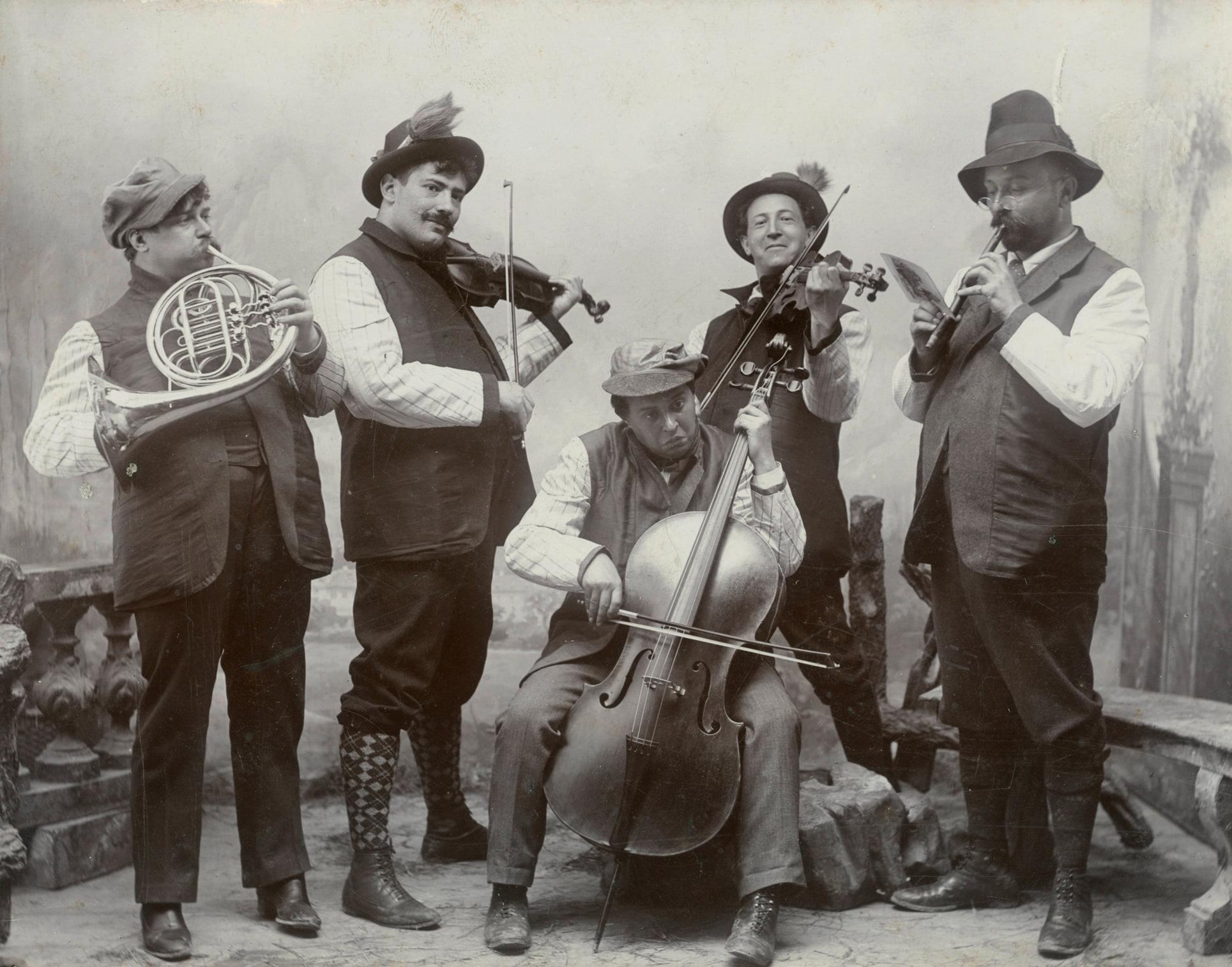
    PHOTO: Fritz Kreisler (second from left) and Arnold Schoenberg (cello) in 1900
  • Late Summer Sounds: Women Composers & More

    Late Summer Sounds: Women Composers & More

    As we continue to savor this precious late-summer’s day, here’s what I’ve got planned musically – as if, in my hubris, there is anything I can do to enhance an already-perfect afternoon.

    I’ll continue to highlight the contributions of women composers, during this month in which we celebrate the bicentennial of Clara Schumann. To this end, we’ll hear a suite from “La liberazione di Ruggiero” by Francesca Caccini, on her birthday. This was the first opera composed by a woman and probably the first by an Italian to be performed abroad.

    It’s also the anniversary of the births of the great English eccentric and polymath Lord Berners and the Australian composer Arthur Benjamin. Benjamin wrote his most popular piece, “Jamaican Rumba,” for the duo-piano team of Joan and Valerie Trimble. It makes sense, then, to also program Joan’s irresistible “Suite for Strings.”

    As if all that weren’t enough, I’ll risk gilding the lily with the inclusion of a charming faux-Baroque dance suite, the conveniently titled “The Nobility of Women,” by Philadelphia composer Kile Smith.

    At 6:00, it’s another “Music from Marlboro.” This week, we’ll enjoy three quirky quartets by Mozart, Weber, and Bernard Garfield, as always in performances from the archive of the legendary Marlboro Music Festival.

    Tap your toes and take your quartets in the threes. There’s nothing unusual in that, is there? Help yourself to some more tea, from 4 to 7 p.m. EDT, on WWFM – The Classical Network and wwfm.org.


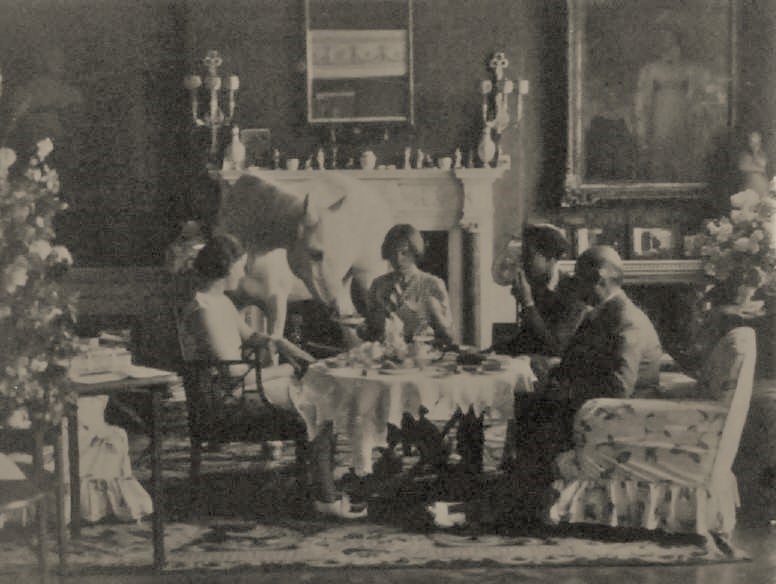
    PHOTO: A classic Berners tea party (note the horse)

  • Beethoven Birthday Bash on Music from Marlboro

    Beethoven Birthday Bash on Music from Marlboro

    I’m staring at a pile of musical birthday gifts for Claudio Monteverdi, Michael Balfe, Nikolai Tcherepnin, Lars-Erik Larsson, Arthur Berger, and John Lanchbery. That’s an awful lot of wrapping for any classical music host. I hope you’ll be on hand to reap the benefits, as I’ll be jumping out of a cake repeatedly from 4 to 6 p.m. EDT.

    Then, at the end of a long day of picking scotch tape off my fingers, there really is only one remedy. On this week’s “Music from Marlboro,” it will be an all-Beethoven affair.

    Beethoven’s Piano Trio in B-flat major, Op. 97, known as the “Archduke,” was one of 14 works the composer wrote for his friend and patron Archduke Rudolf of Austria. Rudolf, an amateur pianist, was the youngest child of Holy Roman Emperor Leopold II.

    Beethoven himself appeared at the keyboard at the work’s premiere in 1814. His encroaching deafness so diminished his former prowess as a performer that he retired from concertizing after a repeat performance a few weeks later. The violinist and composer Louis Spohr summed up the discomfiture and pity felt by those in attendance, by stating, “I am deeply saddened by so hard a fate.”

    The music remains unbowed. Today, the “Archduke” Trio is as noble and inspiring as ever.

    We’ll hear it performed at the 2006 Marlboro Music Festival by pianist and Marlboro co-artistic director Mitsuko Uchida, violinist Soovin Kim, and cellist David Soyer of the legendary Guarneri Quartet.

    Also on the program will be a performance of Beethoven’s “Three Marches for Piano Four Hands,” a remarkable collaboration between an 87 year-old Mieczyslaw Horszowski and an 18 year-old Cecile Licad.

    There are plenty of gifted composers, but it’s hard to beat Beethoven. Beethoven takes the cake, on the next “Music from Marlboro,” this Wednesday evening at 6:00 EDT, on WWFM – The Classical Network and wwfm.org.

    Marlboro School of Music and Festival: Official Page


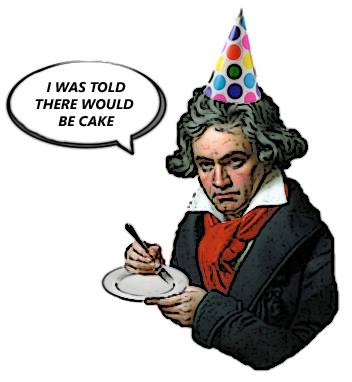
    Beethoven, ready to celebrate his unbirthday

Tag Cloud

Aaron Copland (92) Beethoven (95) Composer (114) Film Music (123) Film Score (143) Film Scores (255) Halloween (94) John Williams (187) KWAX (229) Leonard Bernstein (101) Marlboro Music Festival (125) Movie Music (138) Opera (202) Philadelphia Orchestra (89) Picture Perfect (174) Princeton Symphony Orchestra (106) Radio (87) Ralph Vaughan Williams (85) Ross Amico (244) Roy's Tie-Dye Sci-Fi Corner (290) The Classical Network (101) The Lost Chord (268) Vaughan Williams (103) WPRB (396) WWFM (881)

DON’T MISS A BEAT

Receive a weekly digest every Sunday at noon by signing up here


RECENT POSTS