Tag: Music from Marlboro

  • Saint-Saëns’ Fury Franck Holmès Music from Marlboro

    Saint-Saëns’ Fury Franck Holmès Music from Marlboro

    It’s music to get Camille Saint-Saëns’ blood boiling, on the next “Music from Marlboro.”

    Saint-Saëns was the dedicatee of the Piano Quintet in F minor by his friend, César Franck. But as he sight-read through the piano part at the work’s premiere in 1879, he became more and more agitated, angry even. At the conclusion of the piece, he rejected Franck’s attempt to shake his hand, and stormed off without acknowledging the applause.

    He wasn’t the only one. Franck’s wife also made no secret of hating it.

    Here was music of sublimated desire, and everyone knew the cause. Saint-Saëns knew, because he felt the same way about Franck’s pupil, Augusta Holmès. Franck tutored Holmès in organ and composition. No doubt he admired her musical talent, but equally there was no doubt his interest went beyond that of master-disciple. Don’t let those mutton chops fool you. A man is only flesh and blood.

    There must have been something about Holmès, the French composer of Irish descent, because she had the same effect on just about every man she crossed paths with. Saint-Saëns had proposed marriage to her multiple times, always without success. He would refer to her as a “beautiful pythoness.” Methinks his vines had tender sour grapes.

    We’ll hear a performance of Franck’s incendiary piece, featuring pianist Mitsuko Uchida, violinists Soovin Kim and David McCarroll, violist Milena Pajaro-van de Stadt, and cellist Matthew Zalkind, from the 2012 Marlboro Music Festival.

    The hour will open with a work by Claude Debussy. Debussy composed “En blanc et noir” in 1915, making it one of his later creations, contemporaneous with the Cello Sonata, the Sonata for Flute, Viola and Harp, and the Etudes for solo piano.

    It is to be remembered that Saint-Saëns, who basically lived forever, was 80 years-old by this time. He loathed the work. “We must at all costs bar the door of the Institute against a man capable of such atrocities,” he fumed. “They should be put next to the cubist pictures.”

    The first movement, an energetic waltz, is dedicated to Serge Koussevitzky; the second, a somber slow movement, to Debussy’s friend, Jacques Charlot, who was killed during the First World War; and the third, a playful scherzando, to Igor Stravinsky.

    We’ll hear it played at Marlboro in 2017 by pianists Xiaohui Yang and Cynthia Raim.

    The forbidden fruit tastes the sweetest, thanks to Saint-Saëns’ anger management issues, on the next “Music from Marlboro,” this Wednesday evening at 6:00 EDT, on WWFM – The Classical Network and wwfm.org.

    BONUS: Tune in early to hear one of Holmès’ symphonic poems in the 5:00 hour!

    Marlboro School of Music and Festival: Official Page


    PHOTOS (clockwise from left): Saint-Saëns, all dressed up with nowhere to go; Franck at the organ; Holmès with her je ne sais crois; Debussy, transfixed by a cigarette

  • Spring Equinox Purim Bach & More Today!

    Spring Equinox Purim Bach & More Today!

    I hope you’ll join me this afternoon, as we anticipate the arrival of spring (at 5:58 p.m.), the Jewish festival of Purim (at sunset), and the Super Worm Equinox Moon (full at 9:43 p.m.). We’ll also celebrate the birthdays today of pianist Sviatoslav Richter and heldentenor Lauritz Melchior.

    To coincide with the vernal equinox, it will be an all-Bach hour on “Music from Marlboro” at 6 – performances from the legendary Marlboro Music Festival. Don’t forget to join the Bach 500, if you haven’t already. 500 donations IN ANY AMOUNT will allow us to unlock this year’s Bach Pot. It’s worth over $14,000 to us. Call now at 1-888-232-1212 or donate online at wwfm.org.

    Remember, it’s listeners just like you who put the spring in our step, from 4 to 7 p.m. EDT, on WWFM – The Classical Network and wwfm.org.

  • Sergei Taneyev Honest Russian Composer

    Sergei Taneyev Honest Russian Composer

    Never one to hold back or sugar-coat the truth, Sergei Taneyev (1856-1915) could be brutally honest and in fact generally was. He managed to offend every one of the musicians of the Mighty Handful (Mily Balakirev, Alexander Borodin, César Cui, Modest Mussorgsky, and Nikolai Rimsky-Korsakov) with his blunt assessments. Yet somehow Peter Ilych Tchaikovsky, who was probably the most sensitive composer in all of Russia, actually went out of his way to invite Taneyev’s criticism, even when it threw him into fits of despair.

    On this week’s “Music from Marlboro,” we’ll have music by this most forthright of Russian composers, alongside a delightful caprice by a Frenchman, based on Danish and Russian airs.

    Tchaikovsky valued Taneyev’s keen insight and transparent honesty, perhaps in part because he knew, as Taneyev’s teacher at the Moscow Conservatory, that Taneyev was equally hard on himself. Also, there was little doubt of his disciple’s devotion. Taneyev was the soloist in the Moscow premiere of Tchaikovsky’s Piano Concerto No. 1, and in the Russian premiere of his Piano Concerto No. 2. After Tchaikovsky’s death, Taneyev completed several of his master’s works from sketches left in various states of completion, including the Piano Concerto No. 3. In turn, Tchaikovsky dedicated his symphonic fantasy, “Francesca da Rimini,” to Taneyev.

    Taneyev entered the Moscow Conservatory at the age of nine. His characteristic diligence and impeccable craftsmanship revealed themselves early, and through their application he rose quickly in the estimation of his professors. Tchaikovsky rated Taneyev as Russia’s greatest master of counterpoint and questioned if there was anyone, even in the West, who could match him in this regard.

    When Tchaikovsky resigned his post at the conservatory in 1878, Taneyev was appointed in his place to teach harmony and orchestration. Soon, he was also teaching piano and composition. Finally, he served as the conservatory’s director from 1885 to 1889. Among his own pupils were Sergei Rachmaninoff, Nikolai Medtner, and Alexander Scriabin. (FUN FACT: Taneyev died in 1915 after catching pneumonia at Scriabin’s funeral.)

    For the most part, Taneyev’s life was as orderly as his music. He never married; all his needs were tended to by his childhood nanny. He even managed to remain oblivious when the wife of his friend, Leo Tolstoy, basically threw herself at him. He preferred study to relaxation, passing countless hours poring over volumes on natural and social science, history, mathematics, Plato and Spinoza. He also taught himself Esperanto.

    Perhaps he could have used a little of Tchaikovsky’s spontaneity, both in his life and in his music. Tchaikovsky was more of an impulsive artist, always allowing his creativity and emotion to lead the way, while Taneyev tended to hold his raw materials in balance, carefully considering his ideas and themes, subjecting them to intensive analysis before committing them to manuscript. For as dry as that may sound, his music is still rewarding to listen to!

    Taneyev’s String Quintet in G major, Op. 14, dates from 1901. We’ll hear it performed at the 2005 Marlboro Music Festival by violinists Lily Francis and David Bowlin, violist Yu Jin, and cellists Michael Nicholas and David Soyer.

    By way of introduction, the program will open with a “Caprice on Danish and Russian Airs” by Camille Saint-Saëns (1835-1921). Scored for flute, oboe, clarinet, and piano, the work was composed for a series of concerts organized by the Russian Red Cross that were held in St. Petersburg during Easter Week, 1887. The piece was dedicated to the the Tsarina, Maria Feodorovna, formerly Princess Sophie Frederika Dagmar, daughter of the King of Denmark – hence, Saint-Saëns’ use of Danish and Russian themes.

    We’ll hear it performed at Marlboro in 1968 by pianist Ruth Laredo, flutist Paula Robison, oboist John Mack, and clarinetist Larry Combs.

    No doubt Taneyev would decline my invitation – and he wouldn’t hesitate to tell me why – but there is nothing to keep us from reckless enjoyment of the next “Music from Marlboro,” this Wednesday evening at 6:00 EST, on WWFM – The Classical Network and wwfm.org.

    Marlboro School of Music and Festival: Official Page


    PHOTO: Tell us what you really think, Sergei.

  • John Joubert Remembered on WWFM

    John Joubert Remembered on WWFM

    South African-born British composer John Joubert died on Monday at the age of 91. We’ll lead off the 5:00 hour (EST) remembering him with a performance of his Symphony No. 1 of 1955.

    We’ll also hear some “Variations on a Theme of Handel” (from “Messiah”) by the Argentinean composer Luis Gianneo, whose birthday it is today, and one of Handel’s own concerti grossi.

    Don’t forget, coming up at 6:00, it’s another “Music from Marlboro” – chamber music by György Ligeti and Ernő Dohnányi, from the legendary Marlboro Music Festival.

    It’s all yet to come, between now and 7:00 EST, on WWFM – The Classical Network and wwfm.org.

  • Trout Quintet for Thanksgiving: Music from Marlboro

    Trout Quintet for Thanksgiving: Music from Marlboro

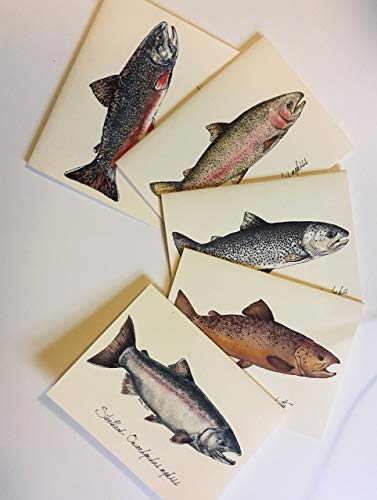
    It’s trout for Thanksgiving on this week’s “Music from Marlboro.”

    Franz Schubert was 22 years-old when he completed his “Trout” Quintet. That was in 1819. The work wasn’t published until 1829, the year after his death.

    Formally identified as the Piano Quintet in A major, D. 667, the piece was conceived for the novel combination of piano, violin, viola, cello, and double bass (bass like the instrument, not the fish). Schubert tailored his quintet for a gathering of musicians who were to perform Johann Nepomuk Hummel’s Septet, which Hummel had arranged for the same instrumentation. I know, it’s very disappointing that the work is not played on five fishes.

    The quintet gets its nickname from the fourth movement (of five), a set of variations on Schubert’s lied, “Die Forelle,” or “The Trout.” The music is generally lighthearted and leisurely, with perhaps a few feints toward melancholy in the second movement Andante. But Schubert wouldn’t be Schubert without a dash of melancholy, and neither would Thanksgiving. Overall, the quintet is just the sort of thing to calm your nerves, even as the ear is engaged by its striking harmonies and catchy melodies.

    We’ll hear a performance recorded at Marlboro in 1967, with pianist Rudolf Serkin, violinist Jaime Laredo, violist Philipp Naegele, cellist Leslie Parnas, and bassist Julius Levine.

    Then we’ll round out the hour with some part-songs, composed around 1801, by Franz Joseph Haydn, including “Abendlied zu Gott” (“Evening Song to God”), after a text by Christian Fürchtegott Gellert:

    Lord, You who have given me life
    Up until this very day,
    Child-like, I pray to You.
    I am much too unworthy of the faithfulness that I sing of,
    And that You grant me today.

    Four vocalists – soprano Claudia Visca, mezzo-soprano Constance Fee, tenor Michael Sylvester, and bass John Paul White – join Luis Batlle at the piano, at the 1976 Marlboro Music Festival.

    It sure beats romaine lettuce. Schubert’s “Trout” will buoy your spirits, even as you wade through traffic, on this Thanksgiving eve.

    Give thanks for musical sustenance on “Music from Marlboro,” this Wednesday evening at 6:00 EST, on WWFM – The Classical Network and wwfm.org.

    Marlboro School of Music and Festival: Official Page

Tag Cloud

Aaron Copland (92) Beethoven (95) Composer (114) Film Music (123) Film Score (143) Film Scores (255) Halloween (94) John Williams (187) KWAX (229) Leonard Bernstein (101) Marlboro Music Festival (125) Movie Music (138) Opera (202) Philadelphia Orchestra (89) Picture Perfect (174) Princeton Symphony Orchestra (106) Radio (87) Ralph Vaughan Williams (85) Ross Amico (244) Roy's Tie-Dye Sci-Fi Corner (290) The Classical Network (101) The Lost Chord (268) Vaughan Williams (103) WPRB (396) WWFM (881)

DON’T MISS A BEAT

Receive a weekly digest every Sunday at noon by signing up here


RECENT POSTS