Tag: Music from Marlboro

  • Spooky Halloween Music on WWFM

    Spooky Halloween Music on WWFM

    Now is the time to brush the cobwebs from the old chest in the attic, pry open the sarcophagus in the dank crypt of imagination, and reanimate the undead music of Hallowe’ens past. For the next three days, I’ll be spiking my playlists with selections of a decidedly spooky nature – alongside a few birthday celebrations and the usual station business. The sense of menace will culminate in a Hallowe’en blow-out on October 31, including an especially creepy “Music from Marlboro.”

    I have no idea what my colleagues have planned for the next few days, but here are the hours during which you are guaranteed to encounter at least a few musical chills (all times Eastern Daylight).

    Today: 3 to 7 p.m.
    Tomorrow: 1 to 4 p.m.
    Wednesday: 4 to 7 p.m.

    Please note: I will be on one hour earlier than usual today, providing an extra opportunity to throw a sheet over my head and cry boo!

    Don’t try buying me off with McDonald’s gift certificates. I only accept dimes, beginning this afternoon at 3:00 EDT, on WWFM – The Classical Network and wwfm.org.

  • Kurt Masur Google Doodle Celebrates Conductor

    Kurt Masur Google Doodle Celebrates Conductor

    Well, dog my cats! Kurt Masur gets his own Google doodle, as you will find when doing Google searches today, the 91st anniversary of the conductor’s birth.

    https://www.cnet.com/news/google-doodle-celebrates-renowned-conductor-kurt-masur/

    I’ll be playing some of Masur’s recordings this afternoon, from 4 to 6 p.m. EDT, on WWFM – The Classical Network and wwfm.org.

    Then stay tuned for “Music from Marlboro” at 6!

  • Bartók & Dohnányi: Contrasting Hungarians

    Bartók & Dohnányi: Contrasting Hungarians

    It’s all about contrasts on this week’s “Music from Marlboro.”

    While Béla Bartók is respected as the foremost Hungarian composer of the 20th century, Ernő Dohnányi, until recently, has been subject to neglect, at least in proportion to his significance. Sure, Bartók and his friend Zoltán Kodály were at the forefront of the whole nationalist movement, traipsing around the countryside in order to document authentic folk traditions before they were swallowed up forever by industrialization. But as director of the Budapest Academy of Music and music director of the Budapest Philharmonic Orchestra, Dohnányi would exert as much influence over his country’s musical development as that of his folk music-mad friends and contemporaries

    Unfortunately, he would become the target of character assassination campaigns after World War II, in which he was painted as a Nazi sympathizer. Dohnányi was investigated and cleared several times by the U.S. Military Government, and in fact has been defended as a forgotten hero of Holocaust resistance, since it was through his administrations that countless Jewish musicians survived. Also, between the wars, he went to bat for Kodály, a leftist, by refusing to fire him from the Budapest Academy. As a result, Dohnányi too lost his position, albeit temporarily. Nevertheless, he continued to be eyed with suspicion, and his slandered reputation never fully recovered.

    Equally fatal is the fact that much of his music bears a more cosmopolitan stamp than that of the Hungarian composers of his era that are now so celebrated. His composition teacher, the German-born Hans von Koessler (known in Hungary as János Koessler) was a cousin of Max Reger. Of course, Koessler also taught Bartók and Kodály. But Dohnányi was perfectly happy nestled in the world of Brahms. For his international career, he assumed the name Ernst von Dohnanyi.

    Dohnányi’s Piano Quintet in C minor, completed in June of 1895, one month before his 18th birthday, earned Brahms’ approval. We’ll hear it performed at the 1977 Marlboro Music Festival, by pianist Stephanie Brown, violinists Joseph Genualdi and Mayuki Fukuhara, violist Philipp Naegele, and cellist Lisa Lancaster.

    The program will open with Bartók’s “Contrasts,” a raw, fascinating work, from 1938. The piece, inspired by Hungarian and Romanian dance melodies, was commissioned by Benny Goodman, of all people. The trio – for clarinet, violin, and piano – contains passages of bitonality and frenzied dances for scordatura violin. We’ll hear it performed at the 1998 Marlboro Music Festival by clarinetist Anthony McGill, violinist Catherine Cho, and pianist Pierre-Laurent Aimard.

    I hope you’re hungry for Hungarian music. Variety is the spice of life on this week’s “Music from Marlboro,” Wednesday evening at 6:00 EDT, on WWFM – The Classical Network and wwfm.org.

    Marlboro School of Music and Festival: Official Page


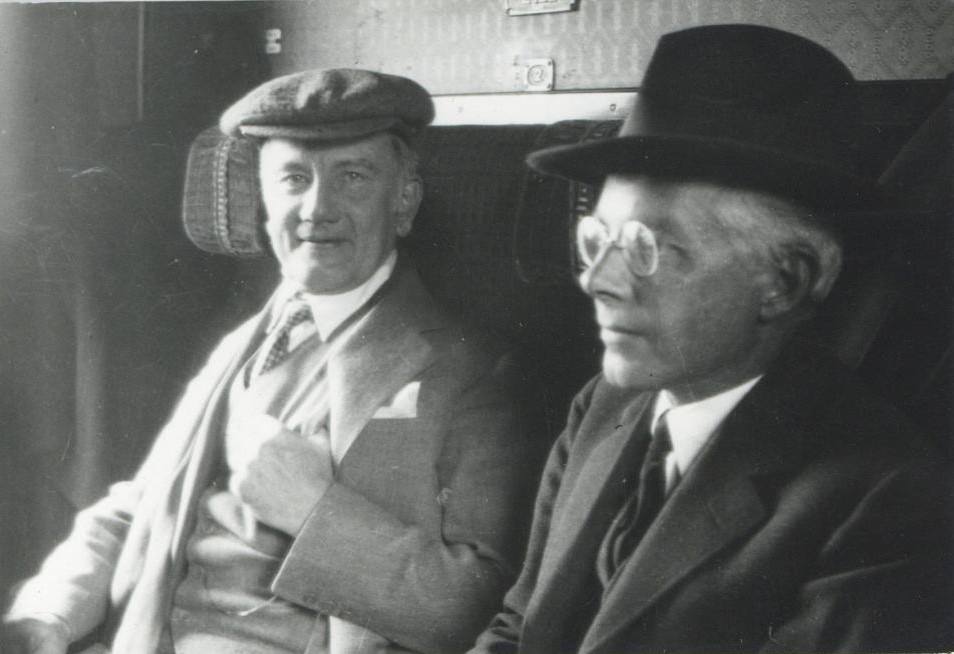
    Strangers on a Train: Ernő Dohnányi (left) and Béla Bartók

  • Danish Quintets Kuhlau and Nielsen

    Danish Quintets Kuhlau and Nielsen

    Into every life a little rain must fall. Tell that to Friedrich Kuhlau, the German-born Danish composer.

    At the age of seven, Kuhlau lost an eye when he slipped on the ice and fell on a bottle. In 1810, he fled to Copenhagen to avoid conscription into Napoleon’s army. There, he struggled to gain acceptance in Danish musical life. It was a bumpy ride, marked by modest success and spectacular failure.

    Then, only a few years after he scored his greatest hit in 1828 with incidental music to the play “Elverhøj” (“The Elf’s Hill”), his house caught fire. He was forced to spend most of the night out in the freezing cold, as a result of which he developed a chest ailment that drove him to an untimely death at the age of 46.

    Happily, his ill-fortune is nowhere in evidence in his flute quintets. We’ll hear one of them on this week’s “Music from Marlboro.” The Flute Quintet in D major, Op. 51, No. 1, will be performed by flutist Julia Bogorad, violinist Ralph Evans, violists Ira Weller and Samuel Rhodes, and cellist Marcy Rosen, at the 1979 Marlboro Music Festival.

    Then the winds will multiply for music by Denmark’s most famous composer, Carl Nielsen.

    Like “The Ugly Duckling” of his compatriot, Hans Christian Andersen, Nielsen emerged from humble beginnings to blossom into Denmark’s national composer. Internationally, Nielsen has flitted in and out of the seemingly inescapable shadow of Finnish master Jean Sibelius. Both men were born in 1865. In fact, Nielsen was six months older. But it is an unfair comparison, not so much apples and oranges; more like kipper and pickled herring.

    The very fact that Nielsen is not referred to reductively as “The Sibelius of Denmark” is attributable to an unusually strong individual voice. His music is modern, yet traditional; Scandinavian, yet Germanic. Most important, it is full of personality, freshness and vitality.

    Nielsen’s Wind Quintet of 1922 reflects the composer’s optimism and good humor. Each part was tailored to the personality of the individual performer for which it was written (members of the Copenhagen Wind Quintet). There is also something of the outdoors about the piece. Nielsen was always fascinated by nature, and there are ample suggestions of bird song woven into the texture of the work’s pastoral neoclassicism.

    We’ll enjoy a recording made at Marlboro in 1971, with flutist Paula Robison, oboist Joseph Turner, clarinetist Larry Combs, bassoonist William Winstead, and hornist Robin Graham.

    I hope you’ll “deign” to join me for an hour of Danish quintets, on the next “Music from Marlboro,” this Wednesday evening at 6:00 EDT, on WWFM – The Classical Network and wwfm.org.

    Marlboro School of Music and Festival: Official Page


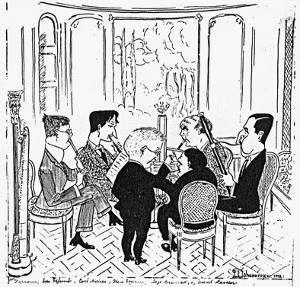
    IMAGE: Period cartoon of the first performance of Nielsen’s Wind Quintet

  • Rediscovering Glazunov: From Sheepishness to Serenity

    Rediscovering Glazunov: From Sheepishness to Serenity

    Alexander Glazunov was always one of those composers I felt kind of sheepish about liking. I remember sitting at a listening bar at a used record shop in Philadelphia and asking to preview a recording of Glazunov’s ballet music. “I know I’m not supposed to like this stuff,” I commented, almost apologetically.

    Admittedly, at the time, other than the Violin Concerto, I didn’t really know a lot of great recordings of his music. I found the Marco Polo releases I had heard, with the Hong Kong Philharmonic, to be underwhelming, and these prejudiced me against the composer for years. But Neeme Järvi’s performances on Chandos were a revelation. Then of course I eventually got my hands on the Melodiya issues with Gennadi Rozhdestvensky and Evgeny Svetlanov.

    Okay, so Glazunov isn’t Beethoven. Who is? But at his best, his music is well-crafted, attractive (to me, anyway), and marked by an abundance of memorable melodies that would make any honest composer jealous.

    Join me on this week’s “Music from Marlboro” in enjoying Glazunov’s String Quintet in A major (1891). The work is full of serene lyricism, generously melodic and beautiful. We’ll hear it performed at the Marlboro Music Festival in 1982 by violinists Sylvie Gazeau and Ernestine Schor, violist Toby Hoffman, and once-and-future cellists of the Guarneri Quartet, David Soyer and Peter Wiley.

    Above and beyond his own merits as a composer, Glazunov had an eye for developing young talent. In the capacity of director of the Petrograd Conservatory, Glazunov saw to it that a young Dmitri Shostakovich be allowed to bypass preparatory theoretical courses and enter directly into the conservatory’s composition program. In general, Shostakovich was lukewarm on his mentor’s music, but he had very kind words for the man and expressed admiration for his scherzos.

    We’ll preface Glazunov’s Quintet with Shostakovich’s String Quartet No. 4 in D major (1949). Shostakovich’s quartet grew out of a newfound confidence on the part of the composer as a result of Stalin personally selecting him as a cultural ambassador to the West. Shostakovich persuaded Stalin that if that were going to be the case, then perhaps it would be a good idea to lift the ban on Soviet performances of his music. Otherwise, it might look a little peculiar to outsiders.

    Papa Joe agreed, and Shostakovich promptly embarked on his new quartet, which he loaded up with Jewish folk songs and all sorts of things that had a history of angering the “wise leader and teacher.” Fortunately for Shostakovich, who had walked a very precarious line with the authorities, his friends persuaded him not to allow the work to be performed publicly, and the composer put it in a drawer for another day.

    That other day is now, and we’ll hear it played by violinists Sylvie Gazeau and Yuzuko Horigome, violist Philipp Naegele, and cellist Robie Brown Dan, at Marlboro in 1983.

    Sylvie Gazeau does double duty in music by Shostakovich and Glazunov, on this week’s “Music from Marlboro,” Wednesday evening at 6:00 EDT, on WWFM – The Classical Network and wwfm.org.

    Marlboro School of Music and Festival: Official Page


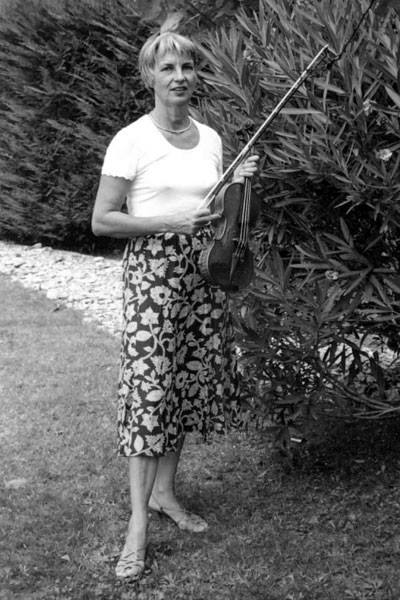
    PHOTOS (Clockwise from left): Gazeau, Glazunov, and Shostakovich
Tag Cloud

Aaron Copland (92) Beethoven (95) Composer (114) Film Music (123) Film Score (143) Film Scores (255) Halloween (94) John Williams (187) KWAX (229) Leonard Bernstein (101) Marlboro Music Festival (125) Movie Music (138) Opera (202) Philadelphia Orchestra (89) Picture Perfect (174) Princeton Symphony Orchestra (106) Radio (87) Ralph Vaughan Williams (85) Ross Amico (244) Roy's Tie-Dye Sci-Fi Corner (290) The Classical Network (101) The Lost Chord (268) Vaughan Williams (103) WPRB (396) WWFM (881)

DON’T MISS A BEAT

Receive a weekly digest every Sunday at noon by signing up here


RECENT POSTS