Neoclassicism in music was a reaction against what was perceived as the garish effusiveness and gooey excesses of late Romanticism.
Contemporary composers, in search of a new lucidity, turned their attention to the 18th century, revisiting its musical processes, though reinterpreting them through a distinctly 20th century prism. Stravinsky was the master, but neoclassicism swept the world.
This week on “The Lost Chord,” we’ll have three cheery examples of Czech neoclassicism, including works by Ilja Hurník (his “Sonata da Camera”), Iša Krejči (his “Serenade for Orchestra,” conducted by Karel Ančerl) and Bohuslav Martinů (his Concerto for Two Violins and Orchestra).
These composers – well, Krejči and Martinů, anyway – manage to balance the clarity of the Enlightenment with an unmistakably Czech national sound.
Hurník’s work is perhaps the purest, in terms of looking back. The term “Sonata da Camera” recalls music of the Baroque and Classical eras, as does the clarity of its instrumentation, involving flute, oboe, cello and harpsichord. Each movement begins as if it were ripped from the pages of history and then gradually squeezed like a lemon, leaving a tangy, contemporary aftertaste.
All of this music is calculated to lift your spirits. I do hope you’ll join me for “Balanced Czechs,” on “The Lost Chord,” now in syndication on KWAX Classical Oregon!
——-
Clip and save the start times for all three of my recorded shows:
PICTURE PERFECT, the movie music show – Friday at 8:00 PM EDT/5:00 PM PDT
SWEETNESS AND LIGHT, the light music program – Saturday at 11:00 AM EDT/8:00 AM PDT
THE LOST CHORD, unusual and neglected rep – Saturday at 7:00 PM EDT/4:00 PM PDT
Stream them, wherever you are, at the link!
https://kwax.uoregon.edu
——-
Tightrope walker by Jiří Sliva
Tag: Neoclassicism
-
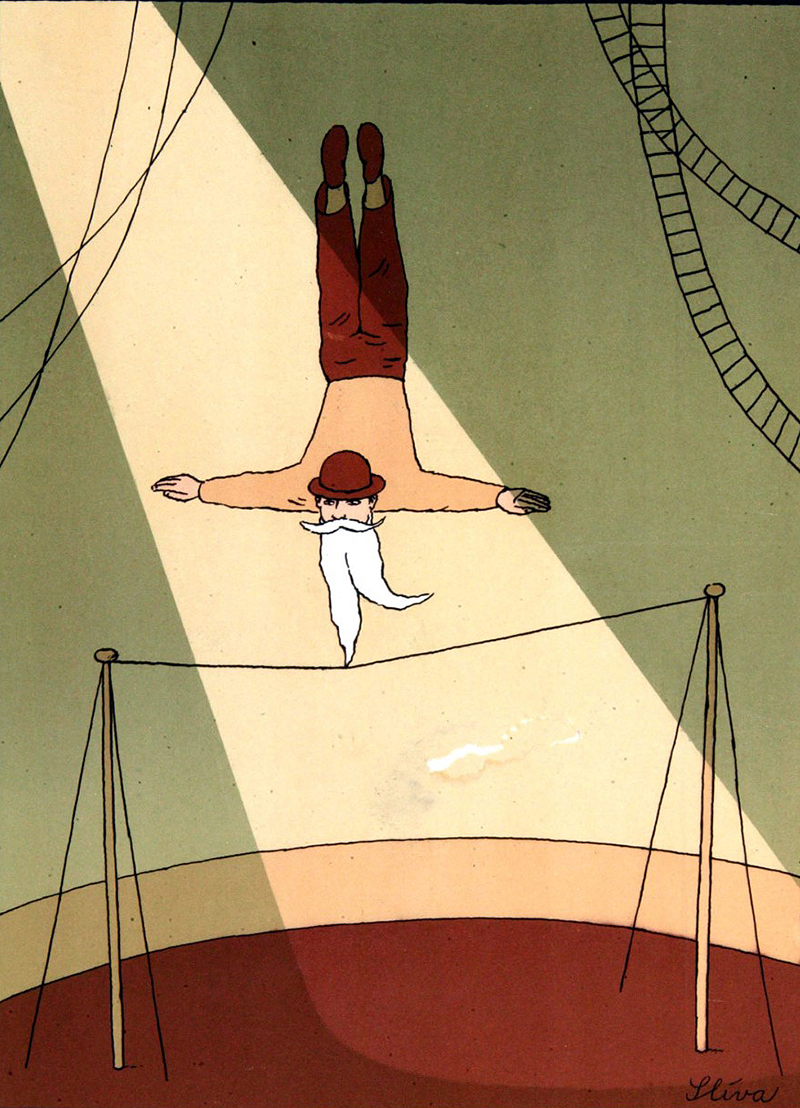
“Balanced Czechs” on “The Lost Chord”
-
Respighi & Diamond Neoclassical Masters
Neoclassicism is the name of the game today, as we celebrate two composers who made their biggest splash appropriating styles and themes of the past.
Ottorini Respighi composed not only his “Ancient Airs and Dances” suites, but works – while not strictly speaking Neoclassical (in fact, more orgiastic) – evocative of Rome’s illustrious and/or notorious past. He also composed music redolent of the Catholic Church, with works influenced by Gregorian modes. Even his ballet, “Belkis, Queen of Sheba,” is set 3000 years ago.
The American composer David Diamond was asked by the conductor Dimitri Mitropoulos in 1944 for a new work. The only stipulation was that the piece be of a happy disposition, in defiance of the unsettling events unfolding in the world at large and in music in particular. (Mitropoulos was depressed from conducting too much 12-tone music.)
The result was the clear, cool “Rounds for String Orchestra,” which went on to become Diamond’s best-known music, a bona fide American classic.
Happy birthday, Ottorino Respighi (b. 1879) and David Diamond (b. 1915)!
Here’s violinist Uto Ughi in Respighi’s “Concerto Gregoriano”: https://www.youtube.com/watch?v=wWSKB8aZ884
And Diamond’s “Rounds for String Orchestra” (well worth it, if you can ignore the images): https://www.youtube.com/watch?v=D6iF70Sn-4E
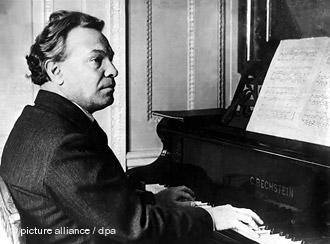
PHOTOS: Duo pianists Respighi (top) and Diamond
Tag Cloud
Aaron Copland (94) Beethoven (95) Composer (114) Film Music (149) Film Score (143) Film Scores (255) Halloween (97) John Williams (197) KWAX (232) Leonard Bernstein (105) Marlboro Music Festival (125) Movie Music (164) Mozart (91) Opera (215) Philadelphia Orchestra (90) Picture Perfect (174) Princeton Symphony Orchestra (110) Radio (90) Ross Amico (244) Roy's Tie-Dye Sci-Fi Corner (290) The Classical Network (101) The Lost Chord (269) Vaughan Williams (107) WPRB (397) WWFM (881)