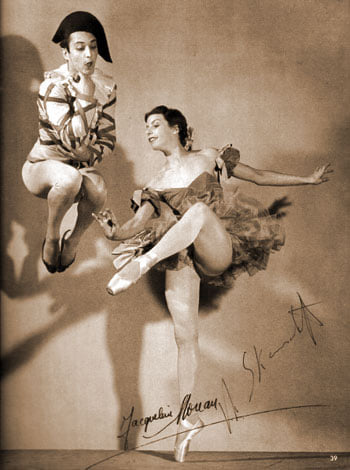
It seems as if it was only a matter of time before any Baroque musician of merit would become embroiled in a musical duel.
In the case of Domenico Scarlatti, he was challenged by none other than George Frideric Handel, in Rome. The resulting contest led to Handel being judged superior to his rival on the organ; however, on the harpsichord Scarlatti was deemed to be supreme. In fact, Scarlatti’s unusual facility at the keyboard has had artists “keyed up” for centuries.
Born in Naples in 1685 – the same year as Handel and Bach – Scarlatti spent much of his career in the service of the Portuguese and Spanish royal families. He wrote 555 keyboard sonatas, which have been admired by composer-performers from Frederic Chopin to Marc-André Hamelin.
This week on “The Lost Chord,” we’ll enjoy several works written in tribute to this Baroque master.
Charles Avison, whose life overlapped Scarlatti’s own (he was born in 1709, when Scarlatti was 23 years-old), arranged a number of his elder colleague’s keyboard works into a set of 12 concerti grossi. We’ll sample one of those, Avison’s Concerto No. 10 in D.
Then we’ll turn to American composer Norman Dello Joio. Dello Joio was the recipient of the Pulitzer Prize for Music in 1957 for his “Meditations on Ecclesiastes.” From 1979, we’ll hear his four-movement piano work, “Salute to Scarlatti.”
Dmitri Shostakovich arranged two of Scarlatti’s keyboard sonatas for small wind ensemble and percussion. We’ll enjoy performances of these by members of the former USSR Ministry of Culture Symphony Orchestra conducted by Gennady Rozhdestvensky.
Finally, Alfredo Casella’s 1926 suite for piano and orchestra, “Scarlattiana,” draws its inspiration from dozens of Scarlatti sonatas. Though unquestionably high-spirited, it was not originally intended for the dance – but since it unabashedly recalls Stravinsky’s “Pulcinella,” it is hardly surprising that some clown decided to choreograph it.
I hope you’ll join me for a mixed salad of Scarlatti tributes, on “Italian Dressing,” on “The Lost Chord,” now in syndication on KWAX Classical Oregon!
——-
Clip and save the start times for all three of my recorded shows:
PICTURE PERFECT, the movie music show – Friday at 8:00 PM EDT/5:00 PM PDT
SWEETNESS AND LIGHT, the light music program – Saturday at 11:00 AM EDT/8:00 AM PDT
THE LOST CHORD, unusual and neglected rep – Saturday at 7:00 PM EDT/4:00 PM PDT
Stream them, wherever you are, at the link!
https://kwax.uoregon.edu
——-
PHOTO: Wladimir Skouratoff (levitating) and Jacqueline Moreau in a 1954 production of “Scarlattiana”
Tag: Norman Dello Joio
-
Old Meets New Classical Music on KWAX
In music, as in most things, progress can sometimes seem a mite overrated. In any case, at the risk of teetering into banality, we must acknowledge that the more things change, the more they stay the same. This week on “The Lost Chord,” it seems especially so, when composers of the past 100 years look back to the 18th century.
We’ll hear somewhat contemporary works indebted to earlier times, including Lord Berners’ “Fugue for Orchestra,” Norman Dello Joio’s “Salute to Scarlatti,” Ilja Hurník’s “Sonata da camera,” John Corigliano’s “Chaconne” from “The Red Violin,” and Percy Grainger’s “Blithe Bells,” after Johann Sebastian Bach.
Raise a toast to backward thinking (and I mean that purely facetiously) with new wine in old bottles, on “Déjà Vu All Over Again,” on “The Lost Chord,” now in syndication on KWAX, the radio station of the University of Oregon!
Remember, KWAX is on the West Coast, so there’s a three-hour difference for those of you listening in the East. Here are the respective air-times for all three of my recorded shows (with East Coast conversions in parentheses):
PICTURE PERFECT, the movie music show – Friday on KWAX at 5:00 PM PACIFIC TIME (8:00 PM EASTERN)
SWEETNESS AND LIGHT, the light music program – ALL NEW! – Saturday on KWAX at 8:00 AM PACIFIC TIME (11:00 AM EASTERN)
THE LOST CHORD, unusual and neglected rep – Saturday on KWAX at 4:00 PM PACIFIC TIME (7:00 PM EASTERN)
Stream all three, at the times indicated, by following the link!
-
Ormandy’s Lost American Legacy Rediscovered
Eugene Ormandy was born Jenő Blau in Budapest in 1899. In 1927, he became a naturalized American citizen and wound up directing the Philadelphia Orchestra for 44 years.
In that capacity, he championed much contemporary music and works by his adopted countrymen – a fact eclipsed by his reputation as a superb interpreter of the 19th century classics.
In fact, for many years, much of his American legacy dropped out of print. In the late 1990s, Albany Records attempted to rectify the situation by reissuing some of Ormandy’s recordings of lesser-heard American music. The series only made it to three volumes, but each one of them is a treasure.
This week on “The Lost Chord,” we’ll hear two selections from these invaluable anthologies. Both are by Pulitzer Prize winners whose music has sadly fallen out of fashion.
William Schuman was the very first recipient of the Pulitzer Prize for Music, in 1943, for his “Cantata No. 2, A Free Song.” At the height of his fame, he was also President of Lincoln Center. He was considered such an important figure in American culture, he was even brought on to “What’s My Line?” (Those were the days.)
We’ll hear Schuman’s “Credendum – Article of Faith,” composed in 1955. The work was written in response to the first ever commission by the U.S. government for a symphonic work.
Two years later, the Pulitzer was awarded to Norman Dello Joio, for his “Meditations on Ecclesiastes.” His symphonic suite “Air Power” was adapted from 22 individual scores composed for the CBS television series about the history of aviation. The series ran from November 1956 through the spring of 1957. (Dello Joio would collect his prize in April.) The individual sections were used to underscore segments on the early days of flight, with their barnstormers and daredevils, air battles and war scenes.
I hope you’ll join me for these rarely-heard recordings of American music. Ormandy flies American, on “All-American Ormandy,” on “The Lost Chord,” now in syndication on KWAX, the radio station of the University of Oregon!
Remember, KWAX is on the West Coast, so there’s a three-hour difference for the Trenton-Princeton area. Here are the respective air-times of my recorded shows (with East Coast conversions in parentheses):
PICTURE PERFECT, the movie music show – Friday on KWAX at 5:00 PACIFIC TIME (8:00 PM EST)
THE LOST CHORD, unusual and neglected rep – Saturday on KWAX at 4:00 PACIFIC TIME (7:00 PM EST)
Stream them here!
William Schuman on “What’s My Line?” (1962):
https://www.youtube.com/watch?time_continue=10…
“Air Power,” narrated by Walter Cronkite (1956):
https://www.youtube.com/watch?v=gKXKTh50USM
PLEASE NOTE: Ormandy’s recording of Dello Joio’s “Air Power Suite” will be reissued on Friday, November 17, as part of Sony Classical’s impending 88-CD box, “Eugene Ormandy/The Philadelphia Orchestra: The Columbia Stereo Collection.”
Schuman’s “Credendum” was reissued in 2021, as part of Sony’s 120-CD box (all mono), “Eugene Ormandy: The Columbia Legacy.”
Both Sony releases have been newly-remastered.
-
New Year Classical Music Deja Vu
Everyone begins the new year with hopes for positive change. At the risk of seeming contrarian, this Sunday night on “The Lost Chord,” we acknowledge that the more things change, the more they stay the same – as composers of the past 100 years look back to the 18th century.
We’ll hear somewhat contemporary works indebted to earlier times, including Lord Berners’ “Fugue for Orchestra,” Norman Dello Joio’s “Salute to Scarlatti,” Ilja Hurník’s “Sonata da camera,” John Corigliano’s “Chaconne” from “The Red Violin,” and Percy Grainger’s “Blithe Bells,” after Johann Sebastian Bach.
Raise a toast, with new wine in old bottles, on “Déjà Vu All Over Again,” this Sunday night at 10:00 EST, on WWFM – The Classical Network and wwfm.org.
-
Ormandy’s Lost American Legacy Rediscovered
Eugene Ormandy was born Jenő Blau in Budapest in 1899. In 1927, he became a naturalized American citizen and wound up directing the Philadelphia Orchestra for 44 years.
In that capacity, he championed much contemporary music and works by his adopted countrymen – a fact eclipsed by his reputation as a superb interpreter of the 19th century classics.
In fact, much of his American legacy has dropped out of print. In the late 1990s, Albany Records attempted to rectify the situation by reissuing some of Ormandy’s recordings of lesser-heard American music. The series only made it to three volumes, but each one of them is a treasure.
This Sunday night on “The Lost Chord,” we’ll hear two selections from these invaluable anthologies. Both are by Pulitzer Prize winners whose music has sadly fallen out of fashion.
William Schuman was the very first recipient of the Pulitzer Prize for Music, in 1943, for his “Cantata No. 2, A Free Song.” At the height of his fame, he was also President of Lincoln Center. He was considered such an important figure in American culture, he was even brought on to “What’s My Line?” (Those were the days.)
We’ll hear Schuman’s “Credendum – Article of Faith,” composed in 1955. The work was written in response to the first ever commission by the U.S. government for a symphonic work.
Two years later, the Pulitzer was awarded to Norman Dello Joio, for his “Meditations on Ecclesiastes.” His symphonic suite “Air Power” was adapted from 22 individual scores composed for the CBS television series about the history of aviation. The series ran from November 1956 through the spring of 1957. (Dello Joio would collect his prize in April.) The individual sections were used to underscore segments on the early days of flight, with their barnstormers and daredevils, air battles and war scenes.
I hope you’ll join me for these rarely-heard recordings of American music. Ormandy flies American, on “All-American Ormandy,” this Sunday night at 10:00 EST, on WWFM – The Classical Network and wwfm.org.
William Schuman on “What’s My Line?” (1962):
“Air Power,” narrated by Walter Cronkite (1956):
Tag Cloud
Aaron Copland (94) Beethoven (95) Composer (114) Film Music (149) Film Score (143) Film Scores (255) Halloween (97) John Williams (197) KWAX (232) Leonard Bernstein (105) Marlboro Music Festival (125) Movie Music (164) Mozart (91) Opera (215) Philadelphia Orchestra (90) Picture Perfect (174) Princeton Symphony Orchestra (110) Radio (90) Ross Amico (244) Roy's Tie-Dye Sci-Fi Corner (290) The Classical Network (101) The Lost Chord (269) Vaughan Williams (107) WPRB (397) WWFM (881)