I just learned the composer Christopher Gunning has died. I have a few of his concertos and symphonies in my own collection, but fans of David Suchet’s Poirot will certainly recognize this:
Here’s a video of Gunning at home, talking about some of his symphonies:
If you’re going to throw your hat into the operatic arena, you’d better have the stomach for a long fight.
Composer Lewis Spratlan was the recipient of the 2000 Pulitzer Prize for Music for a concert version of Act II of his three-act opera “Life Is a Dream.” Spratlan had actually composed the work between 1975 and 1978, on a commission from New Haven Opera. But while he was at work on the piece, New Haven Opera ceased to exist. It wasn’t until 2000 that Act II was first heard at Amherst College (where Spratlan taught) and then Harvard University. The complete opera would be heard at Santa Fe Opera for the first time only in 2010.
Spratlan composed a second opera, “Earthrise” for San Francisco Opera. His third, “Architect,” a chamber opera about Louis I. Kahn, was released on Navona Records in 2013. There’s also a fourth opera, “Midi,” which transplants the Medea story to the French Caribbean.
A recipient of a number of fellowships from Guggenheim, Rockefeller, Bogliasco, NEA, Massachusetts Cultural Council, and MacDowell, among others, Spratlan also produced significant orchestral, chamber, choral, and instrumental works.
He is remembered by his students for his empathy and his generosity. Not one to impose his own aesthetic values, he allowed his pupils to develop their own compositional voices, but on a firm musical foundation, always with a consideration of structure and technique and an historical awareness of what came before.
Spratlan died on February 9. He was 82 years-old. R.I.P.
Spratlan on “Life Is a Dream”
“Invasion,” his response to the war in Ukraine
“Bangladesh”
“When Crows Gather”
Characteristically fine album from Boston Modern Orchestra Project (BMOP)
“Vespers Cantata: Hesperus is Phosphorus,” a truly lovely work composed for The Crossing and Network for New Music
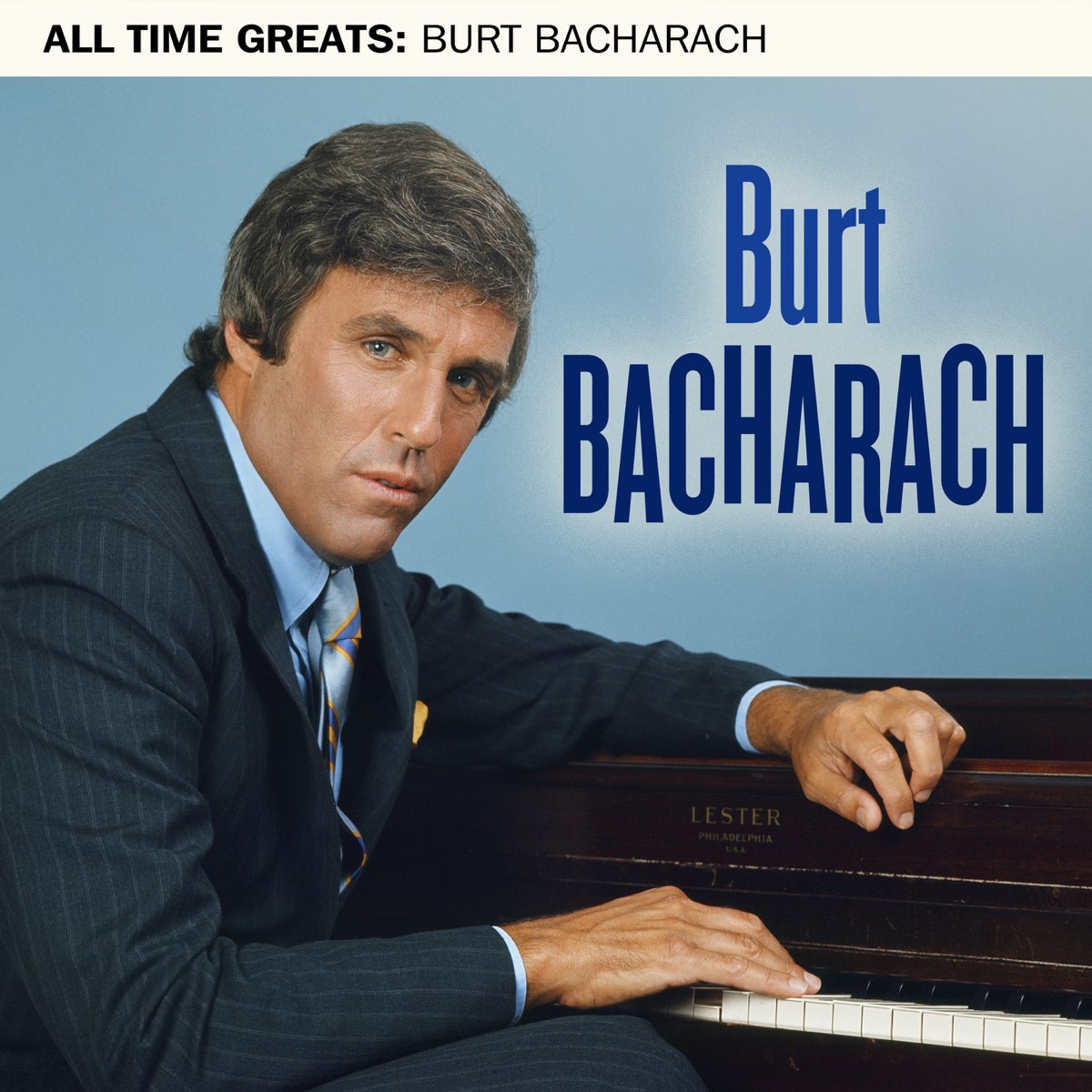
Burt Bacharach, perhaps the least likely pupil of Darius Milhaud, has died. Bacharach, the award-winning composer of such indelible hits as “(There’s) Always Something There to Remind Me,” “Don’t Go Breakin’ My Heart,” “Alfie,” “Casino Royale” (1966), “I Say a Little Prayer,” “Raindrops Keep Fallin’ on My Head,” “Arthur’s Theme (Best That You Can Do),” “Heartlight,” “That’s What Friends Are For” and, yes, the theme to “The Blob” (1958), among many others, also studied with Henry Cowell and Bohuslav Martinu. Under Milhaud’s supervision, he composed a Sonatina for Violin, Oboe and Piano. Obviously, his destiny – and his fortune – lay elsewhere. Bacharach was 94 years-old. R.I.P.
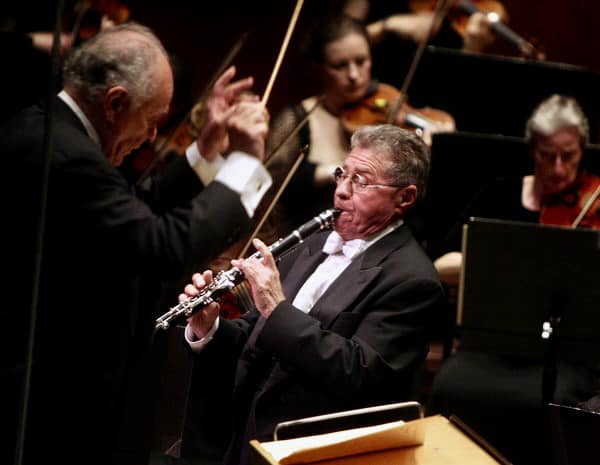
Another piece of living history has left us. Clarinetist Stanley Drucker died on Monday, at the age of 93.
Drucker played with the New York Philharmonic for over 60 years. For 49 of those, he served as principal (beginning in 1960). In total, he played some 10,200 concerts in New York. He appeared as soloist with the orchestra some 150 times. On June 4, 2009, he was acknowledged with a Guinness World Record for longest career as a clarinetist, logging his Philharmonic career at 62 years, 7 months, and 1 day.
Prior to his New York tenure, he played with the Indianapolis Symphony (from the age of 16!). On the journey from Indianapolis to New York, he also managed to work with Adolf Busch’s Busch Little Symphony and serve as principal clarinetist with the Buffalo Philharmonic.
In 2007, Gustavo Dudamel said of Drucker, “He’s a legend. The history of the orchestra is in him.”
R.I.P.
Drucker, described here by Leonard Bernstein as “our orchestra’s high-priced soloist,” playing his signature piece, the Copland Clarinet Concerto (following a four-minute Bernstein intro)
The Carl Nielsen concerto (done all in one take, in an era before digital editing)
The world premiere of the John Corigliano concerto (written for him)
New York Philharmonic tribute
Profile on ABC News, upon his retirement from the Philharmonic at the age of 80
After writing up a little salute to Ned Rorem the other week, on the occasion of his 99th birthday, I happened to read an interview he gave with Bruce Duffie, in which he confessed that it was important to him that his music will be remembered. It made me recollect how, upon hearing of the death of Aaron Copland, I wished I had written him a letter to let him know how much his music meant to me. I easily could have. Copland died in 1990.
Similarly, Rorem’s remark made me think maybe I should send him a note. But I let the moment pass. In truth, his music never occupied the same kind of place in my heart as does Copland’s, but I am certainly grateful for it.
Rorem died yesterday at the age of 99. Here’s a sampler of his music, with links to the Duffie interview and my write-up, in case you missed it.
Leon Fleisher plays “3 Barcarolles” (1949)
With Thanksgiving right around the corner, here’s a piece for string orchestra, called “Pilgrims” (1958). The composer hastens to point out that it has nothing to do with Plymouth Rock. Rather, it was inspired by a novel of Julien Green called “Le voyageur sur la terre.” The title in turn is borrowed from the Book of Hebrews: “These also died in faith, not having received the promises, but having seen them afar off… and confessed that they were strangers and pilgrims on the earth…” (Hebrews 11:13). Rorem points out that the music is less programmatic than it is a mood of remembrance.
Typical of many of Rorem’s larger works, his Violin Concerto (1984) eschews a classical three-movement structure in favor of a suite of shorter movements, generally becoming lovelier and more heart-felt the closer you get to the center. In this case, there’s also a programmatic element, in that the movements are supposed to mirror a dusk-to-dawn progression.
Bernstein conducts the world premiere of Rorem’s Symphony No. 3 at Carnegie Hall (1959)
Anyone who’s ever read Rorem’s writings knows he definitely had his saucy side. He confessed he was shocked at having been awarded the Pulitzer Prize (for “Air Music” in 1976), since he figured the establishment would prefer to punish him for being such a naughty boy. “But it sort of gives you a certain authority,” he reflected. “My name is now always preceded by ‘Pulitzer Prize-winning composer.’ So if I die in a whorehouse, at least the obit will say ‘Pulitzer Prize-Winning Composer Ned Rorem Dies in Whorehouse.’”
“Air Music” can be heard at the link, as part of a collection recorded by the Louisville Orchestra. The opening work, “Design for Orchestra” (1953), is certainly attractive.
Rorem was always most highly-regarded for his art songs. He himself thought his song cycle “Evidence of Things Not Seen” (1998) – 36 songs for voice and piano – his finest work. Here are just a few selections.