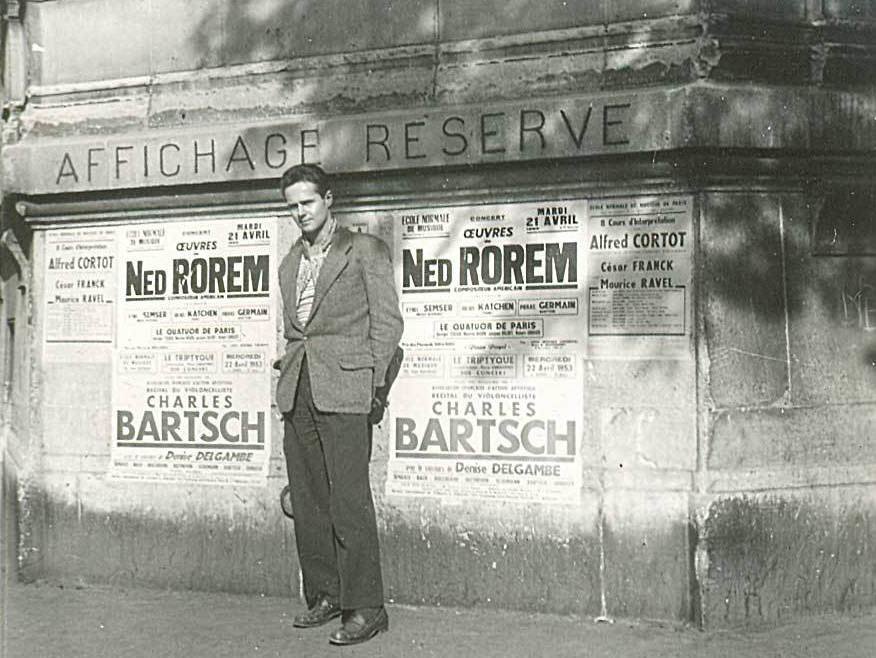
I am very sorry to learn that the American composer Ned Rorem has died, only weeks after my extensive write-up in celebration of his 99th birthday. If you missed it, hopefully you’ll be able to get there by clicking the link.
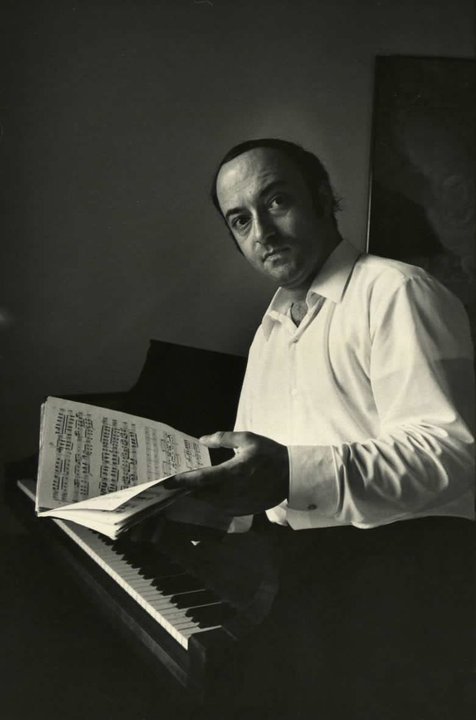
Back in the day when the big labels recorded standard repertoire and not much else, Michael Ponti was like a seismic disturbance.
Now the volcano has gone quiet. Ponti died on Monday at the age of 84.
Sure, Ponti recorded Beethoven and Scarlatti and Tchaikovsky and Rachmaninoff. But he will always be dearest to my heart for the material he exhumed for his groundbreaking, barnstorming Romantic Piano Concerto series on Vox.
Predating by decades a similar venture on the Hyperion label, Ponti showed what he was made of, in a time before digital trickery. AND he did it all himself. (The Hyperion series draws on a bullpen of capable pianists.)
The orchestras that accompanied him could be a little rough-and-ready, but often, in its way, this just made the recordings all the more thrilling. In at least one of the concertos, Ponti, caught up in his own bravura, starts doubling the orchestra and adds a flourish or two to the coda. I still return to the series (reissued as seven double-compact discs), with my personal favorites including piano concertos by Anton Rubinstein, Josef Rheinberger, Christian Sinding, Joachim Raff, and Sergei Lyapunov. Also on Vox, Ponti broke more than a few lances for the solo piano works of Carl Tausig and Charles-Valentin Alkan.
Somehow, he was never picked up by a major label – a rare exception being a recording he made with Dietrich Fischer-Dieskau of the songs of Charles Ives for Deutsche Grammophon – but he did enjoy an active career, especially in Europe. He appeared with such conductors as Sir Georg Solti, Wolfgang Sawallisch, Stanislaw Skrowaczewski, Kirill Kondrashin, and Kurt Masur, and performed in some of the world’s great concert venues, including Carnegie Hall, the Sydney Opera House, and the Teatro Colón.
He also formed, with violinist Robert Zimansky and cellist Jan Polasek, the Ponti-Zymansky-Polasek Trio (from a marketing standpoint, perhaps not the catchiest name).
In his 60s, calamity struck, when he suffered a massive stroke. But he was able to revive his career somewhat by drawing from the vast catalogue of music composed for the left hand.
In all, he made over 80 recordings, most of them for Vox. For some reason, perhaps because he was recorded on smaller labels, often paired with minor league orchestras, he was often overlooked in surveys of important pianists. He is conspicuously absent, for instance, from New York Times critic Harold C. Schonberg’s bestseller “The Great Pianists.”
Ponti was also a baseball fanatic, who possessed an encyclopedic knowledge of the sport. I saw a picture of him being interviewed later in life, and there are baseball books stacked all the way up the side of his couch. This obituary does a great job of a putting a human face on a super-virtuoso.
It’s a shame Hyperion Records wasn’t around in the ‘60s and ‘70s, because Ponti could eat fire with the best of them. He played with greater Romantic temperament than most of the pianists in the latter’s Romantic Piano Concerto series (again, no relation to the Vox set).
Admittedly, Ponti’s recordings weren’t always as polished as those in the top tier. I get the impression that, unlike with the majors, there was no room in the budget for retakes or first-class orchestras. These days, when even the most modest professional orchestras are crammed with hungry graduates of the world’s top conservatories, Ponti would mop the floor with much of the competition. He had talent and exuberance to burn.
Michael Ponti talks to David Dubal, now host of WWFM – The Classical Network’s “The Piano Matters”
Josef Rheinberger, Piano Concerto in A-flat major
Joachim Raff, Piano Concerto in C minor
IN CONCERT: Franz Liszt, “12 Transcendental Etudes”
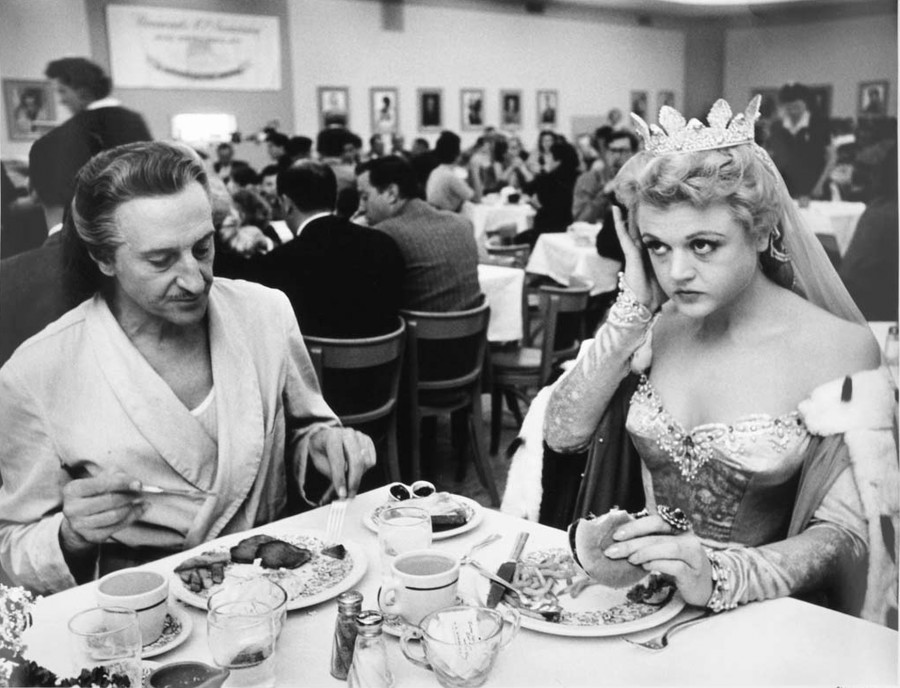
From “Gaslight” to “Mary Poppins Returns.” From “The Manchurian Candidate” to “Mame.” From Mrs. Lovett to Mrs. Potts. Angela Lansbury was a stalwart of stage and screen for over 70 years. The winner of seven Tony Awards. Nominated for three Oscars and a record 18 Emmys. She left quite a legacy. Who would have thought at the time she started “Murder, She Wrote” that she was only at mid-career. Lansbury died earlier today, five days shy of her 97th birthday. I always loved this photo of her having lunch with Basil Rathbone, during the making of “The Court Jester” with Danny Kaye. R.I.P.
The conductor Bramwell Tovey has died. Tovey was a popular guest in Philadelphia and New York, where he often seemed to conduct programs of lighter music (holiday pops, summer concerts), though he was certainly capable of much more. I first learned of him through his hypnotic recording of Jean Cras’ “Polyphème,” on the Timpani label. The opera is about a forlorn cyclops, unlucky in love, who wanders off into the sea. Beautiful stuff. In 2005, Tovey conducted the world premiere of Krzysztof Penderecki’s Symphony No. 8 – definitely not light music. He was also a composer, who wrote concertos for viola and cello, a work for chorus and brass band, “Requiem for a Charred Skull,” and a full-length opera, “The Inventor.” He was principal conductor of the BBC Concert Orchestra, the Sarasota Orchestra, and the Rhode Island Philharmonic. Prior to that, he served as music director in Winnipeg and Vancouver. As a conductor and as a person, he was much beloved. Tovey turned 69 on Monday, the day before his death. The cause was sarcoma. R.I.P.
From “Polyphème”
Conducting Beethoven with the Philadelphia Orchestra in Colorado
Introducing Léhar with the New York Philharmonic
Talking Bernstein, with rehearsal footage of Tovey, Lenny, and the London Symphony Orchestra
It’s sobering to note how someone’s long and varied career can be distilled to a single credit – the father on “Mork & Mindy.”
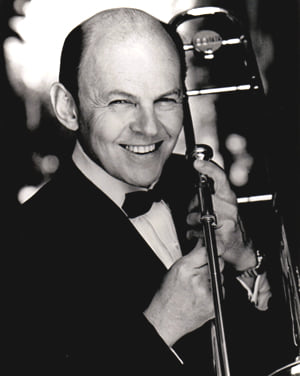
Conrad Janis has died at the age of 94.
On “Mork & Mindy,” the television series that launched Robin Williams and co-starred Pam Dawber, Janis played Mindy’s dad, the owner of a music shop in Boulder, CO (and eventually conductor of the Boulder Symphony Orchestra). If I remember correctly, he had a marked preference for Igor Stravinsky.
In real life, in addition to being a prolific actor for stage and screens (big and small), Janis was a jazz trombonist. In that capacity, he recorded, he appeared on “The Tonight Show,” and he played Carnegie Hall.
I always found it most fascinating that he once assembled a team of jazz legends, all the way back in 1949, that included New Brunswick’s own James P. Johnson. Johnson, a pioneer of stride piano, composed what essential became the anthem of the 1920s, the “Charleston.” How short is history, anyway?
If you want to get a taste of Janis the musician, here’s a great interview:
James P. Johnson plays the “Charleston” in 1923 (presumably from a piano roll)
PHOTOS: Conrad Janis, with (center right) Jonathan Winters on “Mork & Mindy” and (bottom right) Henry Goodwin on trumpet, Edmond Hall on clarinet, James P. Johnson on piano, and Pops Foster on bass