Tag: Opera

  • Mozart’s Birthday Amadeus and Don Giovanni

    Mozart’s Birthday Amadeus and Don Giovanni

    It’s Mozart’s birthday.

    By coincidence, I just happened to rewatch “Amadeus” (1984) earlier this week, for the first time in many years. Of course, I’d seen it a bunch of times before.

    This was the theatrical cut. With all apologies to Miloš Forman, it has been my experience that directors’ cuts tend to be in most ways inferior, especially when recut so long after the fact. (Forman’s was issued in 2002.) Or maybe George Lucas has just made me skittish.

    Unfortunately, once a director’s cut appears on home video, it tends to displace the original in all formats, including streaming.

    Thankfully I’ve got my trusty old, double-sided DVD. Yeah, I have to flip it an hour and 50 minutes into the movie, but I grew up during the LP era, so I can take it.

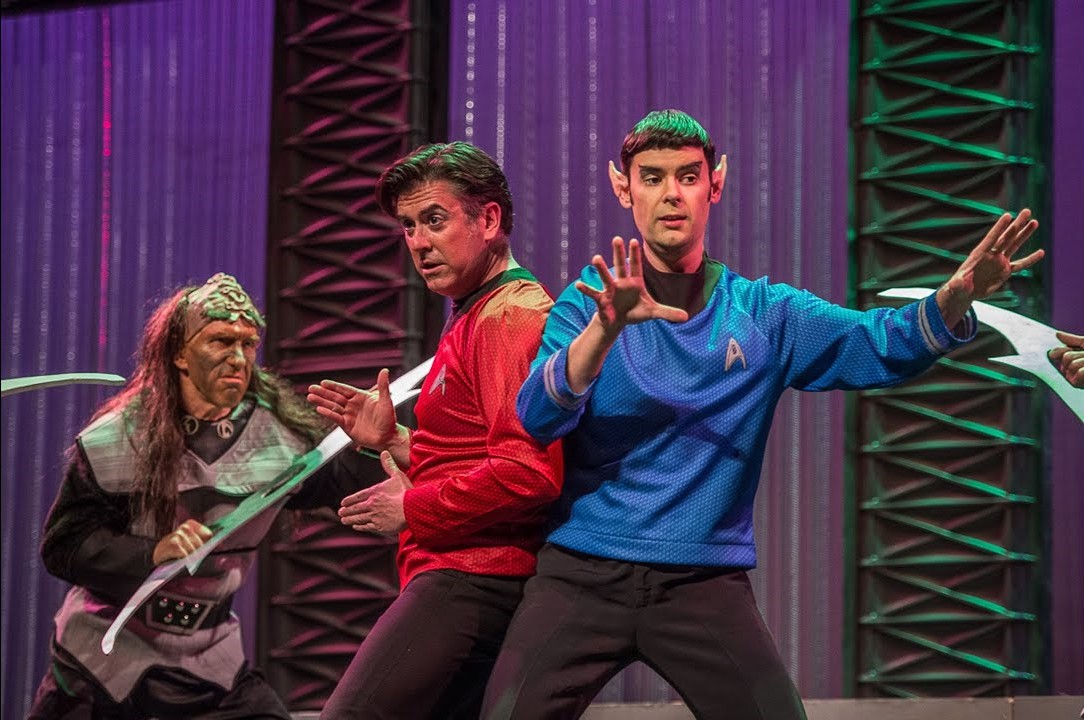
    All that aside, has there ever been a staged “Don Giovanni” as cool as this one?

    https://www.youtube.com/watch?v=i1QyaKs6E5w

    And the audience is like, WTF?

    So true to life.

  • Pavarotti Meat Loaf Unexpected Duet

    Pavarotti Meat Loaf Unexpected Duet

    When you’re Luciano Pavarotti, and you can’t get Domingo or Carreras, who you gonna call? Why, Meat Loaf, of course!

  • Kevin Puts at 50 Pulitzer Winner & Composer’s Career

    Kevin Puts at 50 Pulitzer Winner & Composer’s Career

    Kevin Puts is 50 today. Puts was the recipient of the Pulitzer Prize for Music in 2012 for his opera “Silent Night,” about the real-life, unsanctioned 1914 Christmas truce between Scottish, French, and German troops on the Western Front. It’s a poignant story, in whatever form. (It was also dramatized in the 2005 film “Joyeux Noël.”) The opera beautifully captures the transcendent moments of humanity, like shafts of sunlight piercing clouds, during one of the costliest and most violent conflicts in the bloody history of warfare. The work was given its world premiere by Minnesota Opera in 2011. I was lucky enough to catch Opera Philadelphia’s production in 2013.

    Puts’ latest opera, “The Hours,” co-commissioned by the Philadelphia Orchestra and the Metropolitan Opera, was projected to be unveiled at the Met in 2022. It looks like it’s been pushed back to next season. In the meantime, two concert performances will be given by the Philadelphia Orchestra, on March 18 & 20, with Yannick Nézet-Séguin conducting. The cast for the Met debut was to have included Renée Fleming, Kelli O’Hara, and Joyce Di Donato as Virginia Woolf. For the Philadelphia performances, Fleming and O’Hara will be joined by Jennifer Johnson Cano.

    I’ve never heard anything by this composer that hasn’t been direct, beautiful, and worthwhile. He’s a contemporary artist who has had the good fortune to be rewarded for his courage to remain true to himself, avoiding the pitfall of gussying up what he wishes to express with a lot of extraneous modernist effects, in order to maintain his street cred, as some composers of a clearly romantic bent had done in the previous generation. Nor is he a post-modernist hipster, a keyboard noodler, an overweening pop artist, or a soft-headed, wannabe film composer.

    Puts’ language is romantic, but it is not the lingua franca of the 19th century. In embracing tonality and melody, he honors the most fundamental purpose of music, which is not simply to express, but to communicate, and he does so intelligently, in a manner that is capable of reaching a wide audience without cheapening his art.

    Furthermore, at 50, he still has a long career ahead of him.

    Many happy returns, Kevin Puts.


    “Inspiring Beethoven” (with disturbing slideshow)

    The Flute Concerto, which flirts with Mozart in its second movement

    The Symphony No. 2, a response to the events of 9/11

    “Dona nobis pacem” from “Silent Night”

  • Puccini’s Birthday: La Bohème & Bohemian Life

    Puccini’s Birthday: La Bohème & Bohemian Life

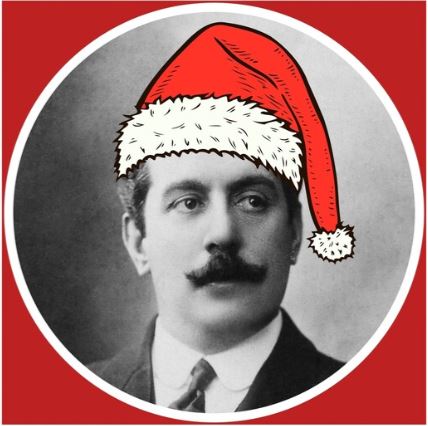
    Happy birthday, Giacomo Puccini!

    The first two acts of “La bohème,” of course, are set on Christmas Eve – Act I in a chilly but cheery artists’ garret, and Act II on the festive streets of Paris’ Latin Quarter.

    The world premiere of Puccini’s opera took place at the Teatro Regio in Turin on February 1, 1896. On the podium was a 28-year-old Arturo Toscanini.

    Allegedly, the opening night reaction was a subdued one, and critics were divided. But it wasn’t long before Rodolfo’s kindling gave rise to a flame that would engulf all of Europe and the New World.

    Though audiences quickly grew to love it, “Bohème” and its composer have always been regarded with a degree of suspicion – condescension even – by critics and Puccini’s envious colleagues. The music lacks sophistication, we are told, and the opera’s lyricism and pathos are calculating – emotional pandering. Whether or not that’s the case, music lovers can’t get enough of it and Puccini cried all the way to the bank.

    Prior to his years of success, Puccini and his friends, mostly writers and artists, would gather at a roadside shed in Torre del Lago to drink and play cards. They referred to the structure as “Capanna di Giovanni delle Bande Nere” (“Cabin of Giovanni of the Black Stripes”), after its owner, a local cobbler. When the cobbler struck out to seek his fortune in America, the artists bought the shack and continued to meet under the banner “La Bohème Club” (as stated on a sign they painted on the roof).

    Further signs were posted on the walls inside, in faulty Latin and ungrammatical Italian. Its members pledged themselves under oath to be well and eat butter.

    The following were the club’s by-laws:

    1. Poker faces, pedants, weak stomachs, blockheads, puritans and other wretches of the species are not admitted and will be chased away.

    2. The President acts as conciliator but undertakes to hinder the Treasurer in the collection of the subscription money.

    3. The Treasurer is empowered to abscond with the money.

    4. The lighting of the locale is provided by a petrol lamp. Failing the fuel, the “moccoli” of the members are to be used [a pun on “moccolo,” meaning either “candle stump” or “blockhead”].

    5. All games permitted by law are forbidden.

    6. Silence is prohibited.

    7. Wisdom is not permitted, except in special cases.

    One can imagine the carefree bohemians, Rodolfo’s companions, rollicking in their garret. After the triumph of “Bohème,” the opera, no one was having to burn their plays for fuel, or hock their coats for medicine.

    There’s nothing like a little success to take the worry out of “bohemian life.”


    André Kostelanetz (also born on this date) conducting a purely orchestral suite of highlights from “La bohème”

    The bohemians in their garret

    Mimi’s hands are cold, so Rodolfo goes to work (the old smoothie)


    IMAGES: From an 1896 poster of the opera, and an 1897 photo of the club

  • William Penn: Music From Philadelphia

    William Penn: Music From Philadelphia

    This Sunday night on Then we’ll turn to “The Lost Chord,” round out your Thanksgiving weekend with two works inspired by William Penn.

    An early hero of American liberty, Penn founded Philadelphia (the “City of Brotherly Love”), named the state of Pennsylvania in honor of his father, and signed a landmark treaty with the Lenape. He was enshrined in music by at least two Philadelphia composers.

    We’ll hear a selection from the opera “William Penn,” by Romeo Cascarino. Cascarino, born in South Philadelphia in 1922, was largely self-taught as a composer. His fascination with Penn took root at an early age, when he was moved by a plaque posted on City Hall of “Penn’s Prayer for Philadelphia.” He first set the Prayer to music as a choral work in 1950, and later set the Treaty, as well.

    These led naturally to the conception of an opera on a grand scale, for which Cascarino asked poet Peg Gwynn to craft a libretto, based on Penn’s life and writings. He spent the next quarter century crafting his magnum opus, even as he composed other works and continued to teach harmony and composition at Philadelphia’s now-defunct Combs College of Music.

    The opera was heard twice in concert, performed by the Orchestra Society of Philadelphia at Drexel University, in 1975 and 1977. Tom DiNardo, critic for the Philadelphia Bulletin, recognized the exceptional quality of the music, and surprised the composer by arranging for a couple of staged performances at the Academy of Music in 1982.

    The chorus is especially prominent, but arguably the most powerful moments are the intimate glimpses of Penn with his family. These were the days of immense and hazardous ocean voyages, remember, and when a man went to sea, there was no telling when – or even if – he’d be reunited with his loved ones. This knowledge lends an added poignancy to our experience of Penn the man.

    Tonight, Metropolitan Opera singer John Cheek assumes the title role, and Penn’s wife, Gulielma, is portrayed by Dolores Ferraro, then married to the composer.

    The second half of the program will be devoted to “Four Squares of Philadelphia,” by Louis Gesensway. Gesensway was born in Latvia in 1906. A violin prodigy, he was one of the founders of the Toronto Symphony. He arrived in Philadelphia, at the age of 19, where he played in the Philadelphia Orchestra under both Stokowski and Ormandy.

    In his mid-20s, he took a leave of absence to study composition with Zoltán Kodály. “Four Squares” was described by the composer as a “symphonic poem for large orchestra, narrator and street criers.”

    The piece opens with Penn’s prayer for the city and celebrates the distinctive characteristics of each of the public spaces he planned: “Washington Square” in early morning during Colonial times, with street criers hawking their wares; “Rittenhouse Square” on a bright and cheerful afternoon; “Logan Square” with its fountains at dusk; and “Franklin Square” at night, evocative of noisy bridge traffic, with a side excursion into Chinatown and musical interjections from the honky-tonk joints located around the square in the 1950s.

    We’ll hear it performed by Gesensway’s colleagues of the Philadelphia Orchestra, with Eugene Ormandy conducting.

    Penn’s influence is not stationary. As the days grow shorter and the nights colder, warm yourself with a nice steaming bowl of “Quaker Notes,” this Sunday night at 10:00 EST, on WWFM – The Classical Network and wwfm.org.

Tag Cloud

Aaron Copland (92) Beethoven (95) Composer (114) Film Music (123) Film Score (143) Film Scores (255) Halloween (94) John Williams (187) KWAX (229) Leonard Bernstein (101) Marlboro Music Festival (125) Movie Music (138) Opera (202) Philadelphia Orchestra (89) Picture Perfect (174) Princeton Symphony Orchestra (106) Radio (87) Ralph Vaughan Williams (85) Ross Amico (244) Roy's Tie-Dye Sci-Fi Corner (290) The Classical Network (101) The Lost Chord (268) Vaughan Williams (103) WPRB (396) WWFM (881)

DON’T MISS A BEAT

Receive a weekly digest every Sunday at noon by signing up here


RECENT POSTS