Tag: Opera

  • Richard Tang Yuk Leaves Princeton Festival

    Richard Tang Yuk Leaves Princeton Festival

    Richard Tang Yuk is leaving The Princeton Festival.

    Tang Yuk is stepping down as executive and artistic director from the festival he founded in 2004.

    The festival has made Princeton a June destination for music-lovers seeking quality opera, musical theater, chamber works, Baroque performance, jazz, dance, and multi-media.

    Under Tang Yuk’s leadership, the festival has grown in scale from two events and four performances in 2004, to encompass eight events and 22 performances – in addition to 20 free lectures and workshops – in 2019. This year, the festival met the challenges of coronavirus with an ambitious menu of online offerings, mixing new and archival material.

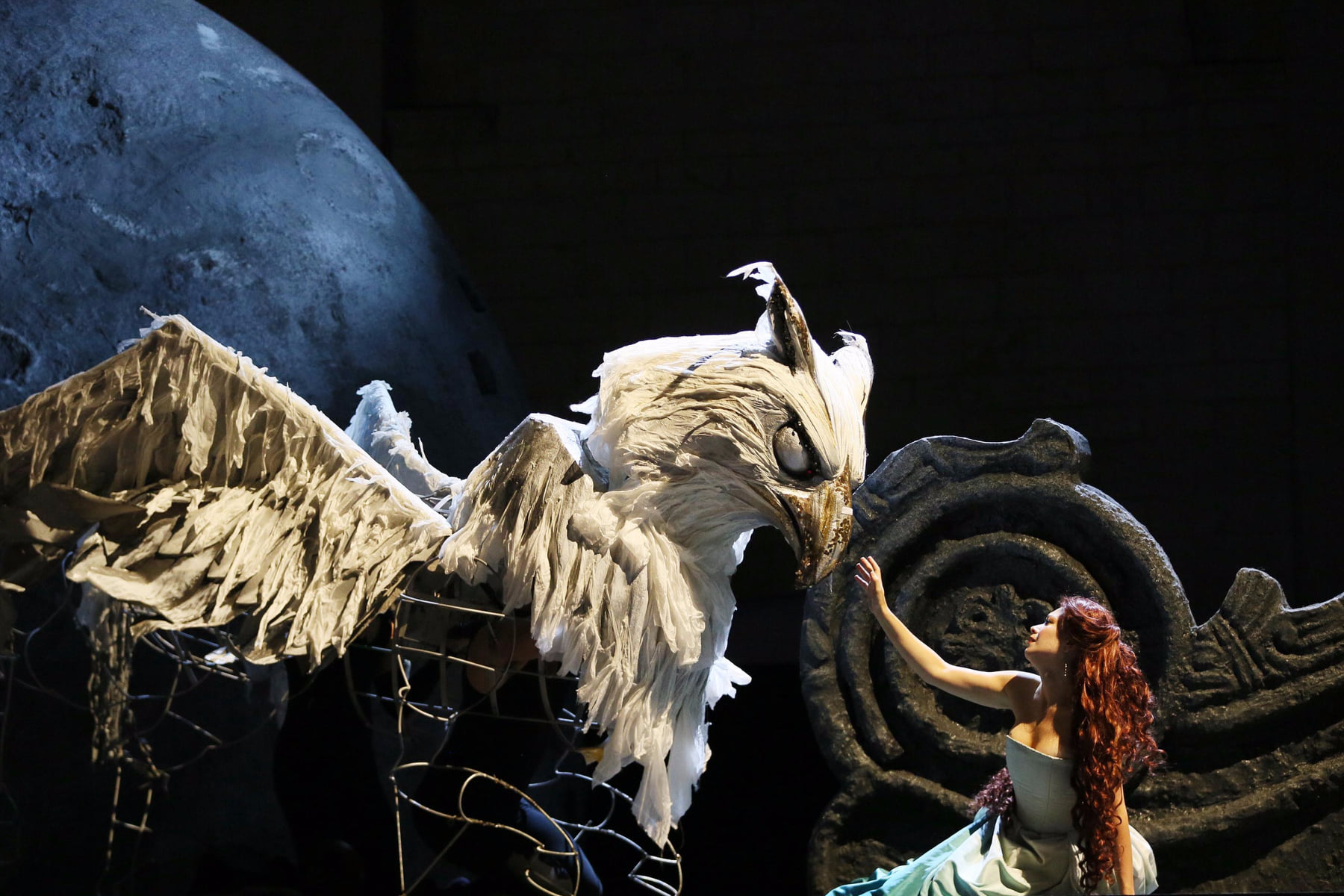
    Tang Yuk’s opera performances have earned acclaim in such publications as Opera News and The New York Times. Repertoire at the Princeton Festival has always been an engaging balance of the familiar and the unusual. Tang Yuk and his crackerjack team of technicians have presented uniformly excellent productions of “The Flying Dutchman,” “Peter Grimes,” “Porgy and Bess,” “The Rake’s Progress,” “Nixon in China,” Handel’s “Ariodante,” and a double-bill of “Gianni Schicchi” and Rachmaninoff’s “Francesca da Rimini,” among others.

    Gregory Jon Geehern, the festival’s associate conductor and assistant to the artistic director, will step up as acting artistic director.

    On September 23 at 6 pm EDT, the Princeton Festival will hold the finals of its annual piano competition, this year to be presented online. The competition will feature participants from around the world. For tickets and information, visit princetonfestival.org.

    Sincere best wishes to Richard Tang Yuk. Thank you, Richard, for all that you’ve done!

  • Celebrating Salieri: Beyond Mozart Rivalry

    Celebrating Salieri: Beyond Mozart Rivalry

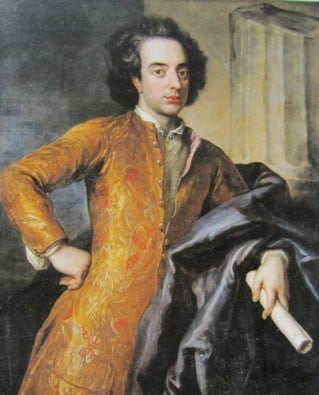
    Happy birthday, Antonio Salieri! I hope you’ll join me in celebrating 270 years of “mediocrity.”

    Salieri lives on in the popular imagination, of course, as the envious rival of Wolfgang Amadeus Mozart. But was he really?

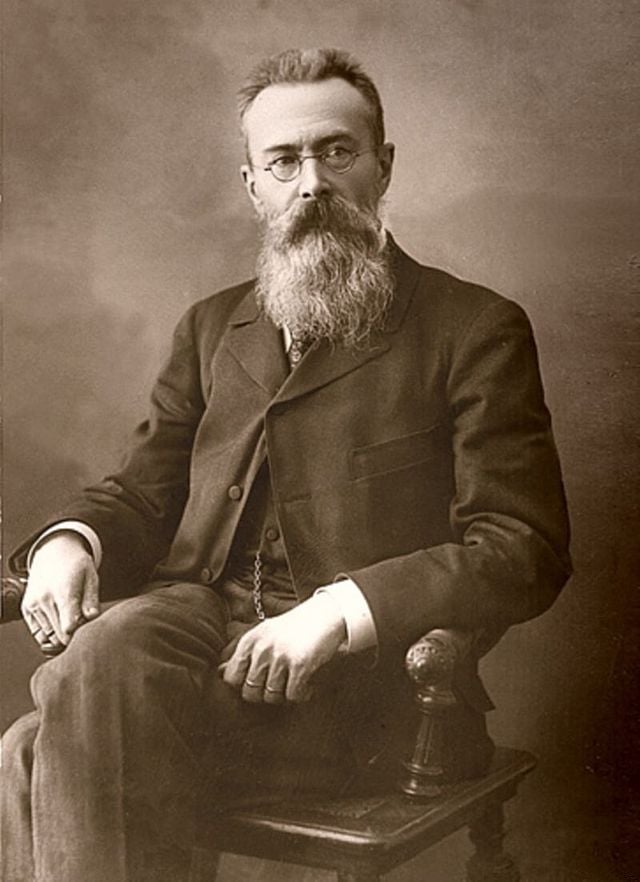
    Rumors of Salieri’s involvement in Mozart’s death were seized upon by Alexander Pushkin as early as 1831, when he came to write the tragedy “Mozart and Salieri,” which appeared only few years after Salieri himself had passed. This was later set as an opera, in 1898, by Nikolai Rimsky-Korsakov.

    Of course, the slander has been kept alive and given even broader currency thanks to Peter Schaffer’s play, “Amadeus,” and the even more widely seen film, directed by Milos Forman. While I have no objection to dramatic license (Shakespeare would not be Shakespeare without it), it is too bad that such a generous figure – and a fine composer to boot – should live on, for the most part, in infamy.

    Salieri was a generous teacher, who fostered Beethoven, Schubert, Liszt, and even the son of the genius he was rumored to have poisoned. Franz Xaver Mozart was born four months after his father’s alleged murder.

    Salieri’s first act, when he was appointed Austrian Imperial Kapellmeister in 1788, was to revive Mozart’s “The Marriage of Figaro.” He was responsible for arranging first performances of his alleged nemesis’ Piano Concerto No. 22, the Clarinet Quintet, and the Symphony No. 40, and he had nothing but praise for “The Magic Flute.”

    Sadly, he found no one to return the favor. Already during his later years, his own enormous compositional output (37 operas, in addition to orchestral works, concertos, chamber music, and sacred pieces) gradually faded from public memory. Ironically, it is the scandalmongers who kept his name alive.

    But, as the saying goes, there is no such thing as bad publicity. In a way, “Amadeus” was the best thing to happen to Salieri in nearly 200 years. How many people remember Mozart’s string quartet partners (with Haydn), Carl Ditters von Dittersdorf and Jan Křtitel Vaňhal, both also talented and prolific composers? I’m sure they would agree – with apologies to Wilde – that the only thing worse than being talked about is not being talked about.

    Happy birthday, Patron Saint of Mediocrity!

    Russian film version of Rimsky’s “Mozart and Salieri” (without subtitles): https://www.youtube.com/watch?v=ilw7oIkrDj4

    In English, if a bit fuzzy:

    Salieri’s Concerto for Flute, Oboe and Orchestra:

    A Mozart and Salieri collaborative effort, the cantata “Per la ricuperata salute di Ofelia,” only recently rediscovered:

    “I absolve you.”

  • Gluck’s Orfeo The Opera Reformer Remembered

    Gluck’s Orfeo The Opera Reformer Remembered

    Christoph Willibald Gluck has come down to us as one the great operatic reformers. Yet, of his dozens of operas (about 35 survive), he’s pretty much remembered for but a single work, “Orfeo ed Euridice” – especially the “Dance of the Blessed Spirits.”

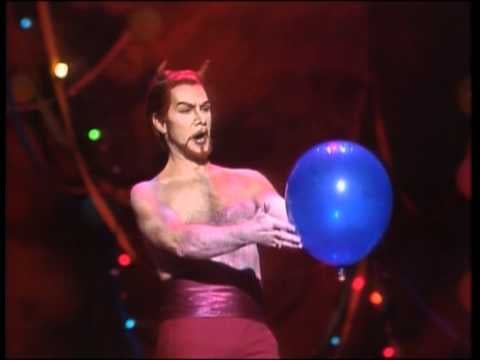
    On the other side of the coin is his “Dance of the Furies.” I wonder if he would find the diablerie of this interpretation as intriguing as I do.

    Think you don’t know the “Dance of the Blessed Spirits?” Click here!

    Gluck’s own blessed spirit lives on primarily through his influence on others – Mozart, Weber, Berlioz, and Wagner. For Gluck, words and music were to bear equal weight. No more, the florid, showy arias of yore, ornamented beyond recognition by star castrati. DRAMA was to be of foremost importance.

    Dame Janet Baker sings “Che farò senza Euridice?”:

    Don’t be sad, Gluck. “Glück” is German for happiness!

    Happy birthday, Christoph. Zum Geburtstag viel Glück!

  • Stream Ethel Smyth’s “The Wreckers” Online

    Stream Ethel Smyth’s “The Wreckers” Online

    Bard College is now streaming its 2015 production of Dame Ethel Smyth’s “The Wreckers.”

    This English seaside opera predates Benjamin Britten’s “Peter Grimes” by decades, a tale of doomed love set against the backdrop of plundering land pirates, who lure unsuspecting ships onto the rocks of coastal Cornwall. The “pirates,” in this instance, are common villagers who justify their misdeeds as righteous Methodists. (Alas, some things never change.)

    “The Wreckers,” Smyth’s third opera, is a product of the so-called English musical renaissance, a flowering that took place around the turn of last century, after an alleged dearth of native talent that reached back centuries – tradition holds, since the death of Henry Purcell – a charge that really was without basis. In 1904, Germany had only just derided England as “Das Land ohne Musik” (“The Land without Music”). Ironic, then, that “The Wreckers” would be given its first performance there, in Leipzig, in German translation, in 1906.

    Why the timidity, England? Smyth’s second opera, “Der Wald,” which also received its premiere in Germany, had made it as far as New York City’s Metropolitan Opera in 1903. It would be the only opera by a woman composer presented by the Met for over a century! Why no performances at home? Eventually, “The Wreckers” would receive its English premiere in 1909, under the direction of Sir Thomas Beecham.

    Smyth was not only a formidable talent, she was a formidable personality. Few were the men who could stand up to this tweed-wearing, cigar-smoking suffragette. After Smyth was arrested for putting out the windows of politicians who opposed a woman’s right to vote, Beecham visited her in prison, only to find her leading her sisters-in-arms in an anthem she composed, “March of the Women,” which she conducted through the bars of her cell with a toothbrush.

    Beecham would conduct “The Wreckers” again in 1934 to celebrate Smyth’s 75th birthday. Sadly, by then she was unable to enjoy it, as by that time she was stone deaf.

    Leon Botstein led the first U.S. performance of the opera, with the American Symphony Orchestra, in New York City, as recently as 2007! These forces brought “The Wreckers” to Bard College, of which Botstein is president, and where he is co-director each summer of the Bard Music Festival.

    This year’s festival, which was to have been devoted to another remarkable woman, Nadia Boulanger, has been postponed to the summer of 2021.

    For now, enjoy Dame Ethel Smyth’s “The Wreckers”:

    https://fishercenter.bard.edu/events/ups-the-wreckers/?utm_source=wordfly&utm_medium=email&utm_campaign=2020-06-24-UPS-Wreckers&utm_content=version_A#the-wreckers

    A talk about the opera, with Leon Botstein:

    https://fishercenter.bard.edu/events/ups-the-wreckers/?utm_source=wordfly&utm_medium=email&utm_campaign=2020-06-24-UPS-Wreckers&utm_content=version_A#opera-talk

  • Rachmaninoff’s Francesca da Rimini Online

    Rachmaninoff’s Francesca da Rimini Online

    As a kind of addendum to its month of Sunday operas, The Princeton Festival is offering, for today only, Sergei Rachmaninoff’s rarely-heard one-acter “Francesca da Rimini,” streamed as part its special COVID-imposed “Virtually Yours” season.

    When “Francesca” was presented at McCarter Theatre in 2012, it was as the first half of a double-bill with Puccini’s “Gianni Schicchi” – clever programming, since both works have ties to Dante.

    As always with the Princeton Festival, the production was well-performed and staged, with, in this instance, evocative medieval sets and costumes. Also, in its vision of Hell, I remember thinking at the time that it was very much of a piece with the famous paintings and illustrations inspired by “Inferno.”

    The lighting is a bit dim in this archival video, but it’s still worth watching, and certainly worth hearing. All in all, a good opera to get you in the spirit for St. John’s Eve…

    https://princetonfestival.org/digital-event/rachmaninoffs-francesca-da-rimini/

    Here’s a preview I wrote for the Trenton Times:

    https://www.nj.com/times-entertainment/2012/06/princeton_festivals_operatic_t.html

    The last of this year’s Princeton Festival operas, “The Flying Dutchman,” featuring bass-baritone Mark Delavan, will stream this Sunday at 1 p.m. EDT. For more information and a complete schedule, look online at princetonfestival.org.

Tag Cloud

Aaron Copland (92) Beethoven (95) Composer (114) Film Music (123) Film Score (143) Film Scores (255) Halloween (94) John Williams (187) KWAX (229) Leonard Bernstein (101) Marlboro Music Festival (125) Movie Music (138) Opera (202) Philadelphia Orchestra (89) Picture Perfect (174) Princeton Symphony Orchestra (106) Radio (87) Ralph Vaughan Williams (85) Ross Amico (244) Roy's Tie-Dye Sci-Fi Corner (290) The Classical Network (101) The Lost Chord (268) Vaughan Williams (103) WPRB (396) WWFM (881)

DON’T MISS A BEAT

Receive a weekly digest every Sunday at noon by signing up here


RECENT POSTS