Tag: Opera

  • Rimsky-Korsakov’s Mlada A Hidden Opera Gem

    Rimsky-Korsakov’s Mlada A Hidden Opera Gem

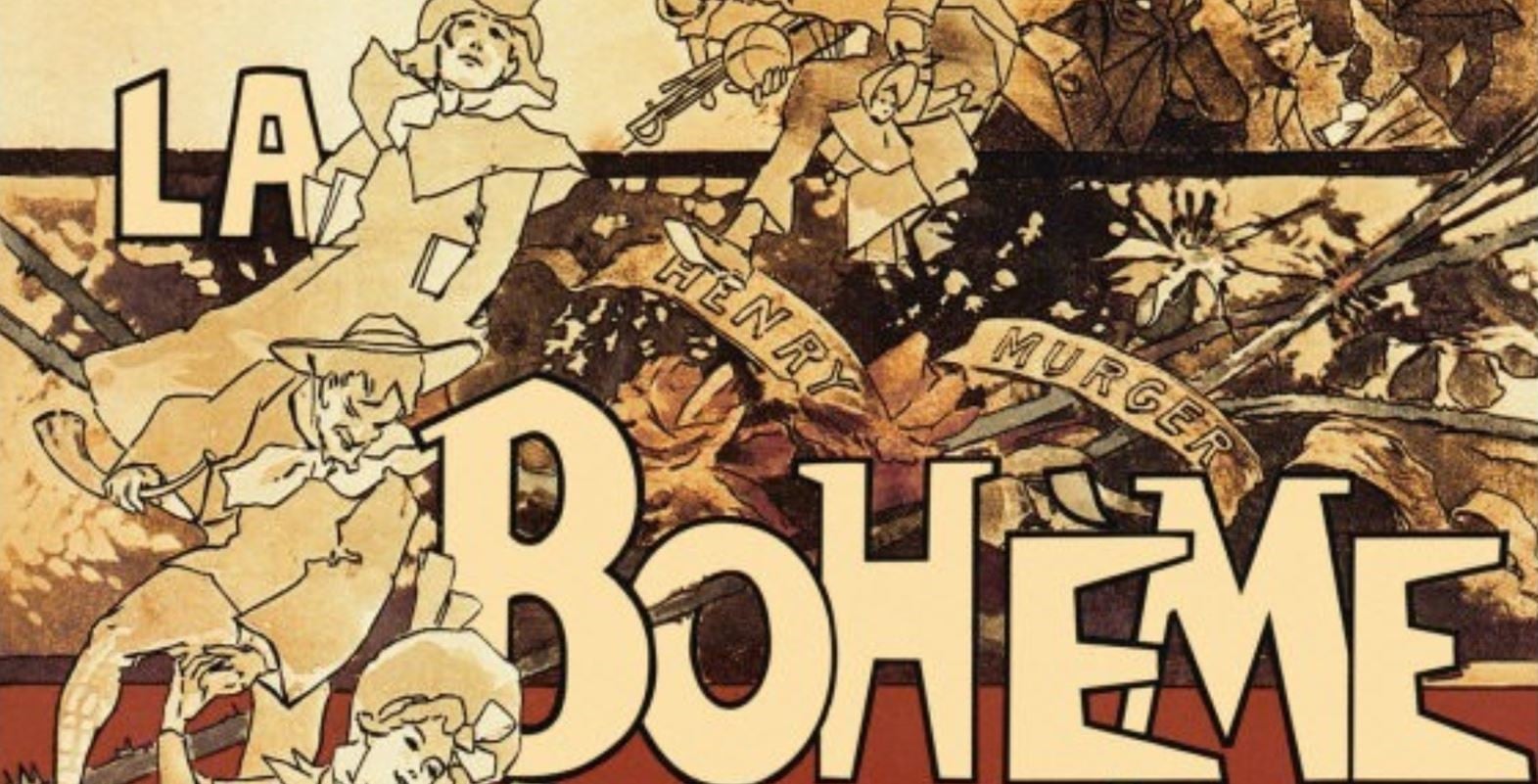
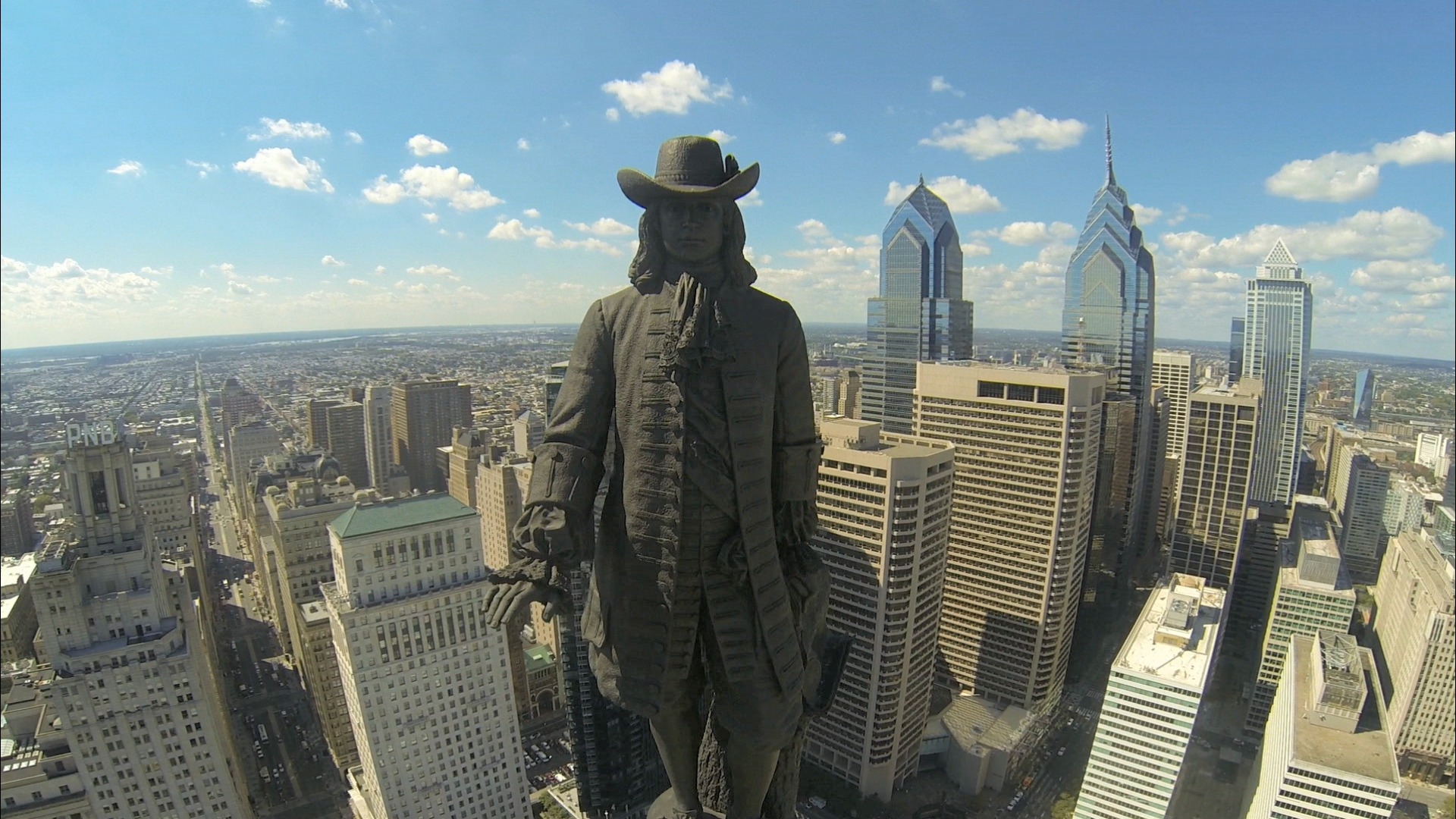
    To say that I didn’t enjoy my undergraduate years at Temple University would be an understatement, but I do appreciate the fact that, at the much longed-for commencement ceremony, I got to march to Rimsky-Korsakov’s “Procession of the Nobles.” In fact, the only thing that would have made me happier is if the orchestra had launched into something from “The Sea Hawk.”

    “Procession of the Nobles” is all that most people know of Rimsky’s opera “Mlada,” an exploration of ancient Slavic paganism that somehow manages to assimilate Cleopatra. The work benefits from the composer’s visit to Paris, during the World Exhibition of 1889, and the eclectic musical influences he absorbed there. “Mlada” encompasses treachery, murder, a supernatural love triangle, a midsummer festival, a witches’ sabbath, Cleopatra, and, in the last act, revenge, widescale destruction, and an apotheosis in which bride and groom are reunited in the Great Beyond. The opera was not a success.

    Rimsky embarked on the work in 1889, after an earlier, collaborative effort, undertaken with his colleagues of the Mighty Handful in 1872, was not completed. Interestingly, Act III of this earlier project included one of several versions of Mussorgsky’s “A Night on Bald Mountain,” then titled “Glorification of Chernobog.” It was at this point that Mussorgsky added vocal soloists and chorus. It was later adapted again for use in his opera, “Sorochinsky Fair.”

    Be that as it may, Rimsky’s suite for his solo outing contains some characteristically transporting music.

    Rimsky also arranged Act III into a purely orchestral work, “Night on Mt. Triglav.” That’s the act with the witches’ sabbath and the vision of Cleopatra.

    In all, the composer wrote 15 operas. Performances in the West are rare, though I’ve managed to collect most of them on record.

    Temple University can go to the devil, as far as I’m concerned, but I will always consider myself lucky to have actually processed with the nobles.

    Happy birthday, Nikolai Rimsky-Korsakov!

  • Vivaldi’s Operas Beyond The Four Seasons

    Vivaldi’s Operas Beyond The Four Seasons

    For those who share with Igor Stravinsky the opinion that Vivaldi wrote the same concerto 500 times, have you considered checking out his operas? Here’s a live performance of “Orlando Furioso,” complete with “upstanding” harpsichord-playing by its conductor.

    A good time, with plenty of eye candy, but when it comes to English subtitles, you’re on your own.

    I suppose you could always just crack open your Ariosto. Seriously, I’m sure you can find a libretto, or at the very least a synopsis online. If you’re a fan of Baroque opera, you probably know the story anyway. It’s been set by everyone, though Handel’s version is probably the most famous.

    This strikes me as a decent intro:

    124. Orlando furioso (Vivaldi)

    Music for all seasons by the composer of “The Four Seasons.” Buon compleanno, Antonio Vivaldi!


    PHOTO: Kindly do not touch the hippogriff!

  • Arrigo Boito’s Mefistofele Still Thrills

    Arrigo Boito’s Mefistofele Still Thrills

    Richard Strauss’ final opera, “Capriccio,” is an extended, though lighthearted debate on the relative merits of words and music. In the case of Arrigo Boito, the two never really came into conflict.

    As one of the great librettists, Boito provided the texts for Verdi’s late masterpieces, “Otello” and “Falstaff.” He also worked up a revision of “Simon Boccanegra” and – under the anagram Tobia Gorrio – provided the libretto for Ponchielli’s “La Gioconda.”

    But Boito himself was also a composer of merit, if not a prolific one. Although he destroyed his first opera, “Ero e Leandro,” and his last, “Nerone,” was left incomplete at the time of his death (to be finished by Arturo Toscanini and Vincenzo Tommasini), he totally nailed it with “Mefistofele.”

    There may be those who look down their noses at Boito’s take on Goethe’s “Faust,” yet the work stubbornly clings to the outskirts of the standard repertoire. Audiences love it. For me it is much more entertaining than anything in Verdi (I know, them’s fightin’ words) and I personally find the melodic invention much richer than that in the more popular version by master melodist Charles Gounod.

    Sure, as narrative it’s a little clunky – it’s as if Boito presents the story as a series of tableaux that are just kind of stitched together – and the most hair-raising set piece, the prologue in Heaven, comes right at the beginning. How could it not be all downhill from there? But the composer has the good sense to bring it all back at the end.

    What the opera really demands is a strong personality at its core, someone who, through his magnetic stage presence and sheer force of will, can haul the circus train of wonders, boxcar after boxcar, before our astonished ears and eyes.

    Feodor Chaliapin, by all accounts, was just such a force. He gained wide notoriety in the title role, for his earthy interpretation and his insistence on playing it half-naked.

    In the recent past, Samuel Ramey owned the piece. He too preferred to show a fair amount of skin (though less than Chaliapin) – but really, couldn’t that be said for just about any of Ramey’s roles?

    Here are some scenes from the stunning – and fun – Robert Carsen production from San Francisco Opera in 1989. The first 26 minutes would knock your socks off. Unfortunately, the full video is not currently posted on YouTube.

    Son lo spirito che nega sempre tutto (I am the spirit that denies):

    Ecco il mondo (Behold the world):

    The finale, with Mephisto drinking Johnny Walker Red and tossing cards into a hat:

    Happy birthday, Arrigo Boito (1842-1918)!

  • Lee Hoiby at 95 Opera Broadway Shrew

    Lee Hoiby at 95 Opera Broadway Shrew

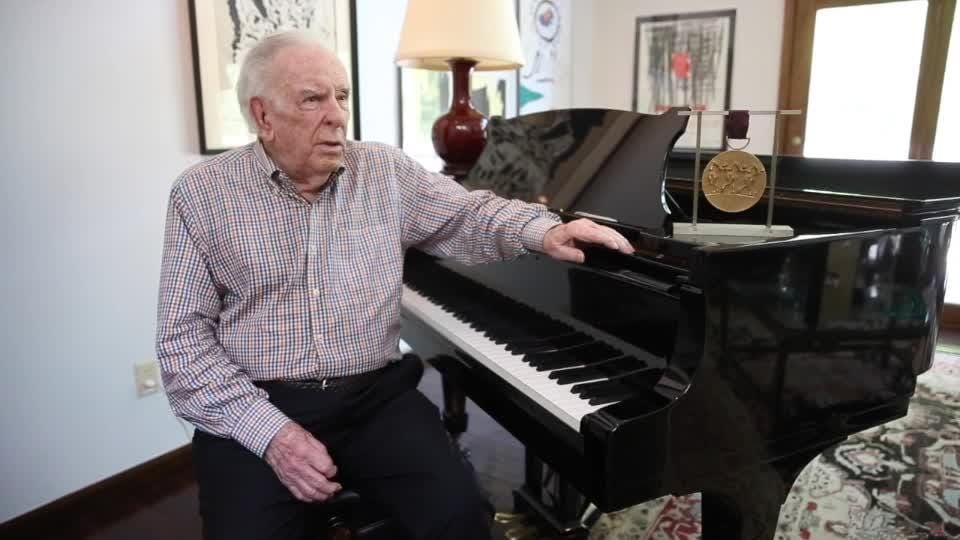
    I note that today would have been the 95th birthday of American composer Lee Hoiby. Hoiby, a disciple of Gian Carlo Menotti, wrote a lot of vocal music and received particular acclaim for his operas. However, I first discovered him through an old recording of his Piano Concerto on the CRI label.

    Hoiby, born in Madison, Wisconsin, in 1926, studied at the University of Wisconsin with pianists Gunnar Johansen and Egon Petri. (His early ambition had been to become a concert pianist.) Then he struck out for California, where he studied at Mills College with Darius Milhaud. In San Francisco, he worked with a number of musicians whose thinking was decidedly outside-the-box, including Rudolf Kolisch, brother-in-law of Arnold Schoenberg, and Harry Partch.

    It’s interesting, therefore, that his own music would wind up being so traditional. Chalk it up to further studies with Menotti at the Curtis Institute of Music in Philadelphia. It was Menotti who introduced Hoiby to opera, instilling in him a life-long love of the human voice. Hoiby was employed as an assistant on the Broadway debut productions of Menotti’s “The Consul” and “The Saint of Bleecker Street” (the latter of which earned his teacher a Pulitzer Prize). Menotti would produce Hoiby’s first opera, “The Scarf” (1958). Eight more would follow. The most highly-regarded of these is perhaps his Tennessee Williams adaptation, “Summer and Smoke” (1971).

    Hoiby also had a powerful champion in Leontyne Price, who introduced many of his best-known arias and songs. He claimed Franz Schubert as an important influence. “What I learned from Schubert came from a long, deep and loving exposure to his songs. A lot happens on a subconscious level, so it’s hard to verbalize, but what I think his songs taught me have to do primarily with the line, the phrasing, the tessitura, the accentuations of speech, the careful consideration of vowels, the breathing required, and an extremely economical use of accompaniment material, often the same figure going through the whole song.”

    Interestingly, Hoiby’s Julia Child opera – or perhaps monodrama – “Bon Appetit!” (1986) was streamed only weeks ago by Opera Philadelphia, with Jamie Barton as “The French Chef.”

    Then this week, wholly by coincidence, I happened to revisit a DVD I had picked up perhaps 15 years ago of a production of “The Taming of the Shrew,” performed by the American Conservatory Theater of San Francisco in 1976. Lo and behold, the incidental music is by Lee Hoiby!

    The production is robust, Rabelaisian (influenced by commedia dell’arte, actually), and it moves like lightning. In this season of perpetually inclement weather, perhaps it would make for a pleasant diversion. I guarantee it will charm your socks off. And it is introduced by the late Hal Holbrook (with cigarette, no less).

    Furthermore, it features Mark Singer as Petruchio, in a performance of astounding physicality. Indeed, it’s a wonder that any of the actors have enough breath to speak their lines. Singer went on to notoriety in the 1980s, when he singlehandedly sustained cable TV through incessant repeats of his breakout feature, “The Beastmaster.”

    Watch “The Taming of the Shrew” here, and see if you don’t owe me a debt of thanks. And note Hoiby’s contribution.

    Leontyne Price sings “Winter Song” (1950)

    Schubert Variations (1981)

    Hoiby Piano Concerto (1957)

    Jamie Barton as Julia Child

    https://www.operaphila.org/about/news-press/pressroom/2020/bon-appetit/

    All roads lead to Lee Hoiby! Happy birthday.


    Hoiby at the keyboard, and (left to right) with Jean Stapleton; Jamie Barton as Julia Child; and Mark Singer taming the shrew

  • Placido Domingo Turns 80

    Placido Domingo Turns 80

    Today is the 80th birthday of Placido Domingo. Although his star may have lost some of its luster over the past 18 months or so, pocked by the brickbats of # metoo, enough of his colleagues have stepped up to attest to his character that, while he remains something of a political hot potato, especially in the United States, he is still performing, if perhaps under the cloud of greylisting.

    All that has little bearing on the fact that, in his prime, he was one of the greatest tenors of his day, and an “Otello” for the ages. No less than Sir Laurence Olivier once remarked, “Domingo plays Othello as well as I do, AND he has that voice.” In 2009, he diversified, pivoting into baritone roles, even as new operas continued to be written for him. He also frequently appeared in the pit, as a conductor.

    There are those who grouse about his refusal to retire, but Domingo owes nothing to anyone, at least as far as his art is concerned. He’s had an amazing career, with a heroic voice that outlasted those of almost any other in his profession. (Hugues Cuénod sang supporting roles until he was 90.)

    In fact, until 2019, Domingo’s greatest sin seemed to be not having been born Luciano Pavarotti. But it was not for want of trying. Domingo turned up on variety shows, singing alongside John Denver, Julie Andrews, and Kermit the Frog. He appeared in magazine ads for Rolex. He conversed with Johnny Carson. He parodied himself on “The Simpsons.”

    Eventually, he adopted a strategy of “if you can’t beat him, join him.” In 1990, on the eve of the FIFA World Cup Final in Rome, he joined Pavarotti and José Carreras for the first of the blockbuster “Three Tenors” concerts. A recording of the event rapidly became the bestselling classical record of all time.

    The man clearly loves performing, and the adulation. While he’s stated that this month’s run of “Nabucco,” with the Vienna State Opera, will be his farewell with the company, as recently as August – having just beat Covid – he told the press that, while he may at some point have to retire from the stage, he will never retire from music.

    Tomorrow, in compliance with the city’s coronavirus safety standards, Vienna’s “Nabucco” will be livestreamed from an empty house at 4:30 pm. Presumably, that’s Vienna time, or 10:30 am EST. You’ll find more information here:

    https://www.wiener-staatsoper.at/en/

    It’s rather likely that Domingo will keep singing for as long as people will keep paying, or until he feels he can’t do it anymore. Some view this refusal to quit as a mar to his legacy. I say the man has had enough high points in a stunning career that he’ll always be remembered as one of the greats in his field.

    Happy birthday, Placido Domingo.


    With Raina Kabaivanska in “Tosca”

    As “Otello” at the Met:

    https://www.youtube.com/watch?v=FlvI8iEUr0g

    His “Don Carlo” bromance with Sherill Milnes:


    PHOTO: Opera’s answer to “The War of the Gargantuas”: Domingo (right) with Luciano Pavarotti

Tag Cloud

Aaron Copland (92) Beethoven (95) Composer (114) Film Music (123) Film Score (143) Film Scores (255) Halloween (94) John Williams (187) KWAX (229) Leonard Bernstein (101) Marlboro Music Festival (125) Movie Music (138) Opera (202) Philadelphia Orchestra (89) Picture Perfect (174) Princeton Symphony Orchestra (106) Radio (87) Ralph Vaughan Williams (85) Ross Amico (244) Roy's Tie-Dye Sci-Fi Corner (290) The Classical Network (101) The Lost Chord (268) Vaughan Williams (103) WPRB (396) WWFM (881)

DON’T MISS A BEAT

Receive a weekly digest every Sunday at noon by signing up here


RECENT POSTS