Tag: Orchestral Music

  • Remembering Sir Andrew Davis: Champion of English Music

    Remembering Sir Andrew Davis: Champion of English Music

    It is with sadness that I learn of the death of Sir Andrew Davis.

    Although Davis had a vast repertoire spanning all eras, he was always a great champion of English music, including the works of Ralph Vaughan Williams. At the time of his death, he was, in fact, president of the Ralph Vaughan Williams Society.

    I was lucky enough to have seen him in concert several times. Most memorably, he introduced and oversaw Olivier Messiaen’s reckless epic erotic mindblower, the “Turangalîla Symphony,” in Philadelphia. (What could be more erotic than the ondes Martenot?)

    On a later visit, he brought more heavy-breathing – this time literally, as there is actual breathing in the score – in the form of Sir Michael Tippet’s Symphony No. 4.

    Both works are rarely done – “Turangalîla,” a 20th century classic, because of its scale, and the Tippett, well, because it’s Tippett. (“Turangalîla” is programmed from time to time, but I never would have guessed that I would hear the Tippett a second time, years later, performed by the New Jersey Symphony!)

    Over the course of his career, Davis served as principal conductor of the Toronto Symphony Orchestra (1975-1988), the Melbourne Symphony Orchestra (2013-2019), and Lyric Opera Chicago (2002-2021), and chief conductor of the BBC Symphony Orchestra (1989-2000) and the Glyndebourne Festival Opera (1988-2000). He was a regular presence at the BBC Proms.

    He conducted Vaughan Williams’ Fifth Symphony in Baltimore last year, but sadly I was already overbooked that weekend (with, among other things, another performance of Vaughan Williams’ Fifth Symphony!).

    Davis died yesterday in Chicago at the age of 80. He had been living with leukemia. His wife, American soprano Gianni Rolandi, predeceased him in 2021.

    R.I.P.


    Vaughan Williams, Symphony No. 5

    Elgar, “The Dream of Gerontius”

    Walton, “Belshazzar’s Feast”

    From Messiaen’s “Turangalîla Symphony,” “Joy of the Blood of the Stars”

    Andrew Davis interviewed


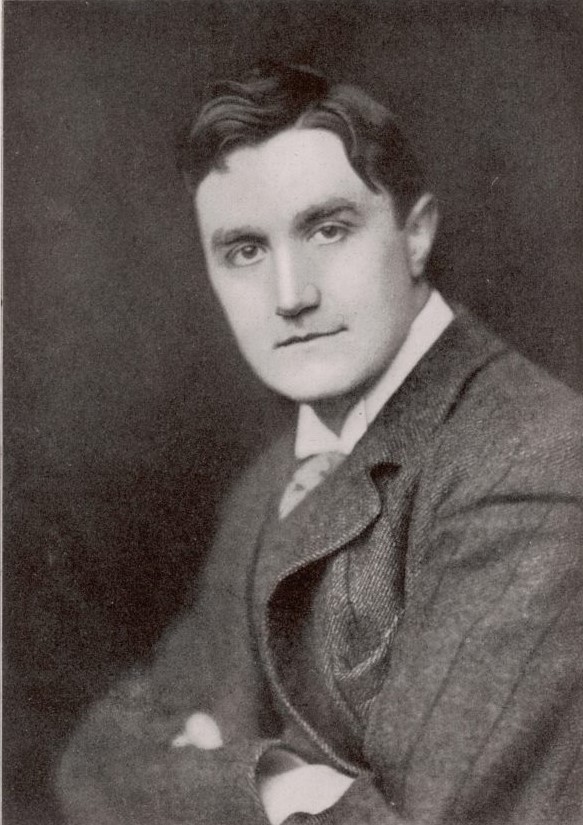
    PHOTO: At the Last Night of the Proms in 2000
  • John Williams’ Genius Beyond the Screen

    I’m a little late in sharing this – the article ran yesterday – but I couldn’t agree more with the premise. Anyone who sneers at John Williams’ indelible themes doesn’t understand the full extent of his artistry, and those who continue to approach film music as mere grist for pops concerts (especially in “pops” arrangements) is doing film music at its best a serious disservice. I wish someone would have the guts to present extended passages from these scores without the images, so that listeners can appreciate more fully what the composer has achieved. Yeah, they’re not symphonies, but it takes a special kind of talent to make this type of music work as often as John Williams has. If there’s anyone else alive that can maintain this balancing act between the dramatically appropriate and musically satisfying as well as he does, I don’t know of it.

    The article is written by Frank Lehman, Associate Professor of Music at Tufts University. It’s refreshing to see an appreciation piece written by someone who understands the inner workings of the music and can actually express himself in musical terms. Too often, these kinds of articles are written by well-meaning fans, who don’t really possess a larger perspective or the necessary tools to communicate musically. Not to trash the fans. Williams is who he is he is, in large part, because of them. But if his music is to be taken seriously, we need people like Lehman.

    The article is interactive, with plenty of film and sound clips to illustrate the writer’s points. I wouldn’t want all newspaper articles to be done like this, but for a music piece, especially one about how music works with the movies, this was very well done. Great job, and a fun read, @[100059174186752:2048:The New York Times]!

  • John Williams Film Music Lion

    He’s a reminder of what film music could be if only composers would be allowed to do their thing, instead of churning out yet another non-descript, inexpensive moan-and-groan that’s convenient to edit right up until the final print is struck. Somebody have the courage to let composers get back to composing, already. Maybe your movies will have more soul. For now, John Williams is the last of the lions.

  • William Grant Still: A Long-Awaited Revival

    William Grant Still: A Long-Awaited Revival

    Can it be that William Grant Still’s time has finally come?

    Whereas in the past, I would be lucky ever to encounter his works outside of recordings, within the last few months, I was able to hear “Ennanga,” for piano, harp and strings, with the Allentown Symphony Orchestra, the Symphony No. 2 with the New York Philharmonic, and the “Afro-American Symphony” (the Symphony No. 1) with the New Jersey Symphony.

    In October, on its first subscription concert of the 2023-24 season, The Philadelphia Orchestra will perform the Symphony No. 4. The New Jersey Symphony will open its season with Still’s “Out of the Silence.” And how appropriate that title has turned out to be.

    Still is on the move. And it’s about time.

    The “Afro-American Symphony” is one of my favorite American symphonies ever. And it’s been so for decades. I’ve been in love with it ever since I first heard it on record nearly 40 years ago. It’s poetic, nostalgic, celebratory, genuinely reflective, beautiful, and brimming with great tunes. It’s congenial, and in the end quite moving. Not to take anything away from the noisy wartime symphonies of Copland, Harris, Schuman, and the rest, but surely there’s room in the pantheon for other points of view.

    Any discussion of Still must include a litany of “firsts.” His “Afro-American Symphony” was the first written by a black composer to be performed by a professional orchestra (the Rochester Philharmonic in 1931). He was the first black composer to be given the opportunity to conduct a major orchestra (the Los Angeles Philharmonic at the Hollywood Bowl in 1936). His opera, “Troubled Island,” became the first to be produced by a major company (the New York City Opera in 1949). Another of his operas, “A Bayou Legend,” was the first to be performed on national television (as late as 1981). His works were performed internationally by the Berlin Philharmonic, the London Symphony Orchestra, the BBC Symphony, and the Tokyo Philharmonic.

    Yet in nearly 40 years of attending concerts, until recently, the only times I ever encountered Still “live” were when the Westminster Community Orchestra played “Wood Notes,” in 2015, and the New Jersey Capital Philharmonic Orchestra performed the Symphony No. 4, on a program with Florence Price’s Violin Concerto No. 1, in 2019. Both were before the death of George Floyd spurred arts organizations to get with it, already. So bravo, local orchestras!

    Otherwise, all of my familiarity with Still’s work has been gleaned from recordings.

    Price, in particular – the first black woman to have her music played by a major orchestra (the Chicago Symphony in 1933) – is undergoing quite a revival. It’s too bad neither she nor Still are around to see it. It’s not a matter of skin color that makes the music worthwhile, but unfortunately, it has been the case that because of it, their music was perhaps not always taken as seriously as it might have been.

    We are now in the enviable position to be able to address some of the injustices of the past, in resurrecting this music, giving it the exposure it deserves, and allowing posterity to sort it out. Just because music is not played doesn’t always mean it is not worthwhile. A lot of very talented, very qualified people are finally getting their chance to be heard.

    And you don’t have to be a minority to reap the rewards.

    Happy birthday, William Grant Still.


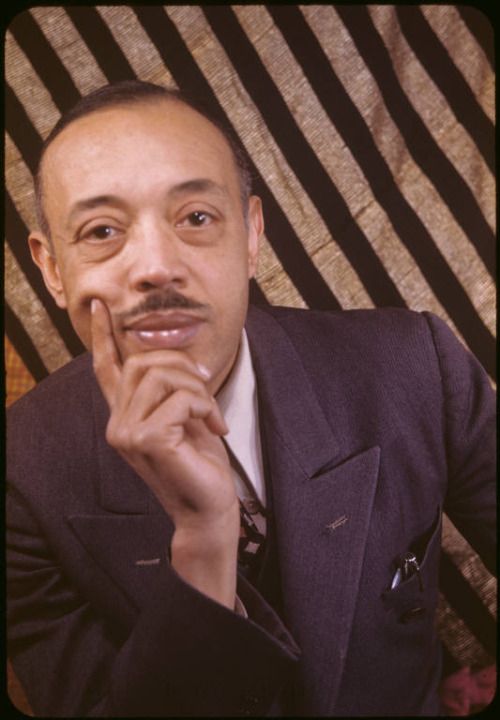
    PHOTO: In living color – my heart be Still!

  • Vaughan Williams’ Wasps Premiere: Unassuming Start

    Vaughan Williams’ Wasps Premiere: Unassuming Start

    How unassuming was the premiere of Ralph Vaughan Williams’ incidental music for “The Wasps?”

    Aristophanes’ comedy, a stinging commentary on the Athenian judicial system, was produced as the Cambridge Greek Play at Trinity College in 1909. The play itself was performed in Greek, with translations sold to the audience. As you can see, when you click through the gallery of photos at the link at the bottom of this post, the composer’s credit is buried midway down the third page of the printed program (as “R. Vaughan Williams”). The music is offered for sale, “price three shillings.”

    The year before, Vaughan Williams spent three months in Paris studying with Maurice Ravel, who was at first reluctant to take him on as a pupil. But RVW wouldn’t take no for an answer. Despite his earthy disposition (his response to Ravel’s assignment to write a minuet in the manner of Mozart was met with an unprintable response), Vaughan Williams quickly earned his teacher’s admiration and soon his friendship. Ravel later remarked that Vaughan Williams was “the only one of my pupils who does not write my music.” RVW, already in his mid-30s and three years older than his teacher, learned his lessons well (at least the ones he considered valid), assimilated what he found useful, and applied it to the achievement of his own objectives.

    Ravel’s influence is most evident in the transitional moments of “The Wasps Overture” and in its dreamy central section. The opening, of course, is a musical joke, self-evident from the onomatopoeic buzzing around the orchestra, but the middle introduces one of those immediately endearing, big-hearted English melodies. The jolly, rollicking theme in the outer portions of the overture sounds equally homegrown.

    Vaughan Williams’ complete incidental music runs to approximately 1 hour and 45 minutes. It was recorded for the first time, with English narration, in 2006. The overture has been a concert favorite since its introduction. Vaughan Williams himself recorded the jauntiest version on record, back in 1925, at a manic 7 minutes and 25 seconds. An average performance of the work is more in the ballpark of 9-10 minutes.

    You’d think that more American orchestras would have taken it up as a guaranteed crowd-pleaser to open concerts during this RVW sesquicentennial year. But U.S. music directors and administrators – “The Lark Ascending” and the “Fantasia on a Theme by Thomas Tallis” aside – remain largely immune to the charms and allure, and certainly the versatility, of Ralph Vaughan Williams. For the composer’s enthusiasts, it’s a good year to live in the U.K.


    “Gentlemen who are willing to be tried for the chorus are requested to state whether their voices are tenor or bass.” Stills from the 1909 Cambridge production.

    https://www.cambridgegreekplay.com/plays/1909/wasps

    The overture opens this 26-minute concert suite, which also includes the equally charming “March Past of the Kitchen Utensils” (at the 13-minute mark).

    Vaughan Williams and Ravel

    https://www.theguardian.com/music/tomserviceblog/2014/feb/28/ravel-vaughan-williams-friendship-radio3-ravel-day

Tag Cloud

Aaron Copland (93) Beethoven (95) Composer (114) Film Music (128) Film Score (143) Film Scores (255) Halloween (94) John Williams (191) KWAX (229) Leonard Bernstein (103) Marlboro Music Festival (125) Movie Music (143) Mozart (87) Opera (206) Philadelphia Orchestra (89) Picture Perfect (174) Princeton Symphony Orchestra (108) Radio (88) Ross Amico (244) Roy's Tie-Dye Sci-Fi Corner (290) The Classical Network (101) The Lost Chord (268) Vaughan Williams (103) WPRB (396) WWFM (881)

DON’T MISS A BEAT

Receive a weekly digest every Sunday at noon by signing up here


RECENT POSTS