Tag: Orchestral Music

  • William Grant Still: An American Voice

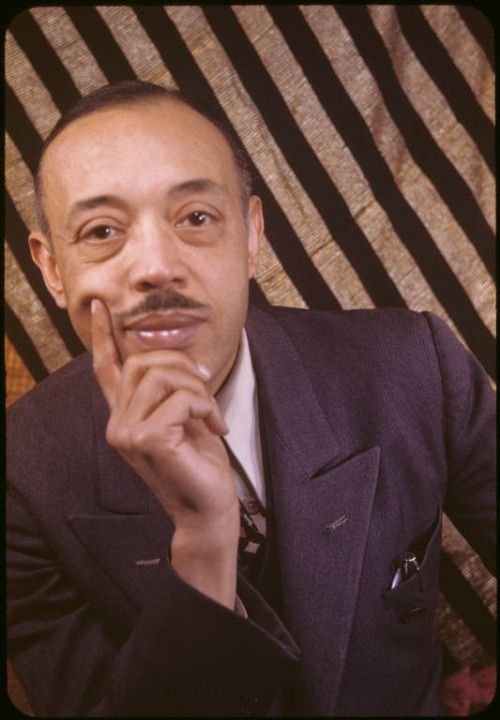
    William Grant Still: An American Voice

    Perhaps it’s not “The Great American Symphony,” self-consciously aspirational, oratorical, or grandiose in the manner the third symphonies of Roy Harris, William Schuman, or Aaron Copland; but it does go straight to the heart, which is something none of the composers of that great American triumvirate do, at least in those particular works.

    William Grant Still’s “Afro-American Symphony” is poetic, it’s genuinely reflective, it’s beautiful, and it brims with great tunes. It’s congenial, and in the end quite moving. It remains one of my favorite symphonies by an American composer.

    When I want “big statements” made on a colossal scale, I will turn to those Lincoln Center composers, who would have us believe they are eating out of lunch pails in their spare time, and riveting skyscrapers, or busting sod in denim overalls. But let’s face it, they are mostly hobnobbing in suits, jostling to get their music conducted by “Lenny.”

    Still is a composer in the mold, if not the manner, of Charles Ives. He’s a perpetual outsider, and always true to himself. His music grows directly out of his autobiographical experience, the blues, ballads, and spirituals of his childhood, in Woodville, Mississippi and Little Rock, Arkansas, and later his experience playing in pit bands during the Harlem Renaissance.

    He also studied at the Oberlin Conservatory and privately with George Whitefield Chadwick and Edgard Varèse, of all people. There is no Varèse to be found in Still’s music.

    He composes with the directness of a Virgil Thomson, but with none of Thomson’s affected naiveté. He shares with George Gershwin a refreshing lack of pretention – or at any rate his music does (he did, after all, subtitle one of his symphonies “Autochthonous”) – and a wonderful facility with melody.

    Of course, any discussion of Still must come with a litany of “firsts.” His “Afro-American Symphony” was the first written by a black composer to be performed by a major orchestra (the New York Philharmonic at Carnegie Hall). He was the first to be given the opportunity to conduct a major orchestra (the Los Angeles Philharmonic, at the Hollywood Bowl). His opera, “Troubled Island,” became the first to be produced by a major company (the New York City Opera). Another of his operas, “A Bayou Legend,” was the first to be performed on national television (as late as 1981). His works were performed internationally by the Berlin Philharmonic, the London Symphony Orchestra, the BBC Symphony, and the Tokyo Philharmonic.

    For years, all I could locate was the “Afro-American Symphony,” and that only in two out-of-print, albeit very fine recordings (with Karl Krueger and the Royal Philharmonic, and Paul Freeman and the London Symphony Orchestra). It wasn’t until the digital era that the other four symphonies gradually – very gradually – became available. Thankfully, all of them have now been recorded and are available for purchase.

    Furthermore, in all these years, I’ve only ever come across a single modern recording of any of his nine operas, “Highway One U.S.A,” with Philip Brunelle and Vocal Essence. This especially is a shame, since, as an opera lover himself, Still so wanted to add something significant to the repertoire.

    For all the love Florence Price has had lavished on her as a woman of color (the Philadelphia Orchestra was recently awarded a Grammy for its excellent recording of two of her symphonies, for the Deutsche Grammophon label), it would be great if a world-class, American ensemble would take up the cause of Still.

    Let’s face it, most American orchestras are pretty terrible about recording even the white guys that were once so revered during that era. Unless you’re Copland, Gershwin, or Barber, you’re pretty much out of luck with the majors. Must so many of our American composers be documented by less-costly orchestras abroad?

    Fashion would seem to favor a Still revival. At least play his music in concert, Americans!

    Happy birthday, WGS (1895-1978).


    “Afro-American Symphony”

    “Danzas de Panama”

    A little more severe, “Dismal Swamp” for piano and orchestra

    “Lenox Avenue,” conducted by Still

    “Troubled Island,” still awaiting a modern recording
  • Wayne Peterson Pulitzer Winner Dies

    Wayne Peterson Pulitzer Winner Dies

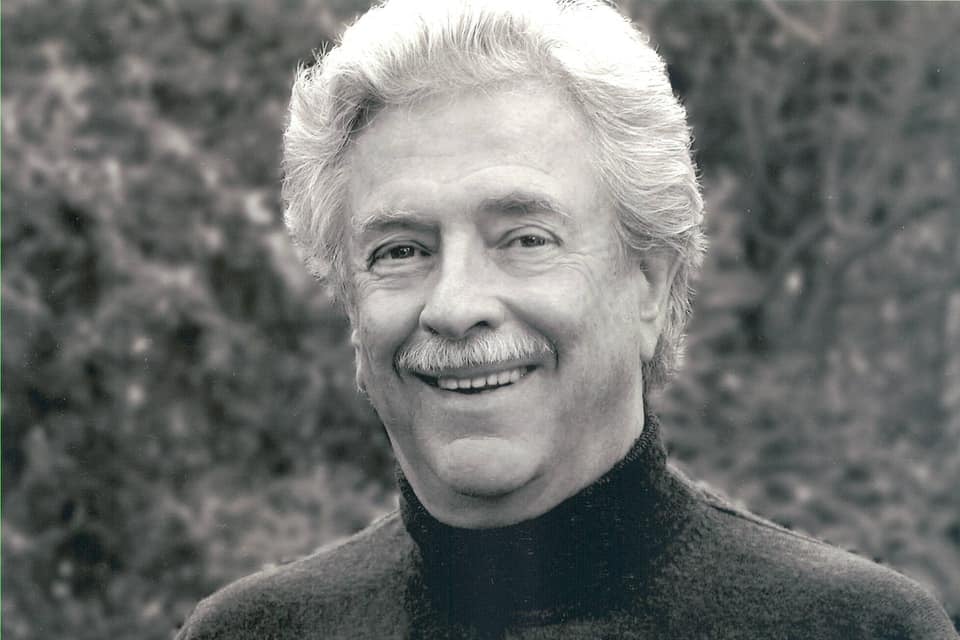
    On Friday, news began circulating that American composer Wayne Peterson died at the age of 93. He was a recipient of the Pulitzer Prize for Music, for his orchestral work “The Face of the Night, the Heart of the Dark,” in 1992.

    The award was not without controversy. Through no fault of Peterson’s own, the prize caused a bit of a scandal after the judges on the music committee went public with news that their own selection – Ralph Shapey’s “Concerto Fantastique” – had been vetoed by the Pulitzer board, and the award bestowed for Peterson’s piece instead.

    While the board’s intervention was not unprecedented (Edward Albee’s play “Who’s Afraid of Virginia Woof?” and Thomas Pynchon’s novel “Gravity’s Rainbow” were similarly dismissed), it was the first time it had imposed its will in the music category.

    What exactly spurred the action is anyone’s guess. Certainly Peterson’s work is no more commercially viable than Shapey’s. So it could not have been a sop to the public. Though the board justified its decision by stating the “Pulitzers are enhanced by having, in addition to the professional’s point of view, the layman’s or consumer’s point of view.”

    On the other hand, Shapey did have something of a reputation for being a prickly S.O.B., so maybe he just rubbed the wrong people the wrong way. Unquestionably, he had the respect of his peers. He had previously been a finalist for the Pulitzer in 1990.

    “I’ve been up for a Pulitzer year after year,” he remarked, “and I can’t get a Pulitzer.” Shapey was born in Philadelphia 100 years ago last month. He died in 2002.

    With few notable exceptions – among them Aaron Copland’s “Appalachian Spring” and Charles Ives’ Symphony No. 3, “The Camp Meeting” – Pulitzer Prize winners tend to fade from memory rather quickly.

    When Ives was awarded the Pulitzer in 1947, he muttered, “Prizes are for boys. I’m a grown-up.”

    Forever cranky, he characterized the very notion of prizes as “badges of mediocrity.”

    Peterson himself remarked, “Winning the Pulitzer has meant nothing for the piece that won. Back when Blomstedt was at the San Francisco Symphony, David Zinman conducted it and did a beautiful job. But they never did it again and nobody else has ever played it.”

    It did, however, generate new commissions and guaranteed publication of his music. In 2017, “The Face of the Night, the Heart of the Dark” was finally recorded, by Boston Modern Orchestra Project, or BMOP.

    This year’s Pulitzer Prize winners will be announced on June 11.

    Peterson’s obituary in yesterday’s WaPo. He died on April 7.

    https://www.washingtonpost.com/local/obituaries/wayne-peterson-dead/2021/04/18/752f23a8-9eea-11eb-9d05-ae06f4529ece_story.html

    Peterson’s “The Face of the Night, the Heart of the Dark,” in two movements (so just let it run):

    To my knowledge, Ralph Shapey’s “Concerto Fantastique” has yet to be recorded. Here’s “Ontogeny,” from 1958, a considerably earlier work, but I’m posting it here because, like the Pulitzer reject, it’s orchestral.

    Ives, Symphony No. 3, “The Camp Meeting”

    R.I.P. Wayne Peterson

  • Broadway Composers Go Classical

    Broadway Composers Go Classical

    Sure, it’s artistically satisfying to perform with the New York Philharmonic and to have one’s works choreographed by Léonide Massine and George Balanchine – but at the end of the day, there’s really nothing like a good popular hit to keep food on the table.

    This Sunday night on “The Lost Chord,” we’ll enjoy concert music by two artists more frequently associated with the musical theater.

    Vernon Duke may be remembered for standards like “April in Paris” and “Autumn in New York,” with his greatest stage success being the Broadway musical “Cabin in the Sky.” However, his early ambition was to become a “serious” composer.

    Born Vladimir Dukelsky in what in now Belarus in 1903, Duke studied composition with Reinhold Gliere. His music was championed by Serge Koussevitzky and admired by Sergei Prokofiev. Indeed, Duke continued to write works for the concert hall (as Dukelsky) right up into the 1950s.

    In 1921, he arrived in New York City, where he was befriended by George Gershwin. It was Gershwin – himself born Jacob Gershowitz – who suggested Dukelsky’s nom de plume. Thereafter, Duke/Dukelsky lived a double-life, Duke writing for popular consumption and Dukelsky composing symphonies.

    Dukelsky’s Piano Concerto was requested of the 19 year-old by none other than Arthur Rubinstein. Allegedly, Rubinstein and Gershwin were delighted with the piece when they heard it in its two-piano form. Unfortunately, so was impresario Serge Diaghilev. When Diaghilev heard Dukelsky play through it in Paris (with Georges Auric on the second piano), he immediately offered the talented young man a commission to write “Zephyr et Flore” for the Ballets Russes. This led to further offers from London’s West End. As a result, Dukelsky never got around to orchestrating the piece. It was left to pianist Scott Dunn to do so, in advance of some Gershwin centennial concerts in 1999.

    Meredith Willson is best remembered for “The Music Man” and “The Unsinkable Molly Brown.” However, before his success in musical theater, he had been a flutist in the Sousa Band and with the New York Philharmonic. He worked as an orchestrator on Charlie Chaplin’s “The Great Dictator.” He was also a gifted conductor, author, librettist, and humorist. His autobiography, “And There I Stood with my Piccolo,” became a bestseller.

    Willson composed two symphonies, both of them extended love letters to California landmarks. His Symphony No. 1 pays tribute to San Francisco. The Symphony No. 2, the one we’ll hear this evening, is evocative of the missions of Southern California, with individual movements devoted to Junipero Serra, San Juan Bautista, San Juan Capistrano, and El Camino Real.

    I hope you’ll join me for “Broad Talents from Broadway” – musical theater composers hang on to their day jobs – this Sunday night at 10:00 EDT, on WWFM – The Classical Network and wwfm.org.


    Dawn Upshaw sings “Autumn in New York”

    Count Basie performs “April Paris”

    Basie welcomes Sheriff Bart

    “The Music Man,” Overture/Rock Island

    “76 Trombones” – for 76 trombones!


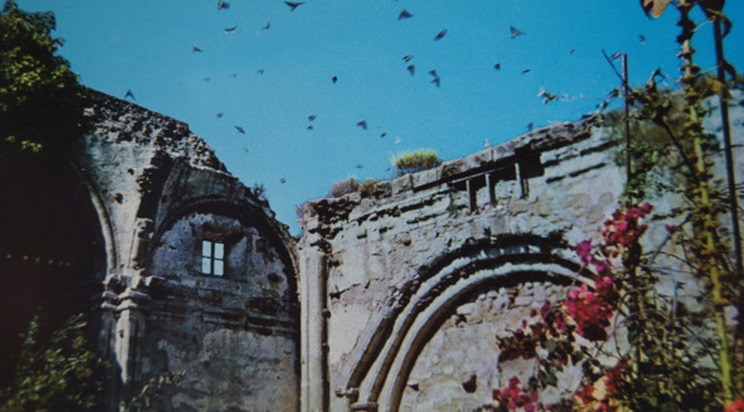
    PHOTO: Are these menacing vampire bats, flittering about the ruins of Castle Dracula? No, they’re just the swallows, come back to Capistrano.

  • Haydn Wood’s Joyful May Day Overture

    Haydn Wood’s Joyful May Day Overture

    “A May Day Overture” by Haydn Wood

  • Stokowski Conducts Wagner’s Parsifal

    Stokowski Conducts Wagner’s Parsifal

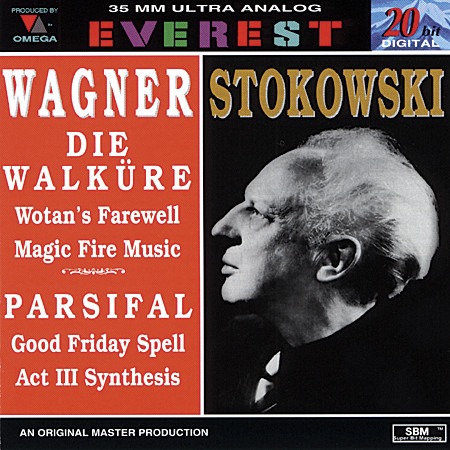
    Leopold Stokowski conducts the “Good Friday Spell” from Wagner’s “Parsifal.”

Tag Cloud

Aaron Copland (93) Beethoven (95) Composer (114) Film Music (128) Film Score (143) Film Scores (255) Halloween (94) John Williams (191) KWAX (229) Leonard Bernstein (103) Marlboro Music Festival (125) Movie Music (143) Mozart (87) Opera (206) Philadelphia Orchestra (89) Picture Perfect (174) Princeton Symphony Orchestra (108) Radio (88) Ross Amico (244) Roy's Tie-Dye Sci-Fi Corner (290) The Classical Network (101) The Lost Chord (268) Vaughan Williams (103) WPRB (396) WWFM (881)

DON’T MISS A BEAT

Receive a weekly digest every Sunday at noon by signing up here


RECENT POSTS