Tag: Philadelphia Orchestra

  • Ormandy’s All-American Philadelphia Orchestra

    Ormandy’s All-American Philadelphia Orchestra

    This Sunday night on “The Lost Chord,” it’s one more trip to the well, with well-played works of American composers rendered by Eugene Ormandy and the Philadelphia Orchestra.

    Slake your thirst with selections from “Five Songs of William Blake” by Virgil Thomson, the Symphony No. 7 by Roy Harris, and “Four Squares of Philadelphia” by Louis Gesensway.

    Gesensway was born in Latvia in 1906. A violin prodigy, he was one of the founders of the Toronto Symphony Orchestra. He came to Philadelphia at the age of 19, where he played under both Stokowski and Ormandy.

    In his mid-20s, he took a leave of absence to study composition with Zoltán Kodály. “Four Squares of Philadelphia” was described by the composer as a “symphonic poem for large orchestra, narrator and street criers.”

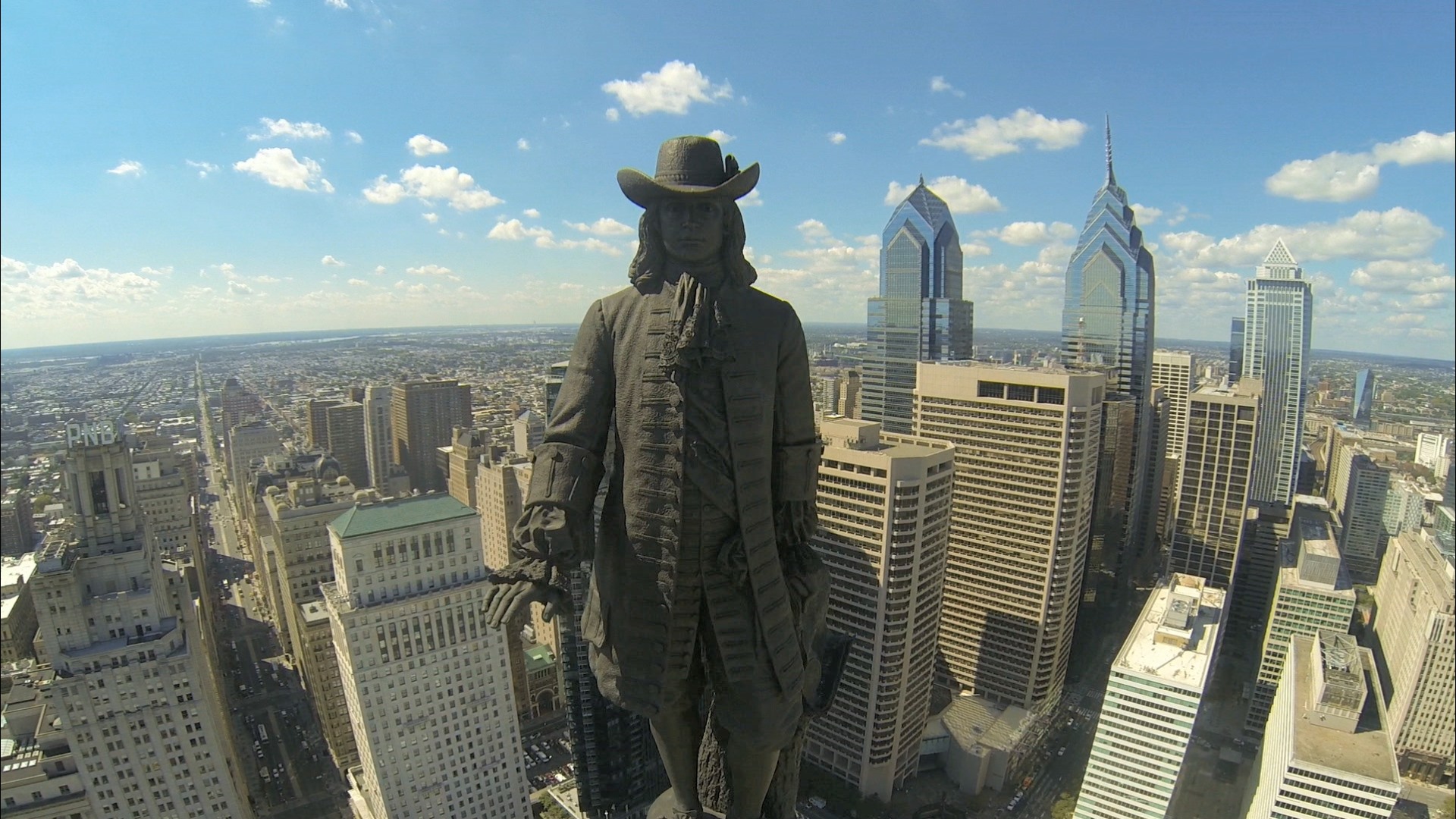
    The piece opens with a recitation of William Penn’s prayer, then continues with musical evocations of Washington Square (in early morning, during Colonial times, with street criers hawking their wares), Rittenhouse Square (on a bright and cheerful afternoon), Logan Square (with its fountains at dusk), and Franklin Square (at night, evocative of noisy bridge traffic, a side excursion into Chinatown, and musical interjections from the honky tonk joints located around the square in the 1950s).

    Be there or be square. Eugene Ormandy serves up the last of the Thanksgiving leftovers. I hope you’ll join me for “All-American Ormandy III,” this Sunday night at 10:00 EST, on WWFM – The Classical Network and wwfm.org.


    PHOTO: Statue of Penn, high atop the city he founded

  • Ormandy’s Lost American Music Recordings

    Ormandy’s Lost American Music Recordings

    It’s not so much that I am out of ideas, but it is mighty convenient that I have so much material left over from last week’s show. Even now, I run my eye down the stack of CDs with the warm satisfaction of an acquisitive magpie.

    This Sunday night on “The Lost Chord,” it’s the second installment in what is shaping up to be a three-part series of Eugene Ormandy conducting the Philadelphia Orchestra in rarely-heard recordings of American music.

    Samuel Barber was born in West Chester, Pa., not far from Philly, in 1910. He attended Philadelphia’s Curtis Institute of Music and had his first orchestral work, the “School for Scandal Overture,” performed by the Philadelphia Orchestra in 1931, when he was 21 years-old.

    His “First Essay for Orchestra” was sent to Arturo Toscanini in the same mail as his “Adagio for Strings.” Toscanini performed both works with the NBC Symphony in 1938, but it was Eugene Ormandy who made the first recording of “Essay,” with the Philadelphians, in 1940.

    Vincent Persichetti was born in Philadelphia in 1915, and he died there in 1987. In between, he attended Combs College of Music, the Curtis Institute (where he studied conducting with Fritz Reiner) and the Philadelphia Conservatory. He taught at Combs and the Philly Conservatory. Then he received an invitation from William Schuman (some of whose music we heard last week) to take up a professorship at Juilliard.

    Persichetti was one of our great composers, but to this day he remains underappreciated, more respected than loved. His Symphony No 4 of 1951 must be one of his most immediately attractive works.

    Finally, John Vincent may be the most undeservedly neglected composer in Ormandy’s entire discography. Ormandy described his recording of Vincent’s Symphony in D (“A Festival Piece in One Movement”) as “one of the best we have ever done,” and the piece itself as “one of the finest compositions created by an American composer in the past decade.” The 1954 work sounds at times like Sibelius gone to the rodeo, but my, is it good stuff!

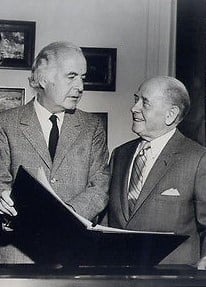
    I hope you’ll join me for “All-American Ormandy II.” Ormandy recommends a visit to the Barber (pictured), then convinces with the Vincents, this Sunday night at 10:00 EST, on WWFM – The Classical Network and wwfm.org.

  • Ormandy’s Lost American Legacy Rediscovered

    Ormandy’s Lost American Legacy Rediscovered

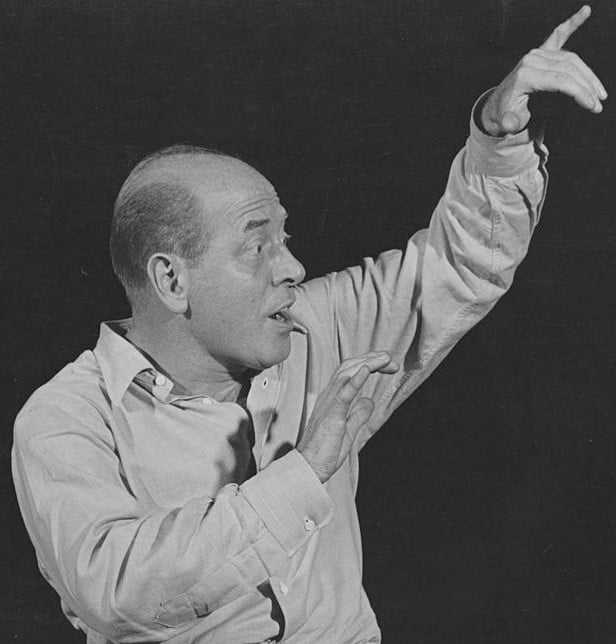
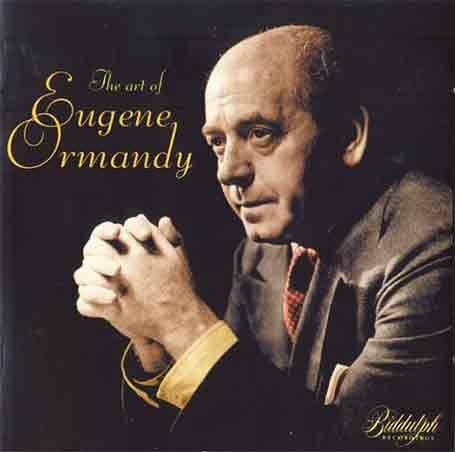
    Eugene Ormandy was born Jenő Blau in Budapest in 1899. In 1927, he became a naturalized American citizen and wound up directing the Philadelphia Orchestra for 44 years.

    In that capacity, he championed much contemporary music and works by his adopted countrymen – a fact eclipsed by his reputation as a superb interpreter of the 19th century classics.

    In fact, much of his American legacy has dropped out of print. In the late 1990s, Albany Records attempted to rectify the situation by reissuing some of Ormandy’s recordings of lesser-heard American music. The series only made it to three volumes, but each one of them is a treasure.

    This Sunday night on “The Lost Chord,” we’ll hear two selections from these invaluable anthologies. Both are by Pulitzer Prize winners whose music has sadly fallen out of fashion.

    William Schuman was the very first recipient of the Pulitzer Prize for Music, in 1943, for his “Cantata No. 2, A Free Song.” At the height of his fame, he was also President of Lincoln Center. He was considered such an important figure in American culture, he was even brought on to “What’s My Line?” (Those were the days.)

    We’ll hear Schuman’s “Credendum – Article of Faith,” composed in 1955. The work was written in response to the first ever commission by the U.S. government for a symphonic work.

    Two years later, the Pulitzer was awarded to Norman Dello Joio, for his “Meditations on Ecclesiastes.” His symphonic suite “Air Power” was adapted from 22 individual scores composed for the CBS television series about the history of aviation. The series ran from November 1956 through the spring of 1957. (Dello Joio would collect his prize in April.) The individual sections were used to underscore segments on the early days of flight, with their barnstormers and daredevils, air battles and war scenes.

    I hope you’ll join me for these rarely-heard recordings of American music. Ormandy flies American, on “All-American Ormandy,” this Sunday night at 10:00 EST, on WWFM – The Classical Network and wwfm.org.


    William Schuman on “What’s My Line?” (1962):

    “Air Power,” narrated by Walter Cronkite (1956):

    https://www.youtube.com/watch?v=gKXKTh50USM

  • Ormandy’s Lost American Gems Barber Persichetti Vincent

    Ormandy’s Lost American Gems Barber Persichetti Vincent

    It’s not so much that I am out of ideas, but it is mighty convenient that I had so much material left over from last week’s show, consisting of rarely-heard recordings of American music performed by Eugene Ormandy and the Philadelphia Orchestra.

    This Sunday night on “The Lost Chord,” I reach for the already conveniently stacked CDs to cue up three more gems.

    Samuel Barber was born in West Chester, Pa., not far from Philly, in 1910. He attended Philadelphia’s Curtis Institute of Music and had his first orchestral work, the “School for Scandal Overture,” performed by the Philadelphia Orchestra in 1931, when he was 21 years-old.

    His “First Essay for Orchestra” was sent to Arturo Toscanini in the same mail as his “Adagio for Strings.” Toscanini performed both works with the NBC Symphony in 1938, but it was Eugene Ormandy who made the first recording of the “Essay,” with the Philadelphians, in 1940.

    Vincent Persichetti was born in Philadelphia in 1915, and he died there in 1987. In between, he attended Combs College of Music, the Curtis Institute (where he studied conducting with Fritz Reiner) and the Philadelphia Conservatory. He taught at Combs and the Philly Conservatory. Then he received an invitation from William Schuman (some of whose music we heard last week) to take up a professorship at Juilliard.

    Persichetti was one of our great composers, but to this day he remains underappreciated, more respected than loved. His Symphony No 4 of 1951 must be one of his most immediately attractive works.

    Finally, John Vincent may be the most undeservedly neglected composer in Ormandy’s entire discography. Ormandy described his recording of Vincent’s Symphony in D (“A Festival Piece in One Movement”) as “one of the best we have ever done,” and the piece itself as “one of the finest compositions created by an American composer in the past decade.” The 1954 work sounds at times like Sibelius gone to the rodeo, but my, is it good stuff!

    I hope you’ll join me for “All-American Ormandy II,” rarely-heard recordings of Barber, Persichetti and Vincent, on “The Lost Chord,” this Sunday night at 10 ET, with a repeat Wednesday evening at 6; or that you’ll listen to it later as a webcast at wwfm.org.

    To help get you in the mood, here’s an in-depth interview with Persichetti by Bruce Duffie:

    http://www.bruceduffie.com/persichetti.html

  • Ormandy’s Lost American Legacy

    Ormandy’s Lost American Legacy

    Eugene Ormandy, of course, was born in Hungary. His birth name was Jenő Blau. But he became a naturalized American citizen in 1927 and directed the Philadelphia Orchestra for 44 years.

    In that capacity, he championed much contemporary music and works by his adopted countrymen –facts frequently forgotten next to his legacy as a superb interpreter of the 19th century classics.

    In fact, much of his American legacy has dropped out of print. In the late 1990s, Albany Records briefly attempted to rectify the situation by reissuing some of Ormandy’s recordings of lesser-heard American music. In the event, the series only reached three discs, but each of them is a treasure.

    This Sunday night on “The Lost Chord,” we’ll hear two works by Pulitzer Prize-winners, both of whose music has sadly fallen out of fashion. The first is William Schuman, the very first recipient of the Pulitzer Prize for Music in 1943, for his “Cantata No. 2, ‘A Free Song.’” At the height of his fame, Schuman was also President of Lincoln Center.

    We’ll hear music he composed in 1955, called “Credendum – Article of Faith,” which was written in response to the first ever commission by the U.S. government for a symphonic work.

    Norman Dello Joio was the recipient of the Pulitzer in 1957 for his “Meditations on Ecclesiastes.” The concert suite from “Air Power” was adapted from 22 individual scores he composed for the CBS television series, about the history of aviation, which aired from November 1956 through spring of 1957. Its individual sections underscore the early days of flight, with its barnstormers and daredevils, followed by those of air battles and war scenes.

    I hope you’ll join me for these rarely heard recordings of American music, conducted by Eugene Ormandy. That’s “All-American Ormandy,” tonight at 10 ET, with a repeat Wednesday evening at 6; or listen to it later as a webcast at wwfm.org.

Tag Cloud

Aaron Copland (92) Beethoven (95) Composer (114) Film Music (123) Film Score (143) Film Scores (255) Halloween (94) John Williams (187) KWAX (229) Leonard Bernstein (101) Marlboro Music Festival (125) Movie Music (138) Opera (202) Philadelphia Orchestra (89) Picture Perfect (174) Princeton Symphony Orchestra (106) Radio (87) Ralph Vaughan Williams (85) Ross Amico (244) Roy's Tie-Dye Sci-Fi Corner (290) The Classical Network (101) The Lost Chord (268) Vaughan Williams (103) WPRB (396) WWFM (881)

DON’T MISS A BEAT

Receive a weekly digest every Sunday at noon by signing up here


RECENT POSTS