Tag: Philadelphia Orchestra

  • Eugene Ormandy Underrated Maestro

    Eugene Ormandy Underrated Maestro

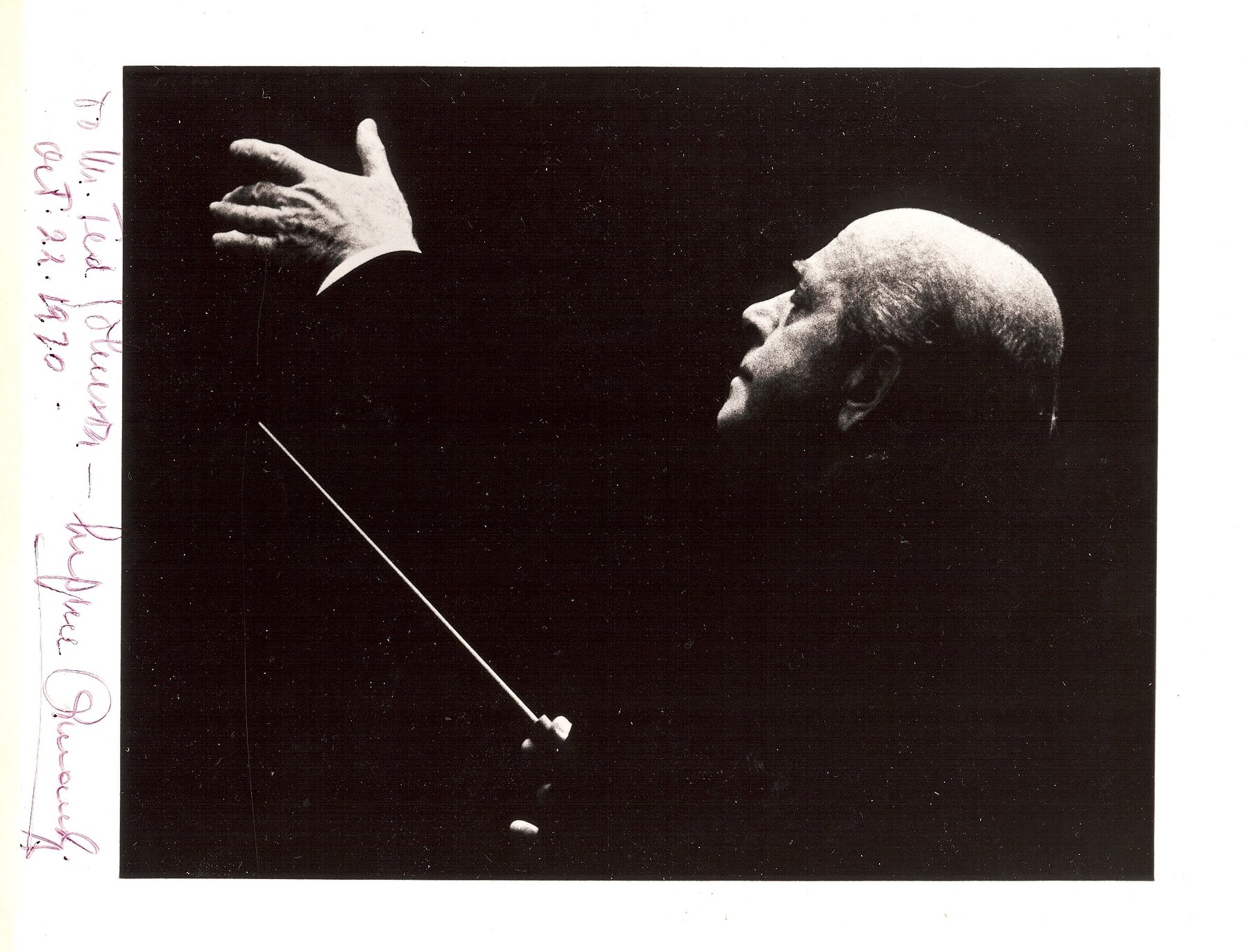
    What’s the big deal about this guy, Jenő Blau? Well, you probably know him better by his adopted name, Eugene Ormandy.

    Ormandy, a Hungarian-born violinist who had studied with Jenő Hubay (for whom he was named), became a naturalized American citizen in 1927. He ultimately wound up directing The Philadelphia Orchestra for 44 years. In that capacity, he became one of the world’s most-recorded conductors.

    However, in some respects, he remains a vastly underrated one. Sure, he was a superb interpreter of 19th century and post-romantic classics (his Columbia recording of Tchaikovsky’s “Pathétique” was one of my go-to favorites as a teen, and he was an authoritative conductor of Rachmaninoff and Sibelius), but he also championed much contemporary music and new works written by his adopted countrymen. Also, if ever there was a more sensitive accompanist in the concerto repertoire, I don’t know of him.

    One of my favorite Ormandy records was also one of his later ones. Throughout his career Ormandy succeeded in selling Sibelius’ “Four Legends from the Kalevala,” a collection of tone poems inspired by the Finnish national epic the “Kalevala,” for the early masterpiece that it is.

    Here again is the final section, “Lemminkainen’s Homeward Journey,” even more thrilling, in 1940:

    https://www.youtube.com/watch?v=FzQMyCsB8eQ

    The legendary Philadelphia strings in Vaughan Williams’ “Fantasia on a Theme by Thomas Tallis”

    Hindemith, “Concert Music for Strings and Brass”

    Ivan Davis joins Ormandy and the Philadelphians for Liszt’s “Hungarian Fantasy,” slight abridged:

    Bruckner “Te Deum” with Temple University Choir

    World premiere performance of Samuel Barber’s Violin Concerto:

    Shostakovich Symphony No. 4:

    Reinhold Glière’s “Russian Sailor’s Dance”

    Rachmaninoff Piano Concerto No. 2, with Eugene Istomin

    Ormandy conducts “Scheherazade” (complete). This is the Philly Orchestra I remember from my college years.

    Debussy, “Reverie”

    Saint-Saens’ Symphony No. 3 “Organ”


    Happy birthday, Eugene Ormandy (1899-1985)!

  • Philly Orchestra Celebrates 120 Years

    Philly Orchestra Celebrates 120 Years

    Happy birthday, The Philadelphia Orchestra! Looking pretty good for 120.

    The Fabulous Philadelphians gave their first public concert under Fritz Scheel on this date in 1900. The event took place at the orchestra’s former home of the Academy of Music, located on the southwest corner of Broad and Locust Streets. On the program were works by Carl Goldmark (“In Spring” Overture), Beethoven (Symphony No. 5), Tchaikovsky (Piano Concerto No. 1), Weber-Berlioz (“Invitation to the Dance”), and Wagner (“Entry of the Gods into Valhalla”).

    The soloist on that occasion was Ossip Gabrilowitsch. Gabrilowitsch’s teachers at the Saint Petersburg Conservatory included Anton Rubinstein and Nikolai Medtner. He then studied for two years in Vienna under the legendary pedagogue Theodor Leschitizky. Not only was Gabrilowitsch a prominent pianist, he was also offered the music directorship of the Boston Symphony Orchestra, which he politely declined. Later, he became founding director of the Detroit Symphony in 1918. He was also Mark Twain’s son-in-law. In my possession is a biography I picked up at a library sale a few years ago, “My Husband, Gabrilowitsch,” that I noticed had been inscribed by Twain’s daughter, Clara Clemens!

    Fritz Scheel was succeeded as music director of the Philadelphia Orchestra by Carl Pohlig in 1908. Leopold Stokowski (pictured) followed in 1912; Stoky would lead the group for the next 24 years. Then came Eugene Ormandy, who held the podium until 1980 – 44 years. Ormandy passed the baton to Riccardo Muti, who directed from 1980 to 1992. Muti was followed Wolfgang Sawallisch, who remained with the orchestra for the next decade. Sawallisch was succeeded by Christoph Eschenbach in 2003. Eschenbach was followed by Charles Dutoit, appointed “Chief Conductor” in 2008. And, bringing us up to the present, Yannick Nézet-Séguin arrived, with vitality to burn, in 2012. What a history!

    Looking forward to next week’s Digital Stage concert (available November 25-29), which will include the Philadelphia premiere of Florence Price’s Symphony No. 1. Price’s symphony was the first by an African American woman to be performed by a major orchestra (the Chicago Symphony, in 1933). Also on the program will be Samuel Barber’s “Adagio for Strings.” For more information on this and other Philadelphia Orchestra events, visit philorch.org.

    Thank you, Philadelphia, for taking a chance on substantial works by composers such as Price and Louise Farrenc. I was there, in the hall, for Farrenc’s Symphony No. 2. So sorry not to be able to attend the Price performance in person. Perhaps next year.

    Happy 120th!


    PHOTO: The Philadelphia Orchestra at the Academy of Music in 1916, ready to go for the American premiere of Gustav Mahler’s “Symphony of a Thousand”

  • Ormandy, China, and Forgotten American Music

    Ormandy, China, and Forgotten American Music

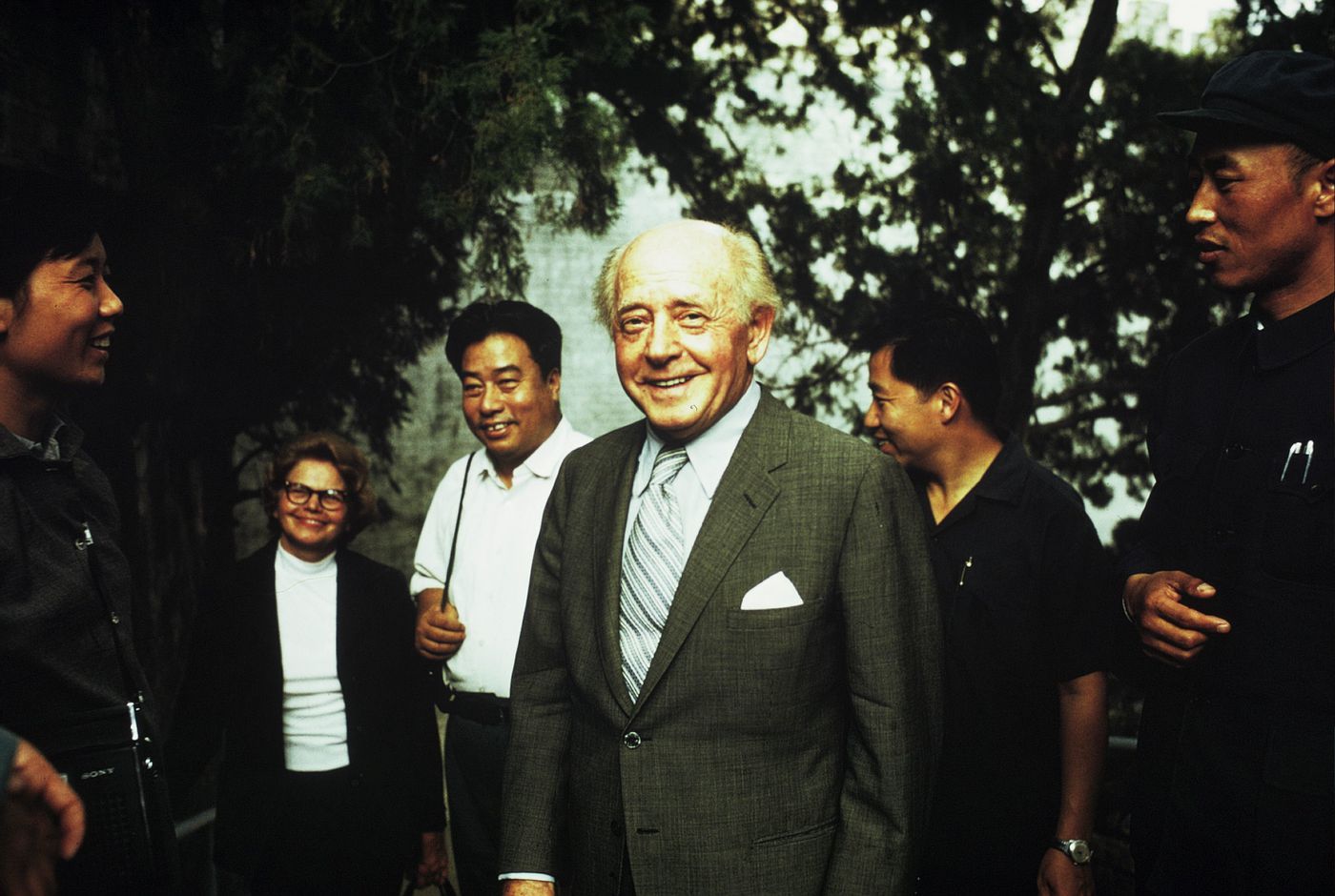
    When Eugene Ormandy took the Philadelphia Orchestra to China in September of 1973, he was sure to include, alongside Mozart and Brahms, some music from the American Heartland.

    Roy Harris (1898-1979) was born in a log cabin, in Lincoln County, Oklahoma, on Lincoln’s birthday. If that doesn’t imbue a composer with a sense of destiny, I don’t know what will. Harris went on to became one of our great American symphonists. In particular, his Symphony No. 3 of 1939 has been much beloved and frequently performed. Unfortunately, we don’t hear all that much of his music anymore. And that’s a damned shame.

    Philadelphia would be the first American orchestra to perform in China (the London and Vienna Philharmonic Orchestras had appeared earlier the same year), having received an invitation in response to Nixon’s historic visit in 1972. According to first-hand accounts, audience reactions to the performances were difficult to decipher. On the street, people were curious, but stand-offish. Red banners and likenesses of Mao, Lenin, and Stalin festooned Tiananmen Square. The local orchestra played Western music (Beethoven), but only in rehearsal, for training purposes. In summer, musicians pruned trees.

    Here are some interesting, balanced impressions, from a diary kept by one of the Philadelphians:

    https://www.inquirer.com/arts/philadelphia-orchestra-china-tour-1973-mao-beijing-20190509.html

    In all, the orchestra played six concerts. This was the trip on which Philadelphia performed the notorious “Yellow River Concerto,” a piano concerto written by committee and overseen by Madame Mao herself. Interesting that a country that did its damnedest to suppress decadent Western influence would shamelessly pilfer from the Western Romantics. As an encore, the pianist played a set of variations on “Home on the Range,” apparently a concession to Nixon. According to the diarist, Madame Mao did not care for “The Pines of Rome.” Mao himself was a no-show.

    Also included on the programs were “The Stars and Stripes Forever” and the “Chinese Worker’s March.” Again, the Beijing audience seemed impassive. Performances were received with more enthusiasm in Shanghai.

    While I haven’t been able to locate any recordings of the Chinese concerts, here’s Ormandy and the Philadelphians playing Harris in Russia in 1958. Additional American offerings included Samuel Barber’s “Adagio for Strings” and George Gershwin’s “An American in Paris,” which were played alongside Igor Stravinsky’s “The Firebird.” You can hear the tepid applause in Russia, when following the link:

    If you’re interested in hearing the “Yellow River Concerto,” there are a number of performances posted on YouTube. However, the audio for the Philadelphia/Ormandy album, with Daniel Epstein – which I’ve got somewhere in my own collection – for some reason has not been posted online. If you’ve got a sweet tooth, by all means, feel free to explore. Me, I’d rather not risk a trip to the dentist’s office in time of COVID.

  • Philadelphia Orchestra Streams Williams Bernstein

    Philadelphia Orchestra Streams Williams Bernstein

    The Philadelphia Orchestra will stream one of its “neighborhood concerts” tonight at 8 p.m. The program, which was performed at the Kimmel Center for the Performing Arts on July 30, 2015, will include music by John Williams, Jennifer Higdon, Leonard Bernstein, Hector Berlioz, and Maurice Ravel. Also promised is a never-before-seen conversation between John Williams and conductor Stéphane Denève.

    For more information, follow the link:

    https://www.philorch.org/virtual

    The concert will also be streamed on the orchestra’s Facebook page.


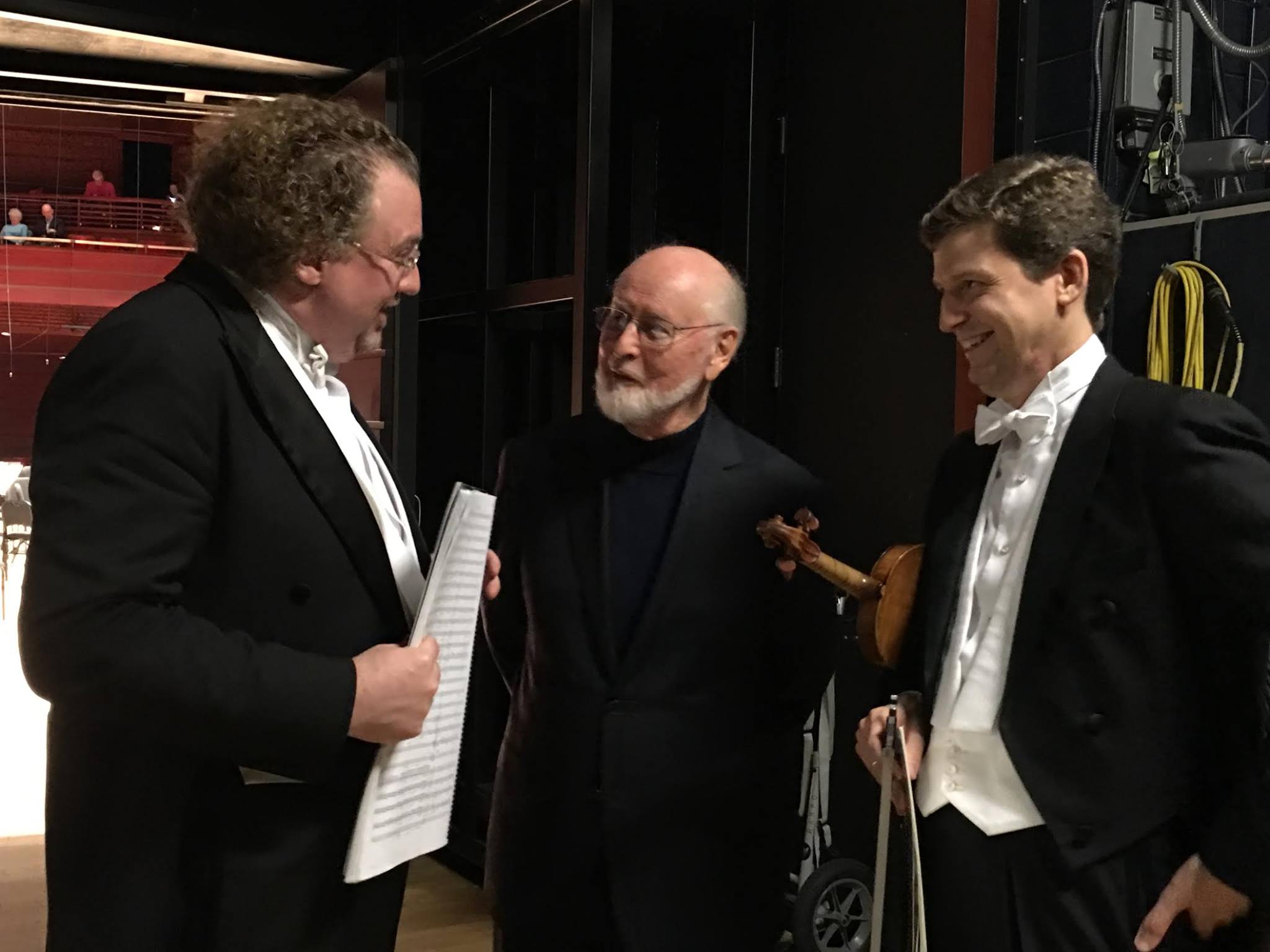
    PHOTO: Stéphane Denève, John Williams, and James Ehnes, backstage at the Kimmel during a memorable concert in 2016

  • Philly Orchestra Farrenc Shines Beyond Beethoven

    Philly Orchestra Farrenc Shines Beyond Beethoven

    Very interesting program at The Philadelphia Orchestra this weekend. Naturally, all promotions emphasize Trifanov and Beethoven (after all, they want to get butts in the seats), but I would like to shower the entire organization with rose petals for allowing the bulk of the concert to be devoted to music by Lili Boulanger and especially Louise Farrenc.

    If you’re unfamiliar with Farrenc, she was the only female professor at the Paris Conservatory in all of the 19th century. I have a preference for her Third Symphony, myself, but it was so good to be able to hear the Second performed live. It doesn’t always have to be Berlioz (her exact contemporary), for as much as I enjoy his music!

    Yannick, please check out Farrenc’s Symphony No. 3. And more adventurous programming, please! I understand the importance of new commissions for women composers, but there is still also plenty of worthwhile music by historical women that right now can only be experienced through recordings.

    The next time you have the urge to do Elgar, try your hand at Ethel Smyth. The overture to “The Wreckers” would make for a dynamic curtain-raiser. The “Serenade in D” is a symphony in all but name, with some pretty good tunes. If you prefer Czech, try Vítězslava Kaprálová. She inhabits a similar sound world to that of Martinu. And Poland’s Grazyna Bacewicz can stand toe-to-toe with just about any of the 20th century’s greatest composers.

    For the present, thank you, Philadelphia, for performing Boulanger and Farrenc. Now there are more, and perhaps even greater, treasures to be mined.

    As for the Beethoven concerto, of course the solo part held no terrors for Daniil Trifanov, the Rachmaninoff pianist du jour. But the orchestra also played with plenty of punch, under the muscular direction of Yannick Nézet-Séguin, and bubbled over with dynamism to the driving timpani of Angela Zator Nelson.

    The program is presented under the umbrella of the orchestra’s BeethovenNOW series. I’d be dismissive of the venture as a tired rehash of music that already gets raked over every year, all over the world, but if these musicians are energized by Beethoven the way they were on Thursday, then it will all probably be worth hearing, even by a jaded old bastard like myself. You can find more information at the orchestra’s website, philorch.org.

    PLEASE NOTE: For remaining performances of this particular program, tonight at 8 p.m. and tomorrow at 2 p.m., Trifanov will swap out Beethoven’s Piano Concerto No. 1 for the Piano Concerto No. 5, the popular “Emperor.”

    I am not able to access the review, since it’s paywalled, but if you already subscribe to the Philadelphia Inquirer, you can check out David Patrick Stearns’ impressions of the Thursday concert. From the headline, it looks as if he too was pleased to be able to hear Farrenc.

    https://www.inquirer.com/arts/philadelphia-orchestra-beethoven-now-daniil-trifonov-yannick-20200131.html

Tag Cloud

Aaron Copland (92) Beethoven (95) Composer (114) Film Music (123) Film Score (143) Film Scores (255) Halloween (94) John Williams (187) KWAX (229) Leonard Bernstein (101) Marlboro Music Festival (125) Movie Music (138) Opera (202) Philadelphia Orchestra (89) Picture Perfect (174) Princeton Symphony Orchestra (106) Radio (87) Ralph Vaughan Williams (85) Ross Amico (244) Roy's Tie-Dye Sci-Fi Corner (290) The Classical Network (101) The Lost Chord (268) Vaughan Williams (103) WPRB (396) WWFM (881)

DON’T MISS A BEAT

Receive a weekly digest every Sunday at noon by signing up here


RECENT POSTS