Tag: Philadelphia Orchestra

  • John Williams Live in Philadelphia

    John Williams Live in Philadelphia

    Yesterday, I made a last-minute decision to catch John Williams in Philadelphia. Having seen him three times before (four, actually, as once he came out to acknowledge an ovation, following a performance of one of his concertos, the night after he conducted a program of his own music), I had resigned myself to sitting this one out. When the concert was announced, I went to the Philadelphia Orchestra website, and instead of being able to buy tickets, there were instructions to email for information. Forget that. But when I went back yesterday, after many months, there were a handful of seats posted, so I got out my credit card and jumped through the usual hoops to reserve one.

    I have been reluctant to attend concerts since Covid-19, and with Williams, I knew the hall would be packed, but I lucked into a box seat with three other people, so we were elevated slightly, above the main floor, and the chairs were positioned in such a way that there was little chance of us breathing on one another. Everyone was masked, of course, and proof of vaccination was required. My seat was the equivalent of twelve rows from the stage, maybe 35 or 40 feet from the podium, with a great sightline.

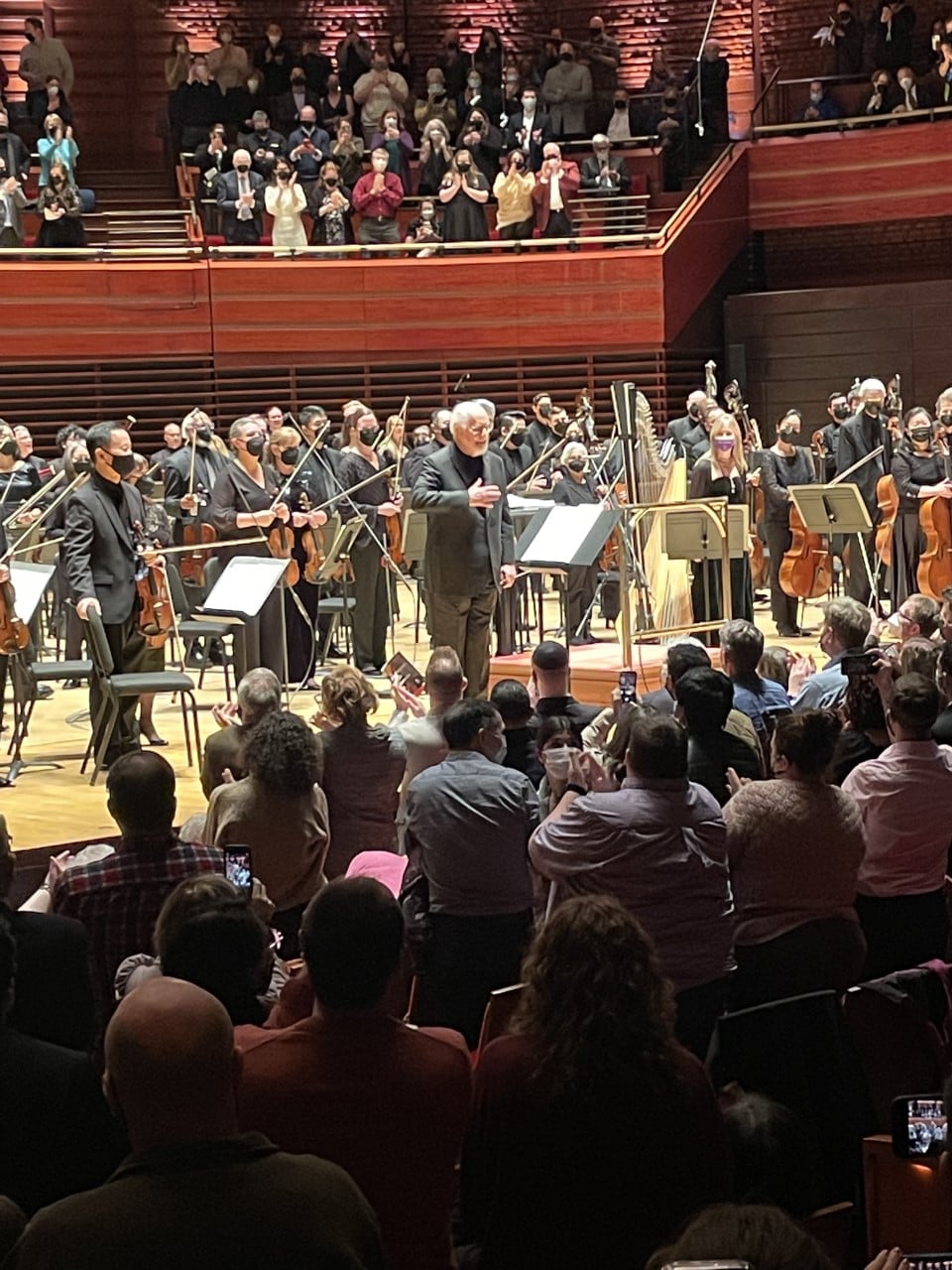
    The emotional high point of the evening came at the very beginning, when Williams emerged to a rafter-rattling standing ovation. At 90 years-old, he is a marvel. If not for his evident care when walking back and forth to the podium (I did see him fall once in Baltimore a number of years ago), I’d say he hasn’t changed a bit in the last 20 years. He did not conduct from a chair, as many superannuated maestros do, but led the entire two-hours-plus standing. He did lean on concertmaster David Kim’s shoulder a few times when getting on and off the podium.

    Anne-Sophie Mutter joined him as soloist in his brand new Violin Concerto No. 2 (given its premiere at Tanglewood in July), which they have been touring, with another performance scheduled for Carnegie Hall tomorrow night. This is probably the third time I’ve heard the piece – having seen the debut on PBS and listened to a bootleg on YouTube – and I hear more in it every time. Like most of Williams’ concertos, it has little in common with his film work, beyond a shared expertise in the handling of the instrumental colors. Everyone remembers the big moments in his film scores, but there’s real magic in the connective material. When required, Williams does delicacy as well as any frontal assault. Although I imagine Mutter knows the concerto pretty well by now (it was written for her), she played it from the score.

    Audiences at these kinds of events are not necessarily classical music people – the guy next to me commented that he had never attended the Philadelphia Orchestra before – but everyone listened attentively, or at any rate patiently, knowing the programming on the second half of the concert was calculated to please. I do hope, after all these performances of the work, that one of the major labels (Deutsche Grammophon?) will allow Mutter and Williams to record it. Record companies don’t exactly stumble over themselves to finance recordings of Williams’ concert music.

    The first half of the concert opened with a brief occasional piece, “Sound the Bells,” written to celebrate the royal wedding of Crown Prince (now Emperor) Naruhito and Masko Owada of Japan. Following the concerto, Mutter played an encore, “Across the Stars,” in an arrangement for violin and orchestra, from “Attack of the Clones.” Addressing the audience, Williams played coy, stating it was from one of the nine “Star Wars” scores, but he didn’t remember which one; he hadn’t had a chance to look it up. I find that doubtful, since he made the same quip at the Tanglewood concert, when it was also played as an encore to the concerto.

    This was not the last we would hear from Mutter. Following intermission, there were selections from “Hook” and “Close Encounters of the Third Kind.” Then Mutter returned to play some new arrangements, also written for her, of selections from “Harry Potter,” “Cinderella Liberty,” and “The Adventures of Tintin.” These were played very well, of course – Mutter is one the world’s great violinists – but, while I don’t begrudge other’s enjoyment of this sort of “easy listening” approach to film music, personally I always find it to be a little kitschy.

    Williams did give a nice shout-out to André Previn, whom he described as a lifelong friend. The two met in Hollywood, when Previn was a prolific, and Academy Award-decorated, film composer. Mutter was married to Previn from 2002 to 2006. Williams told how he asked Previn whether or not he thought Mutter, who is used to playing Mozart, Beethoven, and Tchaikovsky, would be able to grasp the jazzy idiom of “Cinderella Liberty.” Previn assured him, Williams said, that Anne-Sophie could play anything.

    Williams also observed that he and Previn were probably the only two who remembered seeing “Cinderella Liberty,” which was released 50 years ago. It was one of several remarks on Williams’ part to stir melancholy reflections of my own, that time is passing at an alarming rate, and that Williams, at 90, is a toehold on a vanishing world. He even made an aside about Errol Flynn, “for those of you who remember who he is.” There may have been those in the audience who didn’t.

    During intermission, the guy next to me had asked about Mutter. When I mentioned her marriage to Previn, I got the impression he had never heard of him. He certainly didn’t know “Bad Day at Black Rock,” “Elmer Gantry,” or “My Fair Lady.” He turned to me then, when Williams mentioned him, in acknowledgement. Time is passing very quickly indeed. When the orchestra launched into the Throne Room and End Title music from “Star Wars,” it seemed “a long time ago, in a galaxy far, far away,” and not just for the reasons originally intended.

    Standing ovations punctuated the evening. The audience recalled Williams and Mutter again and again. I attended a Williams concert a few years ago, and the encores lengthened the program by nearly a third. Last night, we got “Schindler’s List” (with Mutter) and the flying theme from “E.T.” The audience was ruthless in its adoration. Williams was recalled multiple times, but after a lovely evening, the point had come when he should be allowed to go. He’s 90 years-old, people! At last, he put two hands together and held them to his cheek, as he always does, to signify that he was tired and it was time to get some sleep. And everyone laughed, as they always do.

    I was happy to see the musicians so evidently gratified to be playing the music, and many of them were obviously star-struck in Williams’ presence. You could see it on their faces, especially of those whose hands he was able to shake. The personnel are now mostly of an age when they would have been reared, as I was, on Williams’ music. I was 10 at the time “Star Wars” was released. There was a lot of love in the room.

    New to Williams’ repertoire was the fist-bump, of which he exchanged several with people in the front row of the audience. He also reacted to cries and whistles from the balconies. He’s an exceptionally gracious presence. I can’t believe for a moment that he doesn’t recognize how much his music has meant to so many, but he always conveys a modest, appreciative disposition. What a charmed career he’s had. There’s been plenty of hard work, to be sure, supported by an innate musicianship and a masterful command of technique. But the whole Lucas-Spielberg connection gave him an unprecedented opportunity to dream big and to reach the broadest possible audience. How many other composers, living or dead, have been so fortunate?

    I don’t have a smart phone (Verizon keeps threatening to cancel my flip), so the image on this post was kindly shared with me by the gentleman next to me, with whom I had conversed a couple of times during the evening. So thank you to him!

    By coincidence, I also wrote about Williams for my article in the current edition of the Princeton weekly newspaper U.S. 1, in connection with an all-Williams concert to be given by the Capital Philharmonic of New Jersey in Trenton in this Saturday. I’ll write a little more about that in a separate post later today.
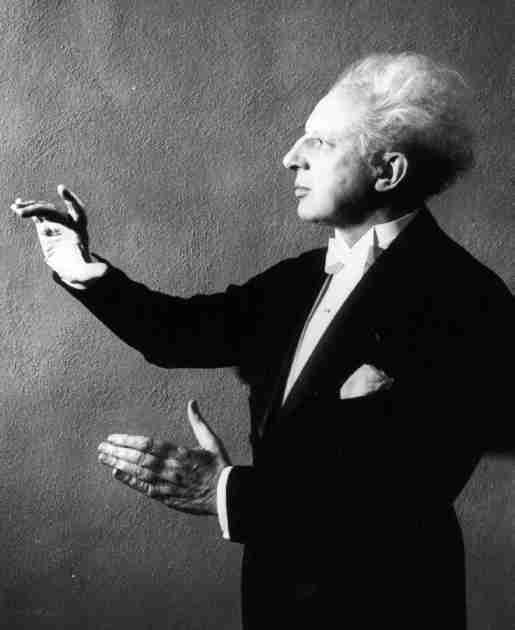
  • Leopold Stokowski The Genius at 140

    Leopold Stokowski The Genius at 140

    Maestro. Showman. Magician. Matinee idol. Prima donna. Charlatan. Genius. Superstar.

    The multifaceted Leopold Stokowski was born on this date, 140 years ago.

    Preserved (or parodied) in all media, he could be as outrageous as he was revelatory. He brought to concert music a glamour and vitality that today it too often lacks. His wild hair and faux middle-European accent, his dove-like hands, his flamboyant experiments in sound, his pursuit of the novel and the cutting edge of technology, made him a celebrity, often to the chagrin of his critics. But the proof is in the pudding, and thankfully his recorded legacy is enormous. There is ample evidence to support all claims.

    Stokowski died in 1977 at the age of 95. At 94, he signed his final recording contract, with Columbia Records, which would have kept him busy into his 100th year.

    Here’s a documentary filmed when he was 88:

    At around the 11:23 mark, he states, “We have a motto in the American symphony orchestra, which is ‘do better.’ And it would be a good motto for life all over the world today, when we are killing instead of loving. Do better, world!”

    Well said. Happy birthday, Leopold!


    One of my favorite live performances on YouTube, when it shows up (it keeps getting taken down), with Stokowski conducting Debussy at the age of 90.

    Bach in Philadelphia in 1927

    Conducting Tchaikovsky in the film “Carnegie Hall” (1947)

    Shaking hands with Mickey Mouse in “Fantasia” (1940)

    Parodied in “Long-Haired Hair” (1949)

    “Daphnis and Chloe” Suite No. 2

    London Phase 4 “The Firebird” finale

  • Philadelphia Orchestra Memories

    Philadelphia Orchestra Memories

    It’s gotten to the point that I remember things I experienced 30-35 years ago more vividly than stuff I did 30-35 weeks ago. Even so, I will sometimes try to search for old concert reviews to confirm my memory of certain dates or performers or companion pieces on a given program.

    In the course of one of such search, I happened across this: Philadelphia Orchestra concert listings from the 1980s and ‘90s, the era that formed the peak of my Philadelphia concert attendance – first as one of those who stood in line for an hour and a half, in all weather, outside the old Academy of Music at Broad and Spruce Streets, for a shot at a $1.50 amphitheater ticket (later raised to $2.00); then as a young subscriber.

    How strange it is to revisit these programs from my current perspective, all these years later. On the one hand I can remember vividly being there in the hall, and the actual performances, as if next to no time has passed; on the other, not only does it seem so very distant, but like from another dimension entirely. Surely it is for elusive sensations like this that the word as “uncanny” was coined.

    Looking back, I realize afresh how lucky I was to be able to see and hear so many of the greats in action. I can’t say that I took everything for granted, but with the passage of time, one starts to realize how seldom certain pieces are played in concert and how indispensable individual talents are.

    Pay attention not only to the conductors, but also the soloists – some of them drawn from the orchestra’s personnel. So many no longer with us, or getting toward the end of their careers.

    https://concertannals.blogspot.com/2018/12/philadelphia-orchestra-subscription_13.html

    Those of you with even longer memories may appreciate this. Scroll down for Ormandy in the ‘50s:

    https://concertannals.blogspot.com/search/label/Philadelphia%20Orchestra


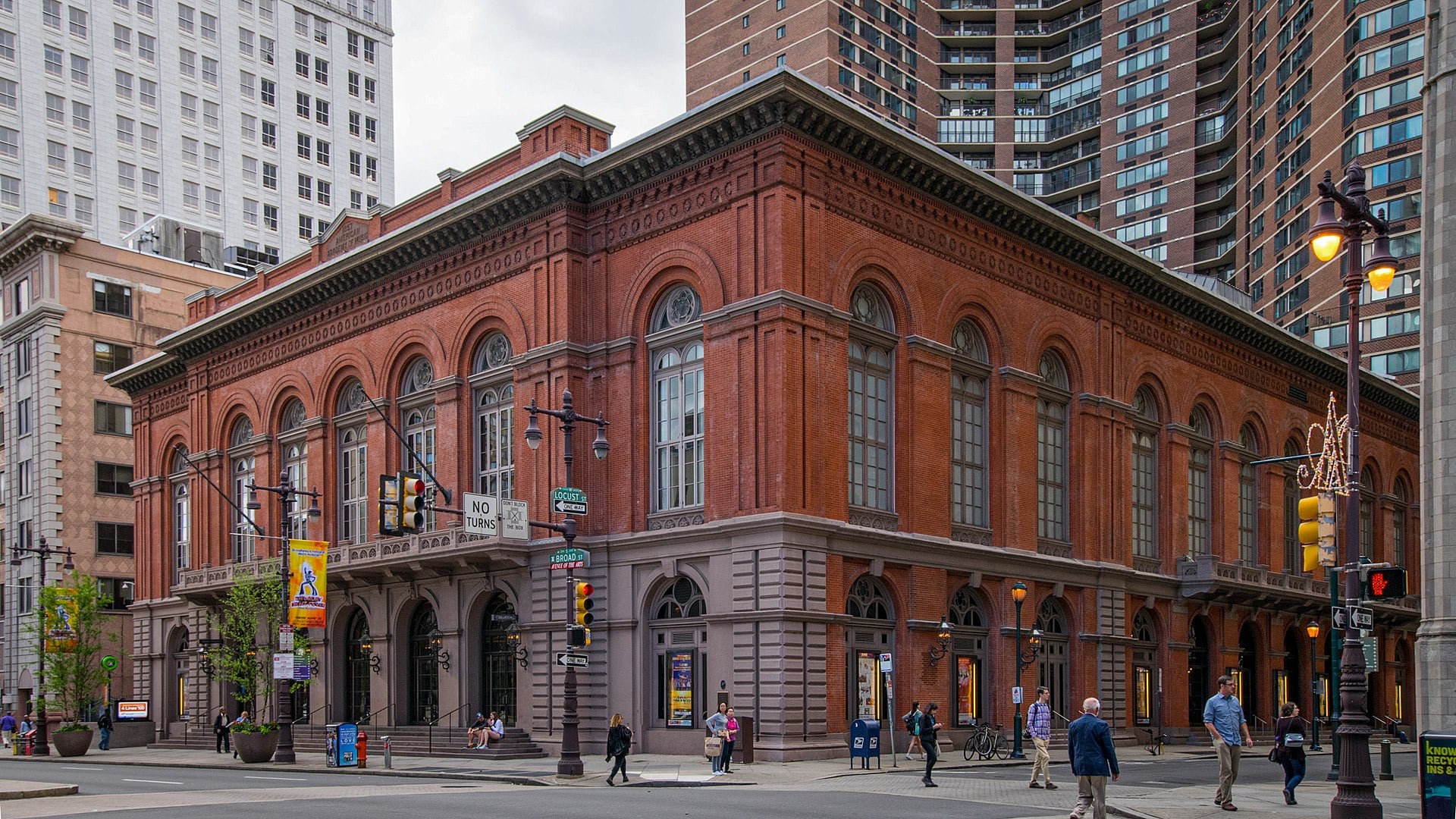
    PHOTO: Philadelphia’s Academy of Music, where I saw Mieczylslaw Horszowski, Rudolf Firkušný, Leon Fleisher, Alicia de Larrocha, Max Rudolf, Klaus Tennstedt, Rafael Frühbeck de Burgos, Erich Leinsdorf, Oscar Shumsky, Isaac Stern, Paul Tortelier, Mstislav Rostropovich, Heinrich Schiff, Lynn Harrell, Jessye Norman, Luciano Pavarotti, John Shirley-Quirk, William Warfield, Gian Carlo Menotti, Einojuhani Rautuvaara, and so many others. Entrance to the amphitheater is toward the far right of the photo. If you were in line back to the poster on the front right of the building (seen center), you knew you were in. You just had to be sure to bring a coffee and a book. No cell phones then!

  • Bernard Jacobson Philadelphia Music World Mourns

    Bernard Jacobson Philadelphia Music World Mourns

    An eminent musicologist and critic has died. Bernard Jacobson was a familiar presence in Philadelphia. During the Muti years, when he was probably my age or younger, he was a program annotator for the Philadelphia Orchestra. He also founded a chamber music series and initiated pre-concert talks. Furthermore, he very much had Muti’s ear as an advisor, so that it’s difficult to say how much he may have influenced what trickled down to audiences at the Academy of Music. On one occasion, he appeared as narrator with members of the orchestra, delivering his own translation of Stravinsky’s “L’Histoire du soldat.”

    Later in life, he regularly attended concerts of the Philadelphia Chamber Music Society, to whom he generously donated program notes. He showed a marked preference for the French form of Mozart’s middle name, Amadé.

    His accomplishments extended far beyond the City of Brotherly Love. You can read more about him here:

    http://www.musicweb-international.com/contrib/Bernard_Jacobson.htm

    I just put in an order for his book on “Polish Renaissance” composers Andrzej Panufnik, Witold Lutoslawski, Krzysztof Penderecki, and Henryk Górecki.

    Jacobson was 85 years-old.


    Jacobson recites Schoenberg’s “Ode to Napoleon” in 1968

    (1/2) https://www.youtube.com/watch?v=YcthBF0X9RU

    (2/2) https://www.youtube.com/watch?v=KsGXdBP_c30

  • Eugene Ormandy Rediscovered

    Eugene Ormandy Rediscovered

    What’s the big deal about this guy, Jenő Blau? Well, you probably know him better by his adopted name, Eugene Ormandy.

    Ormandy, a Hungarian-born violinist who studied with Jenő Hubay (for whom he was named), became a naturalized American citizen in 1927. Ultimately, he wound up directing The Philadelphia Orchestra for 44 years. In that capacity, he became one of the world’s most-recorded conductors.

    However, in some respects, he remains a vastly underrated one.

    In May, I breathlessly announced my acquisition of “Eugene Ormandy: The Columbia Legacy,” a 13-pound box set of 120 compact discs, newly remastered from original analogue sources, recorded between 1944 and 1958. I am just over halfway through my first, attentive journey through its contents, and I have no hesitation in proclaiming it the release of the year.

    At worst, there a handful of performances that never take flight as perhaps they should, and one or two interpretive misfires (I hasten to add, the execution is always impeccable), but by a staggering margin, the quality of the music-making documented in this set is both stunning and revelatory.

    It astounds me that any of the old saws about Ormandy being “workman-like,” a mere custodian of Stokowski’s “Philadelphia sound,” and too commercially successful ever to be taken seriously have not been exploded, once and for all.

    However, it remains obvious that, even with the evidence now freshly before their ears, some critics remain blinded by their preconceptions. How else to explain the blinkered, damning-with-faint-praise reception in the venerable British music magazine Gramophone and in The New York Times?

    The box is a knockout. Yes, the recordings are in mono, but there’s a vitality to the music-making that lights up the room. I’d be first in line for a sequel, in the form of an authorized box of Ormandy’s Columbia stereo recordings.

    But take your time, Sony Classical. There’s still plenty here for me to enjoy.


    One of my favorite Ormandy records was also one of his later ones, this one made for EMI. Throughout his career Ormandy succeeded in selling Sibelius’ “Four Legends from the Kalevala,” a collection of tone poems inspired by the Finnish national epic the “Kalevala,” for the early masterpiece that it is.

    The legendary Philadelphia strings in Vaughan Williams’ “Fantasia on a Theme by Thomas Tallis”

    Hindemith, “Concert Music for Strings and Brass” (the movements uploaded individually into a playlist)

    Ivan Davis joins Ormandy and the Philadelphians for Liszt’s “Hungarian Fantasy,” slightly abridged:

    Bruckner “Te Deum” with Temple University Choir

    World premiere performance of Samuel Barber’s Violin Concerto

    Shostakovich Symphony No. 4

    Reinhold Glière’s “Russian Sailor’s Dance”

    Rachmaninoff Piano Concerto No. 2, with Eugene Istomin

    Ormandy conducts “Scheherazade” (complete). This is the Philly Orchestra I remember from my college years.

    Debussy, “Reverie”

    Saint-Saens’ Symphony No. 3 “Organ”


    Happy birthday, Eugene Ormandy (1899-1985)!

Tag Cloud

Aaron Copland (92) Beethoven (95) Composer (114) Film Music (123) Film Score (143) Film Scores (255) Halloween (94) John Williams (187) KWAX (229) Leonard Bernstein (101) Marlboro Music Festival (125) Movie Music (138) Opera (202) Philadelphia Orchestra (89) Picture Perfect (174) Princeton Symphony Orchestra (106) Radio (87) Ralph Vaughan Williams (85) Ross Amico (244) Roy's Tie-Dye Sci-Fi Corner (290) The Classical Network (101) The Lost Chord (268) Vaughan Williams (103) WPRB (396) WWFM (881)

DON’T MISS A BEAT

Receive a weekly digest every Sunday at noon by signing up here


RECENT POSTS