Poland is in bloom! This Saturday on “The Lost Chord,” find refreshment in musical discoveries by four Polish composers.
We’ll hear a Fantasy for Cello and Piano by Alexandre Tansman. Tansman spent most of his career in Paris, with an interlude during the war years in the United States. Here, he met Arnold Schoenberg, wrote film scores, and developed an affection for American jazz. Still, his most enduring influences were those of his Polish and Jewish roots.
Hyper-romantic Mieczyslaw Karlowicz lived his life at such a heightened emotional pitch that he was perhaps fated to die young. His music certainly tends in that direction, occupied as most of it is with ecstasy and death. “A Sad Tale,” his last completed work, is a contemplation of suicide. Karlowicz himself was killed in an avalanche while hiking in the Tatras. He was 32 years-old.
On a lighter note, we’ll enjoy choral music by Andrzej Koszewski – his “Kaszuby Suite,” steeped in folk traditions of northwestern Poland – and a neoclassical woodwind quintet by Wojciech Kilar, who is probably best known in the West for his film scores, including those for “Bram Stoker’s ‘Dracula,’” “The Portrait of a Lady,” and “The Pianist.”
It’s a flowering of Polish music on “Poland Spring,” on “The Lost Chord,” now in syndication on KWAX Classical Oregon!
——-
Clip and save the start times for all three of my recorded shows:
PICTURE PERFECT, the movie music show – Friday at 8:00 PM EDT/5:00 PM PDT
SWEETNESS AND LIGHT, the light music program – Saturday at 11:00 AM EDT/8:00 AM PDT
THE LOST CHORD, unusual and neglected rep – Saturday at 7:00 PM EDT/4:00 PM PDT
Stream them, wherever you are, at the link!
https://kwax.uoregon.edu See less
Tag: Poland
-

“Poland Spring” on “The Lost Chord”
-
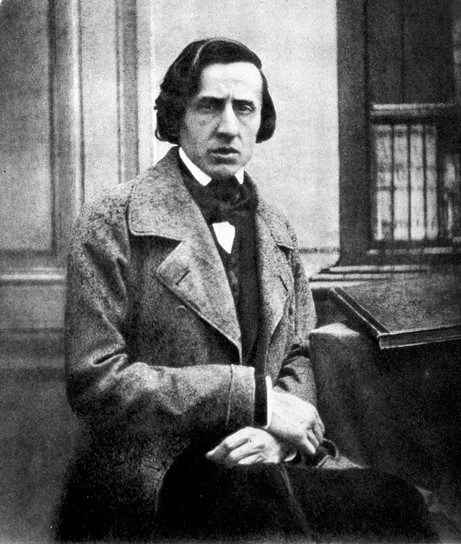
Chopin’s Heart: A Postmortem Journey
“Swear to make them cut me open so I won’t be buried alive!”
No, that was not Edgar Allan Poe, but rather the pianist and composer Frederic Chopin.
Chopin died on this date in 1849.
His music may go straight to the heart, but did you know that when the composer died, his heart went right to Poland?
Chopin had lived in exile in Paris since he arrived there in 1831 and became one of its most celebrated pianists; this in a city teeming with great pianists (including Chopin’s friend and rival, Franz Liszt).
For most of his life, Chopin struggled against poor health. When he sensed his impending death in 1849, he made the request of his sister, Ludwika Jędrzejewicz, that his heart be removed from his corpse and transported back to the land of his birth.
Ludwika complied, smuggling her brother’s heart under her cloak in a jar full of booze (probably cognac), and delivering it to Holy Cross Church in Warsaw. The heart is now immured there in a pillar. A decorative monument to the composer soon became a rallying point for Polish nationalists.
During World War II, understanding the significance of Chopin as a source of national pride, the Nazis stole the heart (paging Indiana Jones!), but it was returned after the war and reinterred.
At Chopin’s funeral in Paris, Mozart’s Requiem was played, as were Chopin’s own Preludes No. 4 in E minor and No. 6 in B minor. His body was buried in Père Lachaise Cemetery. At his graveside was heard the famous and now-hackneyed “Funeral March” from his Piano Sonata No. 2, in an orchestration by Napoléon-Henri Reber. The plinth on his grave is capped by a statue of Euterpe, muse of music, weeping over her broken lyre.
Mozart’s Requiem has been performed annually at Holy Cross Church, per the composer’s request, as part of a solemn mass conducted every year on the anniversary of his death. The International Chopin Piano Competition also takes place during this time.
While the ultimate cause of Chopin’s early demise (at 38) has been the subject of speculation – his death certificate reads tuberculosis, but modern medicine has posited, among other things, cystic fibrosis, cirrhosis, and alpha-1 antitrypsin deficiency – an examination of Chopin’s preserved heart in 2014 (through the unopened jar) suggests the likely cause of his passing was a rare case of pericarditis indeed caused by complications of chronic tuberculosis.
To avoid risking a public outcry, the composer’s heart was exhumed by church officials, scientists, and medical experts under cloak of night. Their motive was no more sinister than ensuring that the container preserving the heart had not cracked. Happily, even though the patient appears to have died of tuberculosis, his heart remains in excellent health.
Actually, despite the recurring fate of premature burial in a number of his fictions, Poe did not seem to have any extraordinary concerns about being buried alive himself. However, taphophobia is definitely a thing.
Arturo Benedetti Michelangeli plays Chopin’s Funeral March
Samson François plays the Piano Concerto No. 2
Ballade No. 4
Sviatoslav Richter fires off an Étude
Alexander Brailowsky reduced to offal by Ophüls
-
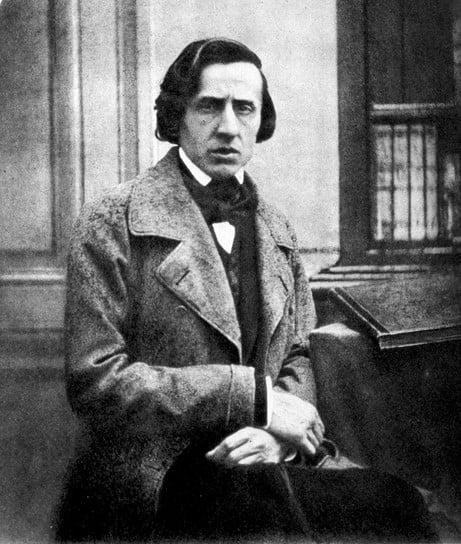
Chopin’s Heart A Wild Post-Mortem Journey
Chopin’s music may go right to the heart, but did you know that when the composer died, his heart went right to Poland?
Chopin had lived in exile in Paris since he arrived there in 1831 and became one of its most celebrated pianists; this in a city teeming with great pianists (including Chopin’s friend and rival, Liszt).
For most of his life, Chopin struggled against poor health. When he sensed his impending death in 1849, he made the request of his sister, Ludwika Jędrzejewicz, that his heart be removed from his corpse and transported back to the land of his birth.
Ludwika complied, smuggling her brother’s heart under her cloak in a jar full of booze (probably cognac), and delivering it to Holy Cross Church in Warsaw. The heart is now immured there in a pillar. A decorative monument to the composer soon became a rallying point for Polish nationalists.
During World War II, understanding the significance of Chopin as a source of national pride, the Nazis stole the heart (paging Indiana Jones!), but it was returned after the war and reinterred.
At Chopin’s funeral in Paris, Mozart’s Requiem was played, as were Chopin’s own Preludes No. 4 in E minor and No. 6 in B minor. His body was buried in Père Lachaise Cemetery. At his graveside was heard the famous and now-hackneyed “Funeral March” from his Piano Sonata No. 2, in an orchestration by Napoléon-Henri Reber. The plinth on his grave is capped by a statue of Euterpe, muse of music, weeping over her broken lyre.
Mozart’s Requiem has been performed annually at Holy Cross Church, per the composer’s request, as part of a solemn mass conducted every year on the anniversary of his death, October 17. The International Chopin Piano Competition also takes place during this time.
While the ultimate cause of Chopin’s early demise (at 38) has been the subject of speculation – his death certificate reads tuberculosis, but modern medicine has posited, among other things, cystic fibrosis, cirrhosis, and alpha-1 antitrypsin deficiency – an examination of Chopin’s preserved heart in 2014 (through the unopened jar) suggests the likely cause of his passing was a rare case of pericarditis indeed caused by complications of chronic tuberculosis.
To avoid risking a public outcry, the composer’s heart was exhumed by church officials, scientists, and medical experts under cloak of night. Their motive was no more sinister than ensuring that the container preserving the heart had not cracked. Happily, even though the patient appears to have died of tuberculosis, his heart remains in excellent health.
But enough about Chopin’s death. Let’s talk about his birth. Chopin was born on this date in 1810 – or was he? Chopin and his mom said so. However, his baptismal certificate, filled out on April 23, gives his natal day as February 22. The Chopin Society UK, in defiance of the composer and his family, is inclined to agree.
So it is that Chopin’s entrance into and exit from this world have been shrouded in mystery and mired in controversy. Moral of the story: don’t trust public records (at least in the 19th century)!
Happy birthday, Chopin.
Arturo Benedetti Michelangeli plays the Funeral March
Samson François plays the Piano Concerto No. 2
Ballade No. 4
Sviatoslav Richter fires off an Étude
Alexander Brailowsky reduced to offal by Ophüls
-
Chopin Monkeys A Musical Connection
Chopin and monkeys.
Tag Cloud
Aaron Copland (94) Beethoven (95) Composer (114) Film Music (149) Film Score (143) Film Scores (255) Halloween (97) John Williams (197) KWAX (232) Leonard Bernstein (105) Marlboro Music Festival (125) Movie Music (164) Mozart (91) Opera (215) Philadelphia Orchestra (90) Picture Perfect (174) Princeton Symphony Orchestra (110) Radio (90) Ross Amico (244) Roy's Tie-Dye Sci-Fi Corner (290) The Classical Network (101) The Lost Chord (269) Vaughan Williams (107) WPRB (397) WWFM (881)