Tag: Ralph Vaughan Williams

  • Beat the Heat with Wintry Film Scores

    Beat the Heat with Wintry Film Scores

    Though the weather is uncharacteristically lovely today in the Trenton-Princeton area, I wholly expect to be sweating it out again in front of the air conditioner sometime soon. (It will be back to 90 by the weekend.) In that glass-half-empty frame of mind, this week on “Picture Perfect,” we’ll have an hour of aural escapes from the grim heat of summer.

    “The Snow Storm” (1964) is an adaptation of Pushkin’s “The Tales of the Late Ivan Petrovich Belkan.” This year marks the centenary of the birth of the composer, Georgy Sviridov. The Waltz and Romance from “The Snow Storm” enjoyed particular popularity, bringing Sviridov two of his greatest hits.

    Then Arthur Honegger will take us to higher altitudes with his music for “The Demon of the Himalayas” (1935), complete with the eerie electronic timbre of the ondes Martenot.

    Ralph Vaughan Williams will guide us to the South Pole with selections from his score for “Scott of the Antarctic” (1948). The music perfectly reflects the sublime, austere beauty of a hostile environment. The score became the basis for Vaughan Williams’ Symphony No. 7, “Sinfonia Antarctica.”

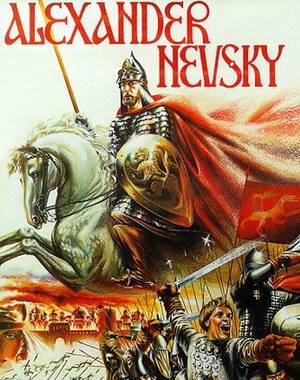
    Finally, the “Battle on the Ice” sequence from “Alexander Nevsky” (1938) provides a textbook marriage of music and film. Director Sergei Eisenstein granted the composer, Sergei Prokofiev, the unusual luxury of cutting the images to suit his music, as opposed to the usual practice, which is the other way around. The result is not only one of the great films, but also one of the great film scores.

    Chill out with wintry scenes from world cinema this week, on “Picture Perfect” – music from the movies – this Friday evening at 6, with a repeat Saturday morning at 6; or listen to it later as a webcast at wwfm.org.

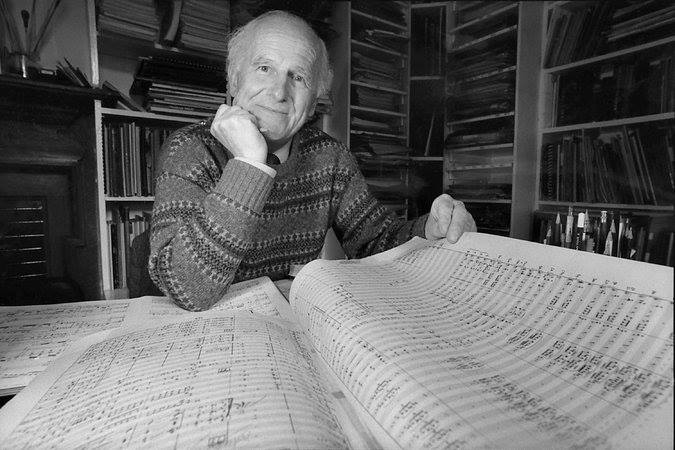
    PHOTO: Very cool

  • Howard Ferguson Composer’s Lost Chord Rediscovered

    Howard Ferguson Composer’s Lost Chord Rediscovered

    Howard Ferguson is an interesting figure. Born in Belfast in 1908, he had ambitions to become a composer. To this end, he traveled to London, where he studied at the Royal College of Music with, among others, Ralph Vaughan Williams. He also met and befriended a fellow student, Gerald Finzi. He achieved early success with works like the Octet of 1933, and no less a personage than Jascha Heifetz recorded his Violin Sonata No. 1.

    Even so, over the decades his music has slipped from consciousness, no doubt helped by the fact that by mid-life, he felt he had said everything he had to say as a composer. He devoted his last four decades to musicological pursuits, editing and promoting works of Purcell, Schubert and Finzi. In the 1990s, he also wrote a cookbook, “Cooking Solo.” Ferguson died in 1999, not long after his 91st birthday.

    Thankfully, he lived long enough to hear some fine recordings as part of a modest revival of his music in the 1980s and ‘90s. A number of his chamber works were released on the Hyperion label by fine musicians like Thea King and members of the Nash Ensemble; his Piano Concerto was recorded for EMI by Howard Shelley; and Richard Hickox conducted a disc of his orchestral works for Chandos.

    Also on the latter album is what turned out to be Ferguson’s last completed work, for chorus and orchestra, “The Dream of the Rood,” composed in 1958. After that, the composer embarked on a string quartet, but became frustrated by the lack of a fresh perspective and tore the thing up.

    “The Dream of the Rood” is based on an 8th century Anglo-Saxon poem which marries the Passion story with characteristics of the secular heroic tradition. The poem is framed by a narrator’s vision of a magnificent bejeweled tree. Upon closer inspection, however, he finds its jewels bespattered with blood. It becomes apparent that this tree was the very same upon which Christ was crucified.

    The middle portion of the poem is told from the tree’s perspective, with the tree being cut down and carried away for the purpose of the crucifixion. The nails pierce the tree, yet man and tree endure, refusing to fall, bearing unimaginable pain for the sake of mankind. Just as Christ is resurrected, so is the Cross resurrected, now adorned with gold and silver. It is honored above all trees, just as Christ is honored above all men. The narrator gives praise to God, filled with hope at the prospect of eternal life and a desire to be nearer the glorious Cross.

    “The Dream of the Rood” will be the featured work on the “The Lost Chord” this Easter Sunday. I hope you’ll join me for “Rood Awakening,” tomorrow night at 10 ET, with a repeat Wednesday evening at 6; or that you’ll listen to it later as a webcast at http://www.wwfm.org.

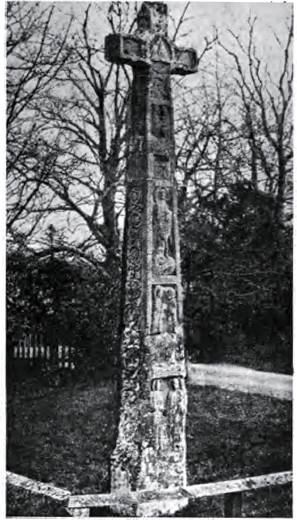
    PHOTO: Portions of the poem are engraved on the 8th century Ruthwell Cross (left, as it appeared between 1823 and 1887; and right, at its current location at Ruthwell Church, Dumfriesshire, Scotland)

  • Roy Douglas Arranger of Les Sylphides Dies at 107

    Roy Douglas Arranger of Les Sylphides Dies at 107

    I am very sorry to share the news that Roy Douglas has died at the age of 107. Douglas, best known for his arrangement of Chopin keyboard works into the ballet “Les Sylphides,” was the longtime personal assistant of both Ralph Vaughan Williams and Sir William Walton. Until the day of his death, he was listed as vice president of the Ralph Vaughan Williams Society. God speed, Mr. Douglas.

    http://www.kentnews.co.uk/news/tributes_paid_to_one_of_britain_s_most_distinguished_musicians_roy_douglas_after_he_dies_aged_107_1_4007351

    PHOTO: Douglas (with pipe) and RVW in 1953

  • Wintry World Cinema Picture Perfect

    Wintry World Cinema Picture Perfect

    This week on “Picture Perfect,” we look beyond our shores for an hour of wintry scenes from world cinema, with entries from England, Finland, the Soviet Union and Japan.

    “Dersu Uzala,” from 1975, was one of the best of Akira Kurosawa’s later films, although it seems to have slipped into obscurity in the shadow of “Kagemusha” and “Ran.” The plot concerns the friendship in the early 20th century between a Russian explorer and an East Asian trapper and hunter, who acts as his guide.

    “Dersu Uzala” was the last of Kurosawa’s works to be recognized with an Academy Award for Best Foreign Language Film. The music is by Isaac Schwartz.

    Snow again is in abundance in “The White Reindeer,” a Finnish film from 1952. Set in Lapland, it tells the tale of a lonely herder’s wife, who visits a local shaman and is transformed into a shapeshifting, vampiric white reindeer.

    The film was honored at the Cannes Film Festival with a special award for Best Fairy Tale Film, and at the Golden Globes as Best Foreign Film. Einar Englund wrote the music.

    Sergei Prokofiev’s concert suite from “Lieutenant Kijé ” is very well known, but for some reason the film is not. In fact, it has been widely circulated in program notes that the film was never actually completed, which is false. It has not been available for purchase in the U.S. for as long as I can remember, but you can watch it here:

    Why Criterion can’t get a hold of this one, I don’t know, but I’m sure there must be an explanation. The famous sleigh-ride, the “Troika,” begins just before the 45 minute mark. Note that the baritone on the soundtrack is none other than the composer himself, who thought the original singer employed for the purpose too refined.

    Finally, we head to the South Pole with Robert Falcon Scott, for “Scott of the Antarctic.” England’s Ealing Studios is best recognized for its classic comedies of the 1950s, many of them starring Alec Guinness. There’s not much funny about this harrowing story, released in 1948, which stars John Mills and sports the most celebrated film score of Ralph Vaughan Williams. Vaughan Williams’ music perfectly reflects the sublime, austere beauty of a hostile environment. Material from the score was later reworked to create his Symphony No. 7, the “Sinfonia Antarctica.”

    Bring your gloves and a hat. It’s a small world of cold this week, on “Picture Perfect,” this Friday evening at 6 ET, with a repeat Saturday morning at 6, or you can listen to it later as a webcast at http://www.wwfm.org.

  • English Nativity Settings: Parry & Vaughan Williams

    English Nativity Settings: Parry & Vaughan Williams

    This Sunday night on “The Lost Chord,” we’ll celebrate Christmas with an hour of English Nativity settings.

    Hubert Parry was part of the English Musical Renaissance – not the actual Renaissance, but rather that flowering of English music which took place at the close of the 19th century, after a nearly 200 year dearth of world class composers following the death of Henry Purcell in 1695.

    A professor at the Royal College of Music in London, Parry eventually became the school’s head. He influenced an entire generation of much better known composers, people like Ralph Vaughan Williams, Gustav Holst, John Ireland and Frank Bridge.

    We’ll be listening to Parry’s “Ode on the Nativity,” for soprano, chorus and orchestra, on a text by William Dunbar. The work was given its premiere in 1912 at the Hereford Three Choirs Festival, on the same day as Vaughan Williams’ “Fantasia on Christmas Carols.”

    Vaughan Williams wrote so much Christmas music. It’s remarkable that such a spiritual composer, who seemed particularly attracted to religious texts and Biblical subjects, was a self-proclaimed agnostic. At least by the end of his life he had softened his stance from atheism! He was particularly passionate about Christmas carols.

    We’ll be listening to the very last music he ever composed, “The First Nowell,” a nativity play arranged and adapted from medieval pageants by Simona Pakenham.

    Vaughan Williams worked diligently on the piece during his final month, but died before the work’s completion. Nonetheless, he had finished orchestrating two thirds of it and had mapped out the rest rather thoroughly. The finishing touches were applied by his assistant, Roy Douglas – he of “Les Sylphides” fame.

    By the way, Douglas just turned 107 on December 12! He is still listed on the board of the Ralph Vaughan Williams Society as its vice-president. Next to Douglas, Vaughan Williams was a mere lad while he was at work on the piece, at the age of 85.

    I hope you’ll join me for “A Play in a Manger,” this Sunday night at 10 ET, with a repeat Christmas Eve at 6; or that you’ll listen to it later as a webcast at http://www.wwfm.org.

    Merry Christmas!

    PHOTOS: Vaughan Williams with fur on his clothes; Parry with fur on his face

Tag Cloud

Aaron Copland (93) Beethoven (95) Composer (114) Film Music (125) Film Score (143) Film Scores (255) Halloween (94) John Williams (189) KWAX (229) Leonard Bernstein (101) Marlboro Music Festival (125) Movie Music (140) Opera (202) Philadelphia Orchestra (89) Picture Perfect (174) Princeton Symphony Orchestra (106) Radio (87) Ralph Vaughan Williams (85) Ross Amico (244) Roy's Tie-Dye Sci-Fi Corner (290) The Classical Network (101) The Lost Chord (268) Vaughan Williams (103) WPRB (396) WWFM (881)

DON’T MISS A BEAT

Receive a weekly digest every Sunday at noon by signing up here


RECENT POSTS