Tag: Ralph Vaughan Williams

  • Viola Love from Marlboro Music Festival

    Viola Love from Marlboro Music Festival

    The viola gets some love on this week’s “Music from Marlboro.” We’ll hear two very different quintets, composed over a century apart, that yet reveal their creators’ shared affinity for the instrument’s dark, rich timbre.

    Ralph Vaughan Williams’ “Phantasy Quintet,” written in 1912, was one of numerous works commissioned from England’s great composers by one Walter Wilson Cobbett, a businessman and amateur musician whose dual passions were chamber music and music of the Elizabethan era. (“Phantasy” was Cobbett’s preferred spelling.) The work is full of Tudor inflections and stamped by Vaughan Williams’ tell-tale love of folk music. Vaughan Williams doubles his violas, and the instrument is heard to great effect throughout the piece. We’ll hear a performance from the 1975 Marlboro Music Festival, with James Buswell and Sachiko Nakajima, violins; Philipp Naegele and Caroline Levine, viola; and Anne Martindale, cello.

    Wolfgang Amadeus Mozart, too, adds a second viola to his String Quintet No. 5 in D Major, K. 593. Composed in 1790, the work was recollected by the composer’s widow, Costanze, to have been written for another musical amateur, speculated to be Johann Trost. Trost must have been quite the gifted dilettante. He also knew Haydn from Esterhaza, and Haydn dedicated some of his quartets to him. When Haydn and Mozart played through the D Major Quintet together before Haydn’s first visit to London, the two men took turns indulging in the first viola part.

    The work was known for centuries as the “Zigzag” because of an alteration to the original manuscript that modified what had been a descending chromatic figure in the final movement into something decidedly more humorous. We’ll hear a performance from Marlboro in 2005, with Sarah Kapustin and Diana Cohen, violins; Mark Holloway and Sebastian Krunnies, viola; and David Soyer, cello.

    The two quintets will be divided by an evocative “Elegiac Trio” by Sir Arnold Bax, composed in 1916. The work, scored for flute, viola, and harp, appeared the year after Debussy’s trio for the same instrumental combination (which Bax may or may not have known). Its alluring melancholy emerged from a world at war. Bax was especially affected by escalating tensions between England and his beloved Ireland, which had just boiled over into violence with the Easter Rising. We’ll hear a performance of the trio from 1978, with Carol Wincenc, flute; Caroline Levine, viola; and Moya Wright, harp.

    Leave your viola jokes in the comments section, if you must; then join me for more exceptional music-making from the archives of the Marlboro Music Festival, this Wednesday evening at 6 EDT, on WWFM – The Classical Network and wwfm.org.

    Marlboro School of Music and Festival: Official Page

  • Musical Memorials for the Fallen Composers

    Musical Memorials for the Fallen Composers

    War, what is it good for? Absolutely nothin’.

    Still, a great many brave soldiers laid down their lives in combat and numerous unfortunate civilians were collateral casualties. Join me this Thursday morning, in advance of Memorial Day, as we salute the musical dead of all countries.

    We’ll hear music by composers who died too young: George Butterworth, André Caplet, Cecil Coles, Enrique Granados, Ivor Gurney, Frederick Septimus Kelly, Alberic Magnard, Rudi Stephan, and Anton Webern. We’ll also hear elegies for the fallen by Romeo Cascarino, Aaron Copland, Bernard Herrmann, Gustav Holst, Charles Ives, Maurice Ravel, and Ralph Vaughan Williams.

    The morning’s highlight will be John Fould’s “A World Requiem,” scored for a mass of soloists, choristers, and orchestral musicians to rival those of Mahler’s “Symphony of a Thousand.” Composed between 1919 and 1921, the piece was conceived by Foulds as a memorial to the dead of all nations in the wake of the First World War. It was given its first performance at Royal Albert Hall on Armistice Night, November 11, 1923. It then lay in neglect for 80 years, until it was resurrected by Leon Botstein, who conducted the work’s revival at Royal Albert Hall on November 11, 2007. We’ll hear his recording, which was issued two months later on the Chandos label.

    I hope you’ll join me for pieces of war and prayers for peace, Thursday morning from 6 to 11 EDT, on WPRB 103.3 FM and wprb.com. Sleep is short, but memory is long, on Classic Ross Amico.


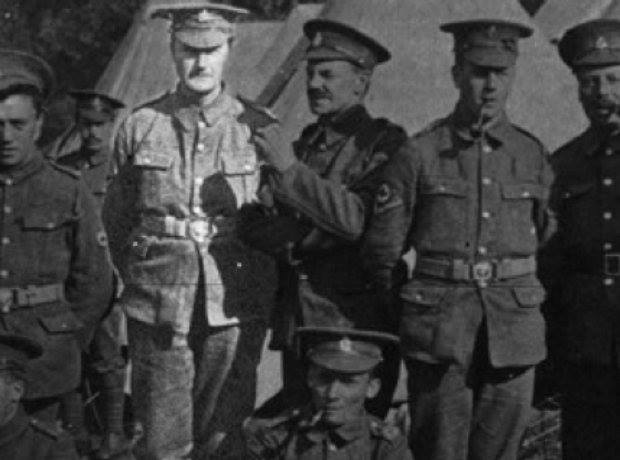
    PHOTO: Ralph Vaughan Williams in uniform. His protégé, George Butterworth, honored with the Military Cross for acts of valor on the Somme, was killed by a German sniper at the age of 31.

  • Shakespeare Birthday Music on WPRB

    Shakespeare Birthday Music on WPRB

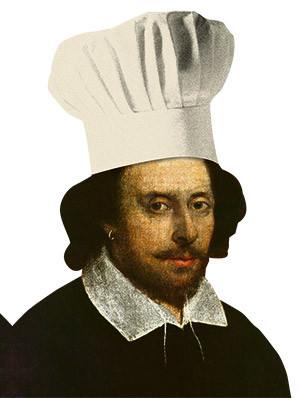
    First comes Groundhog Day, then comes Easter, then comes Shakespeare’s birthday. All that remains is for us to lock up a sacrifice in the Wicker Man on April 30 and Sulis will have been appeased.

    We don’t know when, exactly, the Bard was born, but his baptismal date is April 26, 1564. Since it’s human nature to try to keep things neat, his natal day is generally held to be April 23, the very date of his death in 1616.

    I hope you’ll join me this morning, as we celebrate the Bard, with a full morning of music inspired by his plays. We’ll hear selections from composers who were Shakespeare’s contemporaries, right on down to Paul Moravec’s “Tempest Fantasy,” which was awarded the Pulitzer Prize for Music in 2004.

    Other treats will include a recording of Ralph Vaughan Williams conducting his own “Serenade to Music,” after a text from “The Merchant of Venice,” a reconstructed duet from a projected opera on the subject of “Romeo and Juliet” by Peter Ilych Tchaikovsky, and incidental music for a production of “Antony and Cleopatra” by French composer Florent Schmitt, in an opulent recording conducted by JoAnn Falletta.

    Just some of the ingredients that will go into a secret recipe made public from 6 to 11 a.m. EDT, on WPRB 103.3 FM and wprb.com. We engage in a little Shake and bake, on Classic Ross Amico.


    If music be the food of love, bake on.

  • Voice Trio Concert at Temple Judea

    Voice Trio Concert at Temple Judea

    On today’s Noontime Concert, Emily Burn, Victoria Couper, and Clemmie Franks, the female vocal trio known as Voice, will present a program titled “If Music Be the Food of Love.”

    The concert will be made up of songs exploring the beauty, heartache, and humor of love, with repertoire drawn from medieval France and Germany, 18th century catches, and arrangements of Shakespearean and traditional songs from England and Scotland. Also on the program will be works commissioned by the group from contemporary British composers.

    The concert took place at Temple Judea of Bucks County in February. Temple Judea is located in Furlong, PA. Voice will be joined by the Temple Judea Choir for several of the selections. To find out more about Temple Judea, which will host the Grammy Award winning Turtle Island String Quartet this Saturday at 7:30 p.m., visit templejudea.org.

    Following the noontime concert broadcast, I hope you’ll stick around for Ralph Vaughan Williams’ Symphony No. 9, among our featured works. The concert will begin at 12:00 EST. I’ll be there, spinning the platters until 4, on WWFM – The Classical Network and at wwfm.org.

  • Music for Casals Giants Among Friends

    Music for Casals Giants Among Friends

    It’s hardly surprising that anyone would be moved to write music for Pablo Casals. Regarded by many as the greatest cellist of his time, perhaps ever, he was certainly a giant-of-an-artist, and of a man. Born in Catalonia, he stood up to the Franco regime, entering into self-imposed exile and refusing to perform in countries that recognized Franco’s authority. He rediscovered the Bach cello suites in a secondhand bookshop and made them famous. Over the span of his career, he played for both Queen Victoria and John F. Kennedy.

    As a conductor and administrator, he founded the Prades Festival and the Casals Festival. He established the Puerto Rico Symphony and the Conservatory of Music in Puerto Rico. He gave master classes, conducted and recorded at Marlboro. He was even a talented composer.

    This Sunday night on “The Lost Chord,” we’ll hear three works written for Casals by his notable friends and colleagues.

    Ralph Vaughan Williams wrote his seldom-heard “Fantasia on Sussex Folk Tunes” around the time he was at work on his Piano Concerto and “Job: A Masque for Dancing.” Casals performed the piece in 1930. It was not heard again until 1983, the year of its world-premiere recording (featuring Julian Lloyd Webber). The composer later undertook a full-scale concerto for Casals. It was never completed, but the sketches for its slow movement were realized for a 2010 performance at the BBC Proms, under the title “Dark Pastoral.”

    Donald Francis Tovey, who would achieve fame as a musicologist and writer on music, wrote quite a lot of music himself, most of it now forgotten. In 1935, he composed a concerto for Casals. At nearly an hour in length, the work may be the longest cello concerto ever written.

    In 1912, Tovey was a houseguest of Casals and cellist Guilhermina Suggia, at their summer home at Playa San Salvador on the Mediterranean coast. There, he played tennis, swam and performed chamber music with the likes of Enrique Granados and Mieczyslaw Horzsowski. He also made great strides on his opera, “The Bride of Dionysus.” As a show of thanks, he composed for his hosts a Sonata for Two Cellos in G major, which became part of the evenings’ entertainments. The work’s second movement is a set of variations on a Catalan folk song. We’ll hear it performed by Marcy Rosen and Frances Rowell, from a Bridge Records, Inc. release.

    Finally, Arnold Schoenberg, himself an amateur cellist, had done editorial work on three pieces by the 18th century composer Georg Matthias Monn for inclusion in the publication “Monuments of Music in Austria.” When Casals invited Schoenberg to conduct his orchestra in Barcelona, the composer set about arranging a “new” concerto, based upon a harpsichord work by Monn, written in 1746. We’ll hear Schoenberg’s transformation of the piece performed by Yo-Yo Ma.

    Join me for “Casals’ Pals” – music written for Casals by notable composers, friends and colleagues – this Sunday night at 10 EDT, on WWFM – The Classical Network and at wwfm.org.

Tag Cloud

Aaron Copland (93) Beethoven (95) Composer (114) Film Music (125) Film Score (143) Film Scores (255) Halloween (94) John Williams (189) KWAX (229) Leonard Bernstein (101) Marlboro Music Festival (125) Movie Music (140) Opera (202) Philadelphia Orchestra (89) Picture Perfect (174) Princeton Symphony Orchestra (106) Radio (87) Ralph Vaughan Williams (85) Ross Amico (244) Roy's Tie-Dye Sci-Fi Corner (290) The Classical Network (101) The Lost Chord (268) Vaughan Williams (103) WPRB (396) WWFM (881)

DON’T MISS A BEAT

Receive a weekly digest every Sunday at noon by signing up here


RECENT POSTS