Tag: Ralph Vaughan Williams

  • Vaughan Williams Birthday English Folk Music on WWFM

    Vaughan Williams Birthday English Folk Music on WWFM

    In case you haven’t heard…

    Today is the birthday of Ralph Vaughan Williams (1872-1958). We wend our way to WWFM next to celebrate this bear-like, somewhat slovenly man, who, with his friend Gustav Holst, spearheaded the movement to establish a distinctly English sound in music. We’ll hear Vaughan Williams’ “English Folk Song Suite,” followed by Holst’s “Somerset Rhapsody.” The two share a common ancestry – as will be immediately recognized.

    Cows and Tudors loom large today as we honor Vaughan Williams, from 4 to 7 p.m. EDT, on WWFM – The Classical Network and at wwfm.org.


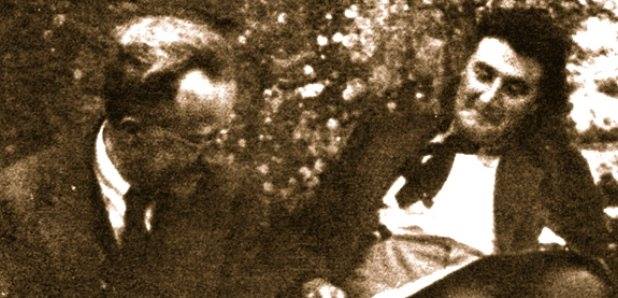
    Best buds Gustav Holst (left) and RVW

  • Ross Amico Moving Day Playlist on WPRB

    Ross Amico Moving Day Playlist on WPRB

    On second thought, don’t just watch – give me a hand with some of these boxes! Today is Moving Day for Classic Ross Amico. I hope you’ll join me at my new time, Friday morning from 6 to 11. That’s me wandering around the rest stop, buckling under the stress and exertion, gibbering like an idiot.

    Lots of great music, though! Right now, we’re listening to baritone John Shirley-Quirk, singing “Songs of Travel” by Ralph Vaughan Williams. Yet to come: Robert Moran’s “Points of Departure,” Paul Lansky’s “Travel Diary,” and Marc Blitzstein’s “Airborne Symphony,” among others.

    It’s all music about the experience of moving and different modes of transportation until 11:00 ET, here on WPRB 103.3 FM and at wprb.com. I’ll be keeping you in beer and pizza, on Classic Ross Amico.

    PLEASE NOTE: “Classical with Kevin,” which formerly aired from 8:30 to 11, has moved to Monday!

  • Ralph Vaughan Williams Symphony No 5 Birthday

    Ralph Vaughan Williams Symphony No 5 Birthday

    Today is the birthday of one of my favorite composers of all time, Ralph Vaughan Williams. Since it’s a holiday, perhaps you’ll have time to luxuriate in his radiant Symphony No. 5, an unexpected of ray of hope composed during the darkest days of World War II (1938-1943). Some of the ideas were incorporated from work on his opera “The Pilgrim’s Progress.”

    The symphony is dedicated to another one of my all-time favorites, Jean Sibelius. When Sibelius heard the work in Stockholm, conducted by Malcolm Sargent, he wrote, “This symphony is a marvelous work… the dedication made me feel proud and grateful… I wonder if Dr. Williams has any idea of the pleasure he has given me?”

    It’s ironic that Vaughan Williams, a self-professed agnostic (who had softened his stance from atheism), often proved to be an exceptionally spiritual composer. The audience at the symphony’s premiere, with the 70 year-old composer conducting the London Philharmonic Orchestra, emerged from Royal Albert Hall feeling enriched and empowered to face anything the future threw their way. Vaughan Williams’ music stirred in its listeners a determination to strive for light and life. The music somehow embodied everything the Allies were fighting for.

    Happy Birthday, Ralph Vaughan Williams (1872-1958).


    Here’s Vaughan Williams conducting his Symphony No. 5 in 1952:

    And a recording of the work in more up-to-date sound, with the late, great Vernon Handley:

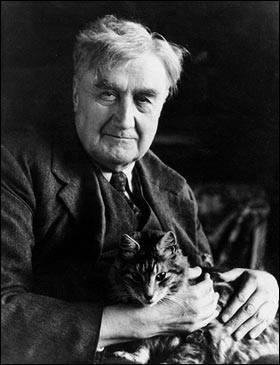
    PHOTO: RVW and Foxy

  • Poetry and Music on WPRB This Week

    Poetry and Music on WPRB This Week

    If music and sweet poetry agree,
    As they must needs, the sister and the brother,
    Then must the love be great ’twixt thee and me,
    Because thou lov’st the one and I the other.
    Dowland to thee is dear, whose heavenly touch
    Upon the lute doth ravish human sense;
    Spenser to me, whose deep conceit is such,
    As passing all conceit, needs no defence.
    Thou lov’st to hear the sweet melodious sound
    That Phœbus’ lute, the queen of music, makes;
    And I in deep delight am chiefly drowned
    Whenas himself to singing he betakes:
    One god is god of both, as poets feign,
    One knight loves both, and both in thee remain.

    – Richard Barnfield, 1574-1621 (attributed to Shakespeare)


    This Thursday morning on WPRB, we invoke the Muses (or a number of them anyway) for five hours of poetry and music.

    We’ll hear our share of singing, of course – choral settings and lieder – but also a satisfying number of orchestral and instrumental works, with music inspired by the poetry or persons of Matthew Arnold, Aloysius Bertrand, William Blake, Robert Burns, Lord Byron, Lewis Carroll, Samuel Taylor Coleridge, E.E. Cummings, A.E. Houseman, Victor Hugo, Ben Johnson, Edward Lear, Federico Garcia Lorca, Edgar Allan Poe, Alexander Pushkin, William Shakespeare, Percy Bysshe Shelley, Wallace Stevens, Dylan Thomas and William Butler Yeats, or as many of those as I can get to.

    We’ll also enjoy a visit from J.D. Burnett, founder and artistic director of the Kinnara Ensemble, which will perform at The Hun School of Princeton this Saturday at 8 p.m., presenting Ralph Vaughan Williams’ “Serenade to Music,” along with works by Johannes Brahms and others. He’ll drop by at around 10:00 to tell us a little bit more about their season.

    I hope you’ll join me for a banquet of poetry and music, tomorrow morning from 6 to 11 ET, at WPRB 103.3 FM or online at wprb.com. We’re not averse to verse on Classic Ross Amico.

  • Sir David Willcocks A Choral Legend Remembered

    Sir David Willcocks A Choral Legend Remembered

    Sir David Willcocks did so much, so well, and for so long, it’s hard to believe he’s gone. Particularly renowned for his work with the Choir of King’s College, Cambridge, which he led from 1957 to 1974, he and the choir received world-wide exposure through their albums and the annual Christmas Eve broadcast of “Nine Lessons and Carols.”

    Willcocks set down notable recordings of Thomas Tallis’ “Spem in Alium,” Gregorio Allegri’s “Miserere,” choral masterworks of Johann Sebastian Bach, and what many regard as the definitive interpretation of the Fauré Requiem.

    His work on “Carols for Choirs,” a series of anthologies he co-edited with Reginald Jacques and John Rutter, yielded the most widely used source of carols in the British Anglican tradition, very popular among choral societies. Many of the pieces had been written, or arranged, for the annual Service of “Nine Lessons and Carols.”

    In addition to his considerable accomplishments in the classical realm, Willcocks directed his London Bach Choir in the Rolling Stones song, “You Can’t Always Get What You Want.”

    This Sunday night on “The Lost Chord,” we remember arguably the most esteemed British choral director of his generation, who died on September 17 at the age of 95, with performances of music composed by a couple of his countrymen.

    It may seem like an awfully long stretch, to reach from Mick Jagger to the New Testament, but in the writing of “Sancta Civitas” (“The Holy City”), Ralph Vaughan Williams turned to the Book of Revelation (so perhaps it’s not so far off, after all). The oratorio, which spans just a little over 30 minutes, received its first performance in 1926. Late in life, Vaughan Williams claimed it was his favorite among his choral works. We’ll hear a classic recording with tenor Ian Partridge and baritone John Shirley-Quirk.

    In the 1970s, Willcocks became director of the Royal College of Music. We’ll sample some of his work with the chamber choir there, with performances of two pieces by Gustav Holst: “Hymn to Dionysus,” composed in 1913, with its presentiments of “Jupiter, the Bringer of Jollity” from “The Planets,” and a selection from “Choral Hymns from the ‘Rig Veda,’” written between 1908 and 1912, one of numerous works to grow out of the composer’s fascination with Sanskrit literature.

    I hope you’ll join me for “King David,” as we honor the legendary Sir David Willcocks, this Sunday night at 10 ET, with a repeat Wednesday evening at 6; or that you’ll listen to it later as a webcast, at wwfm.org.

Tag Cloud

Aaron Copland (93) Beethoven (95) Composer (114) Film Music (125) Film Score (143) Film Scores (255) Halloween (94) John Williams (189) KWAX (229) Leonard Bernstein (101) Marlboro Music Festival (125) Movie Music (140) Opera (202) Philadelphia Orchestra (89) Picture Perfect (174) Princeton Symphony Orchestra (106) Radio (87) Ralph Vaughan Williams (85) Ross Amico (244) Roy's Tie-Dye Sci-Fi Corner (290) The Classical Network (101) The Lost Chord (268) Vaughan Williams (103) WPRB (396) WWFM (881)

DON’T MISS A BEAT

Receive a weekly digest every Sunday at noon by signing up here


RECENT POSTS