Tag: Ralph Vaughan Williams

  • Rediscovering Lost Incidental Music

    Rediscovering Lost Incidental Music

    The play’s the thing – not only to uncover the conscience of the king, but to inspire music from untold composers down the ages. We refer to this kind of music, somewhat belittlingly, as “incidental.”

    No doubt, there are instances of incidental music having entered the standard concert repertoire – Edvard Grieg’s “Peer Gynt,” Georges Bizet’s “L’Arlésienne,” Felix Mendelssohn’s “A Midsummer Night’s Dream” – but so much more numerous are those that have suffered from neglect. Generally speaking, even under the best circumstances, the music is distilled into concert suites, offering but a few numbers, while some excellent work by some very fine composers goes unheard.

    This Sunday morning on WPRB, we’ll listen to incidental music by composers both well-known and perhaps not-quite-so, and marvel at the ingenuity on display, as acts are bridged and scenes are set in flourishes that last no more than a few moments.

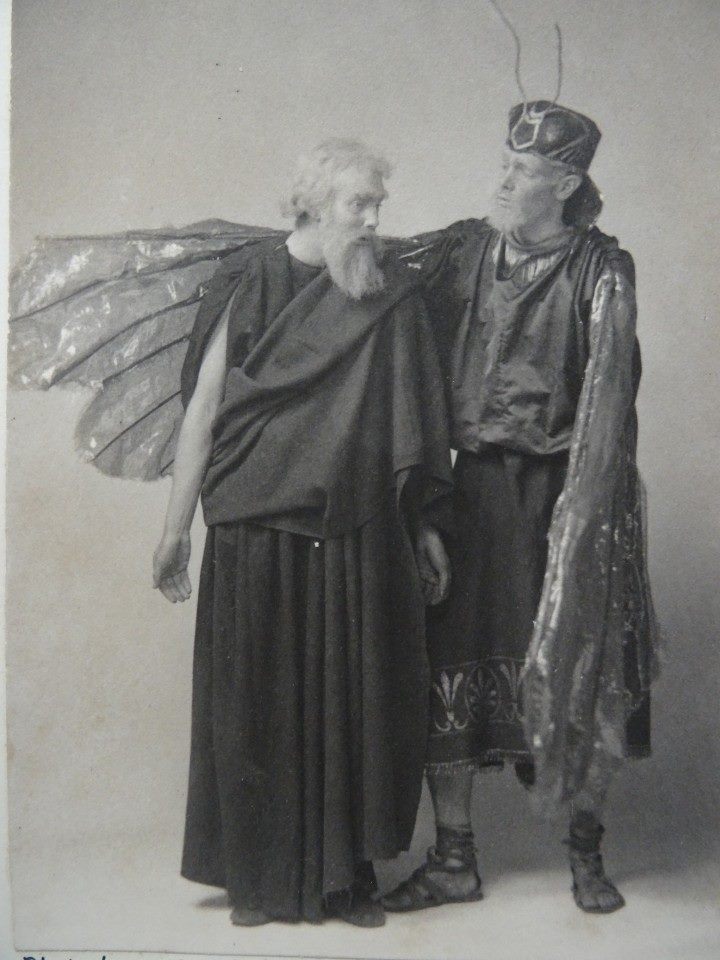
    The highlight of the morning will be a complete performance of Ralph Vaughan Williams’ “The Wasps,” written for a 1909 Cambridge University production of Aristophanes’ satire. Vaughan Williams re-arranged parts of the music to create a five-movement concert suite – the overture is especially well-known – but the complete, original, 80-minute score had faded from memory until this 2005 world premiere recording. The whole is held together by judicious narration and a pinch of salty dialogue.

    Join me for these unstung pleasures. We offer them incidentally, this Sunday morning from 7 to 10 EST, on WPRB 103.3 FM and wprb.com. Needless to say, it will all be very “playful,” on Classic Ross Amico.

  • Good King Wenceslas St Stephens Day Music

    Good King Wenceslas St Stephens Day Music

    Good King Wenceslas looked out, on the Feast of Stephen. We all know the carol, which tells of the good king’s generosity – how he brought flesh and wine and fuel to a needy peasant, his faltering page literally treading in his master’s footsteps.

    What the carol doesn’t tell us is that, with all the snow lying round about, deep and crisp and even, Wenceslas could pack a wicked snowball, as seen in this medieval fresco. Woe betided the lord or lady who caught one of the king’s frigid projectiles.

    On this St. Stephen’s Day, the second day of Christmas, I hope that you too are continuing to enjoy your midwinter festivities. If you find yourself in the vicinity of a radio or are able to do a little online streaming, consider joining me for today’s Noontime Concert on The Classical Network, which will consist of performances from the Lake George Music Festival.

    On the program will be Ralph Vaughan Williams’ early Piano Quintet in C minor, from 1903 (revised 1905). The first movement strikes a Brahmsian tone, yet there are intimations in the slow movement of the world of Hubert Parry (Vaughan Williams’ teacher) and RVW’s contemporaneous song, “Silent Noon.” Interestingly, the composer would return to the theme of the finale, put here through five variations, fifty years later, in 1954, for another set of variations for the last movement of his Violin Sonata.

    Also featured will be a brand new work – and a Lake George commission – by Philadelphia composer Sheridan Seyfried. His Concerto for Two Violins and Orchestra was composed for the festival’s resident artists, brothers Nikki Chooi and Timothy Chooi. Seyfried, 32, is a product of the Curtis Institute of Music and the Manhattan School, where he studied with Richard Danielpour, Jennifer Higdon, and Ned Rorem.

    Then stick around. Later in the afternoon, we’ll hear another highly listenable piece of new music by Kenji Bunch, 44 – his ballet, “The Snow Queen,” after Hans Christian Andersen. The recording, a two-CD set issued on innova Recordings, was made in Eugene, Oregon, by Orchestra NEXT. Orchestra Next gave the work its premiere in collaboration with the Eugene Ballet Company. Bunch, who is also a violist, studied at the Juilliard School. He has since returned to the land of his birth and now makes his home in Portland.

    As the afternoon progresses, we’ll drop in a few more surprises for the season. It’s a feast of music for St. Stephen’s Day, this Tuesday from 12 to 4 p.m. EST, on WWFM – The Classical Network and wwfm.org.

    Detail from “Winter” (before 1407), by Master Wenceslas of Bohemia

  • Child Alice A Carroll Mahler Masterpiece Rediscovered

    Child Alice A Carroll Mahler Masterpiece Rediscovered

    If Lewis Carroll and Gustav Mahler had a love child, this would be it.

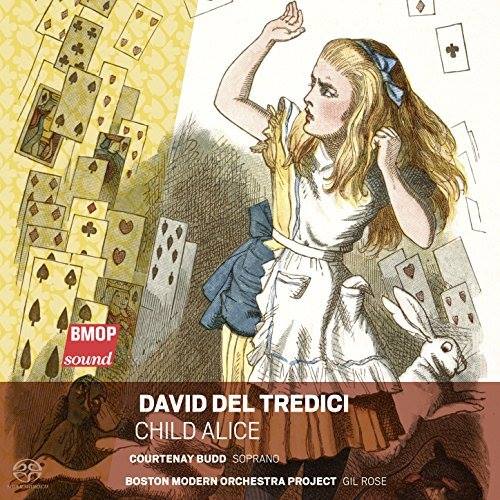
    David Del Tredici’s “In Memory of a Summer Day,” part one of his massive “Child Alice,” won the Pulitzer Prize for Music in 1980. The work was inspired by two prefatory poems from Carroll’s “Through the Looking Glass, and What Alice Found There” and “Alice’s Adventures in Wonderland.” It was performed for the first time in its completed form – including part two (an additional 73 minutes of music) – at Carnegie Hall in 1986.

    “Child Alice” was revived only last year by soprano Courtenay Budd and the Boston Modern Orchestra Project (BMOP), conducted by Gil Rose. A recorded performance was issued last month, with the same forces, on the BMOP Sound label. It is one of several stimulating releases from BMOP to arrive in my mailbox over the past 12 months.

    We will sample from “Child Alice,” among our featured recordings, this Thursday morning on WPRB, as I remove the shrink wrap from a number of CDs I have been unable to work into my usual thematic format. Curiously, I’ll also be including a selection from one of several releases of chamber music by a distant cousin of Carroll, Stephen Dodgson – composer.

    In addition, there will be a corker of a new release in the form of world premiere recordings of music composed for a trio of Greek plays by Ralph Vaughan Williams, issued on Albion Records, the official label of the Ralph Vaughan Williams Society.

    With the holidays fast approaching, you might be looking for some interesting stocking stuffers. Join me this Thursday morning from 6 to 11 EST, on WPRB 103.3 FM or at wprb.com. It will beat the hell out of batteries and new razors, on Classic Ross Amico.

  • Ralph Vaughan Williams: A Birthday Salute

    Ralph Vaughan Williams: A Birthday Salute

    Though he was affectionately known as “Uncle Ralph,” there was more to the man and his music than is suggested by his unpressed, avuncular persona. Ralph Vaughan Williams, more than anyone, elevated the music of the English countryside to high art. He reexamined the past, as he pushed to the future; he peered inward, even as he expressed the universal. Traditionalist and revolutionary, romantic and modernist – his was a remarkable career, and his body of work was more diverse than many realize from the countless performances of “The Lark Ascending” and the “Fantasia on a Theme by Thomas Tallis” for which he is best known.

    This Thursday morning on WPRB, we’ll attempt to convey the full genius of Ralph Vaughan Williams, with an assortment of his recordings from all across the spectrum. We’ll hear his bleakest symphony (conducted by Boult in 1954), as well as his most hopeful (conducted by Barbirolli in 1944). We’ll hear an orchestral fantasy from one of his least-known operas, and the final act of another, which became the basis for one of his most beloved works. We’ll hear rare gems issued by major labels, such as EMI and London/Decca, in their glory days, as well as hard-working independents that specialize in English music, such as Dutton Vocalion Records and Albion Records, the record label of the Ralph Vaughan Williams Society. We’ll hear a recording made by David Munrow, unheard since its release on LP in 1977. We’ll hear works inspired by Spenser and Shakespeare and Aristophanes. Sir David Willcocks will conduct one of RVW’s substantial choral works, and the composer himself with lead a rollicking performance of one of his most hilarious overtures.

    These are some of the attractions you can expect, as we salute Ralph Vaughan Williams on his birthday. I hope you’ll join me this Thursday morning from 6 to 11 EDT on WPRB 103.3 FM and wprb.com. We’ll do our best to keep the cat hairs out of the cake, on Classic Ross Amico.


    PHOTO: Vaughan Williams engaged in a shedding contest with his friend, Foxy

  • Ralph Vaughan Williams Birthday Celebration

    Ralph Vaughan Williams Birthday Celebration

    It’s never truly autumn until we can celebrate the birthday of Ralph Vaughan Williams. One of England’s greatest composers, Vaughan Williams looked back to his country’s agrarian roots as a roundabout way of securing the future of its cultural identity. This Thursday morning on WPRB, we will salute the great man in all his rumpled glory by sampling from a broad cross-section of his multifaceted output.

    As did so many composers who were caught in the wildfire of nationalism that swept across Europe from the mid-19th century forward, Vaughan Williams rebelled against the prevailing academicism that stretched its tendrils all the way from Germany to choke the musically “provincial” outlands. He emerged from an environment that had produced far too many knock-offs of Mendelssohn and Brahms. Vaughan Williams would revolutionize his compatriots’ perception of art music by embracing the sounds of the English countryside.

    However, much like Béla Bartók, he was no simplistic, twee purveyor of folk music. On the contrary, the rhythms and inflections of his native land were already in his DNA. The songs he documented while roaming the fields and fens with his colleague, Gustav Holst, merely brought to the surface what was already innate. What he expressed in his original music was thoroughly digested and deeply personal.

    Some of Vaughan Williams’ best loved works are imbued with nostalgia for a faded world, but the composer pushed forward, as well, through two world wars and into the Great Beyond. He was not a conventionally religious man, but mysticism seems to color a fair amount of his music. Other pieces stare desolation unflinchingly in the face. His lessons with Maurice Ravel made him a thoughtful orchestrator, so that throughout his life he deployed his instrumental forces with considerable creativity and expertise. Given the proper attention, there is much to engage on all levels of his music.

    I hope you’ll join me as we salute this fascinating composer with five hours of lesser-known works and recordings of historic significance. While you might not want to take his instruction on the best way to tie ties, musically you will be in the hands of a master, this Thursday morning from 6 to 11 EDT on WPRB 103.3 FM and wprb.com. You can put your faith in Ralph (pronounced “Rafe”), on Classic Ross Amico.


    Ralph Vaughan Williams Society

Tag Cloud

Aaron Copland (93) Beethoven (95) Composer (114) Film Music (125) Film Score (143) Film Scores (255) Halloween (94) John Williams (189) KWAX (229) Leonard Bernstein (101) Marlboro Music Festival (125) Movie Music (140) Opera (202) Philadelphia Orchestra (89) Picture Perfect (174) Princeton Symphony Orchestra (106) Radio (87) Ralph Vaughan Williams (85) Ross Amico (244) Roy's Tie-Dye Sci-Fi Corner (290) The Classical Network (101) The Lost Chord (268) Vaughan Williams (103) WPRB (396) WWFM (881)

DON’T MISS A BEAT

Receive a weekly digest every Sunday at noon by signing up here


RECENT POSTS