Tag: Ralph Vaughan Williams

  • Armstrong Gibbs Underrated British Composer

    Armstrong Gibbs Underrated British Composer

    I’m not going to strong-arm anyone into liking Armstrong. It’s easy enough to fall in love with the easy charm and seductive melodies of Armstrong Gibbs.

    Cecil Armstrong Gibbs (1889-1960) is mostly known for his songs. He studied composition with Ralph Vaughan Williams at the Royal College of Music. Nevertheless, he is often dismissed for gravitating toward musical forms that could easily be described as “slight.”

    He did contribute his share of British Light Music, to be sure, but he also wrote symphonies. The second of these, the “Odysseus Symphony,” for soloists, chorus, and orchestra, is clearly cut from the same cloth as Vaughan Williams’ “A Sea Symphony.”

    It was Princess Elizabeth – the current Queen Elizabeth II – who requested of Armstrong a piece for her eighteenth birthday. The result was this gorgeous miniature, called “Dusk,” which became one of Gibb’s best-known works.

    Happy birthday, Armstrong Gibbs!

  • Whitman’s British Isles Influence

    Whitman’s British Isles Influence

    While Walt Whitman has attained a venerable status here in the United States, as essentially America’s national poet, more surprising, perhaps, was his impact on composers of the British Isles.

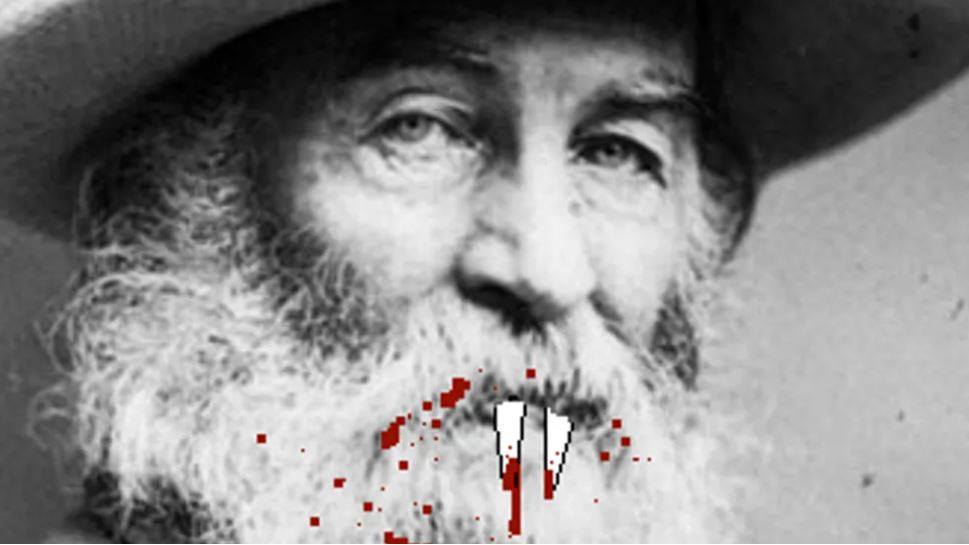
    Whitman was beloved by artists in the U.K. Interestingly, I learned in doing some reading in preparation for these shows that writer Bram Stoker was so taken with Whitman, the man, that allegedly he modeled his characterization of Dracula upon him (for more, follow the links below). And he meant it as a compliment! Stoker viewed Whitman as the quintessential man and kept up a correspondence with him until the poet’s death.

    More to our purposes, this Sunday night on “The Lost Chord,” we’ll hear two works by Gustav Holst, composer of “The Planets:” the “Walt Whitman Overture,” written in 1899, when Holst was about 25 years-old, and “The Mystic Trumpeter” from 1904.

    Holst first encountered Whitman’s poetry while still a student at the Royal College of Music. He would go on to set a number of Whitman texts. “The Mystic Trumpeter” made a particularly strong impression on him. His musical response was an important stepping stone in the composer’s artistic development, emerging as he was from a decade of Wagner worship and not yet giving himself over to the absorption of folk English material. Still, there are certainly glimpses of the mature artist to come.

    Holst’s good friend and colleague, Ralph Vaughan Williams, was also influenced by Whitman, not only in the writing of his frequently recorded “A Sea Symphony,” portions of his cantata “Dona nobis pacem,” and his work for chorus and orchestra, “Toward the Unknown Region,” but also in the less frequently encountered mini song cycle, “Three Poems by Walt Whitman.” The set consists of “Nocturne,” “A Clear Midnight,” and “Joy, Shipmate, Joy!” Written in 1925, the songs are products of Vaughan Williams’ maturity. The composer was around 53 years-old.

    Frederick Delius was yet another English composer deeply influenced by Whitman. Delius’ settings for baritone, chorus, and orchestra, titled “Sea Drift,” from 1903-04, are collectively regarded as one of the composer’s finest achievements. “Sea Drift” was composed at the peak of Delius’ vitality.

    His “Songs of Farewell,” however, were produced under quite different circumstances. Delius was both blind and paralyzed, suffering from the effects of advanced syphilis, when he received an unexpected gift in the arrival of a young musician by the name of Eric Fenby, who offered his services as an amanuensis. The result was a rekindling of Delius’ creativity.

    “Songs of Farewell,” a cycle of dreamy choral settings after Whitman, was dictated to Fenby by Delius in 1929-30. There are five songs: “How sweet the silent backward tracings;” “I stand as on some mighty eagle’s beak;” “Passage to you;” “Joy, shipmate, joy!;” and “Now finale to the shore.”

    We continue our celebration of “the good gray poet,” all month long, for the occasion of the bicentennial of his birth. Whitman was born in Huntingdon, NY, on Long Island, on May 31, 1819, and he died in Camden, NJ, on March 26, 1892.

    “Walk out with me toward the unknown region…” Join me for “The Mystic Trumpeter,” the second of four programs, this Sunday night at 10:00 EDT, on WWFM – The Classical Network and wwfm.org.


    Read Bram Stoker’s effusive letter to Whitman here:

    https://www.brainpickings.org/2019/01/09/bram-stoker-walt-whitman-letter/

    Walt Whitman’s influence on “Dracula” and (possibly) the 1931 “Frankenstein:”

    https://bigthink.com/book-think/walt-whitman-frankenstein-dracula-and-the-afterlife
  • Darwin Galapagos & Vaughan Williams’ Cats

    Darwin Galapagos & Vaughan Williams’ Cats

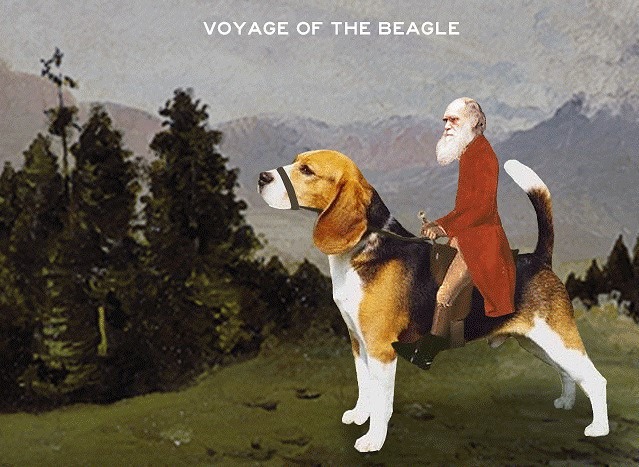
    It was on this date in 1835 that Charles Darwin arrived at the Galapagos Islands aboard the Beagle.

    Fun fact: Darwin was the great uncle of Ralph Vaughan Williams.

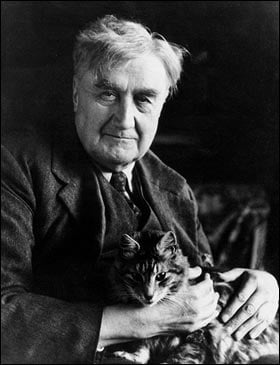
    Vaughan Williams, however, was partial to cats.

  • Vaughan Williams Remembered on WWFM

    Vaughan Williams Remembered on WWFM

    With all the hoo-ha surrounding the 100th anniversary of the death of Claude Debussy, it’s easy to forget that Ralph Vaughan Williams (who studied for a time with Ravel) died 60 years ago today. Yeah, I know 60 doesn’t quite have the marketing punch of 50 or 100, but Vaughan Williams is one of my all-time favorite composers, so I am going to go with it.

    This Sunday night on “The Lost Chord,” we’ll remember one of England’s finest composers by way of three rare recordings he made of his own music.

    Unlike Sir Edward Elgar, who was given the opportunity to record most of his major output, Vaughan Williams was generally overlooked as a conductor by the major labels – which is a shame, because the few recordings he did make are superb.

    Among the acoustical documents, none match the hilarity of RVW’s 1925 performance of “The Wasps” overture. Vaughan Williams’ recording is by far the fastest – and jauntiest – “Wasps” on record, although I’m unsure whether it is due to the composer’s own preference, or because of the limitations of the technology. It’s hard not to smile at such manic high spirits.

    By contrast, his 1937 recording of the Symphony No. 4 is a masterpiece of temperament and ferocity – all the more jarring in that the turbulence evoked in the work is not at all what most people associate with this composer. The urgency of the music is captured, eerily, at a time when the ink was still fresh on the page and the world was on the brink of chaos. It certainly belies the snide dismissal of much of the composer’s output as languid “cow-pat” music.

    In all, Vaughan Willliams’ meager commercial discography as a conductor wouldn’t even fill two hours. It is most fortunate, then, that a few concert recordings have emerged over the years. We’ll conclude with of one of RVW’s loveliest pieces, the “Serenade to Music,” the work which actually brought tears to the eyes of Sergei Rachmaninoff at its first performance in 1938. The text is from Act V, scene I, of Shakespeare’s “The Merchant of Venice.”

    “How sweet the moonlight sleeps upon this bank!
    Here will we sit and let the sounds of music
    Creep in our ears: soft stillness and the night,
    Become the touches of sweet harmony.”

    This performance was captured at Royal Festival Hall on November 22, 1951. Vaughan Williams was 79 years old. What’s especially remarkable is that the recording features 11 of the 16 soloists who sang in the work’s 1938 premiere. We’ll hear it from a compact disc issued on Albion Records, the official label of the Ralph Vaughan Williams Society.

    Vaughan Williams’ ashes are interred in Westminster Abbey alongside some of the nation’s greatest artists – yet, in some measure, the composer is still underestimated, especially by those outside the British Isles. I hope you’ll join me as we remember RVW on the 60th anniversary of his death. That’s “Vaughan, But Not Forgotten,” this Sunday night at 10:00 EDT, on WWFM – The Classical Network and wwfm.org.

  • Remembering Richard Hickox Champion of English Music

    Remembering Richard Hickox Champion of English Music

    It’s sobering to think that Richard Hickox would have been 70 years-old today. Hickox, one of the great champions of English music, died of a dissecting thoracic aneurysm, suffered while recording Gustav Holst’s “First Choral Symphony,” in 2008.

    For decades, Hickox applied his indefatigable zeal to filling out the catalogue with fine recordings of established classics and poor stepchildren. His early passing came especially hard at the end of what seemed like a run on great British conductors – Bryden Thomson (died in 1991), Sir Alexander Gibson (1995), and Vernon Handley (2008, only two months before) – that kept alive a venerable tradition too often dismissed abroad.

    Hickox was the founder of the City of London Sinfonia and Collegium Musicum 90. He was also choral director of the London Symphony Orchestra, artistic director of the Northern Sinfonia, and principal conductor of the BBC National Orchestra of Wales. At the time of his death, he was music director of Opera Australia.

    Hickox recorded prolifically – orchestral works, oratorios, and operas – for the EMI and Chandos labels. The recipient of many honours and awards, he was also president of the Elgar Society. He was the only conductor ever to program the complete symphonies of Ralph Vaughan Williams as a series in concert. Who knows how much more he would have accomplished had he lived another 20 or 25 years?

    This afternoon on The Classical Network, we’ll remember Hickox and the Spanish conductor Jesús López-Cobos, who died on Friday at the age of 78. López-Cobos will conduct music of Heitor Villa-Lobos on the anniversary of the birth of Brazil’s most famous composer. I hope you’ll join me from 4 to 7 p.m. EST, on WWFM – The Classical Network and wwfm.org.

Tag Cloud

Aaron Copland (93) Beethoven (95) Composer (114) Film Music (125) Film Score (143) Film Scores (255) Halloween (94) John Williams (189) KWAX (229) Leonard Bernstein (101) Marlboro Music Festival (125) Movie Music (140) Opera (202) Philadelphia Orchestra (89) Picture Perfect (174) Princeton Symphony Orchestra (106) Radio (87) Ralph Vaughan Williams (85) Ross Amico (244) Roy's Tie-Dye Sci-Fi Corner (290) The Classical Network (101) The Lost Chord (268) Vaughan Williams (103) WPRB (396) WWFM (881)

DON’T MISS A BEAT

Receive a weekly digest every Sunday at noon by signing up here


RECENT POSTS