Tag: Roy Harris

  • Ormandy’s China Tour: An American Overture

    Ormandy’s China Tour: An American Overture

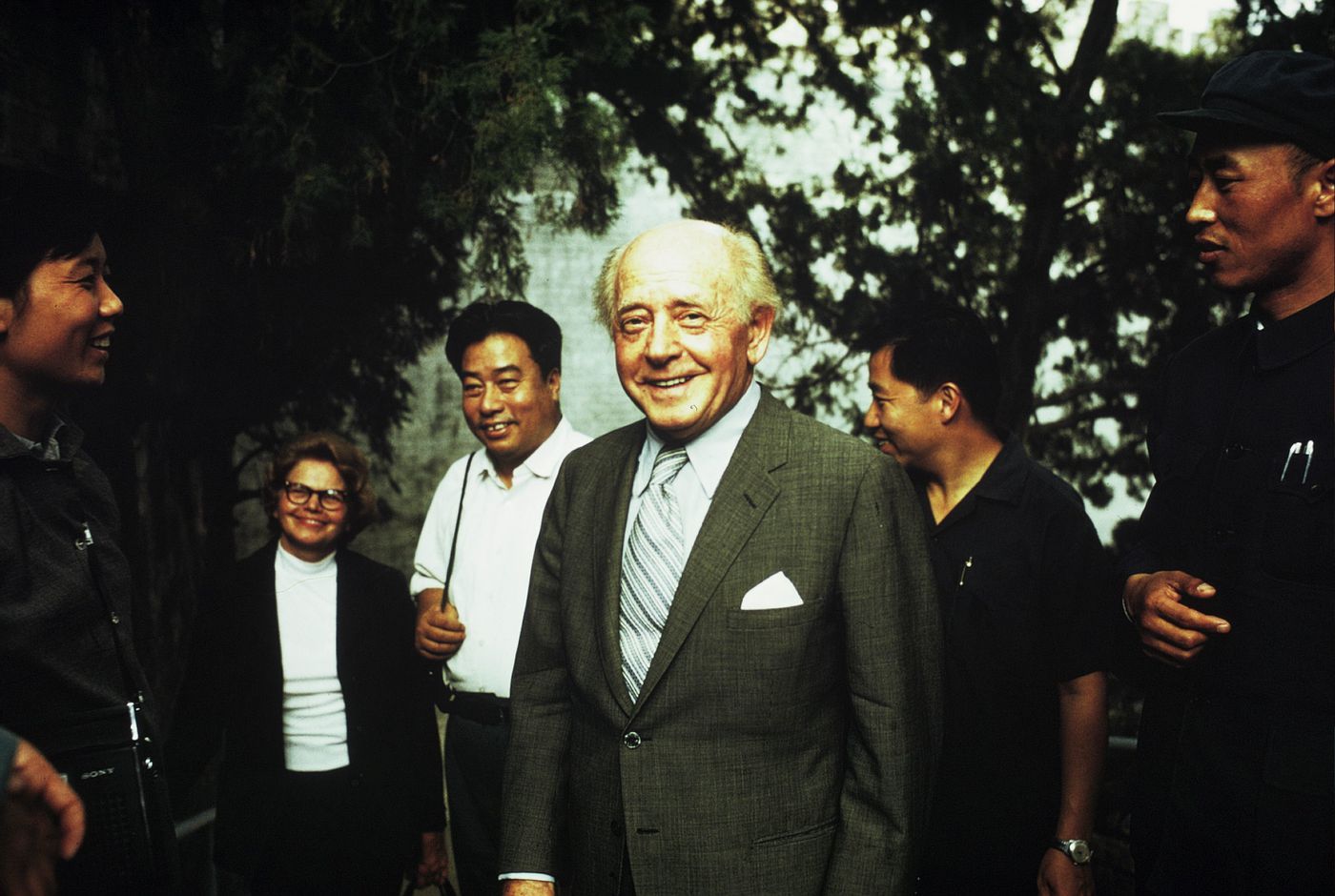
    When Eugene Ormandy took the Philadelphia Orchestra to China for its first concert there, 50 years ago today, he was sure to include, alongside Mozart and Brahms, some music from the American Heartland.

    Roy Harris (1898-1979) was born in a log cabin, in Lincoln County, Oklahoma, on Lincoln’s birthday. If that doesn’t imbue a composer with a sense of destiny, I don’t know what will. Harris went on to became one of our great American symphonists. In particular, his Symphony No. 3 of 1939 has been much beloved and frequently performed. Unfortunately, we don’t hear all that much of his music anymore. And that’s a damned shame.

    Philadelphia would be the first American orchestra to perform in China (the London and Vienna Philharmonic Orchestras had appeared earlier the same year), having received an invitation in response to Nixon’s historic visit in 1972. According to first-hand accounts, audience reactions to the performances were difficult to decipher. On the street, people were curious, but stand-offish. Red banners and likenesses of Mao, Lenin, and Stalin festooned Tiananmen Square. The local orchestra played Western music (Beethoven), but only in rehearsal, for training purposes. In summer, musicians pruned trees.

    Here are some interesting, balanced impressions, from a diary kept by one of the Philadelphians:

    https://www.inquirer.com/arts/philadelphia-orchestra-china-tour-1973-mao-beijing-20190509.html?fbclid=IwAR18VHjKTjBIKdUQlKfwXOzcso2DIy8oDdtrGWd-ZjYUZt6h_9aS9peihuU

    In all, the orchestra played six concerts. This was the trip on which Philadelphia performed the notorious “Yellow River” Concerto, a piano concerto written by committee and overseen by Madame Mao herself. Interesting that a country that did its damnedest to suppress decadent Western influence would shamelessly pilfer from the Western Romantics. As an encore, the pianist played a set of variations on “Home on the Range,” apparently a concession to Nixon. According to the diarist, Madame Mao did not care for “The Pines of Rome.” Mao himself was a no-show.

    Also included on the programs were “The Stars and Stripes Forever” and the “Chinese Worker’s March.” Again, the Beijing audience seemed impassive. Performances were received with more enthusiasm in Shanghai.

    While I haven’t been able to locate any recordings of the Chinese concerts, here’s Ormandy and the Philadelphians playing Harris in Russia in 1958. Additional American offerings included Samuel Barber’s “Adagio for Strings” and George Gershwin’s “An American in Paris,” which were played alongside Igor Stravinsky’s “The Firebird.” You can hear the tepid applause in Russia, when following the link.

    The ”Yellow River” Concerto has been described as a first cousin to Richard Addinsell’s “Warsaw Concerto.” Prior to their departure, the Philadelphia Orchestra gave the U.S. premiere of the piece, one of the works requested by the Chinese to be performed on the impending tour. Daniel Epstein was the soloist at its Saratoga Springs debut. Epstein would accompany the orchestra to China and record the concerto with the the musicians on their return. The album was released on on RCA Records. For some reason, it was never reissued on CD, but is now available for purchase as an mp3.

    Diplomat Nicholas Platt, who accompanied Nixon to Beijing in 1972, and later traveled with and advised Ormandy, talks about some of the complications surrounding the Philadelphia Orchestra’s trip to China.
  • Lincoln’s Birthday Remembered on “The Lost Chord”

    Lincoln’s Birthday Remembered on “The Lost Chord”

    It’s Super Bowl/Valentine’s Day/Abraham Lincoln’s Birthday Weekend!

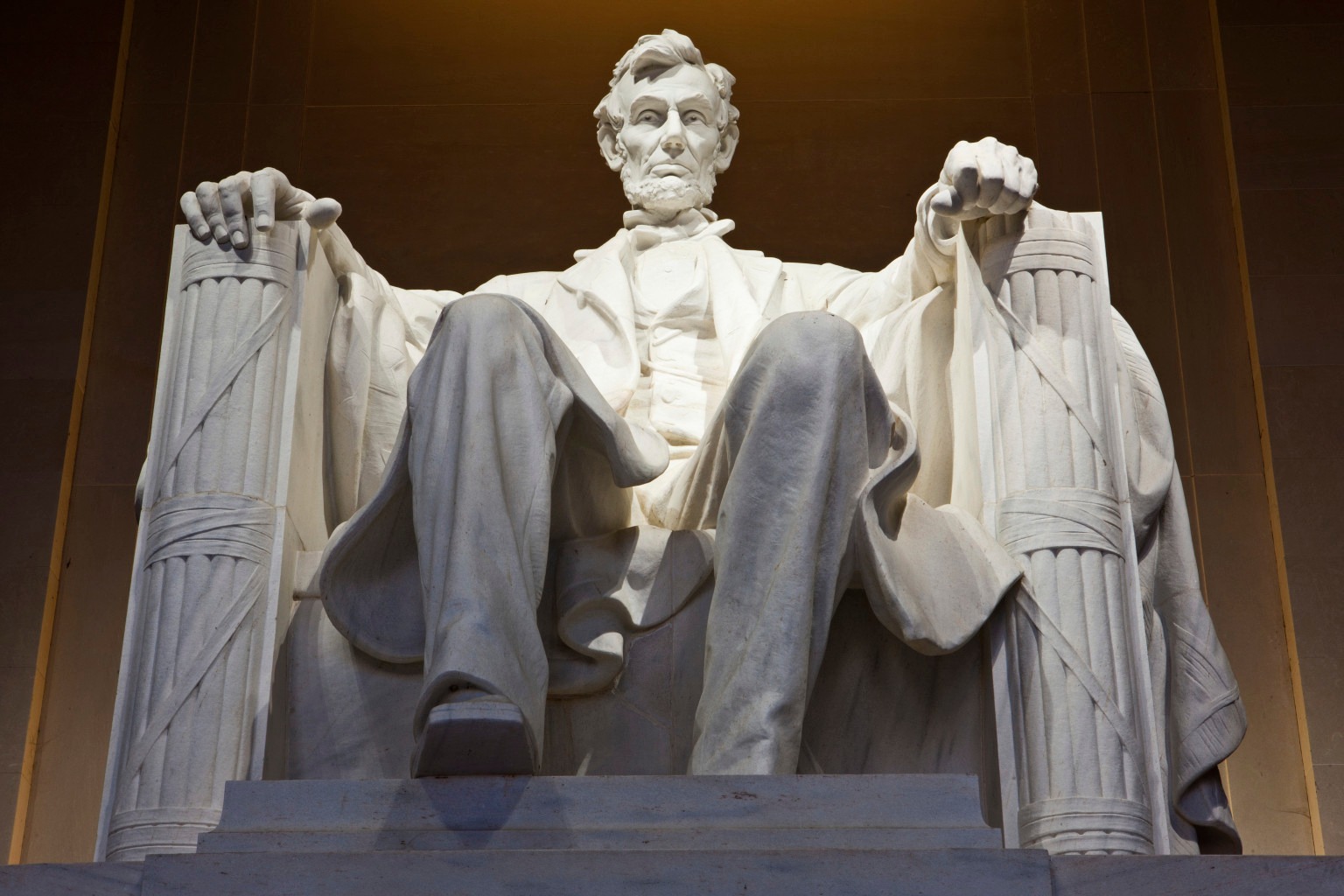
    This Sunday night on “The Lost Chord,” we honor our 16th president, on the anniversary of his birth (in 1809), with an hour of monumental selections.

    We’ll begin with David Diamond’s setting of the Gettysburg Address as “On Sacred Ground,” a work for mixed chorus, children’s chorus, baritone solo and orchestra. The piece was given its first performance two days before the centenary of Lincoln’s actual delivery of the Address, which he presented on November 19, 1863.

    After that, as a bit of a palate-cleanser, we’ll enjoy Paul Turok’s buoyant “Variations on an American Song: Lincoln and Liberty,” also composed in 1963. The song is based on a traditional Irish fiddle tune, “Rosin the Bow,” which was outfitted with new lyrics for use in Lincoln’s 1859 presidential campaign:

    “Then up with our banner so glorious,
    The star-spangled red-white-and-blue,
    We’ll fight till our Cause is victorious,
    For Lincoln and Liberty, too!”

    Finally, we’ll return to Gettysburg and music by American composer Roy Harris, also born on this date, though 89 years later. Harris was born in a log cabin in Lincoln County, Oklahoma. If that doesn’t fill one with a sense of destiny, I don’t know what will!

    In his day, Harris was regarded as one of America’s greatest composers, particularly renowned for his symphonies. His Symphony No. 3 is his most famous work; we’ll be hearing the Symphony No. 6, subtitled “Gettysburg.”

    Each movement bears a superscription taken from the Gettysburg Address.

    I. Awakening (“Fourscore and seven years ago…”);

    II. Conflict (“Now we are engaged in a great civil war…”);

    III. Dedication (“We are met on a great battlefield of that war…”);

    IV. Affirmation (“…that we here highly resolve that these dead shall not have died in vain…).

    I hope you’ll join me for this memorial to Lincoln, on “Lincoln Portraits,” this Sunday night at 10:00 EST, on WWFM – The Classical Network and wwfm.org.

    And remember, if the game runs long, the show will be posted as a webcast at the WWFM website for you to enjoy later. It would make a fine soundtrack for any Presidents Day hootenanny.

  • Lincoln, Price, Harris: Midnight Meditations

    Lincoln, Price, Harris: Midnight Meditations

    Before “Lincoln in the Bardo,”* there was “Abraham Lincoln Walks at Midnight.”

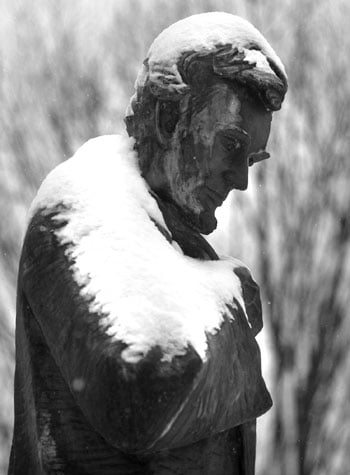
    Vachel Lindsay’s poem, written in 1914, depicts Lincoln stirring from his eternal rest to roam the streets of Springfield, Illinois, still burdened by the nation’s troubles. I’d hate to think what Lincoln’s spirit must be going through today.

    On Lincoln’s birthday, here’s Florence Price’s setting of Lindsay’s meditation. It is one of three Price settings of the poem rediscovered in 2009. From the information available, it would seem that all three would fit on one album. Somebody record these, please!

    By coincidence, today also happens to be the anniversary of the birth of Roy Harris. Born on Lincoln’s birthday in 1898 – in a log cabin in Lincoln County, Oklahoma – Harris had to have been imbued with a sense of destiny. Harris also set Lindsay’s poem, for mezzo-soprano, violin, cello and piano.

    Harris was regarded as one of America’s greatest composers. He was particularly renowned for his symphonies. His Symphony No. 3 is his most famous work. The Symphony No. 6, formulated over a reading of Sandburg, is subtitled “Gettysburg.”

    Each of the four movements bears a superscription from Lincoln’s Gettysburg Address:

    I. Awakening (“Fourscore and seven years ago…”);

    II. Conflict (“Now we are engaged in a great civil war…”);

    III. Dedication (“We are met on a great battlefield of that war…”);

    IV. Affirmation (“…that we here highly resolve that these dead shall not have died in vain…).

    I call that putting a Price on linkin’ Harris and Lincoln.


    “Abraham Lincoln Walks at Midnight”

    (In Springfield, Illinois)

    It is portentous, and a thing of state
    That here at midnight, in our little town
    A mourning figure walks, and will not rest,
    Near the old court-house pacing up and down,

    Or by his homestead, or in shadowed yards
    He lingers where his children used to play,
    Or through the market, on the well-worn stones
    He stalks until the dawn-stars burn away.

    A bronzed, lank man! His suit of ancient black,
    A famous high top-hat and plain worn shawl
    Make him the quaint great figure that men love,
    The prairie-lawyer, master of us all.

    He cannot sleep upon his hillside now.
    He is among us:—as in times before!
    And we who toss and lie awake for long,
    Breathe deep, and start, to see him pass the door.

    His head is bowed. He thinks of men and kings.
    Yea, when the sick world cries, how can he sleep?
    Too many peasants fight, they know not why;
    Too many homesteads in black terror weep.

    The sins of all the war-lords burn his heart.
    He sees the dreadnaughts scouring every main.
    He carries on his shawl-wrapped shoulders now
    The bitterness, the folly and the pain.

    He cannot rest until a spirit-dawn
    Shall come;—the shining hope of Europe free:
    A league of sober folk, the Workers’ Earth,
    Bringing long peace to Cornland, Alp and Sea.

    It breaks his heart that things must murder still,
    That all his hours of travail here for men
    Seem yet in vain. And who will bring white peace
    That he may sleep upon his hill again?


    • Mizzy Mazzoli’s adaptation of George Saunders’ experimental novel, “Lincoln in the Bardo,” is scheduled for a 2025 Metropolitan Opera debut

    PHOTOS: (Clockwise from upper right) Florence Price, Roy Harris, and Abraham Lincoln walking at midnight

  • Lincoln Walks: Price Harris & a Nation’s Burden

    Lincoln Walks: Price Harris & a Nation’s Burden

    Before “Lincoln in the Bardo,” there was “Abraham Lincoln Walks at Midnight.”

    Vachel Lindsay’s poem, written in 1914, portrays Lincoln stirring from his eternal rest to roam the streets of Springfield, Illinois, still burdened by the nation’s troubles. I’d hate to think what Lincoln’s spirit must be going through today.

    On Lincoln’s birthday, here’s Florence Price’s setting of Lindsay’s meditation. It is one of three Price settings of the poem rediscovered in 2009. From the information available, it would seem that all three would fit on one album. Somebody record these, please!

    By coincidence, today also happens to be the anniversary of the birth of Roy Harris. Born on Lincoln’s birthday in 1898 – in a log cabin in Lincoln County, Oklahoma – surely Harris must have been filled with an apposite sense of destiny. Harris also set Lindsay’s poem, for mezzo-soprano, violin, cello and piano.

    Harris was regarded as one of America’s greatest composers. He was particularly renowned for his symphonies. His Symphony No. 3 is his most famous work. The Symphony No. 6, formulated over a reading of Sandburg, is subtitled “Gettysburg.”

    Each of the four movements bears a superscription from Lincoln’s Gettysburg Address:

    I. Awakening (“Fourscore and seven years ago…”);

    II. Conflict (“Now we are engaged in a great civil war…”);

    III. Dedication (“We are met on a great battlefield of that war…”);

    IV. Affirmation (“…that we here highly resolve that these dead shall not have died in vain…).

    I call that putting a Price on linkin’ Harris and Lincoln.


    “Abraham Lincoln Walks at Midnight”

    (In Springfield, Illinois)

    It is portentous, and a thing of state
    That here at midnight, in our little town
    A mourning figure walks, and will not rest,
    Near the old court-house pacing up and down,

    Or by his homestead, or in shadowed yards
    He lingers where his children used to play,
    Or through the market, on the well-worn stones
    He stalks until the dawn-stars burn away.

    A bronzed, lank man! His suit of ancient black,
    A famous high top-hat and plain worn shawl
    Make him the quaint great figure that men love,
    The prairie-lawyer, master of us all.

    He cannot sleep upon his hillside now.
    He is among us:—as in times before!
    And we who toss and lie awake for long,
    Breathe deep, and start, to see him pass the door.

    His head is bowed. He thinks of men and kings.
    Yea, when the sick world cries, how can he sleep?
    Too many peasants fight, they know not why;
    Too many homesteads in black terror weep.

    The sins of all the war-lords burn his heart.
    He sees the dreadnaughts scouring every main.
    He carries on his shawl-wrapped shoulders now
    The bitterness, the folly and the pain.

    He cannot rest until a spirit-dawn
    Shall come;—the shining hope of Europe free:
    A league of sober folk, the Workers’ Earth,
    Bringing long peace to Cornland, Alp and Sea.

    It breaks his heart that things must murder still,
    That all his hours of travail here for men
    Seem yet in vain. And who will bring white peace
    That he may sleep upon his hill again?


    Clockwise from upper right: Florence Price, Roy Harris, and Abraham Lincoln walking at midnight

  • Ormandy, China, and Forgotten American Music

    Ormandy, China, and Forgotten American Music

    When Eugene Ormandy took the Philadelphia Orchestra to China in September of 1973, he was sure to include, alongside Mozart and Brahms, some music from the American Heartland.

    Roy Harris (1898-1979) was born in a log cabin, in Lincoln County, Oklahoma, on Lincoln’s birthday. If that doesn’t imbue a composer with a sense of destiny, I don’t know what will. Harris went on to became one of our great American symphonists. In particular, his Symphony No. 3 of 1939 has been much beloved and frequently performed. Unfortunately, we don’t hear all that much of his music anymore. And that’s a damned shame.

    Philadelphia would be the first American orchestra to perform in China (the London and Vienna Philharmonic Orchestras had appeared earlier the same year), having received an invitation in response to Nixon’s historic visit in 1972. According to first-hand accounts, audience reactions to the performances were difficult to decipher. On the street, people were curious, but stand-offish. Red banners and likenesses of Mao, Lenin, and Stalin festooned Tiananmen Square. The local orchestra played Western music (Beethoven), but only in rehearsal, for training purposes. In summer, musicians pruned trees.

    Here are some interesting, balanced impressions, from a diary kept by one of the Philadelphians:

    https://www.inquirer.com/arts/philadelphia-orchestra-china-tour-1973-mao-beijing-20190509.html

    In all, the orchestra played six concerts. This was the trip on which Philadelphia performed the notorious “Yellow River Concerto,” a piano concerto written by committee and overseen by Madame Mao herself. Interesting that a country that did its damnedest to suppress decadent Western influence would shamelessly pilfer from the Western Romantics. As an encore, the pianist played a set of variations on “Home on the Range,” apparently a concession to Nixon. According to the diarist, Madame Mao did not care for “The Pines of Rome.” Mao himself was a no-show.

    Also included on the programs were “The Stars and Stripes Forever” and the “Chinese Worker’s March.” Again, the Beijing audience seemed impassive. Performances were received with more enthusiasm in Shanghai.

    While I haven’t been able to locate any recordings of the Chinese concerts, here’s Ormandy and the Philadelphians playing Harris in Russia in 1958. Additional American offerings included Samuel Barber’s “Adagio for Strings” and George Gershwin’s “An American in Paris,” which were played alongside Igor Stravinsky’s “The Firebird.” You can hear the tepid applause in Russia, when following the link:

    If you’re interested in hearing the “Yellow River Concerto,” there are a number of performances posted on YouTube. However, the audio for the Philadelphia/Ormandy album, with Daniel Epstein – which I’ve got somewhere in my own collection – for some reason has not been posted online. If you’ve got a sweet tooth, by all means, feel free to explore. Me, I’d rather not risk a trip to the dentist’s office in time of COVID.

Tag Cloud

Aaron Copland (92) Beethoven (95) Composer (114) Film Music (119) Film Score (143) Film Scores (255) Halloween (94) John Williams (185) KWAX (229) Leonard Bernstein (99) Marlboro Music Festival (125) Movie Music (134) Opera (198) Philadelphia Orchestra (86) Picture Perfect (174) Princeton Symphony Orchestra (106) Radio (87) Ralph Vaughan Williams (85) Ross Amico (244) Roy's Tie-Dye Sci-Fi Corner (290) The Classical Network (101) The Lost Chord (268) Vaughan Williams (102) WPRB (396) WWFM (881)

DON’T MISS A BEAT

Receive a weekly digest every Sunday at noon by signing up here


RECENT POSTS