Tag: Russian Music

  • Shostakovich Arensky Marlboro Russian Music on WWFM

    Shostakovich Arensky Marlboro Russian Music on WWFM

    D is for Da!

    It also happens to be the key signature of Dmitri Shostakovich’s String Quartet No. 4. Shostakovich’s quartet will be one of two Russian works on this week’s “Music from Marlboro.”

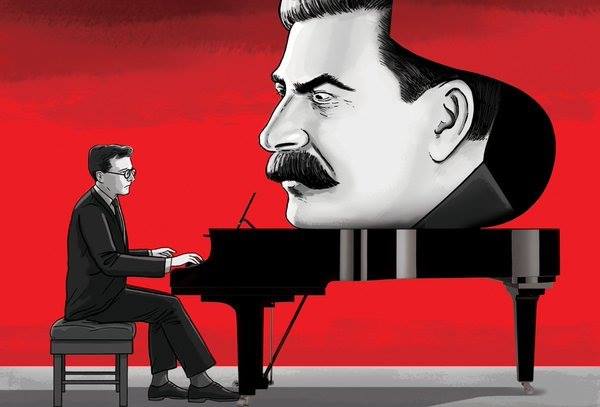
    The String Quartet No. 4 grew out of a newfound confidence, on the part of the composer, as a result of Stalin personally selecting him as a cultural ambassador to the West. Shostakovich persuaded Stalin that if that were going to be the case, then perhaps it would be a good idea to lift the ban on Soviet performances of his music. Otherwise, it might look a little peculiar to outsiders.

    Papa Joe agreed, and Shostakovich promptly embarked on a new string quartet, which he loaded up with Jewish folk songs and all sorts of things that had a history of angering the “wise leader and teacher.” Fortunately for Shostakovich, who had walked a very precarious line with the authorities, his friends persuaded him not to allow the work to be performed publicly, and the composer put it in a drawer for another day.

    That other day is now, and we’ll hear it performed by violinists Sylvie Gazeau and Yuzuko Horigome, violist Philipp Naegele, and cellist Robie Brown Dan, from the 1983 Marlboro Music Festival.

    Anton Arensky’s Piano Trio No. 1 is in the key of D minor. Arensky, a pupil of that icon of Russian nationalism, Nikolai Rimsky-Korsakov, gravitated more toward the cosmopolitan sound of Rimsky’s rival, Peter Ilych Tchaikovsky. His trio is full of good tunes, always charming, regardless of whether the music is melancholy, turbulent, reflective, or good humored. It’s the kind of piece that will have you humming for the rest of the day.

    We’ll hear it performed by pianist Frederick Moyer, violinist Isodore Cohen, and cellist John Sharp, who played it at Marlboro in 1982.

    What are you waiting for? Quit your Stalin. Join me for an hour of Russian music, major and minor, from the Marlboro Music Festival, this Wednesday evening at 6:00 EST, on WWFM – The Classical Network and wwfm.org.

    Marlboro School of Music and Festival: Official Page
  • Rubinstein’s “Ocean” Symphony: A Forgotten Masterpiece

    Rubinstein’s “Ocean” Symphony: A Forgotten Masterpiece

    His manner of playing could border on the hysterical. His wild hair brought comparisons to Beethoven, while he obliterated orchestras in avalanches of sonority. His lack of restraint turned Clara Schumann’s stomach, while the notoriously prickly critic Eduard Hanslick was forced to concede that the sensual element of his playing carried all before it. “Yes, he plays like a god,” he wrote, “and we do not take it amiss if, from time to time, he changes, like Jupiter, into a bull.”

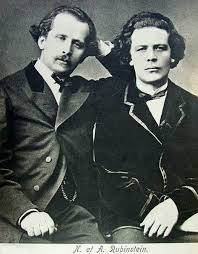
    Anton Rubinstein was one of the most remarkable figures in Russian music. A pianist, composer and conductor – rumored, in fact, to be the illegitimate son of Beethoven (though physically impossible, since he was born 20 months after Beethoven’s death) – Rubinstein founded the Saint Petersburg Conservatory. His brother, Nikolai, the original dedicatee of Tchaikovsky’s Piano Concerto No. 1 (with which he had a complicated history), founded the conservatory in Moscow.

    As a composer, Anton amassed a considerable output. He wrote orchestral works, chamber and instrumental music, and songs. His Piano Concerto No. 4 retains a foothold on the repertoire, though it is not nearly as often heard as it should be. The best known of his 20 operas, “The Demon,” remains popular in Russia. Though celebrated at home, throughout Europe and in the United States as a towering virtuoso, nothing is ever heard of his six symphonies.

    The original version of his ambitious Symphony No. 2, subtitled “The Ocean,” was written in 1851. The piece grew in scope, through revisions over 29 years, as the composer became absorbed in the developments of Romantic “program” music – music that attempted to evoke extra-musical subjects. Though Rubinstein dedicated the symphony to Franz Liszt, with whom he enjoyed friendly relations and who offered much advice, don’t expect anything along the lines of Liszt’s more revolutionary structures. The revised “Ocean” falls into seven movements (expanded from the original four), but the music is more in line with the quieter innovations of the German classicists than anything from the New German School. Furthermore, there is little about it that sounds particularly “Russian.”

    When he undertook the writing of his symphony, Rubinstein was still in search of an individual voice as a composer. In a way, the development of the piece mirrors his perpetual grappling with his own sense of self. “To Jews, I am a Christian; to Christians, I’m a Jew,” he wrote. “To Russians, I’m a German, but to Germans, I’m Russian. To the classicists, I’m an innovator, but to innovators, I’m a reactionary, and so on. The verdict: neither fish nor fowl, a pitiful identity.”

    I hope you’ll join me today, from 12 and 4 p.m. EDT, as we set sail on Anton Rubinstein’s “Ocean” Symphony, among my featured works, on WWFM – The Classical Network and wwfm.org.


    PHOTO: The amazingly talented and influential Brothers Rubinstein (Anton on the right)

  • César Cui The Forgotten Mighty Handful

    César Cui The Forgotten Mighty Handful

    Among the followers of Mily Balakirev that collectively came to be known as “The Mighty Handful” or “The Five,” unquestionably the least well-known is César Cui. Nikolai Rimsky-Korsakov, Modest Mussorgsky, and Alexander Borodin all went on to attain a kind of immortality in Russian music, each having left his indelible mark.

    Cui wrote 15 operas, believe it or not – one of them, “William Ratcliff,” earning the highest praise from Franz Liszt – but today, he is remembered, if at all, as a miniaturist, or perhaps as a composer of art song, and at that, the least Russian-sounding of the five.

    He shared in common with the others the fact that for him music was an avocation. He paid his bills as a military engineer. Beyond that, however, he was a bit of an outsider – born in Vilnius (now in Lithuania) to a father who had been a general in Napoleon’s army, who stayed and married a local. In addition to Russian, Cui grew up speaking French, Polish and Lithuanian. Perhaps this broader cultural perspective led to a more cosmopolitan approach to music.

    As a critic, he was prolific, and he could be blistering in his sarcasm. Perhaps most notorious was his reception of Rachmaninoff’s First Symphony:

    “If there were a conservatory in Hell, and if one of its talented students were to compose a program symphony based on the story of the Ten Plagues of Egypt, and if he were to compose a symphony like Mr. Rachmaninoff’s, then he would have fulfilled his task brilliantly and would delight the inhabitants of Hell. To us this music leaves an evil impression with its broken rhythms, obscurity and vagueness of form, meaningless repetition of the same short tricks, the nasal sound of the orchestra, the strained crash of the brass, and above all its sickly perverse harmonization and quasi-melodic outlines, the complete absence of simplicity and naturalness, the complete absence of themes.”

    The assessment plunged Rachmaninoff into a two-year depression, during which he was unable to compose until being lifted out of his funk by hypnotic therapy. Of course, today everyone knows Rachmaninoff’s music (if not his First Symphony). How many, I wonder, know Cui’s?

    Join me this afternoon, on the anniversary of Cui’s birth, when we’ll listen to his “Deux morceaux” for cello and orchestra. We’ll also mark the birthdays of composers Emmanuel Chabrier, Berthold Goldschmidt, and Alfonso Ferrabosco the Elder, as well as conductor János Ferencsik, from 4 to 7:00 EST, on WWFM – The Classical Network and at wwfm.org.


    IMAGE: With so many whiskers in the room, you know you must be in the company of The Five. Center, left to right: Modest Mussorgsky (standing, by the piano), Nikolai Rimsky-Korsakov, Mily Balakirev (seated), César Cui (standing, with spectacles), and Alexander Borodin. I don’t know who the chap is standing in the center.

  • Russian Folklore Music on WPRB

    Russian Folklore Music on WPRB

    Join me this week on WPRB, when we immerse ourselves in the exotic realms of Russian folklore.

    We’ll have music inspired by the myths, legends and folktales of Russia, including works evocative of Baba Yaga, Koschei the Deathless, the Firebird, Zolushka, Ivan the Fool, Ruslan and Ludmila, and the Invisible City of Kitezh. The folk heroes Sadko and Stepan Razin will also be represented.

    Reinhold Gliere’s epic symphony on the exploits of Ilya Muromets has been the most requested piece of the summer. (That is to say, it was requested by the most people, as opposed to multiple requests from the same source!) We’ll finally have a chance to hear the acclaimed recording by JoAnn Falletta and the Buffalo Philharmonic Orchestra, who took the work to Carnegie Hall in 2013 and subsequently recorded it complete (over 70 minutes) for the Naxos label. The release was described by David Hurwitz of classicstoday.com as “the finest version yet recorded,” and by Peter J. Rabinowitz of “Fanfare” as “beyond excellent.”

    It was the excuse to play “Muromets” that determined our theme for the week. It seems all the more appropriate since I’m always Russian to get there anyway. I hope you’ll join me tomorrow morning from 6 to 11 ET, for five hours of Russian folklore at WPRB 103.3 FM or online at wprb.com. Say “da” to Classic Ross Amico.

Tag Cloud

Aaron Copland (92) Beethoven (95) Composer (114) Film Music (123) Film Score (143) Film Scores (255) Halloween (94) John Williams (187) KWAX (229) Leonard Bernstein (101) Marlboro Music Festival (125) Movie Music (138) Opera (202) Philadelphia Orchestra (89) Picture Perfect (174) Princeton Symphony Orchestra (106) Radio (87) Ralph Vaughan Williams (85) Ross Amico (244) Roy's Tie-Dye Sci-Fi Corner (290) The Classical Network (101) The Lost Chord (268) Vaughan Williams (103) WPRB (396) WWFM (881)

DON’T MISS A BEAT

Receive a weekly digest every Sunday at noon by signing up here


RECENT POSTS