Tag: Symphony No. 5

  • Vaughan Williams 150th NYC Celebration

    Vaughan Williams 150th NYC Celebration

    October 12 marks the 150th anniversary of the birth of Ralph Vaughan Williams. American admirers of the composer are totally in the wrong country this year. The U.K. has been a nonstop RVW jamboree.

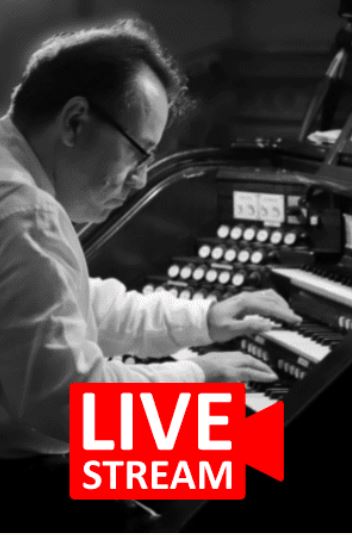
    That said, if you’re in New York City or the vicinity tomorrow, organist David Briggs will present his transcription of Vaughan Williams’ Symphony No. 5 on the composer’s birthday at the Church of St. Ignatius Loyola, NYC, 980 Park Avenue, at 7 p.m.

    If you can’t be there, the concert will be livestreamed and archived through Friday. For more information, visit the St. Ignatius website and click on the links. If you plan to view the livestream, make sure you make your reservation using the correct tab!

    https://ignatius.nyc/music/concerts/

    Briggs has also recorded this transcription, at Truro Cathedral in Cornwall. The CD is available for purchase from Albion Records, the official label of the Ralph Vaughan Williams Society.

    https://rvwsociety.com/transcriptions/

    If our American orchestras can’t be bothered to program any of RVW’s symphonies – and what I wouldn’t give to be able to hear an orchestra play No. 5 tomorrow – at least someone is in a position to pull out all the stops.
  • Remembering Vincent Persichetti

    Remembering Vincent Persichetti

    Vincent Persichetti was born in Philadelphia on this date in 1915. He died there in 1987. Although he seems to have had more of a lasting influence as a teacher – having molded legions of budding composers through his work at Combs College of Music, the Philadelphia Conservatory, and the Juilliard School – his own compositions are invariably well-crafted and certainly well worth listening to.

    Somewhere, I’ve got one of his manuscripts in a box of musical collectibles I acquired at Freeman’s Auction House, back in the day when, if no one bid on a lot, it would go down to a dollar. It may have been in with a box of conductor James De Preist’s homework. I ought to make a point to dig that out. Nothing major, maybe a fanfare or something, a short work for brass.

    The Philadelphia Orchestra used to play his work from time to time, but I haven’t seen any of Persichetti’s music on their programs for years. There is a document from the Muti era, on New World Records, a CD of live performances of the Symphony No. 5 for strings and the Piano Concerto, with Robert Taub as soloist. Frankly, I prefer this symphony, recorded by Ormandy and posted here in four movements:

    I. https://www.youtube.com/watch?v=Ajw4Ayhd1AA

    II. https://www.youtube.com/watch?v=2hkAvb3Gx7A

    III. https://www.youtube.com/watch?v=7BASajjHG08

    IV. https://www.youtube.com/watch?v=_rONwSSdlDE

    A 1983 documentary on Persichetti

    An interview with Bruce Duffie

    http://www.bruceduffie.com/persichetti.html

    An afternoon with Tim Page

    https://www.wnyc.org/story/an-afternoon-with-vincent-persichetti/

    Happy birthday, Vincent Persichetti!


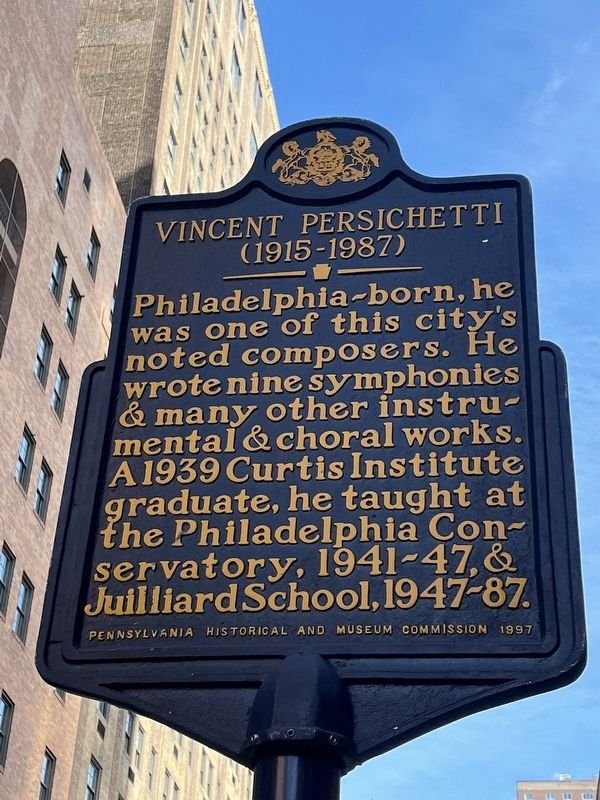
    PHOTO: The Vincent Persichetti historical marker outside the Curtis Institute of Music, from which he graduated in 1939

  • Carl Nielsen’s Symphony No. 5: A Century of Optimism

    Carl Nielsen’s Symphony No. 5: A Century of Optimism

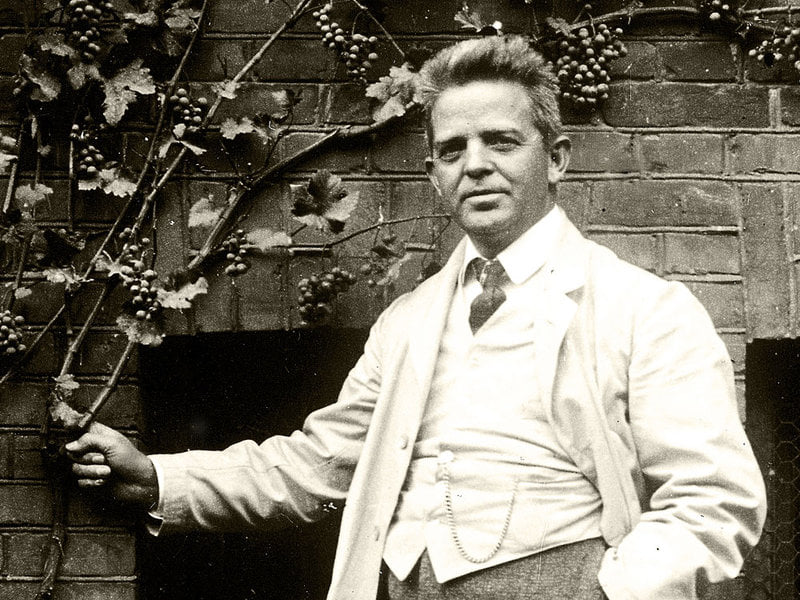
    I can’t claim to know how to solve the world’s problems, but more Carl Nielsen would be a good start.

    Nielsen was, of course, Denmark’s most celebrated composer. He experienced a lot of change in his lifetime (1865-1931), in a world of accelerating anxiety. There is plenty of struggle in his symphonies, to be sure. But to my ears, for the most part, they reflect a spirit of optimism and nobility, and they retain the power to inspire.

    Nielsen’s Symphony No. 5 was first performed in Copenhagen on this day 100 years ago. The work is built on an unusual structure, organized into two movements, as opposed to the customary four. We don’t know what inspired the composer to write his Fifth Symphony, but it’s a good guess that it is a reaction to the War to End All Wars.

    Already by four minutes in, an implacable snare drum appears, and the movement becomes a struggle of contrasts between martial and transcendent impulses. At the climax of the first movement, the composer instructs the drummer to improvise “as if at all cost he wants to stop the progress of the orchestra.” In this sense, the symphony acts almost as a second “Inextinguishable” (the subtitle of Nielsen’s Symphony No. 4, with its dueling timpani), with open wounds, but yearning for the attainment of nobler things.

    Nielsen claimed he was not conscious of the influence of recent world events in the writing of his symphony, but he conceded that “not one of us is the same as we were before the war.”

    A performance in Sweden in 1924 caused a commotion, when the audience rebelled against the cacophonous “modernism” of the first movement. There was a mass exodus from the concert hall, as about a quarter of those in attendance left. Those who remained attempted to hiss the orchestra to silence. It’s too bad they were insensible to the overarching grandeur and hard-won optimism of the piece.

    The symphony received its premiere the same week as the first performance of a very different work influenced by the war, Ralph Vaughan Williams’ “A Pastoral Symphony.” I’ll write more about that on Wednesday.

    In the meantime, here’s a classic performance of Nielsen’s Symphony No. 5, with Leonard Bernstein and the New York Philharmonic:

    Funny how the passage of the years modifies one’s perspective. At the time this recording was made, the symphony was only 40 years-old!

  • Celebrating Beethoven’s 250th Birthday

    Celebrating Beethoven’s 250th Birthday

    Happy birthday, Beethoven!

    Well, here we are. Your 250th birthday – what would have been the biggest celebration in classical music (at least until 2027, the 200th anniversary of your death) – and we’re all sitting at home with our records. That’s okay. I’ve got plenty of good ones. Anyone care to share any of their favorites?

    Here’s a montage of 42 conductors and 1 pianist, performing the most famous opening in all of Western music. It really gives a sense of what different interpreters can bring to a piece of music (also, in Barenboim’s case, the effect of an unstifled sneeze). Performance matters!

    Here’s one from 2007 that I find quite compelling, led by the Hungarian composer Péter Eötvös.

    My candidate for craziest stick technique:

    Perhaps more instructive is this traversal by line-riding bikes:

    Clearly, this symphony is bulletproof.


    Beethoven as he appeared in 1804-05, while he was at work on his “Fifth”

  • Sibelius’s Symphony No 5 Day 4 of 8

    Sibelius’s Symphony No 5 Day 4 of 8

    EIGHT DAYS OF SIBELIUS – DAY 4

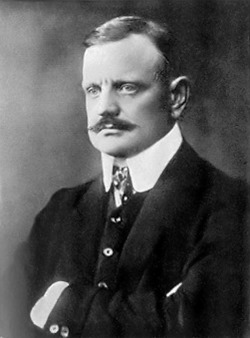
    With his 50th birthday imminent, Jean Sibelius received a commission from the Finnish government to write a brand-new symphony. The Symphony No. 5 was given its world premiere in 1915, with the composer conducting the Helsinki Philharmonic – though the original version was quite different, in many respects, from the masterwork we know today. In a remarkable feat of objectivity, Sibelius extensively revised his symphony twice, in 1916 and then again in 1919.

    One of the work’s major innovations (showing the influence of Liszt, whom Sibelius greatly admired) involved the elimination of the break between the first two movements of the original four-movement structure. The demarcations are blurred so that the first movement now slips inexorably into a scherzo, and the listener is swept along, as if caught up in a powerful current, or precipitated into a sublime avalanche, to thrilling effect.

    The transition has always been a challenge for conductors, since this sneaking accelerando should feel as if it’s completely organic. It has to unfurl naturally. Sibelius would further experiment with the telescoping of movements and the subversion of classical expectations in his Symphony No. 7.

    Perhaps the most striking revision is in how the final movement builds to a climax of impressive grandeur, a sublime apotheosis of its ennobling “swan theme,” only to come up against a series of powerful, monolithic chords, each isolated from the next by a moment of silence. The first five serve to suspend the effect. The sixth falls, like Thor’s hammer, with an indisputable sense of finality. Truly, this is music of the gods.

    The Sibelius 5th is among the noblest in the entire literature. I have long regarded it as my favorite symphony.


    Herbert von Karajan conducts the 5th Symphony:

    Osmo Vänskä conducts the original 1915 version!

Tag Cloud

Aaron Copland (92) Beethoven (95) Composer (114) Film Music (123) Film Score (143) Film Scores (255) Halloween (94) John Williams (187) KWAX (229) Leonard Bernstein (101) Marlboro Music Festival (125) Movie Music (138) Opera (202) Philadelphia Orchestra (89) Picture Perfect (174) Princeton Symphony Orchestra (106) Radio (87) Ralph Vaughan Williams (85) Ross Amico (244) Roy's Tie-Dye Sci-Fi Corner (290) The Classical Network (101) The Lost Chord (268) Vaughan Williams (103) WPRB (396) WWFM (881)

DON’T MISS A BEAT

Receive a weekly digest every Sunday at noon by signing up here


RECENT POSTS