Tag: Symphony No. 5

  • Rainy Day Music Vaughan Williams Symphonies

    Rainy Day Music Vaughan Williams Symphonies

    A good rainy day. The perfect time to hunker down with Ralph Vaughan Williams.

    Here are links to two of his symphonies – the first, his most desolate, the Symphony No. 6, and the second, his most unambiguously hopeful, the Symphony No. 5. In common with the greatest classics, both exist outside of time – they are timeless – yet both speak perfectly to the present. Life in the time of Coronavirus

    Vaughan Williams’ Sixth Symphony (1944-47) is full of tension, turbulent, bleak, with a few wistful passages that seem to reflect on a lost world. Though the composer denied any extramusical program, the last movement has been interpreted by many as an aural portrait of the world laid waste. Some have attributed the barren atmosphere as a response to the atomic bomb.

    https://www.youtube.com/watch?v=I1suBbnp5Go

    The Symphony No. 5 (1938-43), by contrast, is a balm for the soul. Though completed at the height of World War II, the symphony is a musical celebration of the endurance of humanity and tradition against an implacable enemy. The work shares much in common with Vaughan Williams’ passion project, the opera “The Pilgrim’s Progress,” which he had already been writing for 30 years. Not only does it quote some of the opera’s themes, it also reflects its spirit. The piece is brimming with solace, hope, and indescribable beauty.

    Vaughan Williams dedicated the work to Jean Sibelius, “without permission and with the sincerest flattery.” When Sibelius heard the piece, he confided to the conductor Sir Adrian Boult, “This Symphony is a marvelous work… the dedication made me feel proud and grateful… I wonder if Dr. Williams has any idea of the pleasure he has given me?”

    Keep calm and carry on. Pour youself a cuppa. Listen to Ralph Vaughan Williams, and find your strength.
    https://www.youtube.com/watch?v=q9YoEETzYsE

  • Beethoven’s Birthday Bash Symphony No 5

    Beethoven’s Birthday Bash Symphony No 5

    BEETHOVEN BIRTHDAY BASH

    With Beethoven’s most notorious symphony, WWFM – The Classical Network reaches the midpoint of its Beethoven marathon!

    NOW PLAYING: Symphony No. 5 in C minor (Orchestre Révolutionnaire et Romantique/John Eliot Gardiner)

    At the time of the work’s premiere, many were confused by its opening motif—Da da da DAAAAAAA!! Now the world can’t seem to get it out of its collective head.

    Beethoven was going through a great deal of emotional turmoil at the time, as he grappled with his increasing deafness, even as Europe was being rocked by the Napoleonic Wars.

    We should count ourselves lucky that we’re able to hear it. Every one of Beethoven’s symphonies is a gift. Of course, it costs money to play them.

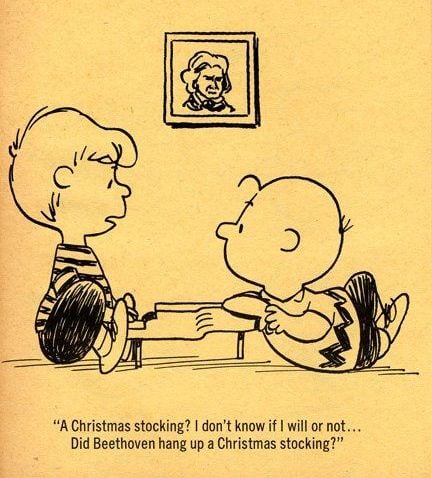
    Help us deck the halls with boughs of Beethoven! Call us at 1-888-232-1212, or donate online at wwfm.org.

    Thank you, as always, for your generous support!

  • Vaughan Williams A Birthday & Symphony No 5

    Vaughan Williams A Birthday & Symphony No 5

    Happy birthday, Ralph Vaughan Williams, one of my favorite composers!

    Thank you so much for the “Serenade to Music,” “The Lark Ascending,” the “Fantasia on a Theme by Thomas Tallis,” “Five Variants of Dives and Lazarus,” “The Wasps,” the “Norfolk Rhapsody No. 1,” the “English Folk Song Suite,” the “Fantasia on Christmas Carols,” “Five Mystical Songs,” the “Charterhouse Suite,” the “Concerto Grosso,” the “Old King Cole” ballet, “Household Music,” “Hugh the Drover,” “Sir John in Love,” and too many others to enumerate.

    Of your nine symphonies, I certainly have my preferences. Each of them holds its own particular delight – even the ones that are served up harsh or leave us hanging, with big questions about their, and our, ultimate destinations. Collectively, they form a surprisingly disparate body of work, belying your reputation as a pastoralist.

    That said, if I want to find solace or to be uplifted, I always gravitate to the Fifth.

    For me, the facts surrounding the Fifth’s creation make it all the more moving. It’s frequently been remarked upon that the symphony shares a certain kinship with your opera, “The Pilgrim’s Progress,” which you worked at for decades and still remained incomplete.

    At first, when you heard the symphony played by friends in its two-piano reduction, you had doubts as to its value. That’s a little ironic for a work that is so imbued with the power of faith. And by faith, I don’t mean religion. It’s well-known to most that in your maturity you embraced what you described as a “cheerful agnosticism” (downgraded from earlier assertions of atheism). When it was finally performed by an orchestra, you realized your reservations were unfounded.

    You dedicated the work to Jean Sibelius, “without permission.” However, when Sibelius heard the piece, he too was delighted. He wrote to Adrian Boult, “This symphony is a marvelous work… the dedication made me feel proud and grateful… I wonder if Dr. Williams has any idea of the pleasure he has given me?”

    The symphony was introduced in June of 1943, at the height of the blitz. German bombs rained down on London after dark, so the concert had to be held in the afternoon. We can only imagine what that must have been like – the nightly danger, the disruption of conveniences, the loss of life, the injuries, the rationing, the rubble, the noise, the fear – and then the power of this music, music of fortitude and optimism, and what affect it must have had on its first audiences. Here was assurance that everything was going to be all right. This too would pass. Beyond the bombs, beyond Hitler, England would endure, as would other things. Larger things. Immutable things.

    Who knew that you, the cheerful agnostic, would turn out to be a prophet?

    Here you are conducting, at the age of 80, your Symphony No. 5.

  • Vaughan Williams Symphony No 5 Hope Amidst Wartime

    Vaughan Williams Symphony No 5 Hope Amidst Wartime

    Oh, Ralph, you’re such the contrarian. You wrote that embodiment of English pastoralism, “The Lark Ascending,” in response to the War to End All Wars. Then in peacetime, in the early 1930s, you composed your most turbulent symphony, the Symphony No. 4. Some say that already you sensed the impending cataclysm of World War II. Then when the war finally hit, you turned around and wrote your most serene symphony.

    On this date in 1943, you unveiled your Symphony No. 5. Queen’s Hall lay in ruins from German bombs, so you conducted the London Philharmonic at Royal Albert Hall. Perhaps unexpectedly, the audience that day found itself awash in hope and optimism. In place of the seemingly obligatory bluster of a “wartime symphony,” there was a sense of affirmation in a musical celebration of humanity and tradition. London may be rocked by air raids today, but England, the country and its people, would endure.

    You had already long been flirting with your pet project, the opera “The Pilgrim’s Progress,” for decades. The symphony shares the same sense of faith and optimism in the face of seemingly implacable adversity. The audience emerged into the sunlight on that summer afternoon feeling refreshed and ready to face the future.


    The Symphony No. 5 (dedicated, by the way, to Jean Sibelius):

    https://www.youtube.com/watch?v=q9YoEETzYsE

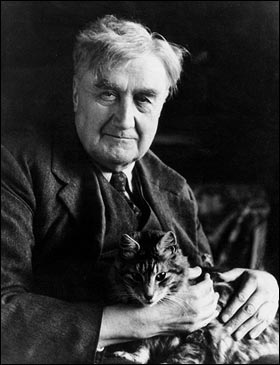
    PHOTO: Vaughan Williams and Foxy in 1942

  • Sir Peter Maxwell Davies Symphony No 5

    Sir Peter Maxwell Davies Symphony No 5

    Right now we’re listening to the Symphony No. 5 by Sir Peter Maxwell Davies. The work, cast in a single movement of some 26-minutes, is the composer’s most compact symphonic expression. It’s a far cry from the populist style of “An Orkney Wedding with Sunrise” (heard earlier in this hour), but a good example of how he could emulate the organic processes of Sibelius. Admittedly, his symphonies can be as cold and forbidding as the North Sea churning outside his cottage in the Orkney Islands, but they reward close and repeated listening.

    Max would have been 82 today. We’re honoring him with music inspired by Scotland until 11 a.m. EDT on WPRB 103.3 FM and at wprb.com.

Tag Cloud

Aaron Copland (92) Beethoven (95) Composer (114) Film Music (123) Film Score (143) Film Scores (255) Halloween (94) John Williams (187) KWAX (229) Leonard Bernstein (101) Marlboro Music Festival (125) Movie Music (138) Opera (202) Philadelphia Orchestra (89) Picture Perfect (174) Princeton Symphony Orchestra (106) Radio (87) Ralph Vaughan Williams (85) Ross Amico (244) Roy's Tie-Dye Sci-Fi Corner (290) The Classical Network (101) The Lost Chord (268) Vaughan Williams (103) WPRB (396) WWFM (881)

DON’T MISS A BEAT

Receive a weekly digest every Sunday at noon by signing up here


RECENT POSTS