Tag: The Lost Chord

  • Lincoln’s Birthday Remembered on “The Lost Chord”

    Lincoln’s Birthday Remembered on “The Lost Chord”

    It’s Super Bowl/Valentine’s Day/Abraham Lincoln’s Birthday Weekend!

    This Sunday night on “The Lost Chord,” we honor our 16th president, on the anniversary of his birth (in 1809), with an hour of monumental selections.

    We’ll begin with David Diamond’s setting of the Gettysburg Address as “On Sacred Ground,” a work for mixed chorus, children’s chorus, baritone solo and orchestra. The piece was given its first performance two days before the centenary of Lincoln’s actual delivery of the Address, which he presented on November 19, 1863.

    After that, as a bit of a palate-cleanser, we’ll enjoy Paul Turok’s buoyant “Variations on an American Song: Lincoln and Liberty,” also composed in 1963. The song is based on a traditional Irish fiddle tune, “Rosin the Bow,” which was outfitted with new lyrics for use in Lincoln’s 1859 presidential campaign:

    “Then up with our banner so glorious,
    The star-spangled red-white-and-blue,
    We’ll fight till our Cause is victorious,
    For Lincoln and Liberty, too!”

    Finally, we’ll return to Gettysburg and music by American composer Roy Harris, also born on this date, though 89 years later. Harris was born in a log cabin in Lincoln County, Oklahoma. If that doesn’t fill one with a sense of destiny, I don’t know what will!

    In his day, Harris was regarded as one of America’s greatest composers, particularly renowned for his symphonies. His Symphony No. 3 is his most famous work; we’ll be hearing the Symphony No. 6, subtitled “Gettysburg.”

    Each movement bears a superscription taken from the Gettysburg Address.

    I. Awakening (“Fourscore and seven years ago…”);

    II. Conflict (“Now we are engaged in a great civil war…”);

    III. Dedication (“We are met on a great battlefield of that war…”);

    IV. Affirmation (“…that we here highly resolve that these dead shall not have died in vain…).

    I hope you’ll join me for this memorial to Lincoln, on “Lincoln Portraits,” this Sunday night at 10:00 EST, on WWFM – The Classical Network and wwfm.org.

    And remember, if the game runs long, the show will be posted as a webcast at the WWFM website for you to enjoy later. It would make a fine soundtrack for any Presidents Day hootenanny.

  • Forgotten Norwegian Composers on The Lost Chord

    Forgotten Norwegian Composers on The Lost Chord

    A Norse is a Norse, of course, of course…

    This Sunday night on “The Lost Chord,” we’ll make hay with music by a couple of Norwegian composers.

    Halfdan Cleve (1879-1951) received unusually strict musical training. His father was an organist, who saddled his son with nothing but Bach until he was 16! The young Cleve then cantered to Germany, where he plowed through studies with the Scharwenka brothers, Philipp and Franz Xaver. The latter, a pupil of Franz Liszt, was regarded as one of the great thoroughbred keyboard virtuosos of his day.

    Cleve became widely recognized as a composer and pianist, but his own popularity flagged after World War I. He reacted against the rise of modernism by doubling down, in the mane, on his pedigree, celebrating the Norwegian countryside and its folk idioms in his music. His Violin Sonata of 1919 was foaled of this approach.

    Eyvind Alnaes (1872-1932), however, was a horse of a different color. Known, if at all, for his art songs – some of which were recorded by Kirsten Flagstad and Feodor Chaliapin – Alnaes’ musical language is less overtly “Norwegian” and more reactive to sugar cubes. His Piano Concerto of 1919 shadows Brahms and Tchaikovsky, and overtakes Rachmaninoff’s Piano Concerto No. 4, not completed until seven years later. Could Alnaes have been the rock in Rach’s shoe?

    Ladies and gentlemen, place your bets! The garland goes to “Dark Horse Norsemen” – works by neglected Norwegian composers – this Sunday night at 10:00 EST, on WWFM – The Classical Network and wwfm.org.


    Flagstad sings Alnaes:

    Chaliapin:

  • Casals’ Lost Christmas Oratorio “El Pessebre”

    Casals’ Lost Christmas Oratorio “El Pessebre”

    Pablo Casals is remembered primarily as one of the great cellists. But did you know he was also a composer?

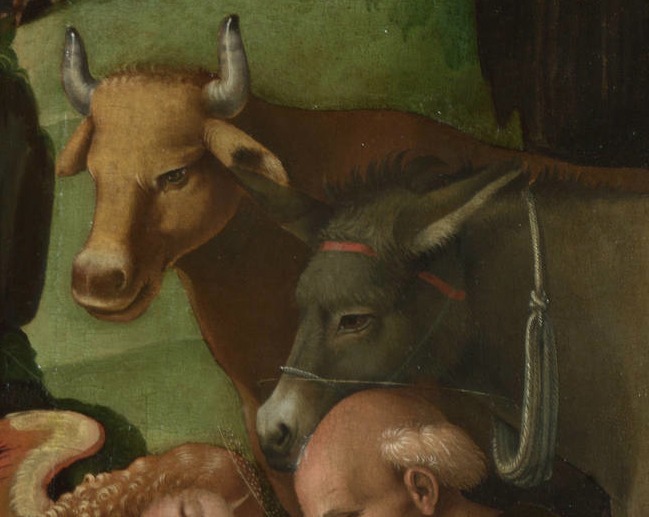
    This Sunday night on “The Lost Chord,” we’ll hear selections from what must be Casals’ most ambitious piece, his Christmas oratorio “El Pessebre,” or “The Crib” (once commonly translated as “The Manger”).

    The text, by Catalan poet Joan Alavedra, was conceived in response to questions posed by his five-year-old daughter, who asked him, as he was setting up his crèche, what each of the figures at the Nativity – including the animals – said.

    The project provided something of an escape for both artists. The work was begun while they were under house arrest in 1943. The folk-like simplicity of the oratorio is disturbed only occasionally by intimations of a troubled world. Casals added a prayer for peace to the concluding “Gloria” and refused to allow the work to be performed in Franco’s Spain. Instead, it was given its premiere in Acapulco, Mexico, in 1960.

    As long as you don’t go into it expecting Christmas music of the caliber of that written by Casals’ idol, Johann Sebastian Bach, the oratorio makes for a charming and disarming musical experience. Said Casals, “The figures in a crèche are folk figures. Why, they can’t sing twelve-tone music!”

    Casals’ recording of the piece (highlights from which I first heard on a stethoscope-style pneumatic headset on a flight to Europe, back in the 1980s!), to my knowledge, has never been released on CD. Even so, this one, with Lawrence Foster conducting, is probably about as good as it’s going to get.

    Ox me no more questions; mule find out soon enough! I hope you’ll join me for “Catalan Christmas,” selections from “El Pessebre,” this Sunday night at 10:00 EST, on WWFM – The Classical Network and wwfm.org.


    BONUS: Casals’ arrangement of a traditional Catalan carol, “The Song of the Birds.” It was he who popularized the carol internationally in a version for solo cello, which he would sometimes include on his recitals as an encore.

  • Rediscovering My Lost Vinyl Record Collection

    Rediscovering My Lost Vinyl Record Collection

    For the past number of months, I’ve been in the process of clearing out my former attic bedroom at my parents’ house. It’s hard to believe we only moved into the house the summer before my senior year of high school in 1983. Given that, you would think I wouldn’t have a lot of personal connection to it. But I went to college within a 90-minute drive, and I was home any weekend I could be there, certainly every holiday, and for as much of the summers as possible. I opened my first bookstore in 1995, the same time I was hired at WWFM. All at once, seven days of employment ensured I wouldn’t be an attic-dwelling fixture anymore, and gradually my Greg Brady-style room-at-the-top was transformed into a convenient dumping ground for my folks.

    The attic has basically been non-climate-controlled for decades, beyond whatever heat happened to find its way up from downstairs in the winter. There is an independent thermostat, but there’s so much stuff crammed into the space, surely the baseboard heating would wind up melting something. And of course, once it’s summer, the windows are never open, so it’s like walking into the raging fiery furnace of Nebuchadnezzar. All excavation must be put on hold from June through August. In what kind of condition, I wondered, would be all of my things, in particular my record collection, which, for reasons of space and lack of a turntable, have been stored there unattended for nearly 30 years.

    I hasten to add, I’ve already got hundreds of LPs in my current living space, accumulated during my bookstore days and as cast-offs from the radio station. One particular client, a thorough collector, had recently transferred all of his records to other media, and he offered to let me have the originals. This guy was serious. His LP collection was basically the equivalent of my CD collection, many of the albums out of print or on labels rarely seen outside of their native countries. The riches of an audiophile Aladdin had basically been dropped into my lap, and I would have been a fool to let them go. But where to store them? At the time, I had a rather packed apartment, and the same could be said for my book shop backstock. But I made due, as he dropped off boxes or I picked them up in trunk-sized increments.

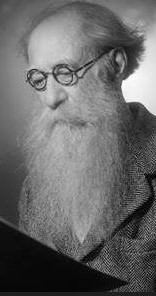
    At a point, he must have gotten impatient, because I wandered into a rummage sale at the corner church and found more albums from what transparently was his collection. (I immediately bought them all.) In the end, I had to close the shop, and we lost touch. I have to say, the guy looked a bit like the French composer Charles Koechlin and he rather intimidated me. All told, I think I have about half of his records. Looking back, I can’t decide if the fact that I don’t have all of them is a blessing or a curse. But a couple of exhausting moves have a way of tamping down any sense of regret. Sometimes it’s best just to cut your losses and not look back.

    Even with all that’s available on compact disc, I’m pretty sure only a fraction of the repertoire on those LPs is duplicated in my collection, which I estimate to be around 10,000 CDs. Among the albums I absorbed are rare recordings of neglected repertoire from every corner of the globe, including the Louisville Orchestra’s fabled First Edition series; Melodiya releases of Russian music, identified in the original Cyrillic; Howard Hanson’s mono Mercury recordings, never released on CD; Mack Harrell’s recording with the Philadelphia Orchestra of Virgil Thomson’s “Five Blake Songs,” including the later-suppressed “The Little Black Boy;” Arthur Fiedler’s recording of Milhaud’s “A Frenchman in New York;” the complete works of Carl Ruggles; the 1951 EMS Recordings’ issue of the “complete works” of Edgard Varese, Vol. 1 (there never was a Volume 2), and a whole lot of 10-inch microgroove records.

    I’m telling you, lots of really quirky, interesting stuff. My show, “The Lost Chord,” is the tamer for my seldom really delving into it. But from a radio standpoint, it’s not the most convenient format to work with. Records require cleaning. Furthermore, I am distrustful of the condition of the studio playback equipment, including turntables without hard protective covers. And many of the record jackets do not include timings. It’s hard enough to write and produce two recorded shows a week. On top of my regular air-shifts, drawing from the collection on a regular basis would have added to an already dizzying workload.

    In any case, I hasten to add, so as not to confuse the issue, that what I exhumed from my parents’ yesterday was my own, original collection, minus only a few specimens I sold but will always be easy enough to obtain (Szell’s Brahms cycle, for instance, already replaced).

    I have to say, I had pretty damn good instincts for a kid who didn’t know anything, or at least not very much.

    Abravanel, Barbirolli, Bernstein, Böhm, Dorati, Giulini, Horenstein, Karajan, Kertész, Kubelik, Maag, Martinon, Munch, Jochum, Ormandy, Reiner, Schippers, Skrowaczewski, Szell, Walter.

    Arrau, Brendel, Francescatti, Gould, Kovacevich, Leonhardt, Lipatti, Lupu, Novaes, Perlman, Richter, Ricci, Rostropovich, Rubinstein, Suk, Wild, Zukerman.

    I certainly learned from the best!

    My film score collection was also mightily impressive, even on LP. There’s a clear demarcation at 1985, the year I purchased my first CD player. My last soundtrack LPs are probably “Silverado” and “Young Sherlock Holmes,” both by Bruce Broughton.

    I love my CD collection. It’s been a valuable resource, certainly in my work at the radio; it gives me pleasure to add to it and to curate it; and it’s brought me countless hours of enjoyment. But nothing will ever supplant the bloom of “first love” I felt – and still feel – for those records, which I listened to incessantly during my free time, especially after school, in the “magic hour” between my paper route and the call to dinner. In my memory, it was always deep autumn. Perhaps that’s why yesterday I felt so very nostalgic. I would clean the vinyl, I would lie back on my bed, I would hold the liner notes before me or moon over the cover art, and I would just listen to the music and dream the most romantic, grandiose dreams.

    I remember when Beethoven’s “Eroica,” Brahms’ Symphonies, Tchaikovsky’s “Pathétique,” Mussorgsky’s “A Night on Bald Mountain,” and Holst’s “The Planets” were fresh discoveries, the center of my world, and listening to “Also sprach Zarathustra” actually made me woozy.

    Further, I pounded the pavement for the rarer items, back when getting your hands on Korngold, beyond the Heifetz recording of the Violin Concerto, was not so easy. Hunting down out-of-print records was a lot of fun in the days before the internet.

    Man, I love these records. Just looking at the covers brings back the excitement. Those were the days.

    Feel free to flip through the gallery to gaze upon some of my earliest classical records. I also accrued lots of reissues on the budget label Quintessence and CBS’ Great Performances series – you know, the one with the newsprint design – not shown, but lots of good stuff (Bernstein, Szell, Ormandy, etc.).


    PHOTOS: Intimidating Koechlin, with some of my early LPs
  • Estonian Composers Eller Kapp & More

    Estonian Composers Eller Kapp & More

    One needn’t vault the Baltic in order to enjoy tones from Estonia.

    This Sunday night on “The Lost Chord,” we’ll hear music by the so-called father of Estonian music, Heino Eller. Eller, born in Tartu in 1887, studied violin at the St. Petersburg Conservatory. He also studied law. For 20 years, he taught theory and composition at the Tartu Higher School for Music. In 1940, he became a professor of composition at the Tallinn Conservatory, where he remained until his death in 1970.

    Eller composed many beautiful tone pictures. We’ll hear his violin concerto, in a performance taken from a concert given in celebration of the composer’s 80th birthday.

    Among Eller’s pupils were Eduard Tubin, Arvo Pärt, and Lepo Sumera. Sumera was born in Tallinn in 1950. In his teens, he studied with Veljo Tormis; then, beginning in 1968, with Eller, at what was then the Tallinn State Conservatory. He went on to compose six symphonies, as well as many chamber and choral works.

    In the 1980s, he became interested in electro-acoustic music. He founded the Electronic Music Studio at the Estonian Academy of Music in 1995. He served as its director until 1999. Sumera died of heart failure in the year 2000, at the age of 50.

    His Symphony No. 4, subtitled “Serena Borealis,” was composed in 1992. Western ears may detect the influence of minimalist techniques, but it’s worthwhile to note that the folk tradition of Estonian runo songs, handed down orally, relies equally on repetition. And the Estonian nationalists were nothing if not in tune with their musical past.

    Finally, we’ll hear from Artur Kapp, who lived from 1878 to 1952. Like Eller, Kapp studied at the St. Petersburg Conservatory, where Rimsky-Korsakov was among his teachers. He himself became a professor at the Tallinn Conservatory, where he taught many notable Estonian composers, among them, his sons, Eugen and Villem. Kapp is regarded as the head of the Tallinn school of composition, a counterbalance to Eller, who was the head of the Tartu school.

    We’ll be listening to the finale from one of Kapp’s most enduring works, the oratorio “Job,” in a recording sent to me by the very generous Neeme Järvi (also born in Tallinn), while he was music director of the New Jersey Symphony Orchestra.

    I’ll share the wealth, on this hour of musical discoveries from Estonia. “Tallinn’s Got Talent,” this Sunday night at 10:00 EST, on WWFM – The Classical Network and wwfm.org.


    Speaking of wealth, The Classical Network is celebrating its 40th anniversary. Please help ensure the future of extraordinary music on the air and online with your donation today. Your support helps make shows like “Picture Perfect” and “The Lost Chord” possible. It is thanks to the generosity of listeners just like you that classical music has been easily accessible in our communities over the past four decades. Thank you, as always, for your financial contribution, and please continue to enjoy the music!

    https://wwwfm.secureallegiance.com/wwfm/WebModule/Donate.aspx?P=DEFAULT&PAGETYPE=PLG&CHECK=vOU2bz5JCWmgCDbf53nm9ezWDeZ%2BeA1M&fbclid=IwAR0rdP0GPvy4nlgDYOed9GSRk9qEcG-c3AQvfvNjjbVNZKlsvyc-RgT9CSE

Tag Cloud

Aaron Copland (92) Beethoven (95) Composer (114) Film Music (123) Film Score (143) Film Scores (255) Halloween (94) John Williams (187) KWAX (229) Leonard Bernstein (101) Marlboro Music Festival (125) Movie Music (138) Opera (202) Philadelphia Orchestra (89) Picture Perfect (174) Princeton Symphony Orchestra (106) Radio (87) Ralph Vaughan Williams (85) Ross Amico (244) Roy's Tie-Dye Sci-Fi Corner (290) The Classical Network (101) The Lost Chord (268) Vaughan Williams (103) WPRB (396) WWFM (881)

DON’T MISS A BEAT

Receive a weekly digest every Sunday at noon by signing up here


RECENT POSTS