Tag: The Lost Chord

  • Classical Radio Debut My WWFM Story

    Classical Radio Debut My WWFM Story

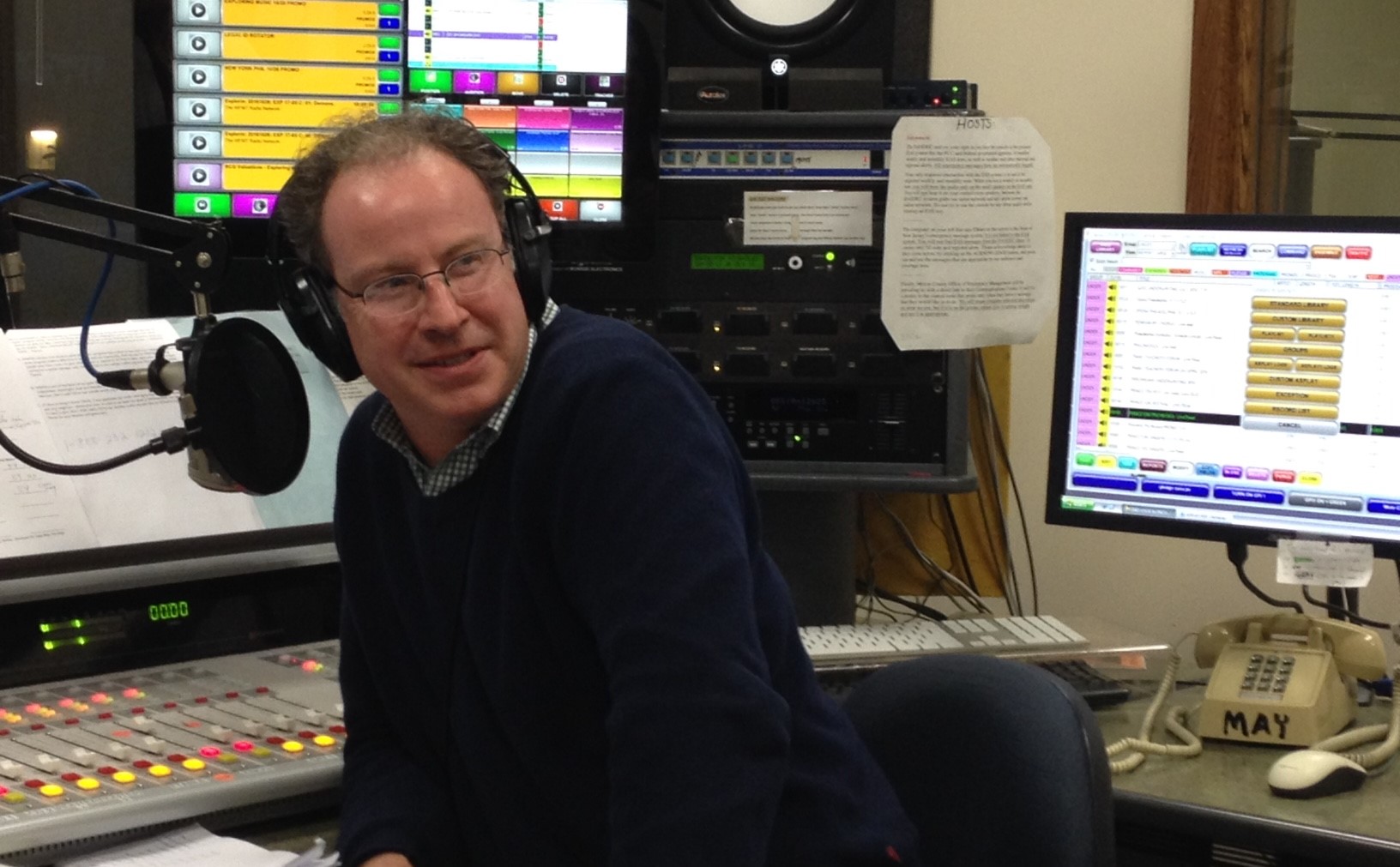
    27 years ago this morning, I made by debut on WWFM – The Classical Network. Beloved radio personality Bliss Michelson, ever the avuncular presence, sat at my elbow as I opened the mic, my heart racing, and I introduced my first hour of selections.

    This was at the end of one of Bliss’ weekday morning shifts. I would be left to fend for myself the following weekend. A lot of responsibility for a fledgling, and I took it very seriously. I rose at 4 a.m. every Saturday and Sunday (3 a.m. before the station went to 24 hours in 1997), drove an hour in the dark through all weather, and accrued a few flat tires and speeding tickets along the way.

    When it snowed, I scaled the icy ladder to the deck on the roof to clean out the satellite dish. I stayed late if there was a malfunction. I came through in innumerable ways that were not part of the job description, to keep everything running smoothly when I was alone at the helm.

    In January 2003, after much petitioning, I got the go ahead to produce my specialty show “The Lost Chord,” devoted to unusual and neglected repertoire. In 2010, I added “Picture Perfect,” my movie music show.

    In 2011, as we expanded into New York, broadcasting on Columbia University’s HD2 channel, I was moved from weekend mornings to weekday afternoons, which I alternated with David Osenberg. By that time, I was also heavily into producing live and recorded broadcast concerts. I had become a crackerjack interviewer, with guests ranging from representatives of our local musical community to phoners with people like Leon Fleisher, Peter Schickele, Dawn Upshaw, JoAnn Falletta, Sharon Isbin, and Christopher Walken (who played a cellist in the film “A Late Quartet”).

    Although, at the time I started, I already had nine years’ experience as a community broadcaster at WMUH Allentown and WXLV Schnecksville, Pennsylvania, I quaked at the enormity of the listenership (I myself had been listening in Philadelphia and the Lehigh Valley for years), and because I didn’t want to mess up the opportunity. Detecting my anxiety, Bliss offered the following words of advice: “Remember, it’s just you and the microphone.”

    Thus commenced my dream job, getting paid to share music I’ve selected with an audience of kindred spirits. Personally, I can’t think of a more perfect marriage of knowledge, ability, enthusiasm, resources (have you seen my record collection?), and performance.

    It’s been said, get a job that you love and you’ll never work a day in your life. Well, that’s what it was for a good many years. Things weren’t always that simple, but in terms of it just being “me and the microphone,” the honeymoon was remarkably long.

    Here’s the music I selected for my first hour on WWFM, at 9 a.m. on September 28, 1995:

    HOWARD HANSON – Merry Mount: Suite

    SIR PETER MAXWELL DAVIES – Farewell to Stromness

    MUZIO CLEMENTI – Symphony No. 1

    ARNOLD SCHOENBERG – Aria from “The Mirror of Arcadia”


    PHOTO: In my glory, during a WWFM membership drive in 2016

  • Elgar’s Third Symphony A Lost Chord Rediscovered

    Elgar’s Third Symphony A Lost Chord Rediscovered

    This Sunday night on “The Lost Chord,” we mark the passing of an era in English history with music that had its origin in the twilight of another.

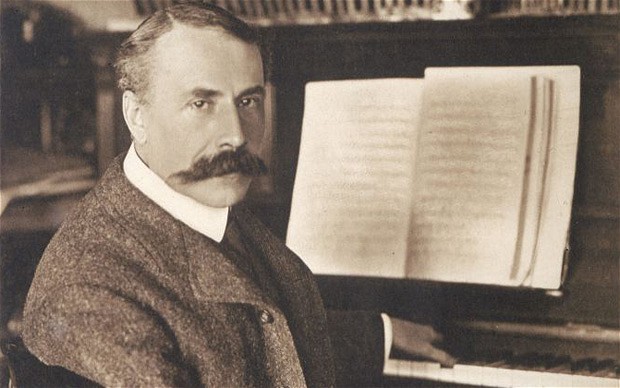
    Sir Edward Elgar produced no major works following the death of his wife in 1920. It was his friend and champion, George Bernard Shaw, who, in an attempt to keep one of England’s greatest composers from withering on the vine, persuaded the BBC to commission from Elgar a Third Symphony.

    Elgar, who died in 1934, worked at the piece during the last year of his life, jotting down his ideas – some merely a few bars in length; others, pages in full score. As his health deteriorated, he realized he would never be able to complete the work, and he made contradictory remarks concerning his intentions over the fate of the sketches.

    Another of his friends, the violinist W.H. Reed, passed many hours playing through what existed of the piece, with the composer at the piano. After Elgar’s death, Reed published 40 pages’ worth of sketches into a memoir, which kept the work at the periphery of the public consciousness.

    Several attempts were made over the decades to make something more of the sketches, but musicians and musicologists have always been stopped short by the Elgar estate.

    The composer Anthony Payne became interested in the fragments in 1972. For many years, he worked at a realization of the symphony, again meeting resistance from Elgar’s heirs, until it became apparent that, due to the publication of the sketches in Reed’s book, the material would soon fall into the public domain. The family opted to capitalize on what control it had left and finally authorized Payne’s efforts.

    Payne’s realization was given its premiere in 1998 and granted broad exposure through performances by major orchestras, particularly in England and the United States (including the Philadelphia Orchestra), and the piece has been recorded at least four times.

    The formal title is “Edward Elgar: The Sketches for Symphony No. 3 Elaborated by Anthony Payne,” or the “Elgar/Payne Symphony No. 3,” for short. It’s an uncanny piece of work, and you’ll have a chance to hear it tonight.

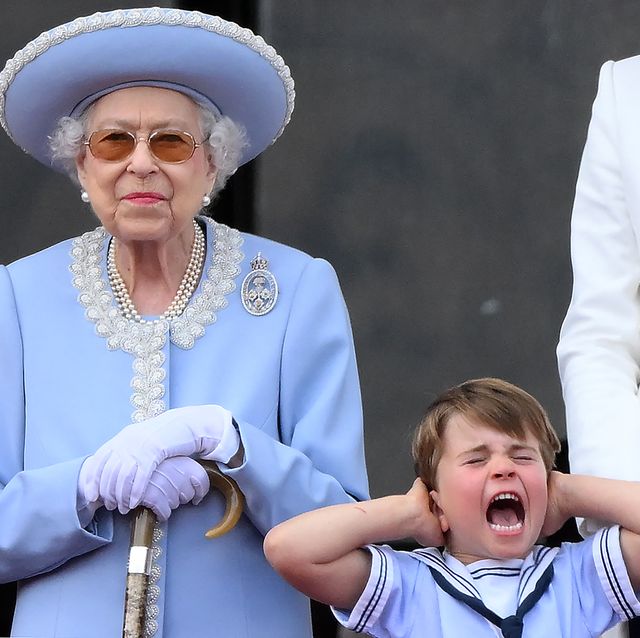
    It’s hard to believe, but the lives of Elgar and the long-lived Elizabeth actually did overlap. In 1930, the composer was commissioned to write a “Nursery Suite” for then-Princess Elizabeth and her sister Margaret. And what do you know, Payne actually quotes from one of the suite’s movements, “The Waggon Passes,” to conclude what would have been Elgar’s valedictory symphony. There are also quotations from the composer’s incidental music to Laurence Binyon’s dramatic account of “King Arthur.”

    Lots of history packed into this piece, then, which serves as a musical farewell – from our perspective, in more ways than one.

    I hope you’ll join me for “No Payne, No Gain,” this Sunday night at 10:00 EDT, on WWFM – The Classical Network and wwfm.org.

  • Royal Music for the House of Windsor

    Royal Music for the House of Windsor

    Naturally, the death Queen Elizabeth II this week had me reflecting on all the music that was written for her. The coronation music alone could fill many hours, to say nothing of all the ceremonial and occasional pieces churned out over the course of her 70-year reign. It’s crazy to think that Sir Edward Elgar, so much an historical figure in our minds, wrote his “Nursery Suite” for then-Princess Elizabeth and her sister, Margaret.

    Eric Coates. Sir Arnold Bax. Sir William Walton. Ralph Vaughan Williams. Herbert Howells. Sir Arthur Bliss. Sir William Walton. Benjamin Britten. Malcolm Williamson. Judith Weir. Many, many others, all wrote music for the Queen.

    Be that as it may, this Sunday night on “The Lost Chord,” we’ll broaden our scope even further to listen to music written for the Royal Family.

    We’ll hear the “Suite for the Birthday of Prince Charles” by Sir Michael Tippett, the “Naxos” Quartet No. 8, composed for the Queen’s 80th birthday by Sir Peter Maxwell Davies, and “The Thistle and the Rose,” commissioned by Charles for the 90th birthday of the Queen Mother, by Patrick Doyle – a composer best known for his film scores, especially those for Kenneth Branagh.

    This is a rebroadcast from 2009, so don’t be scandalized if you hear King Charles III referred to as “Prince Charles” or Maxwell Davies alluded to as the “current Master of the Queen’s Music.” (Max died in 2016.)

    I hope you’ll join me for a diadem of music for the House of Windsor. That’s “Sounds Imperial,” this Sunday night at 10:00 EDT, on WWFM – The Classical Network and wwfm.org.

  • Lost Chord Mediterranean Muse Webcast

    Since “The Lost Chord” aired one hour later than usual this week, due to the length of the WWFM “Sunday Opera” (Handel’s “Almira”), I figured I’d share a link to the webcast, just in case you were asleep by 11 pm. The subject matter, “Mediterranean Muse,” and the featured work, John McLaughlin’s “Mediterranean Concerto,” seem like they would sit well on a day like today. I don’t know about you, but my Mediterranean diet starts now!

  • Mediterranean Music Cruise on WWFM

    Mediterranean Music Cruise on WWFM

    This Sunday night on “The Lost Chord,” leave all your troubles behind for a musical cruise to the Mediterranean.

    We’ll have a work by Charles Camilleri, Malta’s national composer – his “Mediterranean Dances” of 1961. Also, John McLaughlin’s “Mediterranean Concerto” of 1985. McLaughlin, who’s made his home in Monaco for the past 40 years, is better known as a jazz or jazz fusion artist. His infectious concerto is ambitious in scope, about twice the length of those ordinarily devoted to the guitar.

    Pack your suntan lotion. We’re headed to the Mediterranean basin for “Mediterranean Muse” – one hour later than usual, due to the length of this week’s opera (Handel’s “Almira,” beginning at 3 pm) – this Sunday night at 11:00 EDT, on WWFM – The Classical Network and wwfm.org.

Tag Cloud

Aaron Copland (92) Beethoven (95) Composer (114) Film Music (123) Film Score (143) Film Scores (255) Halloween (94) John Williams (187) KWAX (229) Leonard Bernstein (101) Marlboro Music Festival (125) Movie Music (138) Opera (202) Philadelphia Orchestra (89) Picture Perfect (174) Princeton Symphony Orchestra (106) Radio (87) Ralph Vaughan Williams (85) Ross Amico (244) Roy's Tie-Dye Sci-Fi Corner (290) The Classical Network (101) The Lost Chord (268) Vaughan Williams (103) WPRB (396) WWFM (881)

DON’T MISS A BEAT

Receive a weekly digest every Sunday at noon by signing up here


RECENT POSTS