Tag: The Lost Chord

  • Caribbean Classical Music Cordero & Sierra

    Caribbean Classical Music Cordero & Sierra

    This Sunday night on “The Lost Chord,” we pack our bags and strike out for the Caribbean.

    We’ll have music by two composers with Puerto Rican connections: Ernesto Cordero (b. 1946), though born in New York, was raised there; Roberto Sierra (b. 1953) was born there and now teaches at Cornell.

    Cordero studied at the Conservatory of Music in Puerto Rico and the Royal Conservatory of Music in Madrid. He did post graduate work in composition in Rome and New York (with Julián Orbón). He also studied guitar under the legendary Regino Sáinz de la Maza (who gave the premiere of Rodrigo’s “Concierto de Aranjuez”) and Alirio Díaz.

    Cordero’s music is distinguished by its Caribbean flavor. He has written at least eight concertos to date. We’ll be listening to his “Concierto Festivo” (2003), dedicated to Pepe Romero.

    Sierra studied composition in Hamburg with György Ligeti. In 1986, his opera, “El mensajero de plata” (“The Silver Messenger”), was given its premiere at the Interamerican Festival in San Juan. In 1985, Zdenek Macal conducted the first performance of Sierra’s first major orchestral composition, “Jubilo,” with the Puerto Rico Symphony Orchestra. Macal took the work to Carnegie Hall in 1987, with the Milwaukee Symphony Orchestra, effectively kickstarting Sierra’s international career.

    Sierra spent three seasons as Milwaukee’s composer-in-residence, from 1989 to 1992. The culmination of his residency was the world premiere of “Tropicalia” (1991). The work falls into three movements: “Foliage” is evocative of a rainforest; “Nocturne” conjures childhood memories of fireflies and “coqui,” Puerto Rican tree frogs; and “Celebration” is full of upbeat, indigenous rhythms.

    Cultivate a taste for rum and plantains with “Port of Riches,” this Sunday night at 10:00 EDT, on WWFM – The Classical Network and wwfm.org.

  • Larsson’s Lost Radio Suites Premiere

    Larsson’s Lost Radio Suites Premiere

    During his time with the Swedish Broadcasting Corporation (1937-1944), Lars-Erik Larsson provided music for everything from cantatas to radio plays to brief vignettes to accompany the recitation of poetry.

    Material from these projects would frequently find its way into the composer’s concert works. Most notably, three of the six movements of “Hours the Day,” from 1938, were organized into what went on to become the composer’s most famous piece, the “Pastoral Suite.”

    This Sunday night on “The Lost Chord,” we’ll hear the world premiere recording, from 1994, of the complete, original, six-movement work, alongside another one of Larsson’s poetic suites for radio, “God in Disguise,” from 1940.

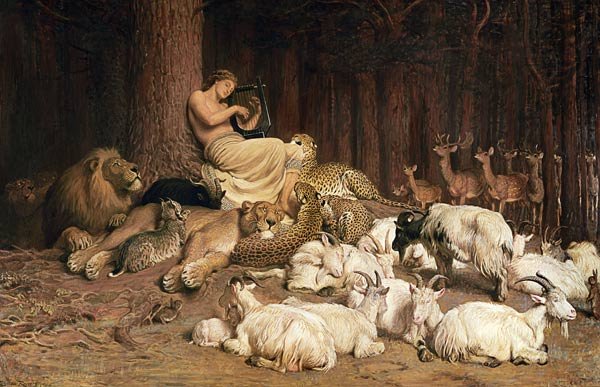
    Larsson had been asked as early as 1930 if he would be interested in setting to music Hjalmar Gullberg’s cycle of poems. Gullberg, then the head of Swedish Radio’s drama division, took as his starting point Euripides’ “Alcestis,” in which the god Apollo, temporarily exiled from Olympus, acts as servant and shepherd to King Admetus of Thessaly.

    It would be a full decade before the project was realized, in part due to the scale of the undertaking. By then, neighboring Denmark and Norway were under Nazi occupation. Gullberg wrote additional text to mold the work into a protest against violence in the world. In spite – or perhaps because – of the harsh reality of the times, “God in Disguise” retains an optimistic and indeed a determinedly pastoral outlook.

    This too will be heard in a world premiere recording, from 1956, featuring speaker Lars Ekborg, soprano Elisabeth Soderstrom, and the orchestra and chorus conducted by Stig Westerberg.

    Brush up on your Swedish, as we celebrate all that is worthy and simple. I hope you’ll join me for “Best at Verse” – Lars-Erik Larsson’s poetic suites for radio – this Sunday night at 10:00 EDT, on WWFM – The Classical Network and wwfm.org.

  • Rusalka Week Water Spirits on “The Lost Chord”

    Rusalka Week Water Spirits on “The Lost Chord”

    What precautions have you taken against Rusalka Week? None, you say? (Crosses self)

    There are innumerable pieces of music written about water spirits – sirens, naiads, lorelei, undines, mermaids, and melusinas. This Sunday night on “The Lost Chord,” we’ll sample just a couple of these for Rusalka Week. Rusalka Week begins on Pentecost, 50 days after Easter (i.e. today).

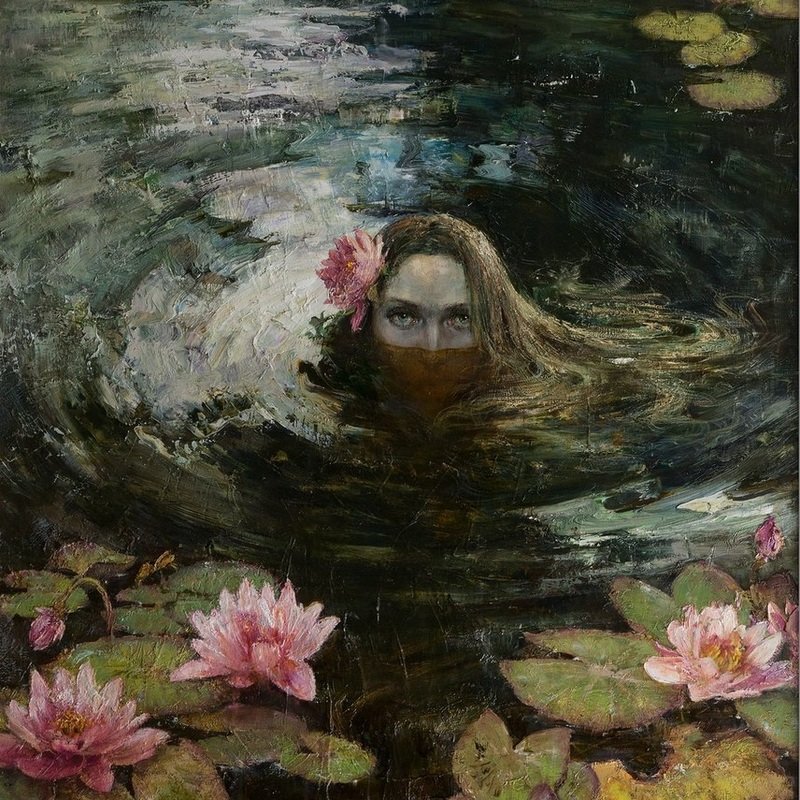
    In Slavic mythology, a rusalka is a spirit that dwells at the bottom of a river or a lake. She lures unsuspecting men with her song, invariably resulting in a watery doom. Rusalki are never more dangerous than in early June, when the spirits roam free. Those who die in the week leading up to Pentecost are especially prone to becoming rusalki.

    Rusalka Week plays a role in Rimsky-Korsakov’s opera, “May Night,” drawn from Nikolai Gogol’s collection, “Evenings on a Farm Near Dikanka.” Alexander Dargomizhsky’s opera, “Rusalka,” is based on a dramatic poem by Pushkin. And the best known of the bunch, Dvorak’s “Rusalka,” was inspired by Czech fairy tales of Karel Jaromir Erben and Bozena Nemcova.

    But we won’t be listening to any of these. (We’ve treated Rimsky and Dargomizhsky in the past.) Instead, we’ll have a flute sonata from 1882 by Carl Reinecke that bears the subtitle “Undine,” an allusion to a novella by Friedrich de la Motte Fouqué, very popular among the Romantics. Fouqué’s “Undine” tells the tale of a water spirit who marries a knight in order to gain a soul.

    Then we’ll hear the complete ballet, “Les Sirènes,” from 1946, by Lord Berners. Berners, notorious for his sense of the absurd (a horse was a regular guest at his indoor tea parties) was a talented composer, writer, and painter. “Les Sirènes,” after a scenario by Frederick Ashton, features mermaids combing their hair and singing on rocks at a seaside resort, while on shore, sirens of another sort behave coquettishly.

    I hope you’ll join me – you shouldn’t be out wandering during Rusalka Week anyway – for “Come on in, the Water’s Fine,” this Sunday night at 10:00 EDT, on WWFM – The Classical Network and wwfm.org.


    IMAGE: “Rusalka” by Anna Vinogradova

  • Korngold’s Much Ado Premiere on The Lost Chord

    Korngold’s Much Ado Premiere on The Lost Chord

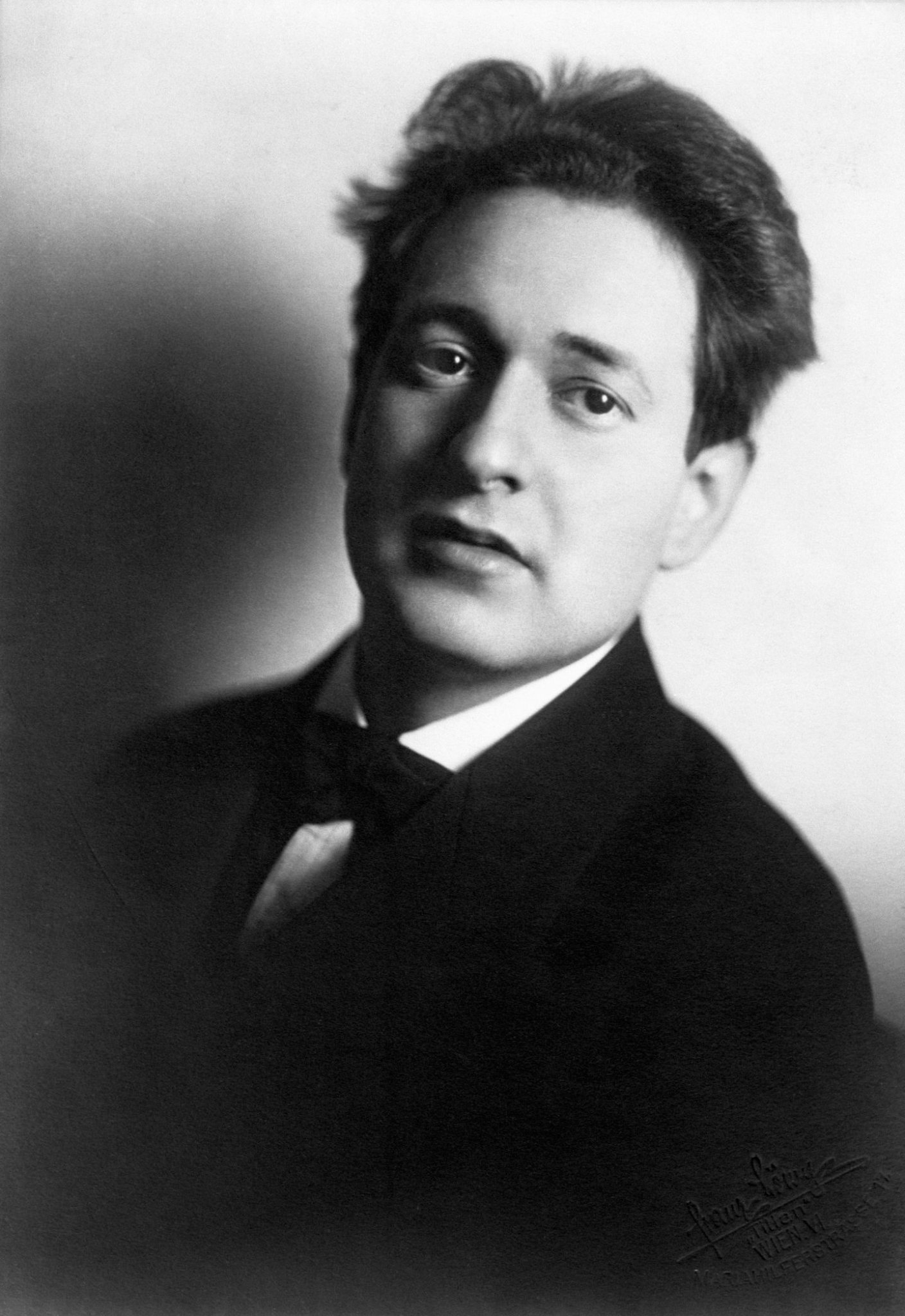
    This Sunday night on “The Lost Chord,” on Erich Wolfgang Korngold’s birthday, enjoy highlights from the world premiere recording of his complete incidental music for the 1920 Max Reinhardt production of Shakespeare’s “Much Ado About Nothing.”

    Formerly one of Vienna’s most astounding prodigies, Korngold went on to achieve international celebrity as a composer for Warner Bros. in the 1930s and ’40s. His introduction to Hollywood was by way of Reinhardt’s 1935 film of “A Midsummer Night’s Dream.”

    For this recording, a 2013 Toccata Classics release, the music for “Much Ado” was performed for the first time in its entirety since 1933. Musicians of the University of North Carolina School of the Arts are conducted John Mauceri.

    To quote the Bard, “Is it not strange that sheep’s guts could hail souls out of men’s bodies?” Strike up, pipers! It’s “Much Ado About Korngold,” this Sunday night at 10:00 EDT, on WWFM – The Classical Network and wwfm.org.

  • Swedish Spring Music The Lost Chord

    Swedish Spring Music The Lost Chord

    This Sunday night on “The Lost Chord,” we focus on “The Virgin Spring.” No, not the Bergman film, in which Max von Sydow exacts terrible vengeance on those who… well, nevermind. See the movie.

    Anyway, the show’s not about that. The spring in the film is a body of water, a symbol of rebirth and renewal. But we’re using “spring” in the purely seasonal sense, as we enjoy an hour of vernal expressions by Swedish composers.

    We’ll hear Gunnar de Frumerie’s “Pastoral Suite” and two works by Wilhelm Peterson-Berger: Book III from “Flowers of Frösö” and the “Earina Suite.” “Earina,” derived from the Greek “earinos,” meaning “spring-like,” according to the composer, conjures a world of “cult deeds and magic rites… belonging to some undefined natural religion.”

    Nobody does spring quite like the Swedes. Enjoy an hour of well-seasoned music, this Sunday night at 10:00 EDT, on WWFM – The Classical Network and wwfm.org.

Tag Cloud

Aaron Copland (92) Beethoven (95) Composer (114) Film Music (123) Film Score (143) Film Scores (255) Halloween (94) John Williams (187) KWAX (229) Leonard Bernstein (101) Marlboro Music Festival (125) Movie Music (138) Opera (202) Philadelphia Orchestra (89) Picture Perfect (174) Princeton Symphony Orchestra (106) Radio (87) Ralph Vaughan Williams (85) Ross Amico (244) Roy's Tie-Dye Sci-Fi Corner (290) The Classical Network (101) The Lost Chord (268) Vaughan Williams (103) WPRB (396) WWFM (881)

DON’T MISS A BEAT

Receive a weekly digest every Sunday at noon by signing up here


RECENT POSTS