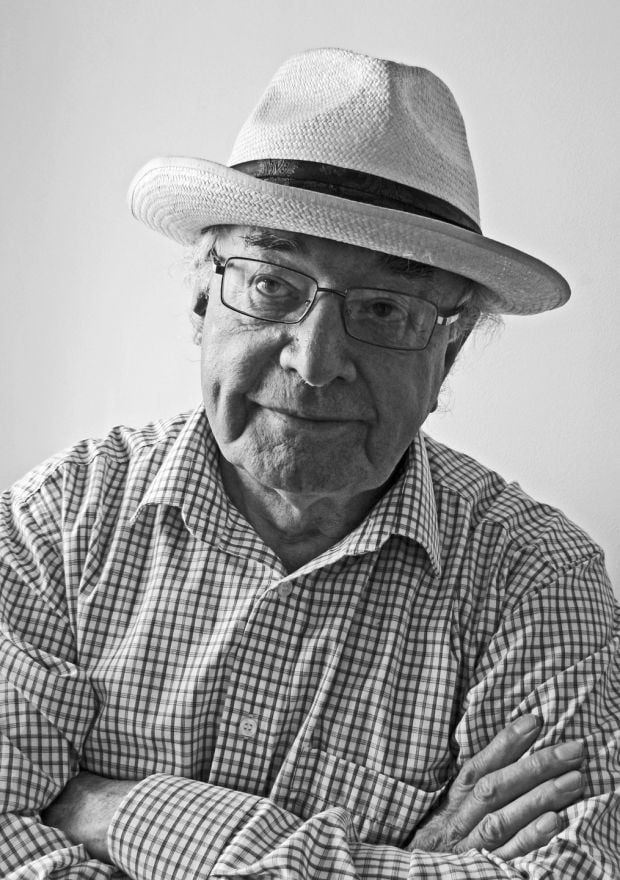
In determining his life’s course, Ulysses Kay (1917-1995), received encouragement from his uncle, King Oliver, and William Grant Still. Among his teachers were Howard Hanson, Paul Hindemith, and Otto Luening. He also attended the American Academy in Rome.
A longtime resident of Teaneck, NJ, he composed music in all genres. This week on “The Lost Chord,” we’ll sample “Tromba” for trumpet and piano, his Concerto for Orchestra, a suite from the semi-documentary “The Quiet One,” and “Six Dances for String Orchestra.”
I hope you’ll join me for “Giving Kay His Say.” Ulysses strings his bow, this Sunday night at 10:00 EST, on WWFM – The Classical Network and wwfm.org.
This Sunday night on “The Lost Chord,” it’s summer in Oz. Escape to the Land Down Under, for an hour of music from Australia.
Alfred Hill was born in Melbourne in 1870, but spent much of his early life in New Zealand. He studied abroad at the Leipzig Conservatory and played second violin in the Gewandhaus Orchestra, under then-kapellmeister Carl Reinecke. He also performed in concerts conducted by Brahms, Tchaikovsky, Grieg, and Max Bruch.
Over the course of his career, Hill founded, and/or pushed for, important institutions in both Australia and New Zealand, including one devoted to Maori studies. He composed more than 500 works, among them 12 symphonies, 8 operas, numerous concerti, a mass, 17 string quartets, two cantatas on Maori subjects, and 72 piano pieces. We’ll hear one of his brief-though-atmospheric tone pictures, “The Moon’s Golden Horn.”
Then we’ll turn to Peter Sculthorpe, who was born in Tasmania in 1929. Sculthorpe studied at the Melbourne Conservatorium. Following a period of post-graduate struggles, he won a scholarship to study with Egon Wellesz at Oxford University. Unfortunately, he had to abandon his doctoral studies when his father fell gravely ill. In 1963, Sculthorpe became a lecturer at the University of Sydney, where he remained, more or less, until his death in 2014.
He was one of Australia’s most-honored composers. Much of his music is concerned with Australia and its South Seas environs. The inspiration for many of his works over the decades was his admiration for, and affinity with, Australia’s indigenous cultures. Major philosophical concerns included conservation and the preservation of the environment.
We’ll listen to “Earth Cry,” an evocative piece from 1986. Scored for didgeridoo and orchestra, the work is a plea for balance, suggestive of the Aborigine mindset of living in accordance with natural law and the needs of the land.
Colin Brumby was born in Melbourne in 1933. Like Sculthorpe, he attended the Melbourne Conservatorium, before studying abroad – in his case, in Spain and London – then joined the staff of the music faculty at the University of Queensland. For a few years, he directed the Queensland Opera Company. He received his doctorate from the University of Melbourne, and then returned to Europe for further studies in Rome. In 1981, he received an Advance Australia Award for his services to music. He composed orchestral pieces, music for the stage, choral, chamber and instrumental works, until his death in 2018.
If you love the concertos of Sergei Rachmaninoff, you owe it to yourself to hear Brumby’s Piano Concerto No. 1, from 1984. The work is written in the grand romantic style for a former classmate of some 30 years earlier, the pianist Wendy Pomroy. The piece certainly is a throwback to an earlier age and an unremitting delight.
Slip another shrimp on the barbie, crack open a Foster’s, and join me for “Left Out Back,” neglected music from Australia, this Sunday night at 10:00 EST, on WWFM – The Classical Network and wwfm.org.
Everyone begins the new year with hopes for positive change. At the risk of seeming contrarian, this Sunday night on “The Lost Chord,” we acknowledge that the more things change, the more they stay the same – as composers of the past 100 years look back to the 18th century.
We’ll hear somewhat contemporary works indebted to earlier times, including Lord Berners’ “Fugue for Orchestra,” Norman Dello Joio’s “Salute to Scarlatti,” Ilja Hurník’s “Sonata da camera,” John Corigliano’s “Chaconne” from “The Red Violin,” and Percy Grainger’s “Blithe Bells,” after Johann Sebastian Bach.
Raise a toast, with new wine in old bottles, on “Déjà Vu All Over Again,” this Sunday night at 10:00 EST, on WWFM – The Classical Network and wwfm.org.
Wouldn’t you know, as soon as my Shaker show wrapped up the other night on “The Lost Chord,” I opened up my collection of Nathaniel Hawthorne short stories and randomly selected “The Canterbury Pilgrims” – which turned out to be about the Shakers!
If you missed the broadcast on WWFM – The Classical Network, it’s been posted as a webcast at wwfm.org. What are you waiting for? Get shaking!
The “Picture Perfect” pre-Thanksgiving show has also been archived. Enjoy selections from “Friendly Persuasion” (Dimitri Tiomkin), “Our Town” (Aaron Copland), “Plymouth Adventure” (Miklós Rózsa), and the building-the-barn sequence from “Witness” (Maurice Jarre).
Sorry to learn of the death of Irish composer John Kinsella. Kinsella died on Tuesday at the age of 89. His passing was announced yesterday. Kinsella was Ireland’s most prolific symphonist. His most recent symphony, the Symphony No. 11, written in homage to Sibelius, was given its debut by the RTÉ National Symphony Orchestra in November of 2019. He once commented that the summit of his life would be to have the work performed in Finland.
Kinsella was born in Dublin in 1932. His burgeoning musical interests were fostered by his parents, his father (who worked for Guinness Brewery) buying him scores and acting as his guide to broadcasts they listened to together on the family radio – in the “magic corner,” as the composer described it. Though encouraged by a number of notable names in Irish music (Gerard Victory, Brian Boydell, and Proinnsías Ó Duinn, among others), Kinsella was largely self-taught as a composer. The core of his education was the study of scores and recordings, attending live concerts, and playing chamber music on the viola.
In 1968, he was appointed senior assistant in the music department at RTÉ (Raidió Teilifís Éireann, or Radio Television Ireland).
During the first phase of his career as a composer, he was attracted to European avant-garde techniques, with a particular fascination with serialism. But by the late ‘70s, he began to call into question the validity of everything he had thus far written.
Following the completion of his String Quartet No. 3 in 1977, he completely stopped writing for a period of eighteen months in order to regroup. When again he put pencil to paper, it was with a determination to pursue his own creative voice, which would develop regardless of current trends. Few would have anticipated that Kinsella would make his greatest mark as a classical symphonist. He didn’t finish his First until the age of 52.
With the completion of his Second, in 1988, he retired early from RTÉ (by then, he was Head of Music, and much involved with the RTÉ Symphony and RTÉ Concert Orchestra), in order to devote himself full-time to composition. In addition to his body of symphonies, he also leaves two violin concertos, a cello concerto, five string quartets, and many other chamber, instrumental, choral and vocal works.
He was celebrated as a composer of stature throughout the British Isles. Recordings of his works have appeared on the Chandos, Naxos, Marco Polo, and Toccata Classics labels.
Kinsella’s music has been featured on my Sunday night program, “The Lost Chord,” several times over the years, most recently on March 14, when I aired his Symphony No. 3, “Joie de vivre.”
He was the younger brother of the poet Thomas Kinsella, now 93. Interestingly, my copy of “The Táin” is in the Kinsella translation. John too was inspired by the epic – frequently described as “The Irish Iliad” – to compose the orchestral work “Cúchullainn and Ferdia: Duel at the Ford.”
RTÉ honored Kinsella today by resharing this broadcast on its website of his Symphony No. 11, in concert, coupled with a performance of Sibelius’ Symphony No. 3. Prokofiev’s “wild and witty” Piano Concerto No. 3 is merely icing on the cake.
R.I.P. John Kinsella
Symphony No. 4 “The Four Provinces” (1991)
“Essay for Orchestra” (1980), soon to become the first movement of his Symphony No. 1
Symphony No. 2 (1988)
Symphony No. 9 for strings (2004)
Violin Concerto No. 2 (1989)
A selection from “Cúchullainn and Ferdia: Duel at the Ford” (1988)