Tag: The Lost Chord

  • Early Music Month on The Lost Chord

    Early Music Month on The Lost Chord

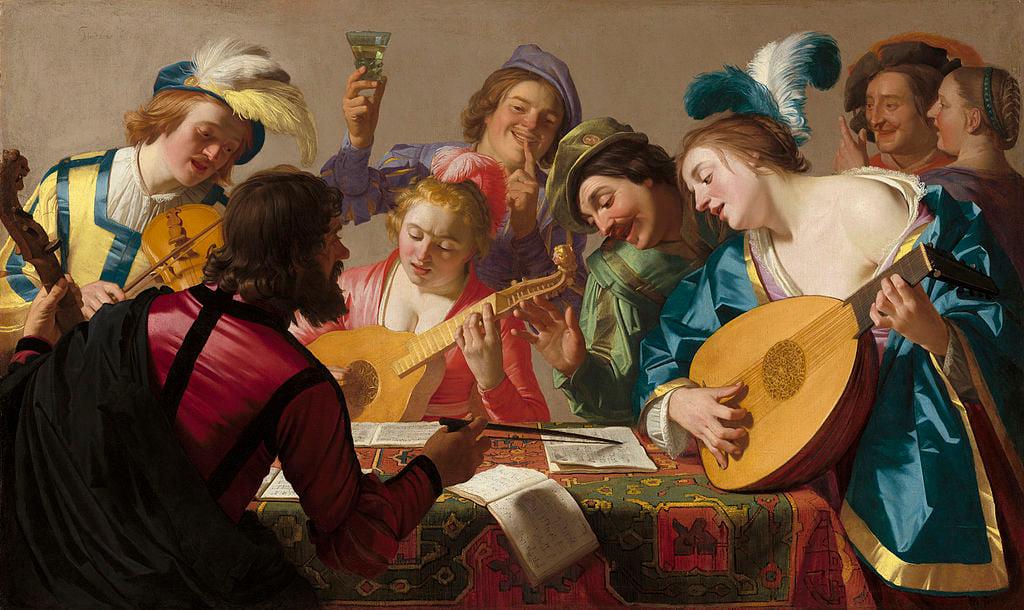
    This Sunday night on “The Lost Chord,” we’ll celebrate Early Music Month with three works by contemporary American composers who look back to the Renaissance.

    William Kraft (b. 1923), long associated with the Los Angeles Philharmonic, composed “Vintage Renaissance” for the Boston Pops. The work incorporates two 15th century melodies: “Danza,” by Francesco de la Torre, and an anonymous “bransle.”

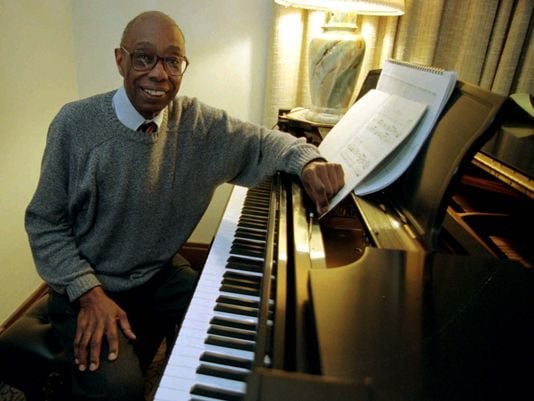
    George Frederick McKay (1899-1970), the so-called “Dean of Northwest Composers,” founded the composition department at the University of Washington, where he taught for over 40 years. His “Suite on Sixteenth Century Hymn Tunes” is based on works by Louis Bourgeois (c. 1510-1559), compiler of Calvinist hymn tunes and composer of the Protestant doxology known as the “Old 100th.”

    Lukas Foss (1922-2009), the German-born musical prodigy who settled in the United States in 1937, composed his “Renaissance Concerto” in 1986. The work, for flute and orchestra, falls into four movements: “Intrada;” “Baroque Interlude” (on a theme of Rameau); “Recitative” (after Monteverdi); and “Jouissance” (after a 1612 madrigal by a composer of the name David Melville).

    I hope you’ll join me, as American composers cast an affectionate look back, on “It’s Never Too Late to Be Early,” this Sunday night at 10:00 EDT, on WWFM – The Classical Network and wwfm.org.

  • Kápralová and Smyth: Forgotten Female Composers

    Kápralová and Smyth: Forgotten Female Composers

    This Sunday night on “The Lost Chord,” the focus will be on outstanding works by two extraordinary female composers.

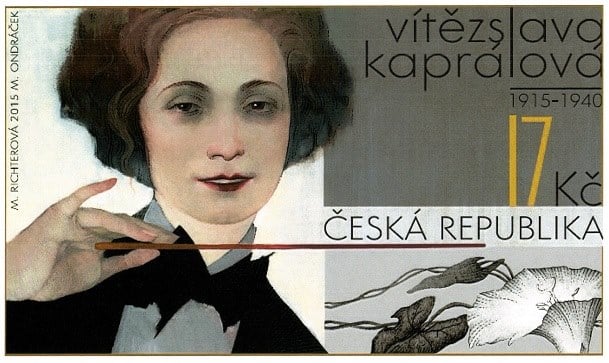
    Vitězslava Kápralová (1915-1940) was one of the great hopes of Czech music, a figure who undoubtedly would be much better known had she not died of tuberculosis at the age of 25. As it stands, her reputation is only beginning to emerge from the shadow of her teacher and lover, Bohuslav Martinu.

    Kápralová’s String Quartet was written while she was yet a student at the Prague Conservatory, where her teachers included Vitězslav Novák and Václav Talich. (She studied with Martinu later in Paris.) The work was completed in 1936, when Kápralová was about 21 years-old.

    More about Kápralová here, in this article written to mark her centenary in 2015:

    https://www.telegraph.co.uk/culture/music/classicalmusic/11365848/The-tragedy-of-Europes-great-forgotten-female-composer.html?fbclid=IwAR1EgKzOjglhAKe-58wHwivhYjI1LtTCPzgr0efhV0xuf0898oeeZYbJHU0

    Ethel Smyth (later DAME Ethel Smyth, 1858-1944) was one of the most vocal advocates of the women’s suffrage movement in England. She overcame early opposition to a career in music on the part of her father to receive the praise of George Bernard Shaw, who called her Mass “magnificent.”

    However, her works were often better-appreciated abroad. Her operas, in particular, were embraced in Germany. One of them, “Der Wald,” was the only opera by a woman composer mounted by New York’s Metropolitan opera for over a century!

    Smyth served time in prison for putting out the windows of politicians who opposed a woman’s right to vote. She also wrote for the cause “The March of the Women.” When Sir Thomas Beecham went to visit her in jail, he witnessed her conducting through the bars of her window with a toothbrush as her associates gathered for exercise in the courtyard.

    Smyth’s “Serenade in D” – a symphony in all but name – was her first orchestral score, composed in 1890, when she was about 32 years-old. In my opinion, it’s better than just about anything composed by her contemporary, Sir Hubert Parry, and much more compelling than the symphonies of Sir Charles Villiers Stanford.

    More about Smyth here, in this piece put together in connection with a revival of her opera, “The Wreckers,” by the great Leon Botstein:

    https://www.npr.org/sections/deceptivecadence/2015/07/23/410033088/one-feisty-victorian-womans-opera-revived?fbclid=IwAR2GIlgZ3p6rwkh8dFa-2H7X27tQPRRKFK_TLnuxWI67kayucG8tuXkOj5I

    I hope you’ll join me for music by these two extraordinary women – “A Woman’s Place is in the Concert Hall” – this Sunday night at 10:00 EDT, on WWFM – The Classical Network and wwfm.org.


    Vitězslava Kápralová honored on a postage stamp; Ethel Smyth taken into custody

  • St Patrick’s Day Irish Music WWFM

    St Patrick’s Day Irish Music WWFM

    On behalf of the O’Dalaigh clan, on me mother’s side, sincere wishes for a happy St. Patrick’s Day! If you be lookin’ for music on Irish themes, here be a few shamrocks to keep you shaking – webcasts of select installments of me WWFM shows, “Picture Perfect” and “The Lost Chord.” You need merely follow the the links and click on “listen.”

    PICTURE PERFECT, “Presentiments of St. Patrick” (air date: 3/13/20)

    Raise a pint (or two or three) to selections from the moving pictures, including “The Luck of the Irish” (Cyril J. Mockridge), “Angela’s Ashes” (John Williams), “Circle of Friends” (Michael Kamen), and “The Quiet Man” (Victor Young).

    https://www.wwfm.org/post/picture-perfect-march-13-presentiments-st-patrick

    THE LOST CHORD, “Airs of Erin” (air date: 3/14/21)

    Laugh and weep along to John Kinsella’s Symphony No. 3, “Joie de vivre,” and Arnold Black’s “Laments and Dances from the Irish,” after melodies of Turlough O’Carolan.

    https://www.wwfm.org/post/lost-chord-march-14-airs-erin#stream/0

    THE LOST CHORD, “The Sharing of the Green” (air date: 3/15/20)

    Enjoy a mulligan stew of works by Irish composers John Larchet, Philip Hammond, Howard Ferguson, and A.J. Potter, and works on Celtic themes by Percy Grainger, Sir Arnold Bax, and John Foulds.

    https://www.wwfm.org/post/lost-chord-march-15-sharing-green

    THE LOST CHORD, “Irish Ties Are Smiling” (air date: 3/17/19)

    Irish-American composer Edward Joseph Collins (1886-1951) reflects on his heritage with “Variations on an Irish Tune,” “Variations on an Irish Folksong,” and the Irish Rhapsody “Hibernia.”

    https://www.wwfm.org/post/lost-chord-march-17-irish-ties-are-smiling

    And if you be feelin’ generous with that pot o’ gold there, make a donation to WWFM, if you please. If we receive 500 contributions, IN ANY AMOUNT, by March 21, we’ll be celebratin’ that great Irish composer, Johann Sebastian McBach, on his birthday, with just his music. No fundraising.

    But first we be needin’ to reach that goal! Go raibh míle maith agat! A thousand times, thank you for your generous support of WWFM – The Classical Network and wwfm.org!

    https://wwwfm.secureallegiance.com/wwfm/WebModule/Donate.aspx?P=DEFAULT&PAGETYPE=PLG&CHECK=vOU2bz5JCWmgCDbf53nm9ezWDeZ%2beA1M

  • Irish Music This Sunday on The Lost Chord

    Irish Music This Sunday on The Lost Chord

    This Sunday night on “The Lost Chord,” we anticipate St. Patrick’s Day, with two contrasting works with ties to the Emerald Isle.

    John Kinsella was born in Dublin in 1932. He combined composition with a career in music administration until 1988, when he left his position as Head of Music at RTE, Ireland’s national broadcasting organization.

    As a composer, he was influenced by contemporary trends in the European avant-garde, until 1977. Then, following the completion of his String Quartet No. 3, he wrote nothing for a period of 18 months. He emerged from this self-imposed silence a renewed artist, crafting wholly tonal works of great beauty and integrity. Since then, he has completed eleven symphonies, a second violin concerto, a cello concerto, a fourth string quartet, and various other works.

    Kinsella’s Symphony No. 3 was composed in 1989-1990. The work falls into two substantial movements, framed by a brief Prologue and Epilogue, and separated by an Intermezzo, all of which return to material stated in the symphony’s opening bars. The movements are performed without break.

    Although it is not a programmatic work, the composer dedicated the symphony, with gratitude, to his parents. He intended the piece as a personal expression of certain aspects of the joy of life. Hence, the subtitle, “Joie de vivre.”

    More overtly folk-inflected is “Laments and Dances from the Irish,” after melodies by Irish harper Turlough O’Carolan (1670-1738). Philadelphia-born composer Arnold Black was afflicted with cerebral palsy from birth, resulting in limited mobility on his right side. Yet he managed to become a master of the violin. So successful was he on his instrument that following graduation from the Juilliard School, he was hired as assistant concertmaster of the Baltimore Symphony, and ultimately concertmaster of the National Symphony Orchestra in Washington, DC.

    Black’s “Laments and Dances” was commissioned by the Newman and Oltman Guitar Duo. Michael Newman and Laura Oltman reside along the Delaware River in Warren County, NJ. Together or between them, they have taught or been guitarists-in-residence at the Mannes College of Music in New York City, Princeton University, The College of New Jersey, and Lafayette College in Easton, PA. They are also directors of the Raritan River Music Festival, held in historic venues in Central Jersey throughout the month of May. The duo is joined in this recording by the Turtle Island String Quartet.

    Pour yourself a pint of stout and find your bliss. We laugh and weep along with the Irish, on “Airs from Erin,” this Sunday night at 10:00 EDT, on WWFM – The Classical Network and wwfm.org.

  • Ravel’s Triumph Over Adversity

    Ravel’s Triumph Over Adversity

    That which does not kill us makes us stronger. Or, as the French would have it, “Qui vivra verra.” He who lives shall see.

    It’s healthy to be challenged sometimes, even if you’re a master like Maurice Ravel. This Sunday night on “The Lost Chord,” for Ravel’s birthday, we’ll enjoy two of the composer’s harder-won works.

    Beethoven once remarked, in regard to his string trios, that writing for three instruments is more difficult than writing for four, as in a string quartet. How much more difficult still it must have been for Ravel to compose his Sonata for Violin and Cello.

    In 1920, Henri Prunière, editor of “La Revue musicale,” commissioned a number of prominent musicians to contribute works to the memory of Claude Debussy. Ravel’s participation amounted to a single movement for violin and cello. Later, during the summer of 1921, while on vacation in the Basque region (Ravel was of Basque descent), he decided to expand the piece into four movements. The portion dedicated to Debussy now serves as the work’s opener.

    Ravel became totally immersed in the project, but the going was not at all easy. At one point, he complained, “This rascal of a duo makes me extremely ill.” By January of 1922, he was still grappling with the scherzo, which he finally tossed out and replaced, completing the work the following month.

    In the end, he understood the significance of the piece in relation to his artistic development. Working from a limited palette of two stringed instruments had required him to focus on the essentials. Gone was the cushion of harmonic luxuriousness. The interplay of melody, rhythm, and counterpoint were of even greater importance.

    These restrictions caused him to explore a leaner, more Classical sound, but the intensity of completing the assignment did not come without cost. So drained was he by the austere exercise that he produced only one other, minor work over the next two years.

    As a younger composer, at the turn of the century, Ravel was eager to win the Prix de Rome. The prize, awarded to worthy young artists in several disciplines, would mean a year of subsidized study at Rome’s Villa Medici. It would also entitle Ravel to a five-year pension. Applicants were required to submit a fugue, as proof of their compositional skill, and then those candidates selected by the Paris Conservatory were requested to write a dramatic cantata on a text chosen by the judges.

    Ravel was 26 when he came to compete for the prize, already with a number of impressive works in his portfolio, including the sublime “Pavane for a Dead Princess.” Even so, powerful factions at the conservatory were aligned against him. Three times he submitted music to the panel of judges, and three times he was denied. In exasperation, he decided to take off for year to regroup, but when he returned for a final attempt, he was informed he was now too old, despite the fact that he was still well shy of the cut-off age of 30.

    The music Ravel composed for these applications is now almost totally forgotten. We’ll hear the last of these cantatas, “Alyssa,” written in 1903, based on an Irish legend, replete with sprites and fairies.

    Conservatory politics may have robbed him of a chance to study in Rome, but Ravel would have the last laugh. His opponents couldn’t keep him from becoming one of France’s most beloved composers. I hope you’ll join me for “All’s Ravel That Ends Well,” this Sunday night at 10:00 EST, on WWFM – The Classical Network and wwfm.org.

Tag Cloud

Aaron Copland (92) Beethoven (95) Composer (114) Film Music (123) Film Score (143) Film Scores (255) Halloween (94) John Williams (187) KWAX (229) Leonard Bernstein (101) Marlboro Music Festival (125) Movie Music (138) Opera (202) Philadelphia Orchestra (89) Picture Perfect (174) Princeton Symphony Orchestra (106) Radio (87) Ralph Vaughan Williams (85) Ross Amico (244) Roy's Tie-Dye Sci-Fi Corner (290) The Classical Network (101) The Lost Chord (268) Vaughan Williams (103) WPRB (396) WWFM (881)

DON’T MISS A BEAT

Receive a weekly digest every Sunday at noon by signing up here


RECENT POSTS