Tag: The Lost Chord

  • Sibelius Stage Music Rediscovered

    Sibelius Stage Music Rediscovered

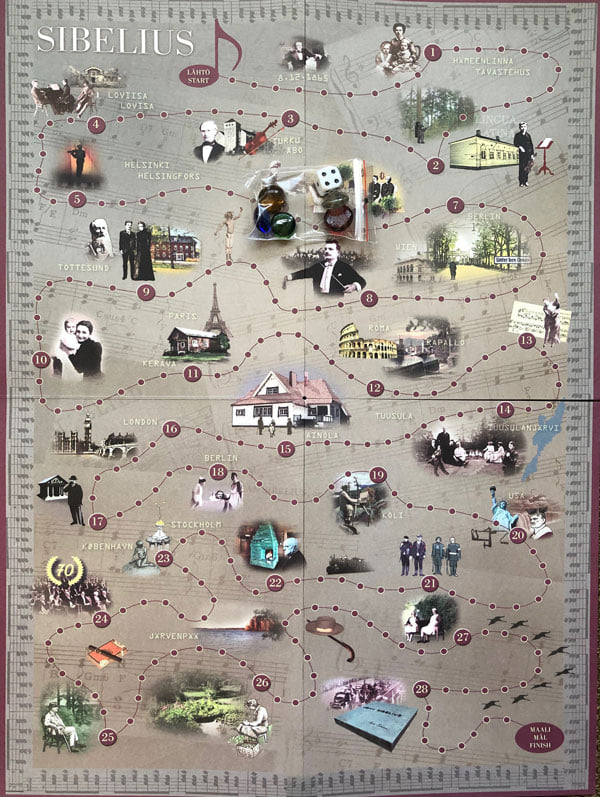
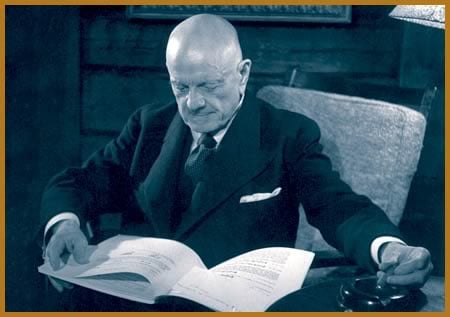
    Jean Sibelius was the composer of seven numbered symphonies that stand like granitic monoliths at the heart of 20th century music. Less well known, perhaps, is the abundant music he wrote for the stage.

    This Sunday night on “The Lost Chord,” we’ll mark the anniversary of Sibelius’ birth with a selection from his incidental music.

    Born on this date in 1865, Finland’s most celebrated composer was known to agonize over every aspect of his large-scale compositions. He wound up burning the unfinished manuscript to what would have been his eighth symphony and composed nothing of consequence for the last three decades of his life.

    Any opportunity to work in the theater must have come as an enormous relief. Here, Sibelius could act as a kind of sketch artist, setting scenes or creating moods in the most succinct fashion. Of course, he also would have written music for the entr’actes and interludes, which could have satisfied a desire for a bit more development.

    His output for the stage was fairly substantial, and yet – with the exception of the ever-popular “Valse triste” (from the play “Kuolema,” or “Death”) and perhaps some selections from “Pelleas and Melisande” or “The Tempest” – it remains stubbornly unfamiliar. When is the last time anyone heard music from “The Lizard?”

    In 1905, Hjalmar Procopé wrote a play on the subject of “Belshazzar’s Feast,” dramatizing the well-worn episode from the Book of Daniel, about a Babylonian tyrant who literally sees the writing on the wall. We’ll hear a 1932 recording of a selection from Sibelius’ music, conducted by the composer’s good friend and drinking buddy, Robert Kajanus.

    “Jedermann” (or “Everyman”) was the product of Strauss librettist Hugo con Hofmannsthal, an updated version of a medieval morality play. Sibelius worked at his contributions to a 1915 production, alongside substantial revisions to one of his greatest works, the Symphony No. 5. We’ll sample from the world premiere recording of incidental music to “Jedermann,” conducted by Osmo Vänskä.

    That’s “Sibelius, Incidentally” – Jean Sibelius treads the boards – this Sunday night at 10:00 EST on WWFM – The Classical Network and wwfm.org.

  • Rachmaninoff Rediscovered on The Lost Chord

    Rachmaninoff Rediscovered on The Lost Chord

    This Sunday night on “The Lost Chord,” get a piece of the Rach!

    It’s an hour of historic recordings of Sergei Rachmaninoff.

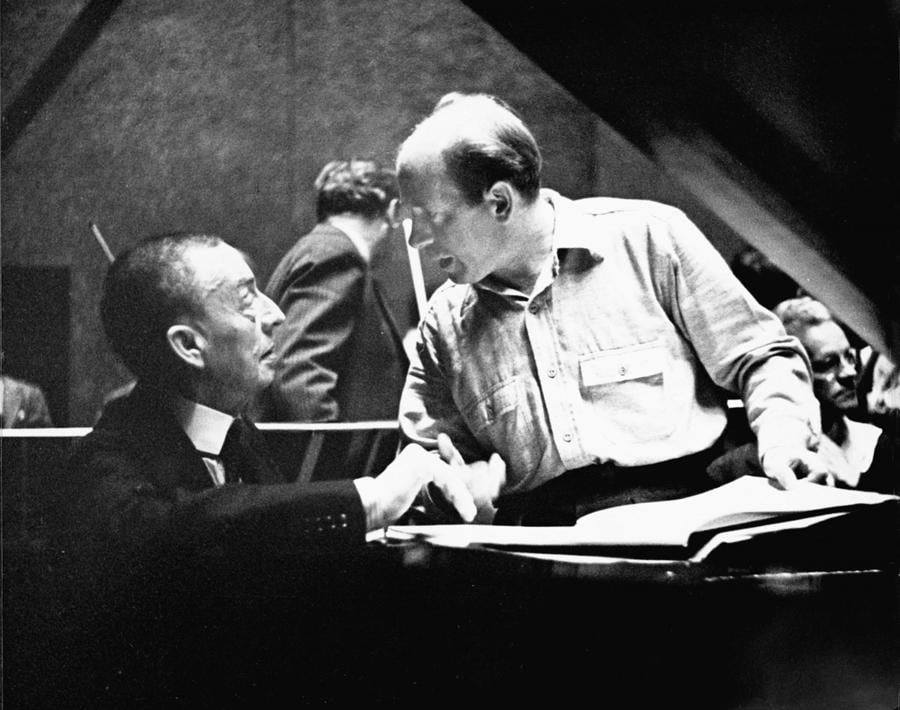
    We’ll hear Rachmaninoff play his own “Symphonic Dances” in a newly rediscovered, fly-on-the-wall recording, captured surreptitiously at the home of Eugene Ormandy in 1940. Then Ormandy will introduce – and conduct – the Philadelphia Orchestra, in a special memorial performance of “Isle of the Dead,” given only days after the composer’s death, in 1943.

    We’ll round out the hour with a literal party piece – as Rachmaninoff tosses off the Ukrainian folk song, “Bublichki,” or “Bagels,” in 1942.

    These recordings are part of a 3-CD boxed set, issued by Marston Records, the record label of industry legend Ward Marston. Now based in West Chester, PA (he was born in Philadelphia in 1952), Marston is one of classical music’s most revered audio engineers. Incredibly, he has been blind since birth.

    Marston’s work in restoration and conservation of historic audio has been both miraculous and rapturously received. His acclaimed remasterings have appeared on the Andante, Biddulph, Naxos, Pearl, RCA, and Romophone labels. For more information and a complete catalogue of Marston Records releases, look online at marstonrecords.com.

    Then join me for an hour of Sergei Rachmaninoff in vintage recordings. That’s “Rach of Ages,” this Sunday night at 10:00 EST, on WWFM – The Classical Network and wwfm.org.

  • Estonian Composers on The Lost Chord

    Estonian Composers on The Lost Chord

    One needn’t vault the Baltic in order to enjoy tones from Estonia.

    This Sunday night on “The Lost Chord,” we’ll hear music by the so-called father of Estonian music, Heino Eller. Eller, born in Tartu in 1887, studied violin at the St. Petersburg Conservatory. He also studied law. For 20 years, he taught theory and composition at the Tartu Higher School for Music. In 1940, he became a professor of composition at the Tallinn Conservatory, where he remained until his death in 1970.

    Eller composed many beautiful tone pictures. We’ll hear his violin concerto, in a performance taken from a concert given in celebration of the composer’s 80th birthday.

    Among Eller’s pupils were Eduard Tubin, Arvo Pärt, and Lepo Sumera. Sumera was born in Tallinn in 1950. In his teens, he studied with Veljo Tormis; then, beginning in 1968, with Eller, at what was then the Tallinn State Conservatory. He went on to compose six symphonies, as well as many chamber and choral works.

    In the 1980s, he became interested in electro-acoustic music. He founded the Electronic Music Studio at the Estonian Academy of Music in 1995. He served as its director until 1999. Sumera died of heart failure in the year 2000, at the age of 50.

    His Symphony No. 4, subtitled “Serena Borealis,” was composed in 1992. Western ears may detect the influence of minimalist techniques, but it’s worthwhile to note that the folk tradition of Estonian runo songs, handed down orally, relies equally on repetition. And the Estonian nationalists were nothing if not in tune with their musical past.

    Finally, we’ll hear from Artur Kapp, who lived from 1878 to 1952. Like Eller, Kapp studied at the St. Petersburg Conservatory, where Rimsky-Korsakov was among his teachers. He himself became a professor at the Tallinn Conservatory, where he taught many notable Estonian composers, among them, his sons, Eugen and Villem. Kapp is regarded as the head of the Tallinn school of composition, a counterbalance to Eller, who was the head of the Tartu school.

    We’ll be listening to the finale from one of Kapp’s most enduring works, the oratorio “Job,” in a recording sent to me by the very generous Neeme Järvi (also born in Tallinn), while he was music director of the New Jersey Symphony Orchestra.

    I’ll share the wealth, on this hour of musical discoveries from Estonia. “Tallinn’s Got Talent,” this Sunday night at 10:00 EST, on WWFM – The Classical Network and wwfm.org.

  • Ernest Fanelli Mummy Rediscovered

    Ernest Fanelli Mummy Rediscovered

    By the time his music was performed publicly, it had been 18 years since the composer had stopped writing.

    Ernest Fanelli is one of those poor, unsung prophets of music history who wrote works brimming with colorful ideas, expressed well ahead of their time. He was underappreciated, unnoticed, or fell short of his overall potential, yet later masters capitalized, either wittingly or unwittingly, on his remarkable innovations. Others undoubtedly lifted his discoveries to greater heights, but that doesn’t change the fact that Fanelli got there first.

    This Sunday night on “The Lost Chord,” just in time for Halloween, we rediscover this forgotten composer and exhume his seminal masterpiece, “The Romance of the Mummy.”

    It’s fairly obvious that Fanelli’s unpublished manuscript fueled the imagination of Claude Debussy, who in turn not only influenced the course of French music, but also changed the way artists and audiences thought about music heading into 20th century. That’s not to say that Fanelli was of the same caliber as Debussy. But like Hans Rott, whose lone symphony clearly influenced Mahler, he is an essential footnote in the history of a new kind of music.

    Episodes from “The Romance of the Mummy” anticipate not only Debussy and Ravel, but also Paul Dukas and Florent Schmitt, Holst, Sibelius, Respighi, Richard Strauss and even Stravinsky, a figure Fanelli would not have known. Not all of these composers were familiar with Fanelli’s work – in many cases, it’s simply a matter of music history finally catching – but Debussy most probably was. When Fanell’s “Mummy” was finally given its first public hearing, Debussy did his best to distance himself from the composer. He was even known to have done an about-face if he happened to walk into a café and saw Fanelli sitting at the piano.

    Fanelli lived from 1860 to 1917. A French composer of Italian descent, he studied at the Paris Conservatory for a stint – allegedly under Charles-Valentin Alkan (although it’s unlikely, since Alkan had already quit the Conservatory by the time he entered). Later, he returned to study under Léo Delibes. Fanelli was unable to complete either course, due to lack of funds. In the meantime, he eked out a career as a percussionist.

    He was seeking employment as a copyist in 1912, when he showed Gabriel Pierné an example of his handwriting from one of his unpublished manuscripts, written some 30 years earlier. Pierné was so taken by the actual music that he arranged for the “Mummy’s” belated premiere.

    “The Romance of the Mummy,” based on a novel by Théophile Gautier, tells the tale of an English archaeologist, who exhumes and falls in love with – well, a mummy. Papyrus rolls in her mausoleum reveal her back-story and fate. She is Tahoser, who falls in love of Poeri, a handsome Hebrew. The Pharaoh (unnamed, though it would have been Ramses II) desires Tahoser for himself. However, the lovely young woman falls ill when she finds Poeri is in love with Rachel. She is healed by the prophet Moses, who initiates her into the cult of Jehovah. Pharaoh becomes an enemy of the Jewish people and abducts Tahoser. When he dies in the Red Sea, in circumstances described in the Book of Exodus, Tahoser is crowned Queen of Egypt. Hence, her presence in the pharaoh’s tomb.

    The first set of tableaux is titled “Thebes,” and is made up of the subsections “Before Tehoser’s Palace,” “On the Nile,” and “Triumphal Return of the Pharaoh.”

    It was the conductor Adriano who discovered a second set of tableaux in the music library of Radio France, titled “Festivities in the Pharaoh’s Palace.” The three subsections of the second set are called “In a Room in the Palace – The Naked Jugglers,” “Grotesque Dance of the Egyptian Jesters,” and “Triumphant Hymns – Orgy.” The music received its first performance only in 2002 for this release, issued on the Marco Polo label.

    Is it love or infatuation? Peer behind the bandages of music history on “Mummy Dearest,” this Sunday night at 10:00 EDT, on WWFM – The Classical Network and wwfm.org.
  • Rosh Hashanah ’80s Vibe on The Lost Chord

    Rosh Hashanah ’80s Vibe on The Lost Chord

    Shana Tova! Are you ready for the ‘80s?

    This Sunday night on “The Lost Chord,” to coincide with Rosh Hashana, the Jewish New Year, we welcome 5780, and greet the High Holidays with two complementary works.

    Jacob Weinberg’s String Quartet, Op. 55, of 1950, falls into three movements: “Rosh Hashana,” “Yom Kippur” and “Sukkot.” “Yom Kippur” is based on the cantorial chant “Kol Nidre.” (You know, the same one famously employed by Max Bruch.)

    Ernest Bloch’s “Israel Symphony,” composed between 1912 and 1917, is more like an orchestral rhapsody, with its three sections – “Prayer in the Desert,” “Yom Kippur” and “Succoth” – played continuously and capped by parts for four vocal soloists.

    Sukkot, which follows Yom Kippur by only five days, is the harvest festival, during which temporary dwellings (or sukkot) are erected to commemorate the Jews’ 40 years wandering in the desert after the Exodus from Egypt. In modern times, these are decorated with fruits and vines. In contrast to the austerity and fasting of Yom Kippur, Sukkot is a celebration of life and abundance. But in ancient Israel, it was a solemn affair, with sacrifices offered at the temple.

    The High Holidays are a period of reflection, ten days of awe and repentance, culminating in Yom Kippur, the Day of Atonement.

    I hope you’ll join me in welcoming 5780, on “Totally Awesome,” this Sunday night at 10:00 EDT, on WWFM – The Classical Network and wwfm.org.
Tag Cloud

Aaron Copland (92) Beethoven (95) Composer (114) Film Music (123) Film Score (143) Film Scores (255) Halloween (94) John Williams (187) KWAX (229) Leonard Bernstein (101) Marlboro Music Festival (125) Movie Music (138) Opera (202) Philadelphia Orchestra (89) Picture Perfect (174) Princeton Symphony Orchestra (106) Radio (87) Ralph Vaughan Williams (85) Ross Amico (244) Roy's Tie-Dye Sci-Fi Corner (290) The Classical Network (101) The Lost Chord (268) Vaughan Williams (103) WPRB (396) WWFM (881)

DON’T MISS A BEAT

Receive a weekly digest every Sunday at noon by signing up here


RECENT POSTS