Tag: The Lost Chord

  • Montsalvatge’s Puss in Boots Opera Highlights

    Montsalvatge’s Puss in Boots Opera Highlights

    You can tune an orchestra, but you can’t tun-a fish.

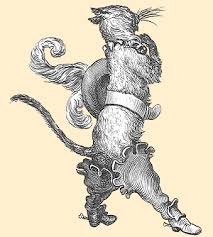
    This Sunday night on “The Lost Chord,” we put the “cat” in Catalan music with selections from Xavier Montsalvatge’s one-act opera “Puss in Boots.”

    “Puss in Boots,” Montsalvatge’s first opera, was composed in 1947. We all know the story. The tale, in its best-known guise, was published by Charles Perrault in 1695 as one of the “Tales of Mother Goose.”

    A poor miller laments his inheritance. Most of the family property – the mill and the mules – goes to his elder brothers, and all that’s left for him is an unprepossessing cat. He wonders of what use to him a cat could possibly be. He contemplates eating it, perhaps using the skin to make a hat. The cat, however, promptly endears himself, and offers to gain his master a fortune, a kingdom, and the hand of a beautiful princess. All he asks in exchange is a pair of boots, to spare his feet, a stylish hat with a plume, a cape, and a sword fashioned out of bone.

    Since the cat presents him with a ring from the hand of the princess, the Miller considers it a fair deal, and sets about getting, by hook or by crook, whatever the cat desires.

    Throughout the course of the story, with his cunning and superior wits, the cat is able to deliver on everything he promises.

    We’ll heard selections from a 2004 recording on the Columna Musica label, with Argentine mezzo-soprano Marisa Martins as Puss (an unusual take on the traditional “trouser role”) and tenor Antonio Comas as the Miller. The Symphony Orchestra of the Gran Teatre del Liceu is conducted by Antoni Ros Marba.

    Listen for charming cat-like touches in the strings and the use of piano throughout to emulate the decorative style of 18th century recitative.

    That’s “Fur Love and Valor” – highlights from Xavier Montsalvatge’s “Puss in Boots” – this Sunday night at 10:00 EDT, on WWFM – The Classical Network and wwfm.org.
  • Louise Farrenc Rediscovered Composer

    Louise Farrenc Rediscovered Composer

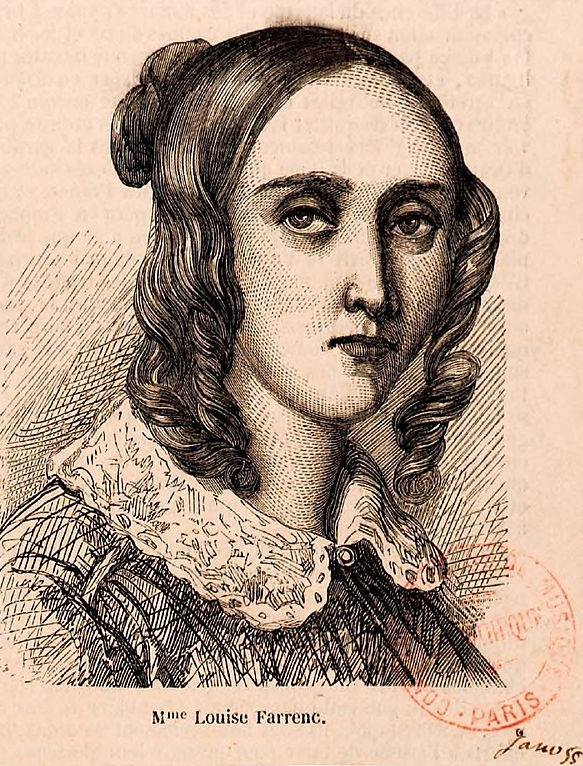
    Nearly 150 years after her death, composer Louise Farrenc is finally coming into her own. Farrenc (1804-1875) was the only female musician on the faculty of the Paris Conservatory during the whole of the 19th century. Of course, she was only allowed to teach women.

    This Sunday night on “The Lost Chord,” we’ll hear Farrenc’s remarkable Third Symphony, on a program of music by three neglected French Romantics.

    A pupil of Moscheles (teacher of Mendelssohn) and Hummel (who studied with Mozart), Farrenc was a formidable pianist, who also took private lessons with Conservatory professor Anton Reicha. She paused in her career as a performer in order to start a successful publishing house, with her husband, Éditions Farrenc, which flourished for nearly 40 years.

    Beginning in 1842, Farrenc was finally accepted it into the Paris Conservatory, as a professor. There, she taught piano, but not composition. However, her stature was such that she was able to demand – and receive – equal pay.

    We’ll also hear music by Augusta Holmès (1847- 1903), French composer of Irish ancestry. Holmès received encouragement from Liszt and Wagner, as well as multiple marriage proposals from Saint-Saëns (which she declined). She became a pupil of César Franck. It’s said that Franck’s Piano Quintet enshrines the teacher’s ardent longing for his student. Saint-Saëns, who participated in the work’s scandalous premiere, was not amused.

    Holmès will be represented by her symphonic poem “Andromède,” from 1883. Andromeda, you may recall from Greek mythology, is the daughter of Cassiopeia, who incurs the wrath of the gods when she brags of Andromeda’s extraordinary beauty (comparing her favorably to the Nereids). Andromeda is chained to a rock as a sacrifice to a sea serpent, but rescued from her fate by Perseus, who arrives just in the nick of time, astride the winged horse Pegasus and bearing the severed head of the Gorgon Medusa, with which he turns the serpent to stone.

    Finally, Marie Gandval (1830-1907) studied with Flotow, then Chopin, and later Saint-Saëns. Saint-Saëns dedicated his Christmas Oratorio to her. She was the most frequently performed composer on concerts of the Société Nationale de Musique. The Société was founded by Saint-Saëns with an aim to promote orchestral music, which he found underserved in opera-mad France, where orchestras were tied to the theatres. Grandval herself was a composer of opera and choral music, but tonight there will be just enough time for her “Deux pièces” for oboe, cello and piano.

    Look for the women on “Cherchez la Femme,” this Sunday night at 10:00 EDT, on WWFM – The Classical Network and wwfm.org.
  • Irish Music on The Lost Chord Pre-St. Patrick’s

    Irish Music on The Lost Chord Pre-St. Patrick’s

    Don’t let the Italian surname fool you; my mother’s people came from Ireland. My own sensibilities tend more toward the Northern climes than to the Mediterranean. And I could be quite happy on a steady diet of praties and Guinness.

    This Sunday night on “The Lost Chord,” green is the new black. I hope you’ll join me, if only virtually, in anticipating St. Patrick’s Day, with music from, and in celebration of, the Emerald Isle. We’ll hear works by Irish composers John Larchet, Philip Hammond, Howard Ferguson, and A.J. Potter, and works on Celtic themes by Percy Grainger, Sir Arnold Bax, and John Foulds.

    That’s “The Sharing of the Green.” It will be all Guinness and no Corona, this Sunday night at 10:00 EDT, on WWFM – The Classical Network and wwfm.org.

  • Medieval Times & Magma Webcasts Now Online

    Medieval Times & Magma Webcasts Now Online

    Time to get medieval!

    This weekend’s “Picture Perfect” (Medieval Times) and “The Lost Chord” (Magma Come Loudly) are now posted as webcasts.

    https://www.wwfm.org/post/picture-perfect-march-6-medieval-times

    https://www.wwfm.org/programs/lost-chord-ross-amico

    Lava you, my loyal listenahs. ❤️

  • Volcano Music Blows Up The Lost Chord

    Volcano Music Blows Up The Lost Chord

    Did you remember to “spring forward?” This Sunday night on “The Lost Chord,” now that we’ve all lost an hour, thanks to the time change, I figured everyone ought to be pretty drowsy by 10 p.m. So I had better be damn well sure to choose some very loud music. Also, it’s Alan Hovhaness’ birthday.

    Hovhaness composed his Symphony No. 50 in the wake of Mount St. Helens’ cataclysmic eruption in 1980. When Helens blew, she killed 57 people, reduced hundreds of square miles to wasteland, and caused over a billion dollars in damage. This is music calculated to keep everyone awake.

    Hovhaness viewed mountains as symbols of man’s attempt to know God – symbolic meeting places between the mundane and spiritual worlds. The friction of the natural and the transcendent informs the progression of the symphony, from a sense of grandeur in the first movement, a prelude and fugue in praise of Helens; the placidity of Paradise Lake, the beauty of which disappeared forever; and the volcano itself, recalled in the third and final movement, most percussively rendered. The violence subsides, and the dawn hymn of the opening returns in triumph.

    Hovhaness’ volcano symphony is like a walk in the park alongside the mad inspirations of Icelandic genius Jon Leifs. Leifs’ “Hekla,” from 1961, is probably the closest you’ll ever want to get to a volcanic eruption. Requiring 19 percussionists banging away on anvils, stones, sirens, plate bells, chains, shotguns, cannons, and a large wooden stump, it has been called the loudest piece of classical music ever written. For their own well-being, the performers were instructed to wear earplugs.

    As a bonus, with what’s left of our hearing, we’ll also enjoy “Volcanic Eruption and Atonement” from Leifs’ ballet, “Baldr.”

    Down a six-pack of energy drinks and leap into a pool of ice. Then tune in for an hour of volcano music. If there was a degree awarded for distinguished achievement in volcanology, these composers would have graduated “Magma Come Loudly.”

    Prepare to be blown away, this Sunday night at 10:00 EASTERN DAYLIGHT TIME, on WWFM – The Classical Network and wwfm.org.

Tag Cloud

Aaron Copland (92) Beethoven (95) Composer (114) Film Music (123) Film Score (143) Film Scores (255) Halloween (94) John Williams (187) KWAX (229) Leonard Bernstein (101) Marlboro Music Festival (125) Movie Music (138) Opera (202) Philadelphia Orchestra (89) Picture Perfect (174) Princeton Symphony Orchestra (106) Radio (87) Ralph Vaughan Williams (85) Ross Amico (244) Roy's Tie-Dye Sci-Fi Corner (290) The Classical Network (101) The Lost Chord (268) Vaughan Williams (103) WPRB (396) WWFM (881)

DON’T MISS A BEAT

Receive a weekly digest every Sunday at noon by signing up here


RECENT POSTS