Tag: The Lost Chord

  • César Franck and His Belgian Disciples

    César Franck and His Belgian Disciples

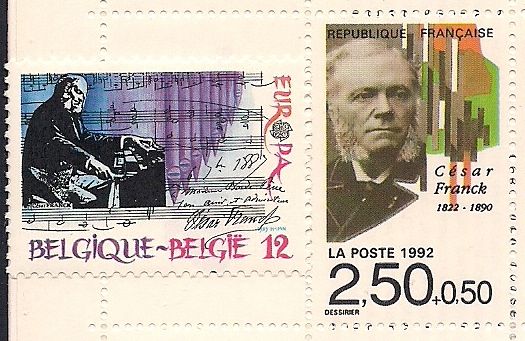
    César Franck was a strangely charismatic outsider. A Belgian abroad, he was required to take French citizenship in order to teach at the Paris Conservatory. A renowned organist, his unexpected genius for composition blossomed late.

    His enduring fame rests on a handful of fairly late works. He managed to reinvigorate the French symphonic and chamber music traditions through his use of “cyclic form,” with themes throughout generated from a single motif. He also embraced the symphonic poem. In these regards he certainly bore the influence of Franz Liszt. In turn, he himself became highly influential among a generation of French and Belgian composers.

    This Sunday night on “The Lost Chord,” we’ll examine music by two Belgians who fell under his sway.

    Armand Marsick, born in 1877, trained as a violinist at the Liège Conservatory, before studying abroad in Nancy with Franck enthusiast Guy Ropartz. Then he moved to Paris, where he studied with another Franckian, Vincent d’Indy. His career led him to Athens, and then Bilbao, where he founded a conservatory and an orchestra. He returned to Liège at the age of 50, settling in to teach and direct the concert society there. He died in 1959. The bulk of Marsick’s compositional output, which consisted of some forty works, was written between the ages of 23 and 37. We’ll enjoy a symphonic poem from 1908, titled “La Source.”

    Guillaume Lekeu was born in Verviers in 1870. He studied with Franck in Paris, then, like Marsick, with d’Indy following Franck’s death. Lekeu, unfortunately, is also remarkable for his very short life. He became ill with typhoid fever after consuming contaminated sherbet at a restaurant, and died in 1894, one day after his 24th birthday. Despite his sadly shortened existence, he managed to make important contacts and to write music of considerable promise. At the time of his death, he had already been composing for nine years, from the age of 15. In 1891 he was recipient of a second prize in the celebrated Prix de Rome competition.

    In all, Lekeu composed about 50 works. We’ll hear his Violin Sonata from 1892, written for the great Belgian virtuoso Eugene Ysaye, and his Adagio from 1891, originally composed for quartet and string orchestra. The score to the latter bears an epigraph from a poem by Georges Vanor, “The pale flowers of memory.”

    I hope you’ll join me for music by these Belgian followers of César Franck. That’s “Franckly Belgian,” this Sunday night at 10:00 EDT, on WWFM – The Classical Network and wwfm.org.

  • Inner Emigration Composers Under the Nazis

    Inner Emigration Composers Under the Nazis

    Is it really “emigration” when you don’t go anywhere?

    This Sunday night on “The Lost Chord,” we’ll have music by flagrantly anti-fascist composers who remained in Germany during the Nazi regime. This type of opposition was described by Thomas Mann as “inner emigration.”

    There were plenty of opportunists who joined the Nazi Party as a means to curry favor, in the hopes of securing prominent posts. Then there were those who, while critical of the Nazis, nevertheless joined the Party to protect their families and to continue working.

    A group which seems to have faded from memory is that made up of composers who remained, opposed the regime, and yet somehow survived. These artists were condemned by the Nazis, their music labeled degenerate and banned from performance. They were either prevented from escape or remained of their own accord. Some justified the decision to stay as an act of social consciousness. Some were active in resistance circles. Others simply withdrew into ostentatious silence.

    Reinhard Schwarz-Schilling is not a terribly well-known composer, largely for the reasons I just mentioned. Schwarz-Schilling had been a professor of music at the Berlin Academy of Music. During Hitler’s reign, his family was subjected to frequent interrogations by the Gestapo. Luckily, it was never found out that Schwarz-Schilling’s wife, the concert pianist Dusza von Hakrid, was of Jewish descent. It was only through the beneficence and courage of a sympathetic official who falsified documents that the Schwarz-Schillings escaped arrest.

    Schwarz-Schilling may have survived the Nazis, but following the war, he had to deal with the musical establishment, which had grown hostile to such flagrantly tonal music. Something like his Violin Concerto of 1953 couldn’t be taken seriously. It starts out sounding a bit like Hindemith, but embraces Korngoldian sentiment at its candy core. If you can’t stick around for the whole show, I hope at least you’ll stay tuned for the gorgeous slow movement of this concerto.

    We’ll also hear music by Karl Amadeus Hartmann, regarded in some circles as the most important German symphonist of the mid-20th century, yet is now largely overlooked. In his 30s, Hartmann was viewed as politically undesirable in his homeland. He completely withdrew from musical life during the Nazi era. On the rare occasion any of his works would have been permitted performance, Hartmann would not allow it. Alas, most of his greatest champions were also his contemporaries. Therefore, performances of his music nearly died with them.

    After the war, Hartmann was one of the few prominent surviving anti-fascists in Bavaria whom the Allied Forces could promote to a position of responsibility. Hartmann used that trust to reintroduce the world to music which had been banned since 1933 under National Socialist aesthetic policy. He remained in Munich for the rest of his life, where his administrative duties cut heavily into what would have been his compositional time and energy. He died in 1963. We’ll hear Hartmann’s Symphony No. 6, composed between 1951 and 1953.

    I hope you’ll join me for “Staying Power” – music by anti-fascist composers who remained in Nazi Germany – this Sunday night at 10:00 EDT, on WWFM – The Classical Network and wwfm.org.

  • Czech Neoclassicism on The Lost Chord

    Czech Neoclassicism on The Lost Chord

    Neoclassicism in music was a reaction against what was perceived as the garish effusiveness and gooey excesses of late Romanticism.

    Contemporary composers, in search of a new lucidity, turned their attention to the 18th century, revisiting its musical processes, though reinterpreting them through a distinctly 20th century prism. Stravinsky was the master, but neoclassicism swept the world.

    This Sunday night on “The Lost Chord,” we’ll have three cheery examples of Czech neoclassicism, including works by Ilja Hurnik (his “Sonata da Camera”), Iša Krejči (his “Serenade for Orchestra,” conducted by Karel Ančerl) and Bohuslav Martinu (his Concerto for Two Violins and Orchestra).

    These composers – well, Krejči and Martinu, anyway – manage to balance the clarity of the Enlightenment with an unmistakably Czech national sound

    Hurnik’s work is perhaps the purest, in terms of looking back. The term “Sonata da Camera” recalls music of the baroque and classical eras, as does the clarity of its instrumentation, involving flute, oboe, cello and harpsichord. Each movement begins as if it were ripped from the pages of history and then gradually squeezed like a lemon, leaving a tangy, contemporary aftertaste.

    All of this music is calculated to lift your spirits. I do hope you’ll join me for “Balanced Czechs,” this Sunday night at 10:00 EDT. Czech it out, on WWFM – The Classical Network and wwfm.org.


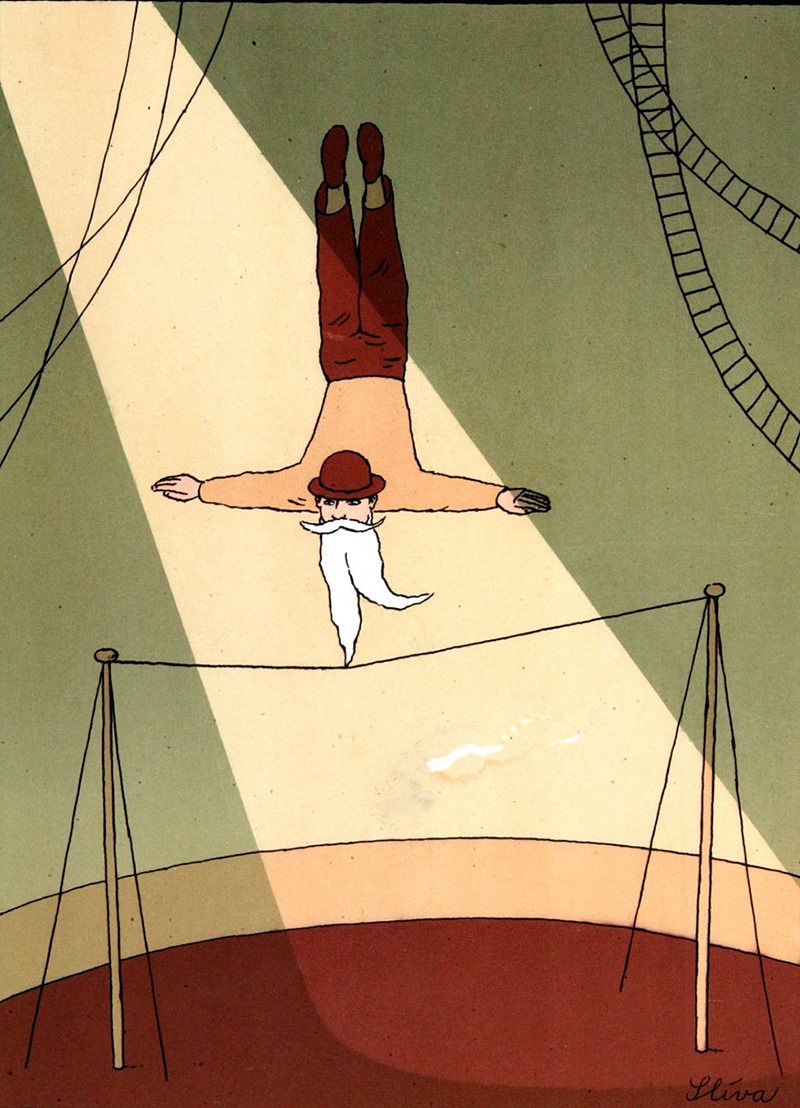
    Tightrope walker by Jiri Sliva

  • Alexandre Dumas Music on The Lost Chord

    Alexandre Dumas Music on The Lost Chord

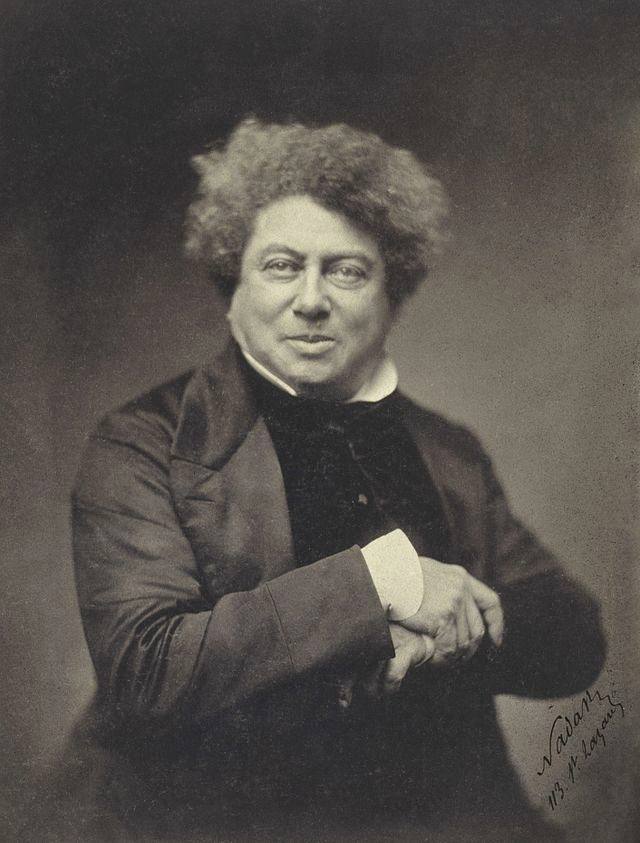
    He is best known as the author of “The Three Musketeers” and “The Count of Monte Cristo.” However, Alexandre Dumas churned out historically-inspired prose on all manner of subjects, and he did so by the yard.

    This Sunday night on “The Lost Chord,” we present an hour of music inspired by his writings, including rarely-heard incidental music composed for a revival of his play “Caligula,” by Gabriel Fauré; ballet music from an opera, “Ascanio,” taken from a novel featuring Benvenuto Cellini, by Camille Saint-Saëns; and a poetic monologue, “Joan of Arc at the Stake,” by Franz Liszt. We’ll also hear the suite for symphonic band “The Three Musketeers,” by George Wiliam Hespe.

    It’s all for one, and one for all! I hope you’ll join me for “The Lost Sword,” this Sunday night at 10:00 EDT, on WWFM – The Classical Network and wwfm.org.

  • WWFM Shows Return Thanks to Rachel Katz

    WWFM Shows Return Thanks to Rachel Katz

    Since the COVID tsunami broke across central New Jersey, I have not been able to get in to the station to upload webcasts from my two specialty shows, “Picture Perfect” and “The Lost Chord.” So for months, the most recent shows archived on the WWFM website dated from around St. Patrick’s Day – or roughly the time I began cultivating my coronabeard.

    That now has been remedied, to some extent, thanks to production manager Rachel Katz, who has been working from home, but, every once in a while, has had to don the hazmat suit in order to enter the college and ensure everything continues to fire as it should. Searching for and uploading audio from my overcrowded folder takes time, as does making sure that all the settings are correct, so that the material can be accessed from the WWFM website.

    Rachel has also been instrumental in ensuring that encore broadcasts of “Picture Perfect” and “The Lost Chord” have continued at all, as I have been sending her lists of shows in five-week increments, and again, it is she who has been hunting them down and loading them into the system.

    Most of June (excluding this past weekend) is now available on the station’s webcast page, as is all of May. As far as I can tell, there are only a few weeks – the last two of March, and a couple in April – that are still missing.

    To listen to the shows, follow the links below, select the one you’d like to hear, and click on the “listen” button.

    PICTURE PERFECT

    https://www.wwfm.org/programs/picture-perfect-ross-amico

    THE LOST CHORD

    https://www.wwfm.org/programs/lost-chord-ross-amico

    Again, many thanks to Rachel!

    If you enjoy “Picture Perfect” or “The Lost Chord” or anything else you hear on The Classical Network, please remember that we are coming up on the end of our fiscal year. If what we do enriches the quality of your days, please consider renewing your membership, becoming a new member, or making an additional gift before June 30.

    We understand that times are tough, but any little bit helps. Our survival, and to what degree we are able to rebuild, depends to large extent on the dedication and generosity of our listener-members.

    https://wwwfm.secureallegiance.com/wwfm/WebModule/Donate.aspx?P=DEFAULT&PAGETYPE=PLG&CHECK=vOU2bz5JCWmgCDbf53nm9ezWDeZ%2BeA1M&fbclid=IwAR2jrLX9uQdBGePKuycNVLIxABZRKX5orE0_PzHa9sIfgPUusaO2zyyI_gM

    Thank you, as always, for your ongoing support of WWFM – The Classical Network and wwfm.org!

Tag Cloud

Aaron Copland (92) Beethoven (95) Composer (114) Film Music (123) Film Score (143) Film Scores (255) Halloween (94) John Williams (187) KWAX (229) Leonard Bernstein (101) Marlboro Music Festival (125) Movie Music (138) Opera (202) Philadelphia Orchestra (89) Picture Perfect (174) Princeton Symphony Orchestra (106) Radio (87) Ralph Vaughan Williams (85) Ross Amico (244) Roy's Tie-Dye Sci-Fi Corner (290) The Classical Network (101) The Lost Chord (268) Vaughan Williams (103) WPRB (396) WWFM (881)

DON’T MISS A BEAT

Receive a weekly digest every Sunday at noon by signing up here


RECENT POSTS