Tag: The Lost Chord

  • Father’s Day Sports Music on The Lost Chord

    Father’s Day Sports Music on The Lost Chord

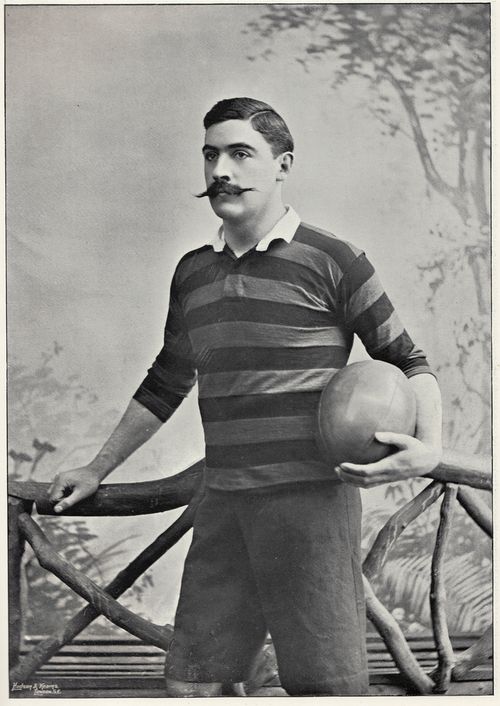
    Happy Father’s Day! This Sunday night on “The Lost Chord,” we pay tribute to Dad, with an hour of music about sports.

    I realize it’s a possibility that not all dads necessarily like sports. However, it’s been my experience that Sunday afternoons and Monday nights have always been off-limits, as far as the family television is concerned. For me personally, that meant that after Abbott and Costello or the Bowery Boys, it was football, golf, or “Wide World of Sports,” and that I never saw “MAS*H” during its first run.

    Be that as it may, it’s Dad’s day, so we’re going to give him what he wants – an hour of rough-and-tumble, the thrill of victory, and the agony of defeat.

    We’ll hear “Rugby” by Arthur Honegger, “Half-Time” by Bohuslav Martinu,” “The Yale-Princeton Football Game” by Charles Ives, and highlights from the baseball opera “The Mighty Casey” by William Schuman.

    Combine with a La-Z-Boy and a cold beer, and it’s a recipe for dad contentment. I hope you’ll join me for “Good Sports,” this Sunday night at 10:00 EDT, on WWFM – The Classical Network and wwfm.org.

  • Persian Polyphony on The Lost Chord

    Persian Polyphony on The Lost Chord

    You might say I’m on a Seemorgh diet. I see ‘Morgh, and I play it!

    This Sunday night on “The Lost Chord,” I hope you’ll join me for an hour of Persian polyphonic music – music written by Persian (or Iranian) composers, based on Persian folk and classical melodies, but written specifically for western instruments.

    We’ll hear two works by Behzad Ranjbaran, recorded in 1994 for the Delos label. I had heard Ranjbaran’s lyrical Piano Concerto at a concert of the Philadelphia Orchestra some time ago, but it did not prepare me for the beauty and opulence of his “Persian Trilogy.”

    Ranjbaran, born in Tehran in 1955, is currently on the faculty of the Juilliard School. Many of his works are influenced by Persian culture and literature. “The Persian Trilogy” was inspired by the “Shahnameh,” the national epic of 11th century poet Ferdowski.

    We’ll hear two of the three pieces, including “Seven Passages,” about the hero Rostam, who undergoes seven trials along the path to rescue the Persian king Kavus; and “Seemorgh,” about the mythical bird that raises the abandoned hero Zaal, who is able to summon her in times of crisis.

    Ranjbaran proves himself a master orchestrator. If you enjoy the music of Rimsky-Korsakov, Debussy, Paul Dukas, or Ottorino Respighi, I think you’ll really enjoy his “Persian Trilogy.”

    We’ll also hear music by Reza Vali, born in Ghazvin in 1952. Vali, currently on the faculty of Carnegie Mellon University, has been called the “Iranian Béla Bartók” for his ability to successfully meld native folk elements with established western classical forms. His “Folk Song (Set No. 9)” is composed for the combination of flute and cello. The flutist switches between various instruments of the flute family, and the cellist plays tuned crystal glass and tom-toms. As you’ll hear, the musicians are also required at various points to sing and whistle.

    I hope you’ll join me for “Roses of Persia,” a bouquet of Persian polyphonic music, this Sunday night at 10:00 EDT, on WWFM – The Classical Networkand wwfm.org.

  • Bortkiewicz Ukrainian Composer Triumph

    Bortkiewicz Ukrainian Composer Triumph

    Some guys just can’t seem to catch a break.

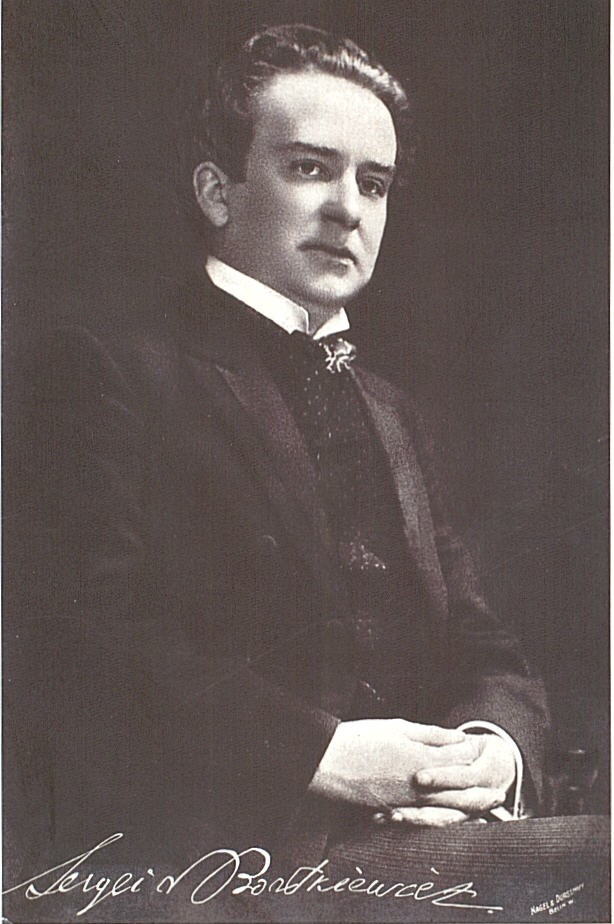
    Sergei Bortkiewicz, born in Ukraine, lived through two world wars and the Russian Revolution. He endured both poverty and personal tragedy. However, through it all, he managed to create music of lasting beauty.

    This Sunday night on “The Lost Chord,” learn more about his turbulent life and transporting music, including the Quatre morceaux, Op. 65, the Symphony No. 2 in E flat major, and the Elegie, Op. 46.

    I hope you’ll join me for “Big Talent from Little Russia,” tonight at 10:00 EDT, on WWFM – The Classical Network and wwfm.org.

  • Swedish Spring Music This Sunday

    Swedish Spring Music This Sunday

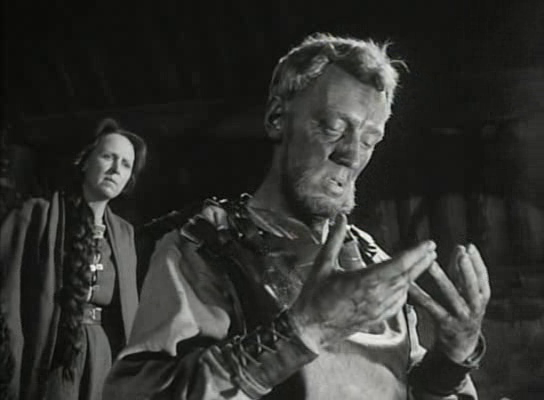
    This Sunday night on “The Lost Chord,” we focus on “The Virgin Spring.” No, not the Bergman film, in which Max von Sydow exacts terrible vengeance on those who… well, nevermind. See the movie.

    Anyway, the show’s not about that. The spring in the film is a body of water, a symbol of rebirth and renewal. But we’re using “spring” in the purely seasonal sense, as we enjoy an hour of vernal expressions by Swedish composers.

    We’ll hear Gunnar de Frumerie’s “Pastoral Suite” and two works by Wilhelm Peterson-Berger: Book III from “Flowers of Frösö” and the “Earina Suite.” “Earina,” derived from the Greek “earinos,” meaning “spring-like,” according to the composer, conjures a world of “cult deeds and magic rites… belonging to some undefined natural religion.”

    Nobody does spring quite like the Swedes. Enjoy an hour of well-seasoned music, this Sunday night at 10:00 EDT, on WWFM – The Classical Network and wwfm.org.

  • Rediscovering William Walton’s Genius

    Rediscovering William Walton’s Genius

    Sir William Walton is beloved for his coronation marches and film scores. But posterity has been woefully reductive. He also wrote operas, symphonies, concertos, chamber music, and choral works.

    This Sunday night on “The Lost Chord,” we’ll hear two long-out-of-print recordings of works composed more than three decades apart.

    At the time of the premiere of his Symphony No. 2, in 1957, Walton was perceived as something of a musical throwback. Indeed, despite the fact that it is more tightly argued, the piece has always been regarded as a poor stepsister of the Symphony No. 1, composed in 1935, a work full of grand gestures, written under the spell of Sibelius.

    What apparently escaped critics of the day was the subtlety of its craftsmanship. The finale, in particular, is a set of variations based on a twelve-note row, a technique not unlike that employed in the kind of serial composition so much in vogue at the time.

    George Szell (pictured, with the composer) gave the American premiere of the symphony, with the Cleveland Orchestra, in December of 1960. A few months later, they made the first recording.

    More than three decades earlier, Walton was viewed as an enfant terrible, when he set Edith Sitwell’s poetry as an entertainment, titled “Façade.” The work was first performed publicly in 1923. The premiere was a succès de scandale, with Sitwell herself speaking her poems into a megaphone protruding from the mouth of a painted face by John Piper, Walton conducting an ensemble of six instruments.

    The displeasure of performers, audience, and critics was evident, with Noel Coward ostentatiously marching out. However, the work quickly caught on, even becoming downright popular in a variety of arrangements. Within a decade, a purely orchestral version was choreographed by Frederick Ashton.

    We’ll hear selections from a treasured recording, unavailable in this country for many years, featuring Dame Peggy Ashcroft and Paul Scofield as the reciters. Both were noted Shakespearean actors, who did much of their best work on stage. Ashcroft received an Academy Award for Best Supporting Actress in 1985, for her part in David Lean’s final film, “A Passage to India,” and Scofield was honored with an Academy Award for Best Actor two decades earlier, in 1966, for his performance in “A Man for All Seasons.”

    I hope you’ll join me for “Will’s Wonders Never Cease” – rarely heard recordings of the works of William Walton – this Sunday night at 10:00 EDT, on WWFM – The Classical Network and wwfm.org.

Tag Cloud

Aaron Copland (92) Beethoven (95) Composer (114) Film Music (123) Film Score (143) Film Scores (255) Halloween (94) John Williams (187) KWAX (229) Leonard Bernstein (101) Marlboro Music Festival (125) Movie Music (138) Opera (202) Philadelphia Orchestra (89) Picture Perfect (174) Princeton Symphony Orchestra (106) Radio (87) Ralph Vaughan Williams (85) Ross Amico (244) Roy's Tie-Dye Sci-Fi Corner (290) The Classical Network (101) The Lost Chord (268) Vaughan Williams (103) WPRB (396) WWFM (881)

DON’T MISS A BEAT

Receive a weekly digest every Sunday at noon by signing up here


RECENT POSTS