Tag: The Lost Chord

  • Volcano Music Blows Up The Lost Chord

    Volcano Music Blows Up The Lost Chord

    Did you remember to “spring forward?” This Sunday night on “The Lost Chord,” now that we’ve all lost an hour, thanks to the time change, I figured everyone ought to be pretty drowsy by 10 p.m. So I had better be damn well sure to choose some very loud music. Also, it’s Alan Hovhaness’ birthday.

    Hovhaness composed his Symphony No. 50 in the wake of Mount St. Helens’ cataclysmic eruption in 1980. When Helens blew, she killed 57 people, reduced hundreds of square miles to wasteland, and caused over a billion dollars in damage. This is music calculated to keep everyone awake.

    Hovhaness viewed mountains as symbols of man’s attempt to know God – symbolic meeting places between the mundane and spiritual worlds. The friction of the natural and the transcendent informs the progression of the symphony, from a sense of grandeur in the first movement, a prelude and fugue in praise of Helens; the placidity of Paradise Lake, the beauty of which disappeared forever; and the volcano itself, recalled in the third and final movement, most percussively rendered. The violence subsides, and the dawn hymn of the opening returns in triumph.

    Hovhaness’ volcano symphony is like a walk in the park alongside the mad inspirations of Icelandic genius Jon Leifs. Leifs’ “Hekla,” from 1961, is probably the closest you’ll ever want to get to a volcanic eruption. Requiring 19 percussionists banging away on anvils, stones, sirens, plate bells, chains, shotguns, cannons, and a large wooden stump, it has been called the loudest piece of classical music ever written. For their own well-being, the performers were instructed to wear earplugs.

    As a bonus, with what’s left of our hearing, we’ll also enjoy “Volcanic Eruption and Atonement” from Leifs’ ballet, “Baldr.”

    Down a six-pack of energy drinks and leap into a pool of ice. Then tune in for an hour of volcano music. If there was a degree awarded for distinguished achievement in volcanology, these composers would have graduated “Magma Come Loudly.”

    Prepare to be blown away, this Sunday night at 10:00 EASTERN DAYLIGHT TIME, on WWFM – The Classical Network and wwfm.org.

  • Vikings & Wales Webcasts Now Available

    Vikings & Wales Webcasts Now Available

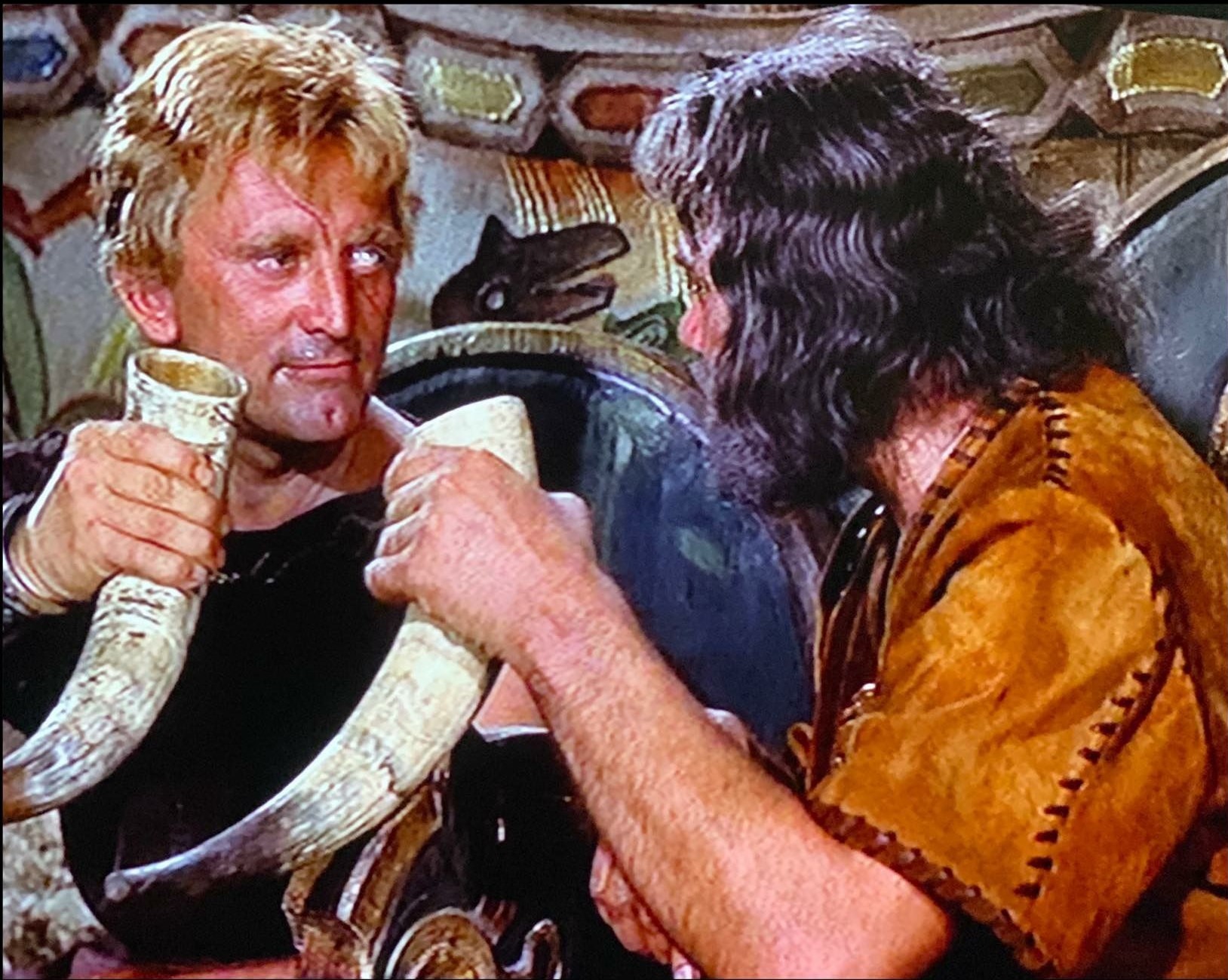
    This weekend’s installments of “Picture Perfect” (“Vikings!”) and “The Lost Chord” (“And God Created Great Wales”) are now posted as webcasts.

    Click here for mead and horned helmets:

    https://www.wwfm.org/post/picture-perfect-february-28-vikings

    Click here for St. David, harps, and daffodils:

    https://www.wwfm.org/post/lost-chord-march-1-and-god-created-great-wales

    That about covers it, I should think.

  • WWFM Webcasts Silk Road & Didjeridoo Now Online

    WWFM Webcasts Silk Road & Didjeridoo Now Online

    Crouching Tiger, Hidden Webcast.

    Last weekend’s specialty shows have now been posted. These include “Silk Road Adventures” (on “Picture Perfect”) and “Didya Hear the One About the Didjeridoo” (on “The Lost Chord”).

    Apologies for the delay. After my resolution to have both shows up on the station website (wwfm.org) by Monday mid-afternoon, with all the Mozart membership business earlier in the week, it completely escaped my mind.

    Here again are the links:

    https://www.wwfm.org/programs/picture-perfect-ross-amico

    https://www.wwfm.org/programs/lost-chord-ross-amico

    Select the show of your choice and click on the “Listen” button.

  • Neglected Norwegian Composers on The Lost Chord

    Neglected Norwegian Composers on The Lost Chord

    A Norse is a Norse, of course, or course…

    This Sunday night on “The Lost Chord,” we’ll make hay with music by a couple of Norwegian composers.

    Halfdan Cleve (1879-1951) received unusually strict musical training. His father was an organist, who saddled his son with nothing but Bach until he was 16! The young Cleve then cantered to Germany, where he plowed through studies with the Scharwenka brothers, Philipp and Franz Xaver. The latter, a pupil of Franz Liszt, was regarded as one of the great thoroughbred keyboard virtuosos of his day.

    Cleve became widely recognized as a composer and pianist, but his own popularity flagged after World War I. He reacted against the rise of modernism by doubling down, in the mane, on his pedigree, celebrating the Norwegian countryside and its folk idioms in his music. His Violin Sonata of 1919 was foaled of this approach.

    Eyvind Alnaes (1872-1932), however, was a horse of a different color. Known, if at all, for his art songs – some of which were recorded by Kirsten Flagstad and Feodor Chaliapin – Alnaes’ musical language is less overtly “Norwegian” and more reactive to sugar cubes. His Piano Concerto of 1919 shadows Brahms and Tchaikovsky, and overtakes Rachmaninoff’s Piano Concerto No. 4, not completed until seven years later. Could Alnaes have been the rock in Rach’s shoe?

    Ladies and gentlemen, place your bets! The garland goes to “Dark Horse Norsemen” – works by neglected Norwegian composers – this Sunday night at 10:00 EST, on WWFM – The Classical Network and wwfm.org.


    Flagstad sings Alnaes:

    Chaliapin:

  • Tippett & Tomlinson New Year’s Music

    Tippett & Tomlinson New Year’s Music

    This Sunday night on “The Lost Chord,” we’ll have contrasting works for the New Year by two English composers whose surnames begin with “T.”

    Sir Michael Tippett’s fifth and final opera is an especially abstruse one, even by Tippett standards. Composed on his own libretto, “New Year” is set in Terror Town, an imaginary city that exists “somewhere today.” The dramatis personae includes such diverse characters as a child psychiatrist, her Rastafarian foster brother, a shaman, and three time-travelers from the future – or, as Tippett specifies, “nowhere tomorrow.”

    The orchestral suite opens and closes with music for the arrival and departure of a spaceship, represented electronically, on New Year’s Eve. Other striking touches include the use of saxophones, and, at the work’s climax, a quotation of “Auld Lang Syne,” pitted against a rather turbulent backdrop.

    “New Year” was first performed at Houston Grand Opera in 1989, with the British premiere taking place at Glyndebourne the following year. The opera was not well received. The wholly reimagined suite was commissioned by the San Francisco Symphony in 1990. Tippett noted that the primary metaphor of the opera is dance. Hey, man, whatever.

    The balance of the program will be devoted to works by a composer of a very different sensibility – master of British Light Music, Ernest Tomlinson. It is Tomlinson’s tongue-in-cheek assertion that the melody of “Auld Lang Syne” underlies most of the world’s great masterpieces. He goes on to support his thesis with no less than 152 examples in his dizzyingly clever “Fantasia on ‘Auld Lang Syne.’”

    We’ll conclude with a waltz from Tomlinson’s “Cinderella,” someone else who clearly understands the transformative power of 12.

    The kettle is on. Turn over a new leaf and join me for a cuppa, with “’T’ Time” – welcoming the New Year with music by Tippett and Tomlinson – this Sunday night at 10:00 EST, on WWFM – The Classical Network and wwfm.org.

Tag Cloud

Aaron Copland (93) Beethoven (95) Composer (114) Film Music (141) Film Score (143) Film Scores (255) Halloween (94) John Williams (195) KWAX (229) Leonard Bernstein (103) Marlboro Music Festival (125) Movie Music (156) Mozart (89) Opera (212) Philadelphia Orchestra (89) Picture Perfect (174) Princeton Symphony Orchestra (108) Radio (88) Ross Amico (244) Roy's Tie-Dye Sci-Fi Corner (290) The Classical Network (101) The Lost Chord (269) Vaughan Williams (103) WPRB (397) WWFM (881)

DON’T MISS A BEAT

Receive a weekly digest every Sunday at noon by signing up here


RECENT POSTS