Tag: The Lost Chord

  • Bortkiewicz Ukrainian Composer’s Lost Chord

    Bortkiewicz Ukrainian Composer’s Lost Chord

    Some guys just can’t seem to catch a break.

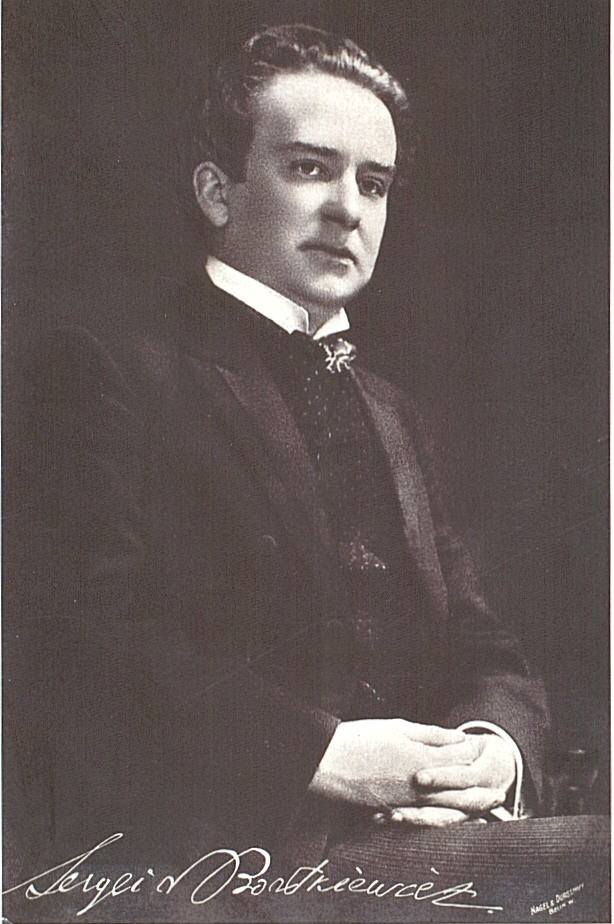
    Sergei Bortkiewicz, born in Ukraine, lived through two world wars and the Russian Revolution. He endured both poverty and personal tragedy. However, through it all, he managed to create music of lasting beauty.

    This Sunday night on “The Lost Chord,” learn more about his turbulent life and transporting music, including the Quatre morceaux, Op. 65, the Symphony No. 2 in E flat major, and the Elegie, Op. 46.

    I hope you’ll join me for “Big Talent from Little Russia,” tonight at 10:00 EDT, on WWFM – The Classical Network and wwfm.org.

  • Alexandre Dumas Music on The Lost Chord

    Alexandre Dumas Music on The Lost Chord

    He is best known as the author of “The Three Musketeers” and “The Count of Monte Cristo.” However, Alexandre Dumas churned out historically-inspired prose on all manner of subjects, and he did so by the yard.

    This Sunday night on “The Lost Chord,” we present an hour of music inspired by his works, including rarely-heard incidental music, written for a revival of the play, “Caligula,” by Gabriel Fauré; ballet music from an opera, “Ascanio,” taken from a novel featuring Benvenuto Cellini, by Camille Saint-Saëns; and a poetic monologue, “Joan of Arc at the Stake,” by Franz Liszt. We’ll also hear the suite for symphonic band, “The Three Musketeers,” by George Wiliam Hespe.

    I hope you’ll join me for “The Lost Sword.” It’s all for one, and one for all, this Sunday night at 10:00 EDT, on WWFM – The Classical Network and wwfm.org.

  • Cathedral Sounds on The Lost Chord

    Cathedral Sounds on The Lost Chord

    Happy Easter, everyone! I’ve been all tied up with Easter activities for most of the day, so I’m only just getting around to extending the invitation for you to cap off your Sunday by joining me on “The Lost Chord” for an hour of pieces inspired or influenced by cathedrals.

    We’ll hear Jennifer Higdon’s “blue cathedral” (all lower-case), from 1999, commissioned by the Curtis Institute of Music in honor of its 75th anniversary. The work is dedicated to the memory of Higdon’s younger brother, Andrew Blue. In the writing of the piece, she imagined a journey through a glass cathedral in the sky, with transparent walls and crystal pillars, through which clouds and endless expanses of blue would be visible.

    Guitarist-composer Agustin Barrios wrote “La Catedral” (“The Cathedral”) in 1921, after having heard music of Johann Sebastian Bach performed on the organ of the cathedral of San Juan Bautista de las Misiones in his native Paraguay.

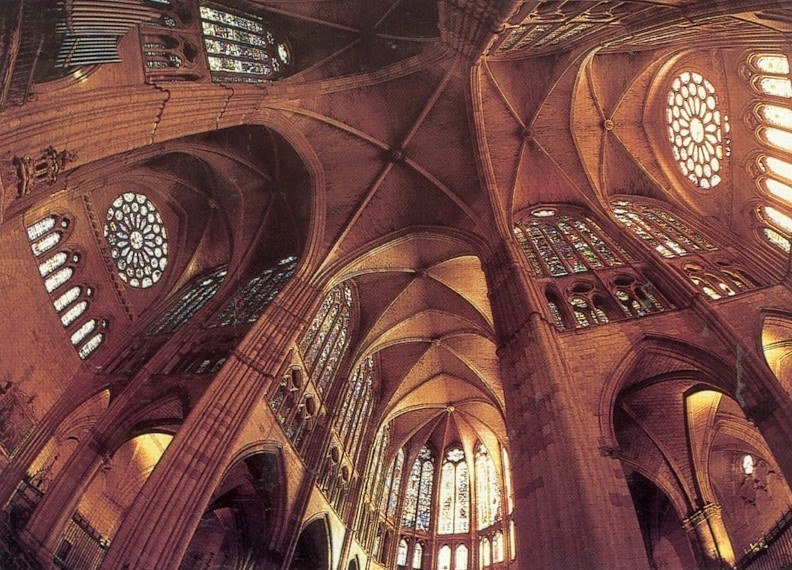
    Englishman Joby Talbot composed “Path of Miracles” in 2005. The work – dedicated to the memory of his father, Vincent – was written on a commission from the vocal chamber group Tenebrae. Its four movements reflect stops along the medieval pilgrimage route to Santiago. The third of these, an evocation of León Cathedral, is imagined as a kind of “Lux Aeterna,” the interior of the space bathed in light.

    Finally, American composer Adolphus Hailstork recollected his experiences as a child chorister at the Cathedral of All Saints in Albany, New York, when he came to write his “Sonata da Chiesa” (“Church Sonata”) in 1992. Hailstork, composer-in-residence at Old Dominion University in Norfolk, Virginia, conceived the work’s seven vibrant sections – “Exaltation,” “O Great Mystery,” “Adoration,” “Jubilation,” “O Lamb of God,” “Grant Us Thy Peace,” and “Exaltation” – for string orchestra, providing a joyous conclusion to the hour.

    I hope you’ll join me for “Master Builders” – architects of cathedrals in sound – this Sunday night at 10:00 EDT, on WWFM – The Classical Network and wwfm.org.


    PHOTO: The vaulted ceiling of León Cathedral

  • Celebrating Kapralova and Smyth on WWFM

    Celebrating Kapralova and Smyth on WWFM

    In all likelihood you’ll be asleep by that time, thanks to the clock change, but in the event that you’ve overcompensated with too much caffeine, consider joining me tonight for “The Lost Chord,” when the focus will be on outstanding works by two extraordinary female composers.

    Vitězslava Kápralová (1915-1940) was one of the great hopes of Czech music, a figure who undoubtedly would be much better known had she not died of tuberculosis at the age of 25. As it stands, her reputation is only beginning to emerge from the shadow of her teacher and lover, Bohuslav Martinu.

    Kápralová’s String Quartet was written while she was yet a student at the Prague Conservatory, where her teachers included Vitězslav Novák and Václav Talich. (She studied with Martinu later in Paris.) The work was completed in 1936, when Kápralová was about 21 years-old.

    More about Kápralová here, in this article written to mark her centenary in 2015:

    https://www.telegraph.co.uk/culture/music/classicalmusic/11365848/The-tragedy-of-Europes-great-forgotten-female-composer.html

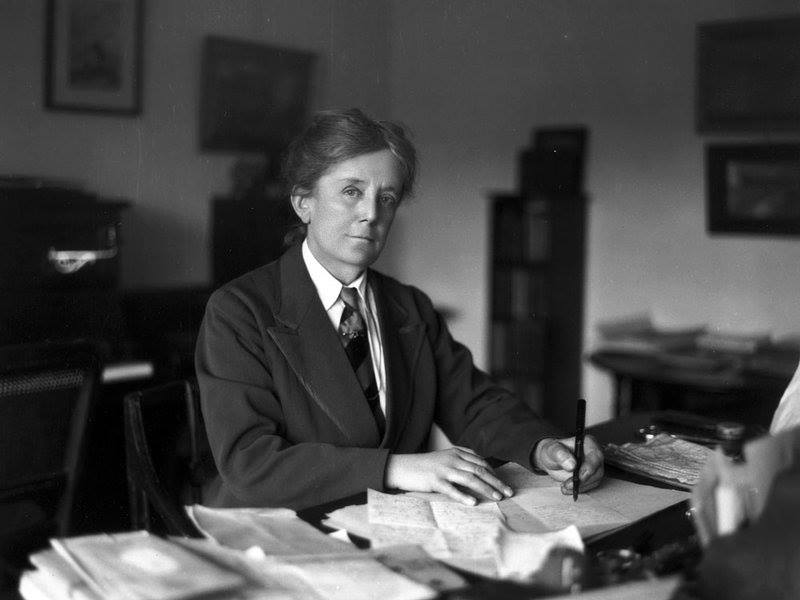
    Ethel Smyth (later DAME Ethel Smyth, 1858-1944) was one of the most vocal advocates of the women’s suffrage movement in England. She overcame early opposition to a career in music on the part of her father to receive the praise of George Bernard Shaw, who called her Mass “magnificent.”

    However, her works were often better-appreciated abroad. Her operas, in particular, were embraced in Germany. One of them, “Der Wald,” was the only opera by a woman composer mounted by New York’s Metropolitan opera for over a century!

    Smyth served time in prison for putting out the windows of politicians who opposed a woman’s right to vote. She also wrote for the cause “The March of the Women.” When Sir Thomas Beecham went to visit her in jail, he witnessed her conducting through the bars of her window with a toothbrush as her associates gathered for exercise in the courtyard.

    Smyth’s “Serenade in D” – a symphony in all but name – was her first orchestral score, composed in 1890, when she was about 32 years-old. In my opinion, it’s better than just about anything composed by her contemporary, Sir Hubert Parry, and much more compelling than the symphonies of Sir Charles Villiers Stanford.

    More about Smyth here, in this piece put together in connection with a revival of her opera, “The Wreckers,” by the great Leon Botstein:

    https://www.npr.org/sections/deceptivecadence/2015/07/23/410033088/one-feisty-victorian-womans-opera-revived

    I hope you’ll join me for music by these two extraordinary women – “A Woman’s Place is in the Concert Hall” – this Sunday night at 10:00 EDT, on WWFM – The Classical Network and wwfm.org.


    PHOTOS: Ethel Smyth at her desk (top); Vitězslava Kápralová taking up the baton (she studied conducting in Prague with Václav Talich and in Paris with Charles Munch)

  • Gordon Jacob Rediscovered on The Lost Chord

    Gordon Jacob Rediscovered on The Lost Chord

    This Sunday night on “The Lost Chord,” we honor the accomplishments of Gordon Jacob.

    Jacob is perhaps best remembered these days as an orchestrator. He did a popular arrangement for full orchestra of Vaughan Williams’ “English Folk Song Suite,” originally composed for symphonic band; he orchestrated Sir Edward Elgar’s Organ Sonata; and his arrangement of the ballet “Les Sylphides” has been eclipsed only by that of Roy Douglas.

    But he was also a prolific composer himself. In all, he wrote some 400 works. In fact, when weighing the size of his output against his reputation, it’s tempting to underestimate – as the Angel did his Biblical namesake – Jacob’s tenacity.

    We’ll listen to an example of his work as an arranger, the “William Byrd Suite,” in a classic recording on the Mercury label, and his rarely-heard Symphony No. 1, dedicated to the memory of his brother, who died in the First World War, in its world premiere recording on the Lyrita label.

    I hope you’ll join me as we grapple with the range of Jacob’s accomplishments, in “Wrestling Jacob,” this Sunday night at 10:00 EST, on WWFM – The Classical Network and wwfm.org.

    In the meantime, follow the link for a witty survey ranking the various depictions of Jacob wrestling the angel in Western Art:

    http://the-toast.net/2014/09/16/famous-paintings-jacob-wrestling-angel-ranked-much-actions-resemble-slow-dancing/

Tag Cloud

Aaron Copland (92) Beethoven (95) Composer (114) Film Music (123) Film Score (143) Film Scores (255) Halloween (94) John Williams (187) KWAX (229) Leonard Bernstein (101) Marlboro Music Festival (125) Movie Music (138) Opera (202) Philadelphia Orchestra (89) Picture Perfect (174) Princeton Symphony Orchestra (106) Radio (87) Ralph Vaughan Williams (85) Ross Amico (244) Roy's Tie-Dye Sci-Fi Corner (290) The Classical Network (101) The Lost Chord (268) Vaughan Williams (103) WPRB (396) WWFM (881)

DON’T MISS A BEAT

Receive a weekly digest every Sunday at noon by signing up here


RECENT POSTS