
Tonight on “The Lost Chord,” in anticipation of Monday’s solar eclipse, we look to the heavens, with three works inspired by the cosmos: Joaquin Rodrigo’s “In Search of the Beyond” (dedicated to NASA), Enrique Granados’ “Song of the Stars,” and Kaija Saariaho’s “Orion.” That’s “Creating Space,” this Sunday night at 10:00 EDT, on WWFM – The Classical Network and wwfm.org.
Tag: The Lost Chord
-

British Light Music Lost Chord WWFM
Trip the light fantastic. This Sunday night on “The Lost Chord,” we take a nostalgic journey with an hour of British Light Music. I hope you’ll join me for vintage recordings, featuring works by Albert Ketèlbey, Samuel Coleridge-Taylor, Sir Edward Elgar, Richard Addinsell, George Scott-Wood, Haydn Wood, Billy Mayerl and Eric Coates. That’s “Distant Light,” this Sunday night at 10:00 EDT, on WWFM – The Classical Network and wwfm.org.
-
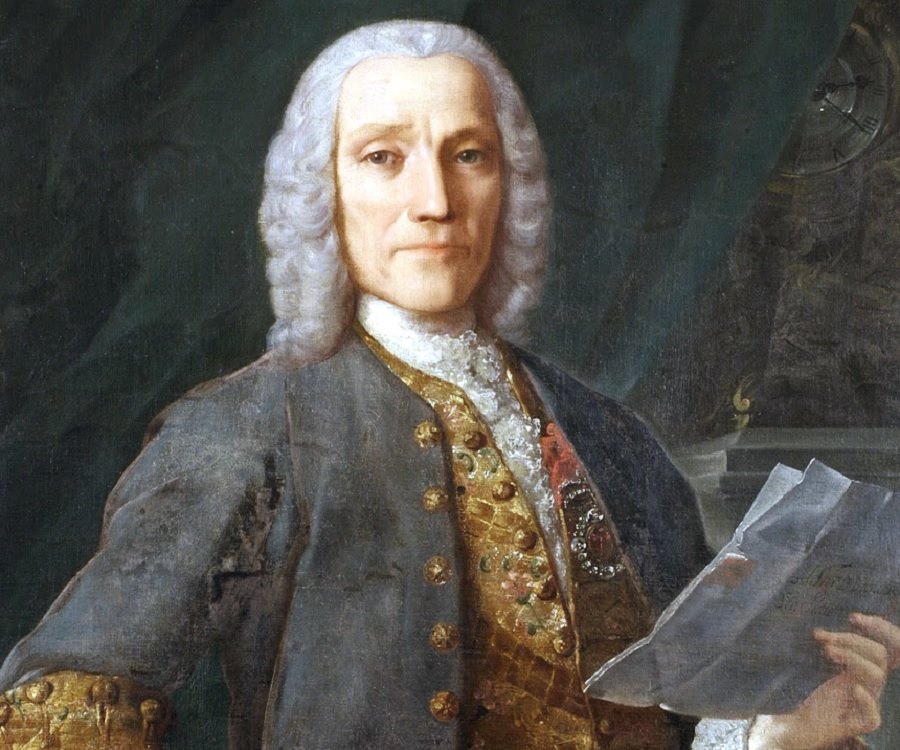
Scarlatti Tributes on The Lost Chord
It seems that any Baroque musician of worth couldn’t help but become embroiled in a musical duel of some sort. In the case of Domenico Scarlatti, he was challenged by none other than George Frideric Handel, in Rome. Handel was deemed superior to his rival on the organ, but on the harpsichord Scarlatti was unsurpassed. In fact, Scarlatti’s unusual facility has had artists “keyed up” for centuries.
Scarlatti was born in Naples in 1685, the same year as Handel and Bach. He spent much of his career in the service of the Portuguese and Spanish royal families, composing some 555 keyboard sonatas. His works have been admired by composer-performers from Frederic Chopin to Marc-André Hamelin. This Sunday night on “The Lost Chord,” we’ll enjoy four pieces inspired by the Baroque master.
The English composer Charles Avison, whose life overlapped Scarlatti’s own (he was born in 1709, when Scarlatti would have been 23 years-old) arranged a number of the older composers keyboard works into a set of 12 concerti grossi. We’ll sample one of those, Avison’s Concerto No. 10 in D.
Then we’ll turn to a tribute by American composer Norman Dello Joio. Dello Joio was the recipient of the Pulitzer Prize for Music in 1957 for his “Meditations on Ecclesiastes.” From 1979, we’ll hear his four movement piano work, “Salute to Scarlatti.”
Dmitri Shostakovich arranged two of Scarlatti’s keyboard sonatas for small wind ensemble and percussion. We’ll enjoy performances by members of the former USSR Ministry of Culture Symphony Orchestra conducted by Gennady Rozhdestvensky.
Finally we’ll turn to a work from 1926 by Alfredo Casella – a seven movement suite for piano and orchestra titled “Scarlattiana,” a high-spirited piece that is unabashedly reminiscent of Stravinsky’s “Pulcinella.”
I hope you’ll join me for “Italian Dressing” – musical tributes to Domenico Scarlatti – this Sunday night at 10:00 EDT, on WWFM – The Classical Network and wwfm.org.
-

Australian Classical Music Heard on “The Lost Chord”
G’day! This Sunday night on “The Lost Chord,” we’re headed Down Under, with an hour of music from Australia.
Alfred Hill was born in Melbourne in 1870, but spent much of his early life in New Zealand. He studied abroad, at the Leipzig Conservatory, and played second violin in the Gewandhaus Orchestra, under then-kapellmeister Carl Reinecke. He also performed in concerts conducted by Brahms, Tchaikovsky, Grieg and Max Bruch.
Throughout the course of his career, Hill founded, and/or pushed for, important institutions in both Australia and New Zealand, including one devoted to Maori studies. He composed more than 500 works, among them 12 symphonies, 8 operas, numerous concerti, a mass, 17 string quartets, two cantatas on Maori subjects, and 72 piano pieces. We’ll hear one of his brief, though atmospheric, tone pictures, titled “The Moon’s Golden Horn.”
Then we’ll turn to Peter Sculthorpe, who was born in Tasmania in 1929. Sculthorpe studied at the Melbourne Conservatorium. Following a period of post-graduate struggles, he won a scholarship to study with Egon Wellesz at Oxford University. Unfortunately, he had to abandon the pursuit of his doctorate when his father became gravely ill. In 1963, Sculthorpe became a lecturer at the University of Sydney, where he remained, more or less, until his death in 2014.
He became one of Australia’s most-honored composers. Much of his music is concerned with Australia and its South Seas environs. The focus of many of his pieces over the decades reveals an admiration for, and affinity with, Australia’s indigenous cultures. Major philosophical concerns include conservation and the preservation of the environment.
We’ll listen to “Earth Cry,” an evocative piece from 1986. Scored for didgeridoo and orchestra, the work is a plea for balance, suggestive of the Aborigine mindset of living in accordance with natural law and the needs of the land.
Colin Brumby was born in Melbourne in 1933. Like Sculthorpe, he attended the Melbourne Conservatorium. He studied abroad in Spain and London, before joining the staff of the music faculty at the University of Queensland. He directed the Queensland Opera Company for a few years. He received his doctorate from the University of Melbourne, and then returned to the continent for further studies in Rome. In 1981, he received an Advance Australia Award for his services to music. He has written orchestral pieces, music for the stage, choral, chamber and instrumental works.
If you love the concertos of Sergei Rachmaninoff, you owe it to yourself to hear Brumby’s Piano Concerto No. 1, from 1984. The work is written in the grand romantic style for a former classmate of some 30 years earlier, the pianist Wendy Pomroy. The piece certainly is a throwback to an earlier age and an unremitting delight.
Slip another shrimp on the barbie, open up a cold Foster’s, and join me for “Left Out Back,” neglected music from Australia, this Sunday night at 10:00 EDT, on WWFM – The Classical Network and wwfm.org.
-

Ellis Island Immigration History & Music
At a time when immigration seems to be such a divisive issue, it’s instructive to look back to political cartoons of the 19th and early 20th centuries, when bomb-toting Bolsheviks seemed poised to take down our democracy, the Chinese were inscrutable back-stabbers, the Jews were bearers of poverty and disease, and the Irish were simian-faced hooligans and drunks. Anxiety about outsiders has always been with us, yet somehow we got over each successive alien group, and the country has plugged along just fine.
This Sunday night on “The Lost Chord,” we’ll get a little perspective, courtesy of composer Peter Boyer. From 1892 to 1954, more than 12 million immigrants passed through Ellis Island in search of a better life. More than 40 percent of the U.S. population – over 100 million Americans – can trace its roots to someone who came to this country along that route.
Boyer’s “Ellis Island: The Dream of America” incorporates texts from testimonials archived as part of the Ellis Island Oral History Project. They are real words of real people telling their own stories. The work is performed by actors, rather than speakers or narrators, who deliver their monologues in the first person. In a powerful epilogue, each of them comes together to recite a stanza from Emma Lazarus’ poem, “The New Colossus.” It’s so effective – and affecting – I get a little choked up just thinking about it.
You will, too, if you join me for “Spirits of Independence,” this Sunday night at 10:00 EDT, on WWFM – The Classical Network and wwfm.org.
Tag Cloud
Aaron Copland (94) Beethoven (95) Composer (114) Film Music (149) Film Score (143) Film Scores (255) Halloween (97) John Williams (197) KWAX (232) Leonard Bernstein (105) Marlboro Music Festival (125) Movie Music (164) Mozart (91) Opera (215) Philadelphia Orchestra (90) Picture Perfect (174) Princeton Symphony Orchestra (110) Radio (90) Ross Amico (244) Roy's Tie-Dye Sci-Fi Corner (290) The Classical Network (101) The Lost Chord (269) Vaughan Williams (107) WPRB (397) WWFM (881)