Tag: The Lost Chord

  • Beecham’s Handel A Lost Chord Celebration

    Beecham’s Handel A Lost Chord Celebration

    Okay, I missed Handel’s birthday (on February 23). Time to make amends.

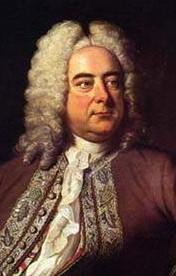
    Sir Thomas Beecham developed an early love for Handel, at a time when very few of his contemporaries knew more than a handful of his pieces. Certainly the operas and oratorios – with the exception of “Messiah,” which had grown fatter and fatter through years of Victorian adoration – were exceedingly scarce. Beecham despaired of this, since there was so much brilliant music, he knew, embedded within these sleeping giants.

    He responded by not only reviving some of the oratorios, in heavily reworked, though for the most part musically sensitive editions, he also arranged choice Handelian morsels into original ballet and concert suites. In doing so, he introduced audiences to much worthy music, which had previously been known only to scholars and specialists.

    This Sunday night on “The Lost Chord,” we’ll listen to Beecham’s at times eccentric, though generally delightful recordings. Alongside the trademark charm of the conductor’s approach comes a thrilling virtuosity in some of the faster music, nowhere better demonstrated than in a 1932 recording of something Beecham called “The Origin of Design,” a suite de ballet distilled from the operas “Ariodante” “Terpsichore,” “Il pastor fido,” “Giulio Cesare,” and “Rinaldo.”

    In approaching those oratorios he ventured to present whole (or something like it), Beecham was not only NOT above tinkering with the orchestration, he would toss out entire sections and rearrange mercilessly, all with the aim of cooking up a digestible evening of music which the general public might otherwise just as happily left in the freezer. At its most gauche, Beecham’s method could result in something like his last recording of Handel’s “Messiah,” which he set down in 1959. The re-orchestration was commissioned from Sir Eugene Goossens and features ample cymbal crashes and other eccentricities, which seem somehow to actual sap some of the excitement out of the original music.

    Beecham defended his padded “Messiah,” not only pointing to the composer’s documented delight in great demonstrations of sound, but also stating his fear that without some effort along the lines he’d undertaken, the greater portion of Handel’s output would remain unplayed – in his words, “possibly to the satisfaction of armchair purists, but hardly to the advantage of the keenly alive and enquiring concertgoer.”

    Despite taking great liberties, Beecham’s recording of Handel’s “Solomon,” set down in 1955-1956, is, in a word, gorgeous. It’s nowhere near what Handel conceived – there’s a huge chunk taken out of the middle, with some of the displaced numbers given refuge in wholly unrelated parts of the oratorio; Solomon, a role generally undertaken these days by a countertenor is assigned to a baritone; the cymbal crashes that disfigure Beecham’s “Messiah” turn up here, as well, but somehow, if one allows oneself to succumb to the Beecham magic, none of it is truly bothersome. In fact, the recording could be deemed an unalloyed delight. It’s not something you’d want as your only “Solomon,” yet it could be the recording of the work you return to the most.

    I hope you’ll join me for “Handeling Beecham” – Sir Thomas Beecham conducts Handel – this Sunday night at 10:00 EST, on WWFM – The Classical Network and at wwfm.org.

  • Lincoln’s Legacy in Music on The Lost Chord

    Lincoln’s Legacy in Music on The Lost Chord

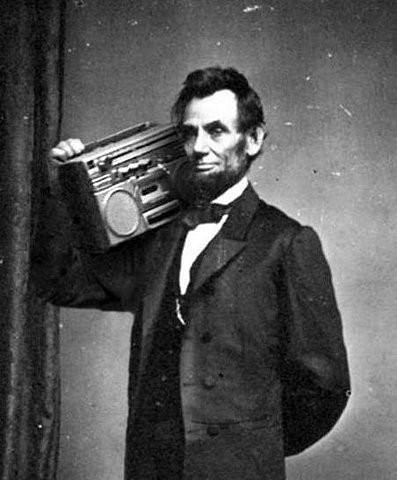
    Abraham Lincoln, 16th President of the United States. Above and beyond his own considerable accomplishments, Lincoln has inspired a lot of music. This Sunday on “The Lost Chord,” we’ll honor him on his birthday, with three diverse works.

    Composer David Diamond set the Gettysburg Address as “On Sacred Ground,” a work for mixed chorus, children’s chorus, baritone solo and orchestra. The piece was given its first performance two days before the centenary of Lincoln’s delivery of the actual Address, which he spoke on November 19, 1863. We’ll hear it tonight, to start.

    Then, as a bit of a palate-cleanser, we’ll listen to Paul Turok’s buoyant “Variations on an American Song: Lincoln and Liberty,” also composed in 1963. The melody is based on a traditional Irish fiddle tune, “Rosin the Bow,” which had been outfitted with new lyrics for use in Lincoln’s 1859 presidential campaign:

    “Then up with our banner so glorious,
    The star-spangled red-white-and-blue,
    We’ll fight till our Cause is victorious,
    For Lincoln and Liberty, too!”

    Finally, we’ll return to Gettysburg and music by American composer Roy Harris, who shares Lincoln’s birthday, though born 89 years apart. Furthermore, Harris was born in a log cabin in Lincoln County, Oklahoma. If that doesn’t fill one with a sense of destiny, I don’t know what will!

    In his day, Harris was regarded as one of America’s greatest composers, particularly renowned for his symphonies. His Symphony No. 3 is his most famous work; what we’ll be hearing is the Symphony No. 6, subtitled “Gettysburg.”

    Each movement bears a superscription taken from the Gettysburg Address.

    I. Awakening (“Fourscore and seven years ago…”);

    II. Conflict (“Now we are engaged in a great civil war…”);

    III. Dedication (“We are met on a great battlefield of that war…”);

    IV. Affirmation (“…that we here highly resolve that these dead shall not have died in vain…).

    It’s all music in honor of the Great Emancipator. I hope you’ll join me for “Lincoln Portraits,” this Sunday night at 10:00 EST, on WWFM – The Classical Network and at wwfm.org.

  • Ulysses Kay Rediscovered on The Lost Chord

    Ulysses Kay Rediscovered on The Lost Chord

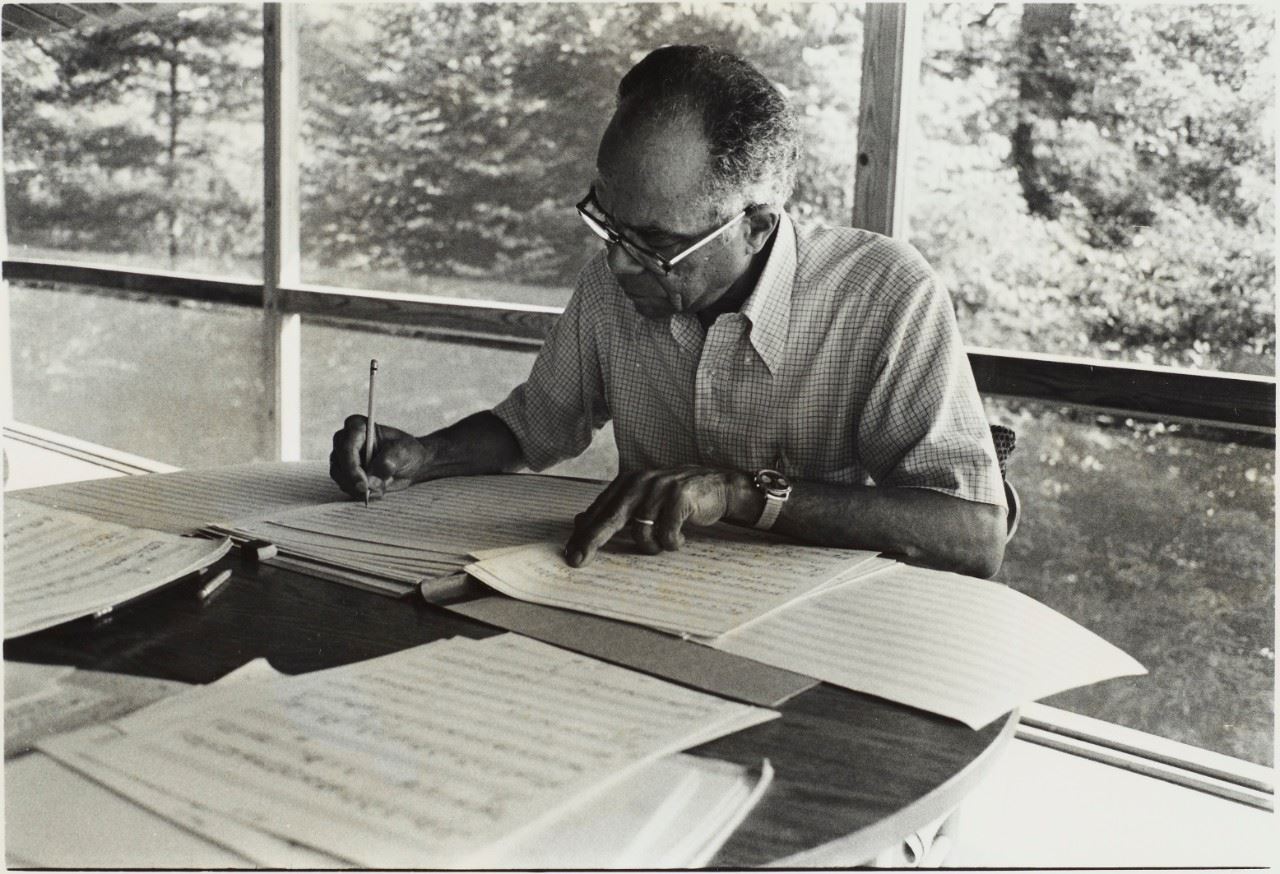
    Regrettably, the music of Ulysses Kay is under-represented in the current catalogue. His delightful “Six Dances for String Orchestra,” probably the lightest music he ever wrote, has been available sporadically on the Vox label, though always badly in need of a new recording. This Sunday night on “The Lost Chord,” we’ll hear two of those dances as part of an hour devoted to Kay’s music, as we celebrate the composer’s centenary. (He was born on January 7, 1917.)

    We’ll hear his work for trumpet and piano, “Tromba,” from 1985; a long out-of-print LP of his “Concerto for Orchestra,” recorded in 1953; and a suite from his film score to “The Quiet One,” from 1947. A quasi-documentary about an abused African American child and his subsequent coming of age, “The Quiet One” received an Oscar nomination for Best Story and Screenplay, and was listed by the New York Times and the National Board of Review as one of the ten best movies of 1948.

    I hope you’ll join me for “Giving Kay His Say,” Sunday night at 10:00 EST, on WWFM – The Classical Network and at wwfm.org.

  • Ulysses Kay American Composer Centennial Celebration

    Ulysses Kay American Composer Centennial Celebration

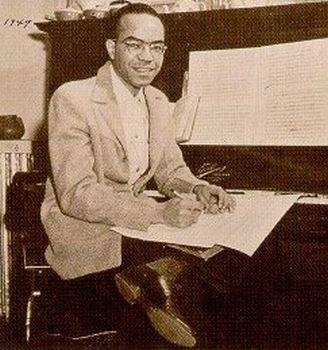
    Ulysses Kay was born in Tuscon, AZ, on this date in 1917. A nephew of jazz musician King Oliver, his uncle encouraged him to study music formally. Likewise, he received encouragement from William Grant Still, then recognized as the “Dean of African-American Composers.” Kay attended the University of Arizona, before heading on to the Eastman-School, where he studied with Howard Hanson and Bernard Rogers. Also influential were studies with Paul Hindemith at the Berkshire Music Center, and then Yale.

    Kay served in the United States Navy during World War II. He then continued his studies at Columbia with Otto Luening. A recipient of multiple scholarships, grants and awards, he was able to live and study abroad, in Rome, where he attended the American Academy, for several years.

    From 1953 to 1968, he worked for BMI. He was then appointed professor at Lehman College of the City University of New York, where he remained until his retirement, two decades later. A longtime resident of Teaneck, NJ, he composed orchestral, chamber, choral and instrumental works, and five operas. He died in 1995 at the age of 88.

    We’ll celebrate the 100th anniversary of Kay’s birth with an hour of his music, “Giving Kay His Say,” this Sunday night at 10:00 EST on “The Lost Chord,” on WWFM – The Classical Network and at wwfm.org.


    An interview with Kay conducted by Bruce Duffie:

    http://www.bruceduffie.com/kay.html

  • New Year’s Music Tippett & Tomlinson

    New Year’s Music Tippett & Tomlinson

    This Sunday night on “The Lost Chord,” we’ll have two works appropriate for the New Year, and both of them will be by English composers.

    Sir Michael Tippett’s “New Year” was the composer’s fifth and final opera. Set in Terror Town, an imaginary city, the location of which is described as “Somewhere Today,” the time is New Year’s Eve. The character personae features such unusual and diverse elements as a child psychiatrist, her Rastafarian foster brother, a shaman, and three time travelers from the future – or, as Tippett specifies, “Nowhere Tomorrow.”

    The suite opens and closes with the arrival and departure of a spaceship, which is represented electronically in the score. Other striking touches included the use of saxophones, and, at the work’s climax, a quotation of “Auld Lang Syne,” against a rather turbulent backdrop.

    The opera was first performed at the Houston Grand Opera in 1989, with the British premiere at Glyndebourne the following year. It was not well received. The wholly reimagined suite was commissioned by the San Francisco Symphony in 1990. Tippett noted that the primary metaphor of the opera is dance.

    The remainder of the hour will be devoted to works by a composer of a very different sensibility: master of British Light Music, Ernest Tomlinson. It is Tomlinson’s tongue-in-cheek assertion that the melody of “Auld Lang Syne” underlies most of the world’s greatest masterpieces. He goes on to support his thesis with no less than 152 examples in his dizzyingly clever “Fantasia on ‘Auld Lang Syne.’”

    In the few minutes left at the end of the show, I include a Tomlinson encore. It’s not a New Year’s piece, strictly speaking, though the subject of the work has to be home by the stroke of twelve.

    I hope you’ll join me for “T Time,” – music for the New Year by English composers whose surnames happen to begin with T – this Sunday night at 10 EST, on WWFM – The Classical Network and wwfm.org.

Tag Cloud

Aaron Copland (92) Beethoven (95) Composer (114) Film Music (123) Film Score (143) Film Scores (255) Halloween (94) John Williams (187) KWAX (229) Leonard Bernstein (101) Marlboro Music Festival (125) Movie Music (138) Opera (202) Philadelphia Orchestra (89) Picture Perfect (174) Princeton Symphony Orchestra (106) Radio (87) Ralph Vaughan Williams (85) Ross Amico (244) Roy's Tie-Dye Sci-Fi Corner (290) The Classical Network (101) The Lost Chord (268) Vaughan Williams (103) WPRB (396) WWFM (881)

DON’T MISS A BEAT

Receive a weekly digest every Sunday at noon by signing up here


RECENT POSTS