Tag: Vaughan Williams

  • Vaughan Williams’ Pastoral Symphony War Elegy

    Vaughan Williams’ Pastoral Symphony War Elegy

    One hundred years ago, in the same week as the debut of Carl Nielsen’s Symphony No. 5, another war symphony received its first performance. Ralph Vaughan Williams’ “A Pastoral Symphony” was given its premiere on January 26, 1922.

    What’s that? “A Pastoral Symphony,” a war symphony? From the pen of Uncle Ralph???

    Vaughan Williams may very well be enshrined in our collective memory as the embodiment of rural contentment. But that aspect of the composer, while clearly appealing to some (among whom I count myself), tends to limit his currency. Which is a shame – especially in this, his sesquicentennial year – as it really is only one facet of a larger, more complicated personality.

    A good many of RVW’s bucolic reveries are tinged with a sense of lost innocence, and in more ambitious works like the Third Symphony, there is a haunted undercurrent that belies its idyllic moniker.

    The very title is an invitation to misunderstanding. As the composer emphasized, what he attempts to convey in the symphony is “not really Lambkins frisking at all, as most people take for granted.”

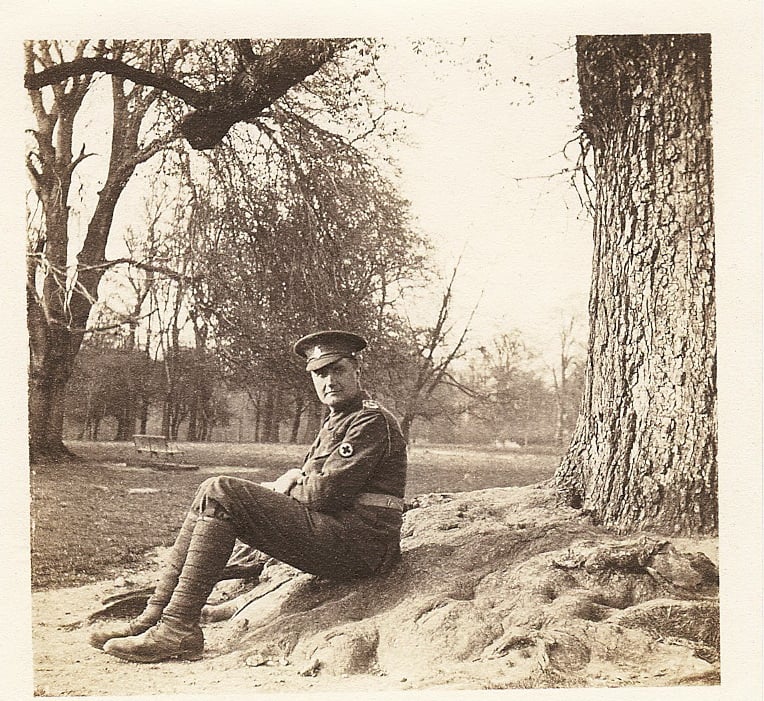
    Vaughan Williams served with the Royal Army Medical Corps in France during the First World War – service from which he could easily have been exempted on account of his age (he was 42 years-old), but he was insistent about doing his part. His duties in this capacity placed him on the front lines, as he recovered wounded and dying soldiers from areas under heavy bombardment. Some of these rescues took place at night, in no-man’s land, as he staggered with an unwieldy stretcher over uneven ground in total darkness.

    At the end of a day, he would drive his ambulance up to the top of a hill to take in the Corot-like landscape at sunset, while listening to a bugler practice the “Last Post.” The execution could be a little rough at times. Once, instead of an octave, the bugler accidentally hit the interval of a seventh. The trumpet solo in the second movement of “A Pastoral Symphony” recollects this experience. The work is pastoral, all right. As peaceful as the dead.

    At 45, Vaughan Williams became a second lieutenant in the Royal Garrison Artillery. Prolonged exposure to shell fire from the 60-pounder guns took its toll on his hearing and likely contributed to his deafness later in life. On one occasion, he also drove 200 horses on a retreat, to get them out of harm’s way.

    He saw his share of horrors, to be sure. He also lost too many friends. A number of these were promising young artists, like the composer George Butterworth, cut down at the Battle of the Somme at the age of 31. Butterworth was the primary reason for Vaughan Williams ever tackling an orchestral symphony to begin with. (You’ll recall, the First Symphony, “A Sea Symphony,” was a large-scale work for chorus and orchestra.) Butterworth was indispensable in guiding the composition of RVW’s Symphony No. 2, “A London Symphony,” which Vaughan Williams dedicated to him.

    It’s sobering to contemplate that had Vaughan Williams himself died in the conflict, he would have been a two-symphony composer. As it was, he lived to complete nine. He died in 1958, only months after the premiere of his Ninth Symphony, at the age of 85.

    RVW cast his “Pastoral Symphony” in four movements, “all of them slow.” That may be, but I always think of the galumphing third movement, which the composer described as a slow dance, as rather Falstaffian.

    The last movement includes a wordless part for soprano. It comes to us like the song of a distant milkmaid. But there is also something ghostly about it. Perhaps the composer intended to suggest that the distance in this case is not merely spatial, but temporal. Agrarian innocence has been gassed, shredded by bullets, and shelled to pieces.

    Imagine someone born in 1872, who lived into the mid-20th century, and all the changes he must have experienced in his lifetime. I often reflect on composers of that generation and how quickly the old world must have faded for them. Hell, the older I get, the more it’s happening to me.

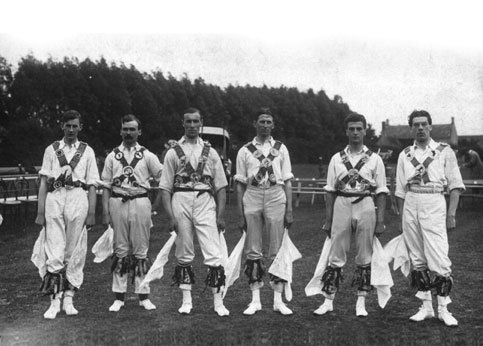
    Vaughan Williams, like his Hungarian counterparts, Béla Bartók and Zoltán Kodály, recognized that the world was accelerating and that many of his country’s traditions were hanging on by a thread. It is part of what spurred RVW and his colleague, Gustav Holst, to hit the muddy back roads of the provinces, to document as many folk songs as they could, before they were all swept away, ground up and swallowed by an increasingly homogenous, mechanized world. Vaughan Williams may not have foreseen television, or chain stores, or pop culture, or the internet, but he knew that transformation was in the air.

    On its surface, English pastoralism is warm and sentimental. It provides a nostalgic escape, an illusory security in tradition. But in works like “A Pastoral Symphony,” it can also serve as a kind of elegy, a memorial for a faded world.


    “A Pastoral Symphony,” conducted by Sir Adrian Boult in 1968. Boult conducted the work’s first performance on this date in 1922.

    George Butterworth, “A Shropshire Lad,” from 1912. The composer was 27 years old. Four years later, he was felled by a sniper’s bullet.

  • Vaughan Williams 150th Anniversary Celebration

    Vaughan Williams 150th Anniversary Celebration

    2022 marks the 150th anniversary of the birth of Ralph Vaughan Williams (on October 12, 1872). Following up on yesterday’s post about the composer’s connections to the Day Lewis family, here’s some additional RVW material to brighten the weekend of any musical Anglophile.

    I transcribed the text of C. Day Lewis’ encomium, on the occasion of RVW’s 85th birthday, from this first-rate radio documentary, which also includes abundant commentary by Vaughan Williams himself, his wife Ursula, Sir Adrian Boult, Sir John Barbirolli, and others. I highly recommend it.

    Then enjoy two concert performances of Vaughan Williams symphonies led by two of his most notable American interpreters. André Previn conducts the Houston Symphony at Carnegie Hall in the Symphony No. 4, from 1969, and Leonard Slatkin conducts the Chicago Symphony in the Symphony No. 5, from 1988. Both conductors went on to record acclaimed cycles of Vaughan Williams’ symphonies.

    You don’t have to purchase the recordings at the link. Just click on any of the arrows and allow them to play through. The tracks will play continuously, from one into another.

    https://crqeditions.bandcamp.com/album/crq-498-vaughan-williams-from-america-previn-and-slatkin-conduct-the-fourth-and-fifth-symphonies-live-in-the-usa?fbclid=IwAR3Y57HRD6wjgYpiP2beRiiFlP-YUirz9qxqlqhF5EULUcbG54en83a4pxQ

    These works – which couldn’t be more different – should be in the repertoire of every American orchestra. Sadly, it looks as if we’re in for another year of “Tallis Fantasias,” if that. If anyone happens to hear of a Vaughan Williams symphony being performed live on the East Coast, PLEASE let me know!

  • David Willcocks Birthday RVW Carols Hodie

    David Willcocks Birthday RVW Carols Hodie

    Remembering Sir David Willcocks on his birthday, directing two favorite Christmas carols arranged by Vaughan Williams.

    “Yorkshire Wassail Song”

    “Wassail Song”

    Of course, Willcocks also conducted my favorite recording of RVW’s “Hodie,” which I got to enjoy this year on Christmas Day. Here it is again, a few days late.

    Willcocks died in 2015, at the age of 95.

  • Remembering Bernard Haitink

    Remembering Bernard Haitink

    By the time I learned last night of the death of Bernard Haitink, there was little I could do about it. I had had a late dinner and watched a movie, and it was all I could do to brush my teeth and struggle through a chapter in bed.

    With the dawn of another day, I can share my recollection of working as a clerk at Sam Goody in the 1980s – essentially signing my paycheck back over to the company in exchange for CDs – and the piecemeal acquisition of my first Shostakovich cycle, with Haitink conducting. Really, in the early days of compact disc, if you wanted all the symphonies, there weren’t any other options. I’ve since acquired complete cycles by Kondrashin and Barshai, and powerful one-offs by any number of other conductors, but I’ve always hung on to Haitink. He also took a remarkable interest in Vaughan Williams, recording all the symphonies, unusual for a major conductor outside of England – especially so for someone from mainland Europe.

    For many, Haitink’s memory will be indivisible from his long association with the Concertgebouw Orchestra of his native Amsterdam. He also held important conducting posts with the London Philharmonic Orchestra (1967-1989), Glyndebourne Opera (1978-1988), the Royal Opera House, Covent Garden (1987-2002), the Staatskapelle Dresden (2002-2004), and the Chicago Symphony (2006-2010). Chicago wanted him longer, but he declined, citing his advancing age. His final concert was in Lucerne, on September 6, 2019, with the Vienna Philharmonic.

    As a music-lover, concertgoer, and record collector for over 40 years, I am sorry to lose anyone as prominent as Haitink has been. He was one of the last lions of the podium of his generation. It’s funny that he received so much recognition for his performances of the core Germanic repertoire (especially Brahms and Beethoven), since I mostly found his recordings in this department to be rather uninteresting. He did, however, often deliver in unexpected places.

    He received nine Grammy nominations, for a complete Beethoven cycle, Beethoven’s “Missa solemnis,” Brahms’ “A German Requiem,” and Mozart’s “Don Giovanni,” but also for recordings of Vaughan Williams’ “A Sea Symphony” and “Sinfonia Antartica” and Holst’s “The Planets.” He won twice, for Janacek’s opera “Jenufa” in 2003 and again in 2008 for a later recording of Shostakovich’s Symphony No. 4.

    Here are some links to a few of my favorite Haitink recordings:

    A live performance of Shostakovich Symphony No. 15

    Debussy’s “Images”

    A concert broadcast of John McCabe’s “Chagall Windows”

    Since today is Liszt’s birthday, from Haitink’s complete recordings of the symphonic poems, “Die Ideale”

    Finally, the European Union Youth Orchestra giving its all in a Haitink specialty, Bruckner’s Symphony No. 7

    Bernard Haitink was 92 years-old. Thank you, Maestro, and R.I.P.

  • Vaughan Williams’ Lark Ascending at 100

    Vaughan Williams’ Lark Ascending at 100

    In December, I noted the date on which Vaughan Williams’ “Lark” first ascended 100 years before. That was in the version for violin and piano. Today marks the centennial of the first time it was heard in its definitive form for violin and orchestra.

    Though written in 1914, it wasn’t played publicly until December 15, 1920 – as stated, on violin and piano – in the unassuming venue of Shirehampton Public Hall in Bristol. Marie Hall was the esteemed violinist. The pianist was Geoffrey Mendham.

    Hall – who made the first recording of the Elgar Violin Concerto, with the composer conducting – was also the soloist at the premiere of the orchestral version, which received greater notice, when it was unveiled at the Queen’s Hall, London, 100 YEARS AGO TODAY. The British Symphony Orchestra was conducted on that occasion by Adrian Boult.

    The score, which bears an inscription from a poem of George Meredith, is the quintessence of the composer’s elegiac pastoralism. Thanks in part to frequent radio airplay, the music’s popularity increases annually, with “The Lark Ascending” consistently ranked among top listener favorites. At the same time, it has been embraced by more and more violinists.

    Vaughan Williams described his leisurely, contemplative, frankly gorgeous violin rhapsody as “a romance.” It now soars as some of his best-known music.

    Hark, hark, the Lark.

    He rises and begins to round,
    He drops the silver chain of sound,
    Of many links without a break,
    In chirrup, whistle, slur and shake.
    For singing till his heaven fills,
    ‘Tis love of earth that he instils,
    And ever winging up and up,
    Our valley is his golden cup
    And he the wine which overflows
    to lift us with him as he goes.
    Till lost on his aerial rings
    In light, and then the fancy sings.


    Marie Hall plays the Elgar Violin Concerto, heavily-abridged, in 1916:

Tag Cloud

Aaron Copland (92) Beethoven (95) Composer (114) Film Music (123) Film Score (143) Film Scores (255) Halloween (94) John Williams (187) KWAX (229) Leonard Bernstein (101) Marlboro Music Festival (125) Movie Music (138) Opera (202) Philadelphia Orchestra (89) Picture Perfect (174) Princeton Symphony Orchestra (106) Radio (87) Ralph Vaughan Williams (85) Ross Amico (244) Roy's Tie-Dye Sci-Fi Corner (290) The Classical Network (101) The Lost Chord (268) Vaughan Williams (103) WPRB (396) WWFM (881)

DON’T MISS A BEAT

Receive a weekly digest every Sunday at noon by signing up here


RECENT POSTS