Tag: Witches

  • Walpurgis Night Witches Music and Lore

    Walpurgis Night Witches Music and Lore

    When the sun sets this evening, we will be in the grip of Walpurgisnacht.

    Walpurgis Night, the eve of the feast day of Saint Walpurga, is a time when evil spirits are believed to roam the earth.

    Tradition holds that a witches’ sabbath and orgy of the damned are held atop the Brocken, the highest peak of the Harz Mountains in Central Germany. It’s the last blast of diablerie before May Day. In Goethe’s “Faust,” Mephistopheles guides his imperiled charge into a swirling cauldron of witches and demons so as to complete his moral degradation.

    Of course, “Faust” has inspired innumerable pieces of music – operas, symphonies, cantatas, piano works, and songs. Here, Samuel Ramey sings “Ecco il mondo” from the Walpurgis Night scene (Act II, Scene 2) of Arrigo Boito’s “Mefistofele.” Sadly, the clip doesn’t run to the end of the act.

    Another Goethe poem provides the basis for Felix Mendelssohn’s cantata “Die erste Walpurigisnacht” (“The First Walpurgis Night”), about a band of prankish Druids playing mind games with some superstitious Christians.

    Johannes Brahms wrote a song, “Walpurgisnacht,” on a text of Alexis Willibald (nom de plum of Wilhelm Häring), about a mother freaking out her daughter, telling her a thunderstorm is actually the sound of witches celebrating on the Brocken. As if that isn’t enough, she adds that she herself is a witch! Ha ha! So German.

    Walpurgis Night is an occasion for leaping over bonfires, vandalizing neighbors’ property, and rioting, all in the name of welcoming spring. It is not to be confused with St. John’s Eve (June 23), the night the demon Chernobog emerges from the Bald Mountain. More on that later, I’m sure.

    When this Brocken’s a-rockin’, don’t come a-knockin’! Cavort responsibly, everybody, and don’t forget to keep Walpurga in Walpurgisnacht!


    “The Goat of Mendes. The Devil himself!”

    See comments section for one of my treasured possessions: photo inscribed to Christopher Lee by Samuel Ramey!


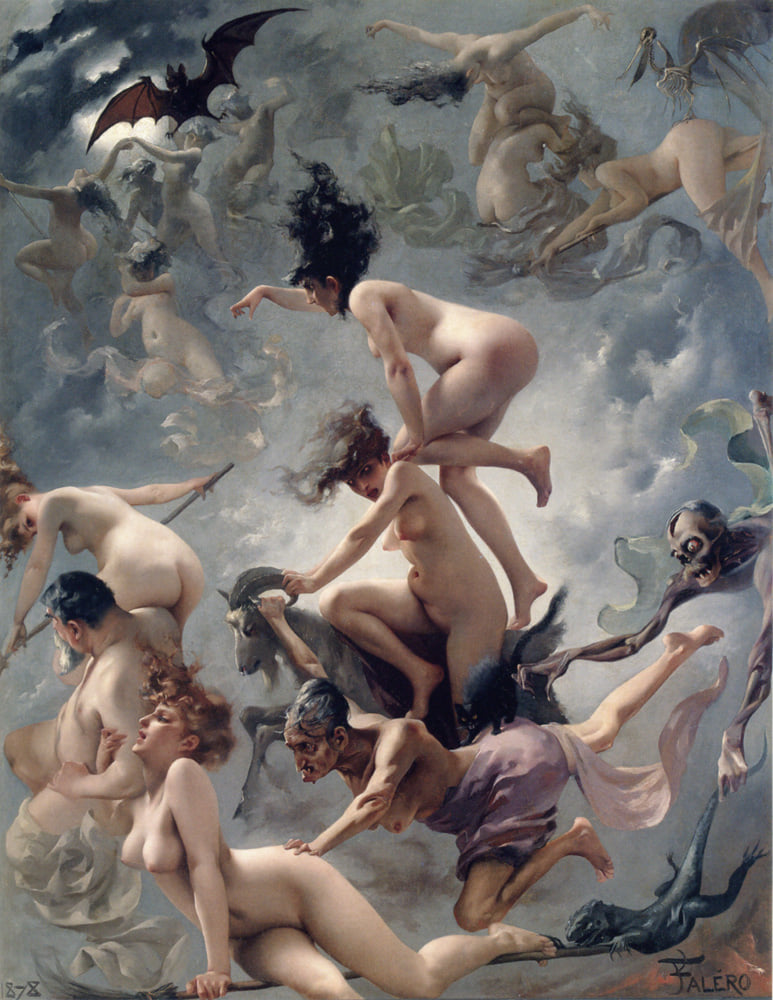
    Luis Ricardo Falero, “Departure of the Witches” (a.k.a. “Witches Going to their Sabbath”), 1878
  • Walpurgis Night: Witches, Music, and Mayhem

    Walpurgis Night: Witches, Music, and Mayhem

    Walpurgis Night, the eve of the feast day of Saint Walpurga, is a time when evil spirits are believed to roam the earth. Tradition holds that a witches’ sabbath and orgy of the damned are held atop the Brocken, the highest peak of the Harz Mountains in Central Germany. It’s the last blast of diablerie before May Day. In Goethe’s “Faust,” Mephistopheles guides his imperiled charge into a swirling cauldron of witches and demons so as to complete his moral degradation.

    Of course, “Faust” has inspired innumerable pieces of music – operas, symphonies, cantatas, piano works, and songs. Here, Samuel Ramey sings “Ecco il mondo” from the Walpurgis Night scene (Act II, Scene 2) of Arrigo Boito’s “Mefistofele.” Sadly, the clip doesn’t run to the end of the act.

    Another Goethe poem provides the basis for Felix Mendelssohn’s cantata “Die erste Walpurigisnacht” (“The First Walpurgis Night”), about a band of prankish Druids playing mind games with some superstitious Christians.

    Johannes Brahms wrote a song, “Walpurgisnacht,” on a text of Alexis Willibald (nom de plum of Wilhelm Häring), about a mother freaking out her daughter, telling her a thunderstorm is actually the sound of witches celebrating on the Brocken. As if that isn’t enough, she adds that she herself is a witch! Ha ha! So German.

    Walpurgis Night is an occasion for leaping over bonfires, vandalizing neighbors’ property, and rioting, all in the name of welcoming spring. It is not to be confused with St. John’s Eve (June 23), the night the demon Chernobog emerges from the Bald Mountain. More on that later, I’m sure.

    Don’t forget to keep Walpurga in Walpurgisnacht, everybody! Enjoy a socially-distanced sabbath and remember to cavort safely – in masks!


    “The Goat of Mendes! The Devil himself.”


    Luis Ricardo Falero, “Departure of the Witches” (a.k.a. “Witches Going to their Sabbath,”1878)

  • Verdi’s Macbeth Witches Goth Dance

    Verdi’s Macbeth Witches Goth Dance

    For Giuseppe Verdi’s birthday, totally Goth witches’ chorus from “Macbeth”:

    https://www.youtube.com/watch?v=7b4tKhV5mcg

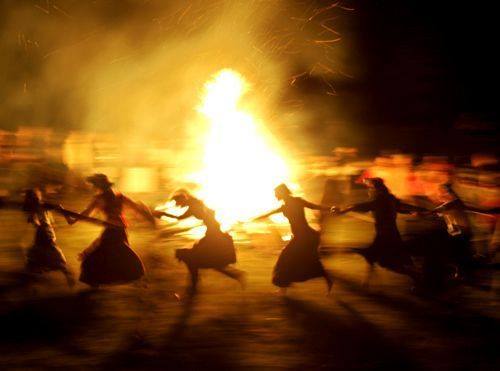
    Act III Witches’ Dance from Taiwan:


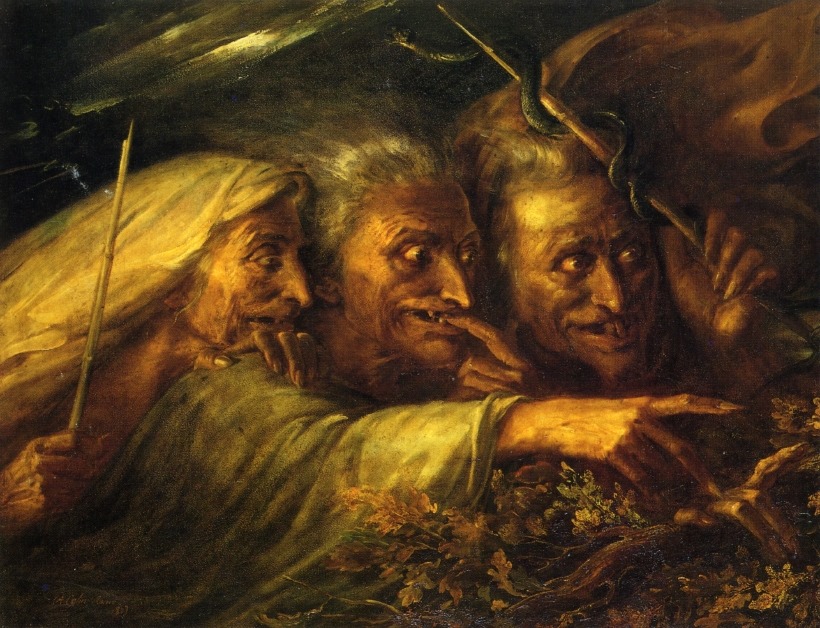
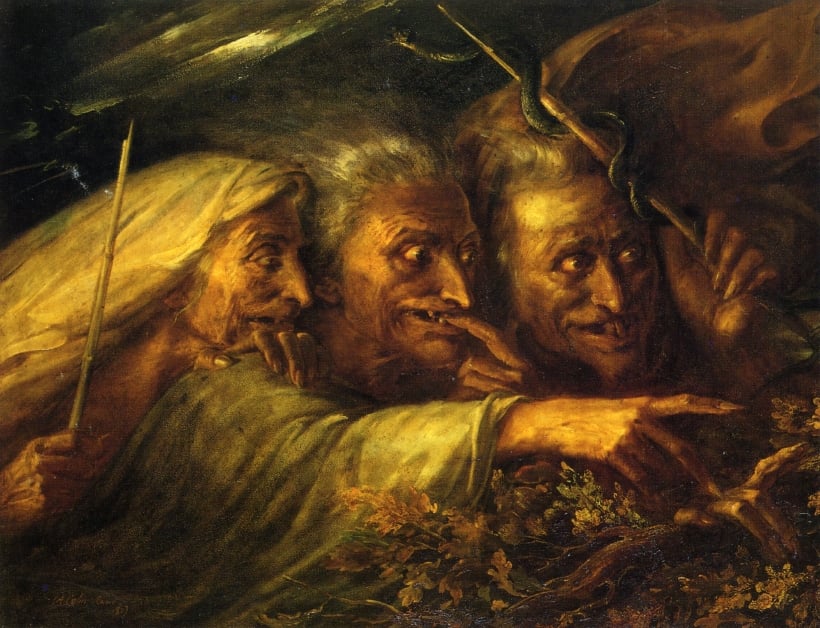
    “The Three Witches from Macbeth” (1827) by Alexandre-Marie Colin

  • Verdi’s Goth Macbeth Witches Halloween Day 10

    Verdi’s Goth Macbeth Witches Halloween Day 10

    31 DAYS OF HALLOWEEN (DAY 10)

    For Giuseppe Verdi’s birthday, a totally Goth witches’ chorus from “Macbeth”

    https://www.youtube.com/watch?v=7b4tKhV5mcg

    Act III Witches’ Dance from Taiwan


    IMAGE: “The Three Witches from Macbeth” (1827) by Alexandre-Marie Colin

  • Midsummer Music Bonfires Witches and More

    Midsummer Music Bonfires Witches and More

    Thank the Romans. They’re the ones who marked the summer solstice for June 24 – hence, the discrepancy between the longest day (June 21) and Midsummer. But the Romans liked nothing if not a good party, so why split hairs? Let the good times roll!

    The Church, though fashionably late, was quick to comprehend it would probably be best to divert the stream of paganism rather than attempt to dam(n) everything outright. To this end, June 24 was designated the Feast Day of St. John. This worked out very nicely, since St. Luke implies the birth of John the Baptist took place six months before that of Jesus.

    On the eve of this blessed anniversary, the night of June 23, good Christians celebrate as only reformed pagans can, in the understanding that everyone will be up to fulfill their religious obligations on the morrow.

    This Sunday night on “The Lost Chord,” we’ll have music for St. John’s Eve.

    The eve of St. John is a time for the harvesting of St. John’s Wort, with its miraculous healing powers. It’s a time to seek the fern flower, which can bring good fortune, wealth, and the ability to understand animal speech. It’s a time for the lighting of bonfires against evil spirits, and even dragons, which roam the earth, as the sun again pursues a southerly course. And it’s a time when witches are believed to rendezvous with powerful forces, such as the demon Chernobog, who emerges from the Bald Mountain on St. John’s Eve at the climax of Disney’s “Fantasia.”

    Leaping over a bonfire is seen as a surety of prosperity and good luck. Not to light a bonfire is seen as offering up one’s own house for destruction by fire. The bigger the fire, the further at bay are kept evil spirits. The further the evil spirits, the better the guarantee of a good harvest.

    We’ll have music inspired by some of these Midsummer customs, as we listen to Modest Mussorgsky’s “St. John’s Night,” an earlier, less-familiar incarnation of his popular musical picture “A Night on Bald Mountain,” as heard in his opera, “Sorochinsky Fair.”

    Also featured will be Alfred Schnittke’s impish rondo, “(K)ein Sommernachtstraum.” The root of the title is German for “A Midsummer Night’s Dream,” but the postmodern inclusion of the “K” in parentheses modifies the meaning to “NOT a Midsummer Night’s Dream.” Indeed! Schnittke sets up the listener with a soothing notturno in the style of Mozart or Schubert, but very soon the atmosphere begins to shift.

    Finally, we’ll hear selections from the ballet, “St. John’s Eve,” by the Swedish composer Gunnar de Frumerie. Not surprisingly, after a long, hard winter, the Scandinavian countries are crazy for Midsummer. The allegorical ballet features appearances by John the Baptist, Salome, the Seven Deadly Sins, Angels, and the Devil, all tied up in Swedish Midsummer traditions.

    Leap high, friends, and join me for “Midsummer Night’s Fiends,” this Sunday night at 10:00 EDT, on WWFM – The Classical Network and wwfm.org.

Tag Cloud

Aaron Copland (92) Beethoven (95) Composer (114) Film Music (123) Film Score (143) Film Scores (255) Halloween (94) John Williams (187) KWAX (229) Leonard Bernstein (101) Marlboro Music Festival (125) Movie Music (138) Opera (202) Philadelphia Orchestra (89) Picture Perfect (174) Princeton Symphony Orchestra (106) Radio (87) Ralph Vaughan Williams (85) Ross Amico (244) Roy's Tie-Dye Sci-Fi Corner (290) The Classical Network (101) The Lost Chord (268) Vaughan Williams (103) WPRB (396) WWFM (881)

DON’T MISS A BEAT

Receive a weekly digest every Sunday at noon by signing up here


RECENT POSTS