Tag: WWFM

  • Bortkiewicz Ukrainian Composer’s Lost Chord

    Bortkiewicz Ukrainian Composer’s Lost Chord

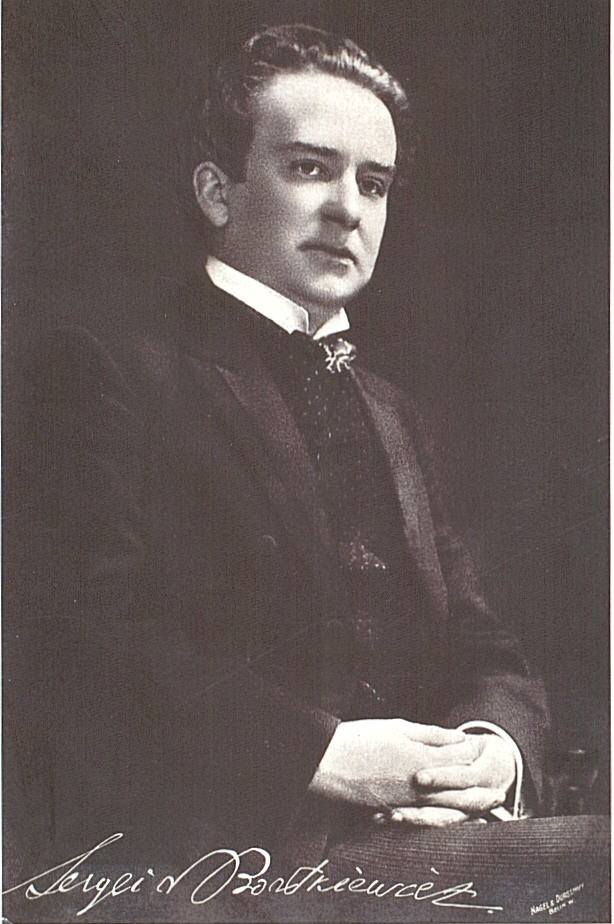
    Some guys just can’t seem to catch a break.

    Sergei Bortkiewicz, born in Ukraine, lived through two world wars and the Russian Revolution. He endured both poverty and personal tragedy. However, through it all, he managed to create music of lasting beauty.

    This Sunday night on “The Lost Chord,” learn more about his turbulent life and transporting music, including the Quatre morceaux, Op. 65, the Symphony No. 2 in E flat major, and the Elegie, Op. 46.

    I hope you’ll join me for “Big Talent from Little Russia,” tonight at 10:00 EDT, on WWFM – The Classical Network and wwfm.org.

  • Britten’s War Requiem Love & War on WWFM

    Britten’s War Requiem Love & War on WWFM

    “War is sweet to those who have no experience of it, but the experienced man trembles exceedingly at heart on its approach.” Unfortunately, little has changed since the Greek poet Pindar wrote those words 2600 years ago.

    Benjamin Britten’s powerful and moving “War Requiem” was written in 1961-62 for the consecration of a rebuilt Coventry Cathedral, after the original 14th century structure was destroyed by bombs during World War II. The work interweaves poetry of Wilfred Owen with traditional texts from the Mass for the Dead. Owen was killed in action in 1918, one week before the signing of the Armistice that ended World War I. The “War Requiem” became an instant classic, embraced by audiences and critics around the world and documented on a recording that became an unlikely bestseller.

    Britten’s masterpiece will be performed at Princeton University’s Richardson Auditorium, in Alexander Hall, tonight and tomorrow at 7:30 p.m. Vocal soloists Sarah Pelletier, William Burden, and Andrew Garland will join the combined forces of the Princeton University Glee Club, Princeton Pro Musica, the Princeton High School Women’s Choir, and the Princeton University Orchestra, conducted by Michael Pratt. The performances take place in a year that marks the centenary of the end of World War I, which went into effect at the 11th hour of the 11th day of the 11th month of 1918.

    Because of the work’s massive demands, seating will be even more limited than usual, with the performers spilling off the stage and into the audience. Can’t get in? Join us tonight on The Classical Network to hear a live broadcast, beginning at 7:30 p.m. EDT.

    Filmmakers, and writers before them, have long realized that nothing heightens the affect of romantic passion in narrative form quite like the turbulent backdrop of war. War supplies impediments, spectacle, often tragedy – and possibly even a few Oscars.

    This week on “Picture Perfect,” there will be plenty of valor, nobility, and sacrifice to tug at the heart strings, as we examine love in time of war, with music from “Casablanca” (Max Steiner), “Doctor Zhivago” (Maurice Jarre), “The English Patient” (Gabriel Yared), and “Cyrano de Bergerac” (Dimitri Tiomkin). Join me for an hour of impossible love, missed opportunities, and doomed romance, this Friday evening at 6:00 EDT.

    Then stay tuned for Britten’s “War Requiem,” beginning at 7:30, on WWFM – The Classical Network and wwfm.org.

  • Shakespeare Berlioz Love and Loss on WWFM

    Shakespeare Berlioz Love and Loss on WWFM

    As I said yesterday, we don’t really know when Shakespeare was born (he was baptized on April 26, 1564). Traditionally his birthday is celebrated on April 23, since that also happens to mark the anniversary of his death, in 1616, and by nature man is a compulsive creature, seeking order in all things.

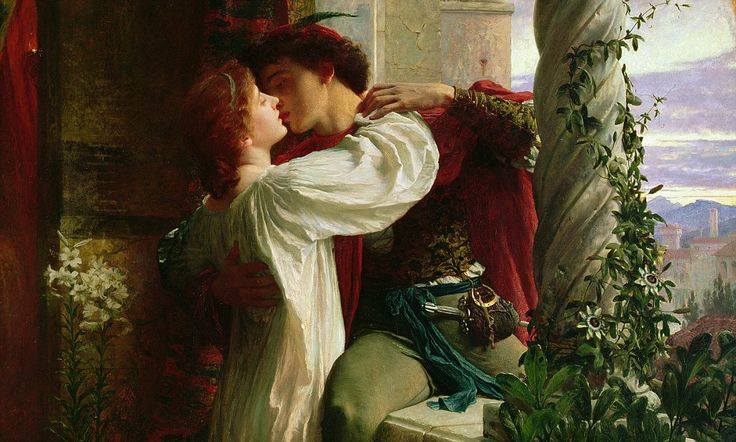
    Though we’ve manufactured a birthday for the Bard it is quite possible he could have been born at any time between now and Thursday. So why not take advantage of the broad blank canvas provided me on a Tuesday afternoon to present Hector Berlioz’s mad, ramshackle symphony, “Romeo and Juliet?”

    Berlioz adored Shakespeare. His “Symphonie Fantastique,” remember, was inspired by his passion for the actress Harriet Smithson, whom he had seen in Paris as Ophelia and fell instantly under her spell. He would woo and win her with his macabre, at times hysterical “symphonie.” At least, for as wild as his opium-induced vision of rejection, dejection, and, ultimately, damnation, would become, the work somehow clung to a semblance of “symphonic,” its romanticism bubbling out over the top of its somewhat classical structure.

    “Romeo and Juliet,” on the other hand, is neither fish nor fowl – a veritable Frankenstein’s monster assembled from the components of symphony, symphonic poem, opera, and oratorio. Unwieldy and flamboyant, Berlioz’s “symphony” unfolds as a collage of the play’s emotional high points – plus a scherzo inspired by Mercutio’s Queen Mab exposition, which is the symphony’s best known movement. In fact, it is rare to hear anything else, except perhaps the love music. Listen for a complete performance of this perplexing masterpiece, this afternoon at 2 p.m. EDT.

    First, on today’s Noontime Concert, it’s a program of new music with the American Modern Ensemble. The group’s founder, composer Robert Paterson, will be represented by two works – a collection of arias from the opera “Three Way” (2017), which explores the present and future of sex and love, and “In Real Life” (2015-16) for soprano and chamber orchestra, which examines the humor and heartbreak of what it means to join a dating website. In between, we’ll hear Robert Maggio’s “Forgetfulness” (2015), a setting for baritone and chamber ensemble of Billy Collins’ poem about Alzheimer’s Disease and dementia. The concert took place at Merkin Concert Hall at Kaufman Music Center in New York City.

    The course of true love never did run smooth. Being caught between warring houses in old Verona seems almost attractive, by comparison. It’s an afternoon of romance, androids, and BDSM (I’m not kidding), from 12 to 4 p.m. EDT, on WWFM – The Classical Network and wwfm.org.
  • Celebrating Shakespeare Music and Spring

    Celebrating Shakespeare Music and Spring

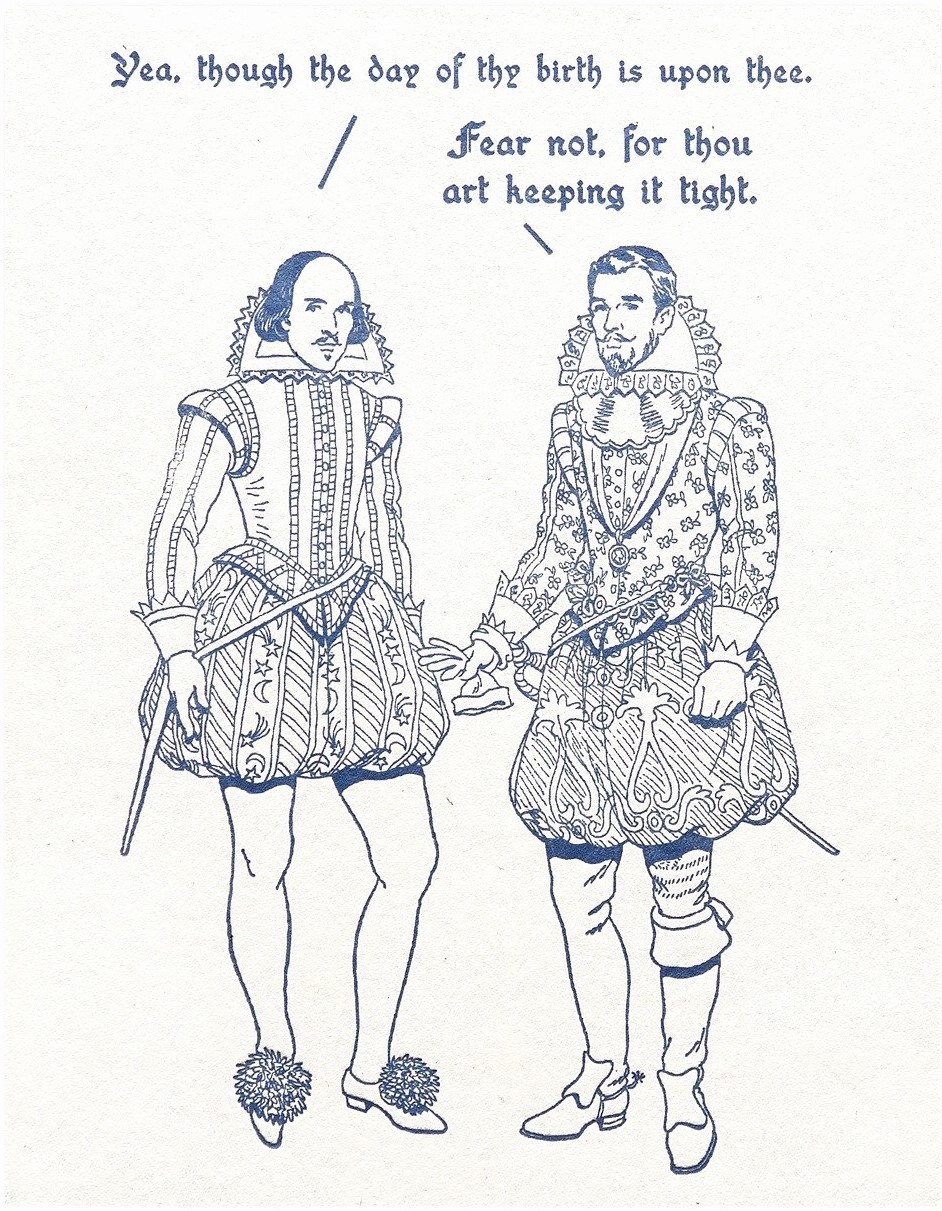
    Okay, so we don’t know when exactly Shakespeare was born. We do know that he was baptized on April 26, 1564. He died on April 23, 1616. Scholars have found the potential symmetry irresistible; therefore his birthday has traditionally been observed on the same day as his death. To borrow from “The Tempest,” our little lives are not only rounded with a sleep, it seems; if we’re famous enough, and we die close enough to our natal day, our birthdays are also rounded down.

    It doesn’t really matter when Shakespeare was born, but I look forward to celebrating the Bard every year. So many of his insights remain fresh, and the plays tie in beautifully with the spirit of renewal that springtime fosters. Also, there is just so much interesting and vital music inspired by his writings.

    We’ll sample as much of it as we can – what masques, what dances shall we have – this Monday, from 4 to 7 p.m. EDT, on WWFM – The Classical Network and wwfm.org.
  • Princeton Concerts Explode With Talent

    Princeton Concerts Explode With Talent

    Okay, so even if it does have the vexing habit of dropping last-minute surprises on those of us who work in print media (most recent example: sending out a press release yesterday about Steve Reich appearing with So Percussion at Richardson Auditorium at 7:30 p.m. tomorrow), I have to admit Princeton University has really outdone itself for next season. Joyce DiDonato, Marc-André Hamelin, Steven Isserlis, Bobby McFarren, the Takács Quartet, Abigail Washburn, Pinchas Zukerman and more will appear as part of the 125th season of the university’s flagship concert series. An artistic residency by Gustavo Dudamel serves to put the whole enterprise way over the top. Dudamel will bring musicians from the Simon Bolivar Symphony Orchestra, the Los Angeles Philharmonic, and the Berlin Philharmonic. And this is just the series that we KNOW about.

    During the intermission of today’s Noontime Concert on The Classical Network, I’ll be joined by the amazing Marna Seltzer, Director of Princeton University Concerts, who will preview next season’s outstanding artist roster. Our on-air conversation will take place around 1:00 p.m.

    Prior to that, I hope you’ll join me at 12:00 for a knockout recital given at Richardson Auditorium on November 17 by pianist Benjamin Grosvenor. The concert will include works by Johann Sebastian Bach, Claude Debussy, Alban Berg, Maurice Ravel, and Johannes Brahms, interleaved with musical reflections on Brahms by Brett Dean.

    Then, a little after 2:00, with the trees budding but the weather still wildly in flux, we’ll attempt coax spring, with two major works inspired by the season, performed by venerable orchestras located comparatively nearby – John Knowles Paine’s Symphony No. 2 “Im Frühling” (“In Springtime”), with the New York Philharmonic, and Igor Stravinsky’s “Le sacre du printemps” (“The Rite of Spring”), with the Philadelphia Orchestra.

    In whatever language, we spring into great music, from 12 to 4 p.m. EDT, on WWFM – The Classical Network and wwfm.org.
Tag Cloud

Aaron Copland (92) Beethoven (95) Composer (114) Film Music (124) Film Score (143) Film Scores (255) Halloween (94) John Williams (188) KWAX (229) Leonard Bernstein (101) Marlboro Music Festival (125) Movie Music (139) Opera (202) Philadelphia Orchestra (89) Picture Perfect (174) Princeton Symphony Orchestra (106) Radio (87) Ralph Vaughan Williams (85) Ross Amico (244) Roy's Tie-Dye Sci-Fi Corner (290) The Classical Network (101) The Lost Chord (268) Vaughan Williams (103) WPRB (396) WWFM (881)

DON’T MISS A BEAT

Receive a weekly digest every Sunday at noon by signing up here


RECENT POSTS