Tag: WWFM

  • Bulgarian Music Discoveries Vladigerov & Bermel

    Bulgarian Music Discoveries Vladigerov & Bermel

    This Sunday night on “The Lost Chord,” we’re off to Bulgaria.

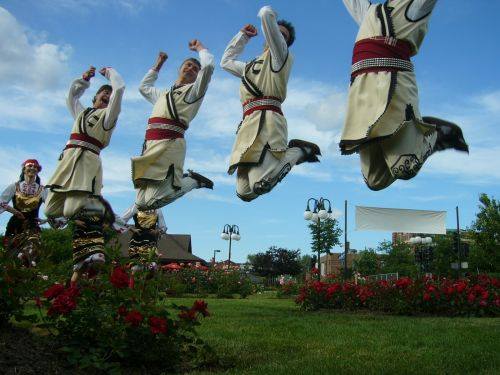
    Pancho Vladigerov – despite his Mexican-sounding first name and Swiss birth – was a seminal figure in Bulgarian music. He was the country’s first major composer to harness the idioms of Bulgarian folk traditions to classical forms.

    Fairly well known in Central Europe during the 1920s, when he was an associate of the theatrical impresario Max Reinhardt, Vladigerov had many of his works published by Universal Edition and recorded by Deutsche Grammophon. He was a composer of opera, ballet, symphonic music, five piano concertos, two violin concertos, chamber music, songs, choral works and piano pieces.

    We’ll be listening to a generous selection from Vladigerov’s “Bulgarian Dances” of 1931.

    Also on the program will be American composer Derek Bermel’s musical recollections of his studies in the region, his “Thracian Echoes” of 2002. Bermel served as artist-in-residence at Princeton’s Institute for Advanced Study from 2009 to 2013. His “Thracian Echoes” was performed locally,by the Princeton Symphony Orchestra, in 2011.

    I hope you’ll join me as we seek the cream of Bulgarian music – “Bulgar Wheat” – tonight at 10 EDT; or that you’ll listen to it later as a webcast, at wwfm.org.

  • Grazyna Bacewicz Polish Composer Spotlight

    Grazyna Bacewicz Polish Composer Spotlight

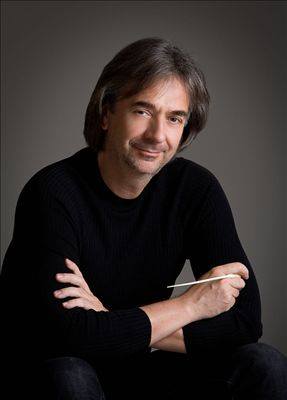
    “I believe this is the most brilliant woman composer who ever was.” So says conductor Mariusz Smolij about Grazyna Bacewicz.

    Smolij, known in the Greater Delaware Valley as Music Director of the Riverside Symphonia, based in Lambertville, NJ, joins me this week on “The Lost Chord,” for the second installment in a two-part series, to talk about his recording projects for the Naxos label. His recorded repertoire focuses on neglected music by Eastern European composers, from Hungary, from his native Poland, and, in the case of Ernest Bloch, from Jewish tradition.

    Bacewicz, who lived from 1909 to 1969, studied at the Warsaw Conservatory and then in Paris with Nadia Boulanger. She is a most interesting, Janus-like figure, her music embracing a kind of cosmopolitan neo-classicism, but not at the expense of her Polish heritage. She was an adept violinist and pianist, who survived a serious automobile accident that allowed her to concentrate wholly on composition for the last 15 years of her life. She remained energetic and prolific, also writing novels, short stories and memoirs. Though she is sometimes classified as a musical conservative, she retained her curiosity in regard to new developments in composition and was always on the lookout for ways to expand her horizons as an artist. She composed four symphonies, 12 concertos, chamber and instrumental works, opera and ballet, incidental music and film scores.

    Smolij, who has directed the Riverside Symphonia for over 20 years, is also music director of the Acadiana Symphony Orchestra and Conservatory of Music in Lafayette, LA, and formerly associated with the Houston Symphony Orchestra and the New Jersey Symphony Orchestra. He has taught conducting at the School of Music at Northwestern University and was a founding violinist of the internationally acclaimed Penderecki String Quartet.

    Only I would elect to highlight music by a great woman composer on Father’s Day. Consider it payback for the year I did an Odysseus show on Mother’s Day!

    I hope you’ll join me for “Topping the Poles” – Mariusz Smolij’s recordings of Grazyna Bacewicz, first lady of Polish music – this Sunday night at 10 EDT, with a repeat Wednesday evening at 6; or listen to it later as a webcast at wwfm.org.


    PHOTOS: Mariusz Smolij (left) and Grazyna Bacewicz

  • Entitled Birds Fly High with Classic Film Scores

    Entitled Birds Fly High with Classic Film Scores

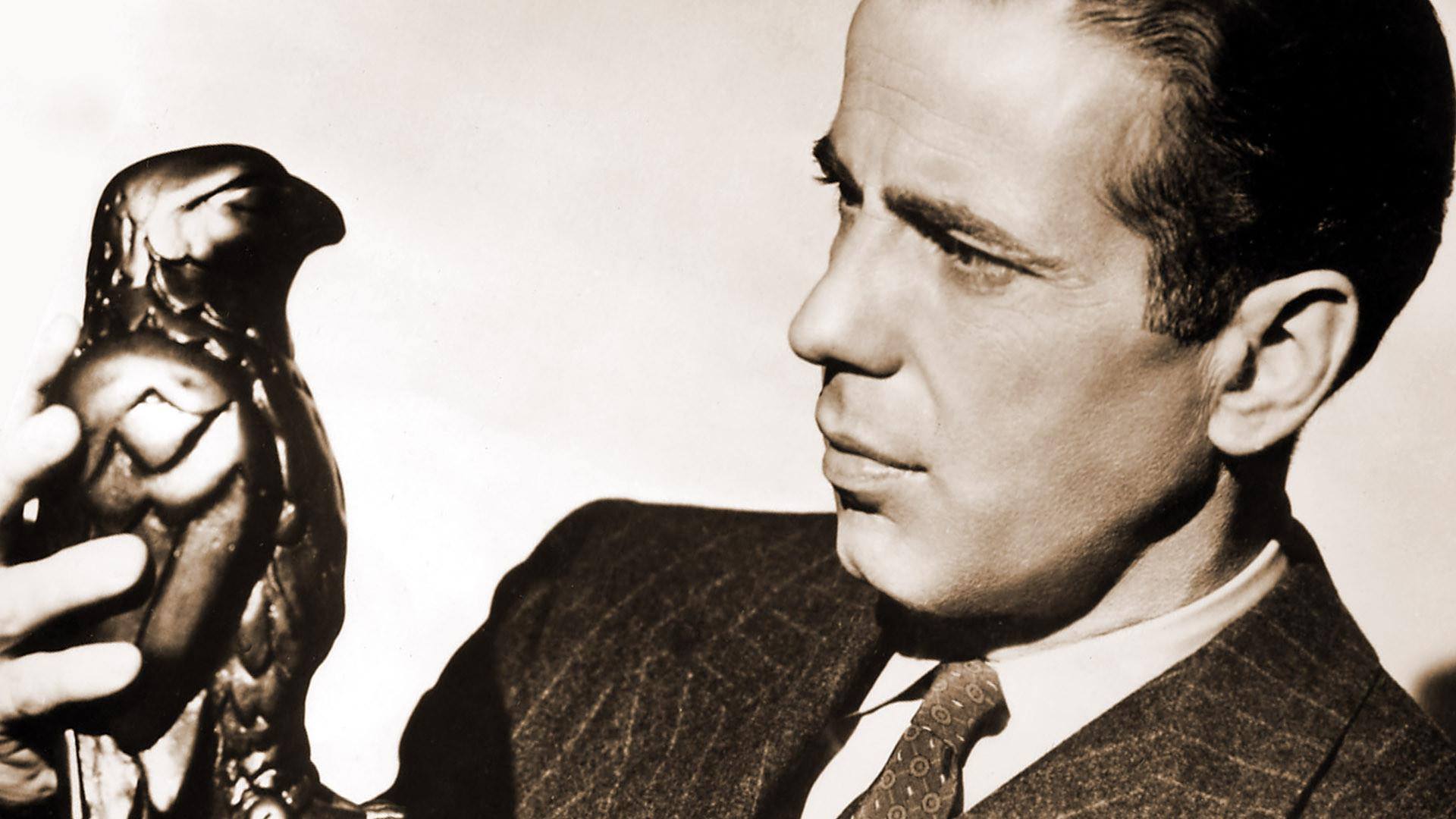
    This week on “Picture Perfect,” it’s an hour of entitled birds, with music from “The Maltese Falcon” (1941) by Adolph Deutsch, “To Kill a Mockingbird” (1962) by Elmer Bernstein, “Jonathan Livingston Seagull” (1973) by Lee Holdridge, and “The Sea Hawk” (1940) by Erich Wolfgang Korngold.

    With my computer gone fowl, it’s the flightiest show I could have hatched. Atticus Finch meets “The Albatross,” this Friday evening at 6 EDT, with a repeat Saturday morning at 6, on WWFM – The Classical Network; or listen to it later as a webcast at wwfm.org.

  • Save Our Radio Shows Funding Ideas Needed

    Save Our Radio Shows Funding Ideas Needed

    With the end of the fiscal year approaching, I thought I would reach out to you, my Facebook friends, for suggestions on how to solve a particular problem. You see, it’s all about raising dough. Isn’t it always?

    As of July 1, WWFM will no longer be able to afford to pay for its specialty shows. That means unless hosts are able to find their own funding, they will either have to (a) do their shows live at whatever time they are assigned, probably somewhere in the middle of the afternoon, (b) produce them on a volunteer basis, or (c) stop doing them.

    All three of these options are problematic. If a host were to do a show live, he or she would still have to record it and perform all sorts of touch up work on it, in order to get it in fighting trim for syndication. The host would not be compensated for that work, or for any script-writing. Essentially he or she would be paid for doing the equivalent of a one-hour live air shift. That’s unsustainable.

    Obviously, doing it for free would be even more so.

    “Picture Perfect” and “The Lost Chord” are on the line. In order to keep doing these shows, I would have to raise $5000 each for the coming year. I could do that through underwriting, or I could look into obtaining a grant. Either one would take time, but if it looked as if it were a realistic option, I would tough it out and do the shows for free until funding was secured.

    Underwriting may be from a corporate source, it could be from a small business, or it could come from a particularly generous individual listener with a surplus of moola burning a hole in his or her pocket. I had even considered perhaps trying to pull together a consortium of individual donors, with everyone kicking in what they could – which brings me to crowdfunding platforms such as Kickstarter. I haven’t really looked into these, but I know they are out there.

    It is not my aim to try to discourage anyone from supporting WWFM in general or to persuade listeners to shift their financial support from the station to one of my individual shows. This should not be an either/or proposition.

    I don’t think anyone who follows this page is a Rich Uncle Pennybags, but I know there are a lot of clever people out there. If anyone can think of a creative solution to the problem of keeping “Picture Perfect” and “The Lost Chord” alive in such a way that they can still be heard by the general population, and in a way that I can actually pay my rent, please post your suggestions below or feel free to message me. I am all eyes and ears.

    If only I could just have Moe inflate the budget using a makeshift hose to the gas pipe. Then again, we all know how well that worked out.

    Thank you for reading, and thank you in advance for your suggestions!
  • Joan of Arc Film Scores on WWFM

    Joan of Arc Film Scores on WWFM

    I suppose everyone is familiar with the basic story of Joan of Arc, the peasant girl who believed God chose her to lead the French against English forces during the Hundred Years’ War. She managed to convince the Dauphin, Charles de Valois (soon King Charles VII), to entrust her with an army, which she led to the besieged city of Orléans. There, without military training, she succeeded in achieving a momentous victory against Anglo-Burgundian forces. She was later captured, tried for heresy, and burned at the stake at the age of 19. Nearly 30 years later, the case was reopened and she was declared innocent. Revered for nearly 600 years, she was elevated to a national symbol by Napoleon in 1803 and finally canonized in 1920.

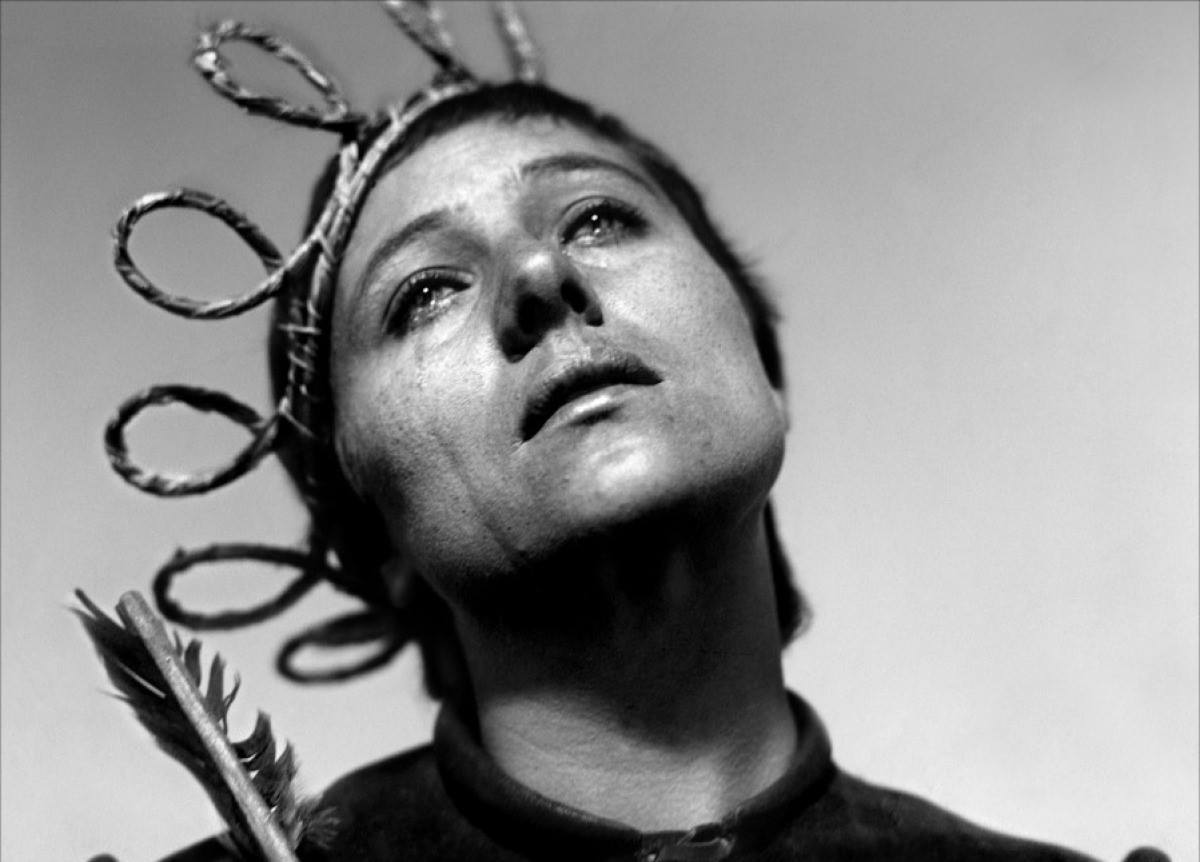
    This week on “Picture Perfect,” we’ll be listening to music for films inspired by Joan’s historical exploits, with two scores written in response to Carl Theodor Dreyer’s 1928 classic, “The Passion of Joan of Arc.” “The Passion of Joan of Arc” will be screened as part of this year’s The Princeton Festival. Soloists of Notre Dame Vocale will join the Princeton Festival Chorus and Princeton Symphony Orchestra to perform, with the film, “Voices of Light” by Richard Einhorn. That event will take place at Princeton University Chapel on June 9 at 8:30 p.m. Einhorn himself will give a free pre-performance talk at the Princeton Garden Theatre at 5 p.m. More information is available at princetonfestival.org.

    We’ll be sampling from Einhorn’s score, written in 1994, as well as one commissioned from Danish composer and conductor Ole Schmidt, also written to accompany the film, in 1983.

    In 1999, Luc Besson directed the “The Messenger: The Story of Joan of Arc,” with his then wife, Milla Jovovich, as the Maid of Orléans, and a starry supporting cast, including John Malkovich, Faye Dunaway and Dustin Hoffman (donning an Obi-Wan robe). The composer was Éric Serra. The score is primarily orchestral, but incorporates synthesized effects.

    Finally, we’ll turn to Otto Preminger’s “Saint Joan,” based on the play by George Bernard Shaw. Graham Greene wrote the screenplay for the 1957 film. Newcomer Jean Seberg was Joan, somewhat out of her league alongside veteran actors John Gielgud, Anton Walbrook and Felix Aylmer. Also, would you believe Richard Widmark as Charles VII? Unfortunately, “Saint Joan” was immolated by the critics. Mischa Spoliansky composed the lovely score. Here’s the film’s main title sequence, designed by the legendary Saul Bass:

    I hope you’ll join me for these scores written for films about Joan of Arc, on WWFM – The Classical Network, this Friday evening at 6 EDT, with a repeat Saturday morning at 6; or that you’ll listen to them later as a webcast at wwfm.org.

Tag Cloud

Aaron Copland (92) Beethoven (95) Composer (114) Film Music (123) Film Score (143) Film Scores (255) Halloween (94) John Williams (187) KWAX (229) Leonard Bernstein (101) Marlboro Music Festival (125) Movie Music (138) Opera (202) Philadelphia Orchestra (89) Picture Perfect (174) Princeton Symphony Orchestra (106) Radio (87) Ralph Vaughan Williams (85) Ross Amico (244) Roy's Tie-Dye Sci-Fi Corner (290) The Classical Network (101) The Lost Chord (268) Vaughan Williams (103) WPRB (396) WWFM (881)

DON’T MISS A BEAT

Receive a weekly digest every Sunday at noon by signing up here


RECENT POSTS