
For anyone interested in previewing this year’s nominees for Best Original Score, last week’s “Picture Perfect” has been posted as a webcast, as has this week’s “Oscar Party” of classic film themes. It’s a great way to kill two hours as you anticipate the Academy Awards.
Tag: WWFM
-
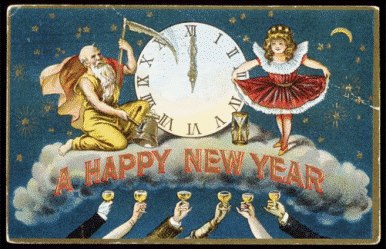
NJ Capital Philharmonic New Year’s Eve Concert
What are you doing New Year’s Eve? I’ll be trying to take a nap in anticipation of doing the overnight at WRTI. So keep it down, if you please!
My recorded interview with music director Daniel Spalding will air as part of WWFM’s live broadcast of the New Jersey Capital Philharmonic Orchestra’s celebratory concert at the Trenton War Memorial tonight at 8 p.m. You can listen to the concert live at 89.1 FM or online at wwfm.org. Or you can pick up a ticket and still be guaranteed to reach your party or get back home by about 10:30.
Last week’s newspaper article, about the concert, appeared on Christmas Day, thereby getting lost in the shuffle. Click here to read my piece about the New Jersey Capital Philharmonic’s New Year’s Eve concert in the Trenton Times.
http://www.nj.com/times-entertainment/index.ssf/2015/12/classical_music_njcp_performin.html
Happy New Year!
-

WRTI and WWFM On-Air Schedule This Week
I am quite the multi-tasking octopus this week.
I pause in the writing of this week’s newspaper article for the Trenton Times to share my on-air schedule at WRTI, which can be heard in Philadelphia at 90.1 FM (internet streaming and a full list of frequencies available at wrti.org):
Today: 2 to 6 p.m.
Tomorrow: 10 a.m. to 2 p.m.
Wednesday: 10 a.m. to 2 p.m.
New Year’s Eve (really Friday morning): midnight to 6 a.m.
Saturday: 2 to 6 a.m.
This week’s edition of “The Lost Chord” – “Emil with Dancing” – looking ahead to the New Year with Emil Nikolaus von Reznicek’s Symphony No. 5, the “Dance Symphony,” alongside historic recordings of the composer conducting his own works, will be rebroadcast on WWFM Wednesday evening at 6. WWFM can be heard in the Trenton-Princeton area at 89.1 FM (internet streaming and a full list of frequencies available at wwfm.org).
You can also hear my interview with music director Daniel Spalding during the intermission of WWFM’s live broadcast of the New Jersey Capital Philharmonic’s New Year’s Eve concert at the Trenton War Memorial, which will begin on Thursday at 8 p.m.
Teri Noel Towe will be covering my WPRB shift on New Year’s Eve morning. He’ll hit the airwaves, from 5:30 to 11, on 103.3 FM and at wprb.com.
What, is that not enough for you people?
-

Star Wars The Force Awakens Soundtrack Premiere
The day is finally upon us! The highly-anticipated “Star Wars: The Force Awakens” opens nationwide. Since the announcement of the project, every aspect of production has been held as tightly as if it were a state secret (perhaps tighter), right on down to the music.
This week on “Picture Perfect,” we offer a spoiler-free presentation of wall-to-wall selections from this latest soundtrack in the “Star Wars” saga.
I hope you’ll join me for John Williams’ first “Star Wars” score in ten years. The Force awakens tonight at 6 ET, with a repeat Saturday morning 6. Stream it live, if you’re actually lining up at the movies, or listen to it later as a webcast at wwfm.org.
-

20 Years at WWFM My Radio Journey Begins
20 years ago today, I made my first appearance on WWFM. I had gone in for my interview with Alice Weiss earlier in September. It was a Monday, and it was strange terrain to me, so I remember doing a dry run on Sunday, just so I wouldn’t be late. A good thing, too, since who knew there were so many exits for Route 1 off I-95? I remember Mario Castelnuovo-Tedesco’s Guitar Concerto No. 1 was playing on the radio as I pulled onto the campus of Mercer County Community College for the first time. It was such a lovely, idyllic campus back then, as it remained largely until only a few years ago, when the college hacked down literally hundreds of trees to make way for its solar field and rimmed the drive with an ugly and claustrophobia-inducing chain-link fence.
Thankfully, the interview itself went really well. I guess in retrospect I’m a little surprised I was hired. I was 29 years-old and already pushing my “unusual and neglected repertoire,” not really considering whether or not it might be the philosophy of my interviewer. I remember citing a New York Times article I had read in the 1980s, an overview of all these Scandinavian composers being documented in recordings on the BIS label, many of whom would have been new to most Americans. There was an air of condescension about the writer’s assessments, so I just assumed most of them weren’t worth the time or expense of exploring. Over the months and years that followed, I encountered a number of these for myself, and I was delighted to find that there was actually some really terrific music there. I used this as an example to convey my reasons for not trusting anything I read in regard to music and always trying to remain open to new experiences. Surprisingly, I was hired anyway.
I remember I was handed a sheaf of papers with names like Gennadi Rozhdestvensky on them, and Alice and Walt Gradzki, then the General Manger, went into the adjacent production studio and recorded me onto reel-to-reel as I read them.
It’s much easier to get in now, if you’re hired. There’s none of that reading names stuff, though of course as someone who had listened to classical radio for probably 15 years and done community radio himself for ten, it was old hat.
Alice and I conversed for hours. We seemed to really hit it off. The whole time, Glenn Smith popped in and out of the on-air studio. He was playing some exceptionally good stuff that day. I’m sure if I really took the time to recall, I could get much of it, since they were all composers I really liked, from pretty much within my strike zone of 1890-1950. One of the pieces, I remember, was Samuel Barber’s “Third Essay for Orchestra” (actually written in the ‘70s). Another was Ervin Schulhoff’s surrealist ballet “Moonstruck.” I remember when we were introduced, Glenn said, “It’s a good place to work.” And so it proved to be, though the future held some very rocky times.
I always regard Glenn as having been a mentor and father figure at the station – though, my, but we could argue up a storm. However, it fell upon Bliss Michelson to administer my training. These two men were my formative influences at WWFM, and both looked out for me in their own ways. My “training,” such that it was, involved sitting in with Bliss for two air shifts, with my arriving before 5:00 in the morning to watch him turn on the transmitter (this was before the station was 24 hours). By the end of the second shift, I was deemed ready to go, and they put me right onto weekend mornings, from 5 a.m. to noon on Saturdays, and 5 a.m. to 11 on Sundays.
“St. Paul Sunday Morning,” as it was then called, began at 11, recorded off of satellite onto reel-to-reel. Reel-to-reel and cart machines (carts were like 8-track cartridges that played promos and things of that sort) were what I worked from at the time that I started. We would eventually move on to an I.R. machine and more recently a dizzying array of computers, and I expect it’s only going to get more complicated and annoying. The more things are “improved” for everyone’s “ease,” the more things seem to go wrong and the more exasperating it becomes. On the other hand, computers make it a lot easier to call up information and communicate with listeners, since I was always a little hit and miss with envelope-and-stamp correspondence. I also like being able to post my playlists.
I was astonished and honored that anyone would leave me, by far the youngest person among the on-air talent, and a newcomer at that, alone for a weekend air shift. Alice wrote up a playlist for the first couple of weeks, but then I was on my own. I was very persistent about turning up for shifts, despite my share of raging snowstorms and tires blown out in total darkness. These days, we have automation to cover for us, but back then, if you didn’t show up, there was white noise. It was actually kind of crazy, since there were very definitely times when I should not have been driving and most certainly risked my life in order to get there. But it was part of the job, I suppose, and one shouldn’t expect any long-term gratitude.
As I suggest, the station has had its bumpy passages over the years. Some were financial and some were interpersonal, just like at any workplace. When the economy went into a nosedive in 2007-2008, I felt myself lucky to be in radio. I thought, well, I never had any money to begin with, so this isn’t really going to impact me, as long as we can raise enough to keep the station afloat. It was a naïve attitude. WWFM is affiliated with Mercer County Community College. It is a peculiar alliance, since in many ways the station is independent, yet in others it has always been reliant. When admissions numbers looked to be taking a turn for the worse, the college mandated cuts across the board. This triggered suspicion between departments, and many wondered why a community college had to have a classical music station anyway.
Tough decisions had to be made, I understand, and one by one, all of the part-time announcers were plucked from their air shifts to be replaced with a service out of Minnesota. I won’t go into the obvious dip in quality, or the sad loss of a local connection. The station had to do something in order to survive, even if it would be at the expense of many of its employees. The full-time staff remained on the air, since it cost nothing extra, but they all also had to shoulder many of the duties carried by the rest of us.
Since that lowest point, our budget has improved and a number of the part-time hosts have been brought back for regular air shifts. I am sorry to say, I have not been among that number. I have continued to record my weekly syndicated shows, “The Lost Chord” (since 2003) and “Picture Perfect” (since 2010), and occasionally get approached for special projects like the tribute to William H. Scheide. I am scheduled to be on the air for three hours during the upcoming fund drive, but that’s about the extent of it.
Over the years, my morning start-time crept up from 5 a.m. to 6, once the station went 24-hours, then later, for budgetary reasons, 8. It is hard to complain about getting up at 6, as opposed to 3 or 4 in the morning, despite the financial loss of a couple of hours. I started my Facebook page on March 28, 2014, the eve of my final weekend morning air shift, as a way to maintain contact with listeners and those curious to keep up. The removal from the shift was perceived as indefinite, though perhaps not permanent. Then, at the end of the fiscal year, I was removed from the payroll. As of July 2014, I was no longer a WWFM employee, but rather an independent contractor, a “vendor.” I now have to submit invoices every quarter and then literally chase down my paychecks. Also, I receive no benefits. This is why suddenly you hear me popping up on every classical music station in creation. It has been very difficult for me, not just financially, but emotionally, since I had always regarded WWFM as my home, and for as long as I had known it, it was the best classical music station I had ever heard.
Be that as it may, my first time on the air was in the final hour of Bliss’ morning air shift, 20 years ago today. I took over the Saturday morning immediately following and continued to cover weekends for the next 18 ½ years. Over time, my duties at the station waxed and waned. At my peak, I was on four days a week. For a time, actually, it may have been five, Wednesday through Sunday.
Here’s the music I selected for my first hour, 9 a.m., September 28, 1995:
HOWARD HANSON – Merry Mount: Suite
SIR PETER MAXWELL DAVIES – Farewell to Stromness
MUZIO CLEMENTI – Symphony No. 1
ARNOLD SCHOENBERG – Aria from “The Mirror of Arcadia”Though I had had ten years experience in community radio, in and around Allentown, Pa., I remember I was shaking like a leaf. Sensing my apprehension about going before such an imposing listenership – WWFM covered much of central and southern New Jersey and portions of eastern Pennsylvania – Bliss’ words of advice were sage: “Remember, it’s just you and the microphone.”
Tag Cloud
Aaron Copland (94) Beethoven (95) Composer (114) Film Music (149) Film Score (143) Film Scores (255) Halloween (97) John Williams (197) KWAX (232) Leonard Bernstein (105) Marlboro Music Festival (125) Movie Music (164) Mozart (91) Opera (215) Philadelphia Orchestra (90) Picture Perfect (174) Princeton Symphony Orchestra (110) Radio (90) Ross Amico (244) Roy's Tie-Dye Sci-Fi Corner (290) The Classical Network (101) The Lost Chord (269) Vaughan Williams (107) WPRB (397) WWFM (881)