Tag: WWFM

  • Black Composers Garcia & Walker on “Lost Chord”

    Black Composers Garcia & Walker on “Lost Chord”

    Hear contrasting works by José Maurício Nunes Garcia and George Walker tonight on “The Lost Chord.”

    Walker was the first African-American recipient of the Pulitzer Prize for Music – as recently as 1996 – for his “Lilacs for Voice and Orchestra.” He was the first black musician to graduate from the Curtis Institute of Music. He also studied at the Eastman School and was a pupil of Nadia Boulanger. Tune in for Walker’s Trombone Concerto of 1957.

    Then it’s off to South America for Nunes Garcia’s Requiem Mass of 1816. Nunes Garcia was Master of Music of the Royal Chapel in Rio de Janeiro. He composed over four hundred pieces of music, including the first Brazilian opera. The Requiem was written at the request of John VI of Portugal for funeral services for his mother, Maria I.

    Join me for this second installment in celebration of the reissue on Sony Classical, after 40 years, of the legendary Black Composers Series. We’re sharing highlights throughout #BlackHistoryMonth, Sunday nights at 10:00 EST, on WWFM – The Classical Network and wwfm.org.

  • Happy 87th Birthday John Williams Tune In!

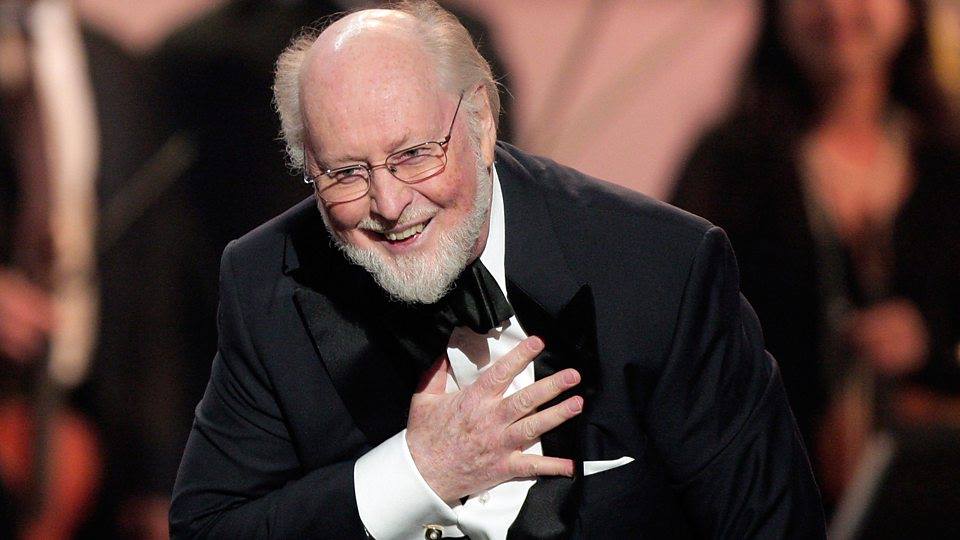
    Happy 87th Birthday John Williams Tune In!

    Happy birthday, John Williams!

    Williams is 87 today. We’ll hear a suite from his lovely and rarely-heard score to “Jane Eyre” on “Picture Perfect” tonight at 6:00 EST, part of an anti-Valentine’s program devoted to doomed love and Gothic romances.

    But tune in a little earlier – between 4 and 6 – to enjoy a few additional Williams surprises. I’ll have something for you in each of my three hours on the air, from 4 to 7 p.m. EST, on WWFM – The Classical Network and wwfm.org.

  • Haydn & Heiden at Marlboro

    Haydn & Heiden at Marlboro

    Stereophonic homophones dominate this week’s “Music from Marlboro.” Worlds collide through the juxtaposition of music by Haydn and Heiden.

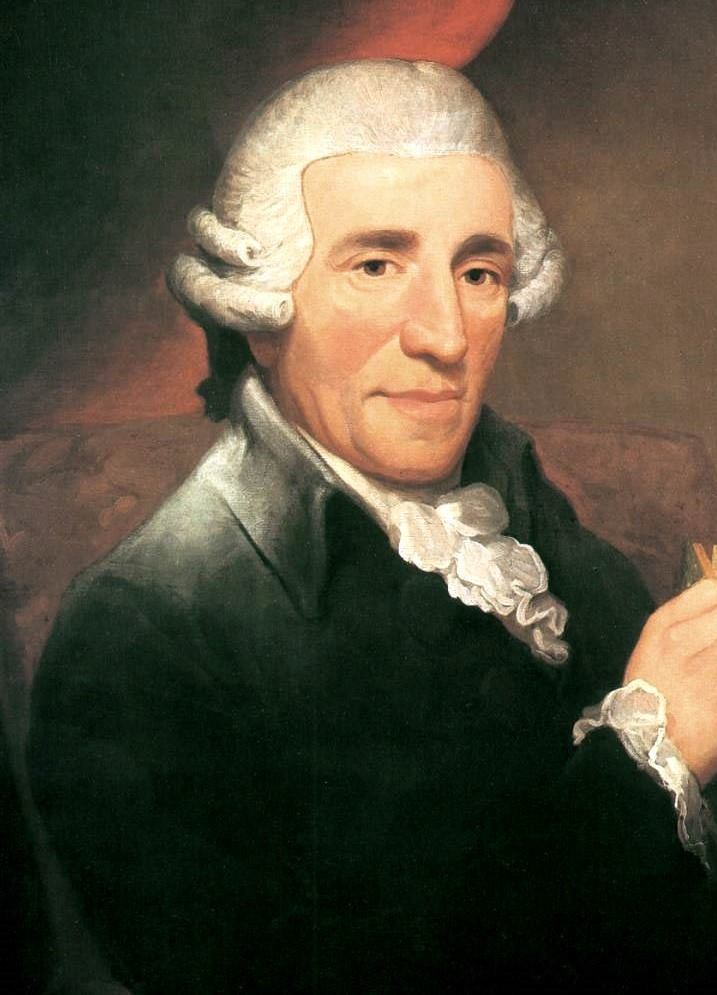
    Franz Joseph Haydn, of course, requires little introduction. For a quarter century, he was music director at the remote estate of Esterháza, where he essentially created the modern symphony and legitimized the string quartet. He established the piano trio as an accepted combination and standardized sonata form. His music was written for the delectation of Prince Nikolaus Esterházy and his associates. Even so, by the time of his death in 1809, at the age of 77, he had become one of the most celebrated composers in Europe.

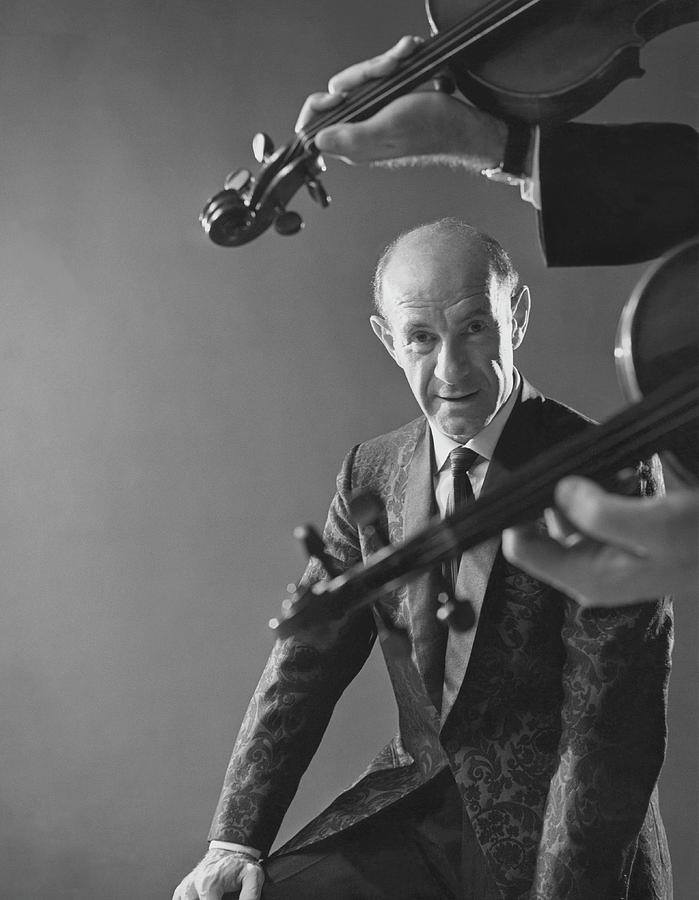
    Bernhard HEIDEN was a Hindemith pupil, who fled fascism in Germany to settle in the American Midwest. There, he conducted the Detroit Chamber Orchestra and taught at the Art Center Music School. Later, he joined the faculty of the Indiana University School of Music. To him, it was more important to reach performers than an audience, for the practical reason that audiences change and performers need to believe in the music in order to be able to sell it. He composed prolifically right up until his death in 2000 at the age of 89.

    On this evening’s program, we’ll hear a serenade and two divertimentos (“divertimenti” for those who prefer the Italian). What’s the difference? There’s a lot of blurring of boundaries between these 18th century categories – divertimento, serenade, cassation, notturno. Basically it’s all entertainment music, at least as it was originally intended. No weighty arguments, profound introspection, or showy virtuosity of the type one might expect from a symphony, concerto, or string quartet.

    The cassation was often a piece designed for outdoor performance, a loosey-goosey assemblage of undemanding, blissfully short movements one might listen to while eating cucumber sandwiches or admiring a sculpted hedge.

    The interchangeability of the terms led Haydn to give his Divertmento in F the alternate title of “Cassation.” What’s in a name? We’ll hear it performed at the 1981 Marlboro Music Festival by violinists Lucy Chapman (Stoltzman) and Carmit Zori, violists Thomas Turner and Toby Hoffman, cellist Gary Hoffman, double bassist Carolyn Davis, oboists Elaine Douvas and John Ferrillo, hornists Robin Graham and Stewart Rose, and bassoonist Stefanie Przybylska.

    A serenade, too, was originally a light, tuneful diversion, often intended as “occasional” music (that is to say, music written for a specific occasion) or in someone’s honor. I guess somebody forgot to tell Heiden. Though his style is generally identified as neoclassical, it is neoclassicism in the mold of Hindemith. The structure is there, but I can’t say that his serenade of 1955 is all that buoyant, and the tunes are secondary. It does score points, however, for its unusual instrumentation.

    It was performed at the 1984 Marlboro Music Festival by bassoonist Nancy Goeres, violinist Saschko Gawriloff, violist Ah Ling Neu, and cellist Grace Bahng.

    We’ll round out the hour with a refreshing after dinner mint in the form of the Divertimento in F Major (K. 213) by Wolfgang Amadeus Mozart. It was performed at Marlboro in 1990 by oboists Rudolf Vrbsky and Alex Klein, bassoonists Clelia Goldings and Matthew Carr, and hornists Christine Chapman and Chris Komer.

    Forget your cares! Join me for an hour of diverting music on the next “Music from Marlboro,” this Wednesday evening at 6:00 EST, on WWFM – The Classical Network and wwfm.org.

    Marlboro School of Music and Festival: Official Page


    DUELING PORTRAITS: Haydn & Heiden

  • LBJ Saved Leinsdorf A Musical Rescue

    LBJ Saved Leinsdorf A Musical Rescue

    It was recently brought to my attention that we have Lyndon Johnson to thank for Erich Leinsdorf.

    In 1938, Leinsdorf was 26 years-old and conducting at the Metropolitan Opera, when his visa expired. This was very bad timing indeed. Of course, Leinsdorf had been working hard to build a career in New York. But to really put things in perspective, the Anschluss had just taken place in March. For Leinsdorf, an Austrian Jew, to travel back to Vienna would have been the beginning of the end.

    He immediately applied for a six month extension, but grew increasingly uneasy as he received no response. Fortunately, a couple of American friends with good connections were able to hook him up with Johnson, who was then but a young congressman of 30 himself. It was Johnson’s idea to have Leinsdorf leave the country but to reenter through Cuba as an immigrant. He did everything to smooth his path. Leinsdorf followed Johnson’s instructions and before long he was back in the U.S. to declare his intention to become a citizen.

    The two men remained friendly for decades. Leinsdorf even supported Johnson’s run for the Senate. Later, however, when he disagreed with some of Johnson’s policies, he didn’t hesitate to let him know. The following was Johnson’s response to Leinsdorf’s criticisms: “Your letter makes me proud that I could have a hand in making a new citizen, who would so well use his citizenship.” Would that this story could play out that way today!

    Leinsdorf may have had the good fortune to escape Hitler, but in 1962 he had the bad luck to land one of the most prominent conducting posts in the United States – music director of the Boston Symphony Orchestra – in the wake of the great Charles Munch. Not only was Leinsdorf unprepared to handle the politics of the organization – in a ceaseless battle against musicians and administration, his outspokenness didn’t earn him many friends – he also came in for a sound drubbing from the critical establishment, which found many of his performances to be just meh.

    As someone who saw Leinsdorf conduct often in Philadelphia during his twilight years, I couldn’t disagree more. As a guest conductor, Leinsdorf brought plenty of interesting music and assembled it into satisfying programs. What’s more, unburdened by the pressures of being boss, he turned in some pretty good performances and actually seemed to enjoy himself.

    This afternoon, I’ll celebrate Leinsdorf on the anniversary of his birth with some of his better recordings, which I’ll shuffle into the mix between 4 and 7 p.m. EST, on WWFM – The Classical Network and wwfm.org.


    On November 22, 1963, Leinsdorf found himself in the unenviable position of breaking the news of President Kennedy’s assassination from the stage of Boston’s Symphony Hall and over WGBH radio. He then conducted the funeral march from Beethoven’s “Eroica” Symphony in JFK’s honor. It’s especially moving to hear the audience’s reaction in those days before cell phones. Remember also that the musicians were in the process of digesting the news themselves, as the replacement scores had only just been distributed.

  • Michel Legrand A Musical Remembrance

    Michel Legrand A Musical Remembrance

    Get out your handkerchiefs.

    This week on “Picture Perfect,” we’ll take a nostalgic journey down Memory Lane with Michel Legrand.

    Legrand died on January 26 at the age of 86. The recipient of three Academy Awards (he was nominated for 13) and five Grammys, Legrand wrote music that tugs at the heart even as it lifts the soul.

    We’ll honor this multifaceted musician with indelible selections from a handful of his over 200 film and television scores, including “Summer of ’42,” “The Picasso Summer,” “The Go-Between,” “Yentl,” “The Thomas Crown Affair,” and “The Umbrellas of Cherbourg.”

    Le Grand, indeed! Join me in remembering Michel Legrand, on “Picture Perfect,” music for the movies, this Friday evening at 6:00 EST, on WWFM – The Classical Network and wwfm.org.

Tag Cloud

Aaron Copland (93) Beethoven (95) Composer (114) Film Music (124) Film Score (143) Film Scores (255) Halloween (94) John Williams (188) KWAX (229) Leonard Bernstein (101) Marlboro Music Festival (125) Movie Music (139) Opera (202) Philadelphia Orchestra (89) Picture Perfect (174) Princeton Symphony Orchestra (106) Radio (87) Ralph Vaughan Williams (85) Ross Amico (244) Roy's Tie-Dye Sci-Fi Corner (290) The Classical Network (101) The Lost Chord (268) Vaughan Williams (103) WPRB (396) WWFM (881)

DON’T MISS A BEAT

Receive a weekly digest every Sunday at noon by signing up here


RECENT POSTS