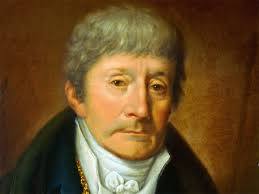
Poor, maligned Antonio Salieri. He was a second-rate hack. He murdered Mozart. Yadda yadda yadda.
While it’s true there’s no such thing as bad publicity, it would be nice if the man could transcend his notoriety to be recognized for his achievements. Especially since none of the charges against him happen to be true.
I like “Amadeus” very much, and while I am happy it has served to keep Salieri’s name alive and perhaps lend a greater degree of commercial viability to subsequent recordings of his music, it is worthwhile to examine the historical facts.
In reality, Salieri was a generous teacher, who fostered Beethoven, Schubert, Liszt and even Franz Xaver Mozart, the composer’s son, who was born a little more than four months before his father’s death.
Salieri was also a prolific and successful composer. He wrote 37 operas, in addition to orchestral works, concertos, chamber music and sacred pieces. While he was no Mozart – who was? – his music is finely crafted and often quite enjoyable, certainly no worse than that of a majority of his contemporaries.
Yes, Mozart believed Salieri and the Italian faction ensconced at the Viennese court (including future Mozart librettist Lorenzo Da Ponte) were against him, and there may have been something to it at first. However, beyond a rivalry over certain specific jobs, Mozart and Salieri appear to have been often better than cordial acquaintances. The two even collaborated on a cantata, “Per la ricuperata salute di Ophelia,” a venture which was apparently entered into voluntarily (as opposed to an earlier juxtaposition of one-act operas composed for the edification of the emperor). Here it is, only recently rediscovered:
When Salieri was appointed Kapellmeister in 1788, his first act was to revive “The Marriage of Figaro.” He was responsible for arranging first performances of Mozart’s Piano Concerto No. 22, K. 482, the Clarinet Quintet and the Symphony No. 40. He was full of praise for “The Magic Flute.” And as I said, he took it upon himself to educate Mozart’s son.
Sadly, Salieri’s enormous compositional output gradually faded from memory already during the latter years of his life. Ironically, it is the scandalmongers who kept his name alive.
Rumors of Salieri’s involvement in Mozart’s death were codified by Alexander Pushkin in 1831, a few years after Salieri himself had passed, in the tragedy “Mozart and Salieri.” This was later set as an opera, in 1898, by Nikolai Rimsky-Korsakov.
Peter Schaffer picked up the thread in 1979, when he wrote the play “Amadeus,” which of course was adapted into the Academy Award-winning film in 1984.
As the compact disc era advanced, more and more of Salieri’s repertoire became available for first-hand assessment – and guess what? A lot of it is quite good!
Join me Friday afternoon to sample some of it, among my featured selections, from 4 to 6 EDT, on WWFM – The Classical Network and wwfm.org. Then stick around, as I host “Picture Perfect,” music for the movies, at 6. I’ll have more about that in just a bit.
Leave a Reply