This Sunday night on “The Lost Chord,” polish up on your Polish music with works by Mieczyslaw Karlowicz and Emil Mlynarski.
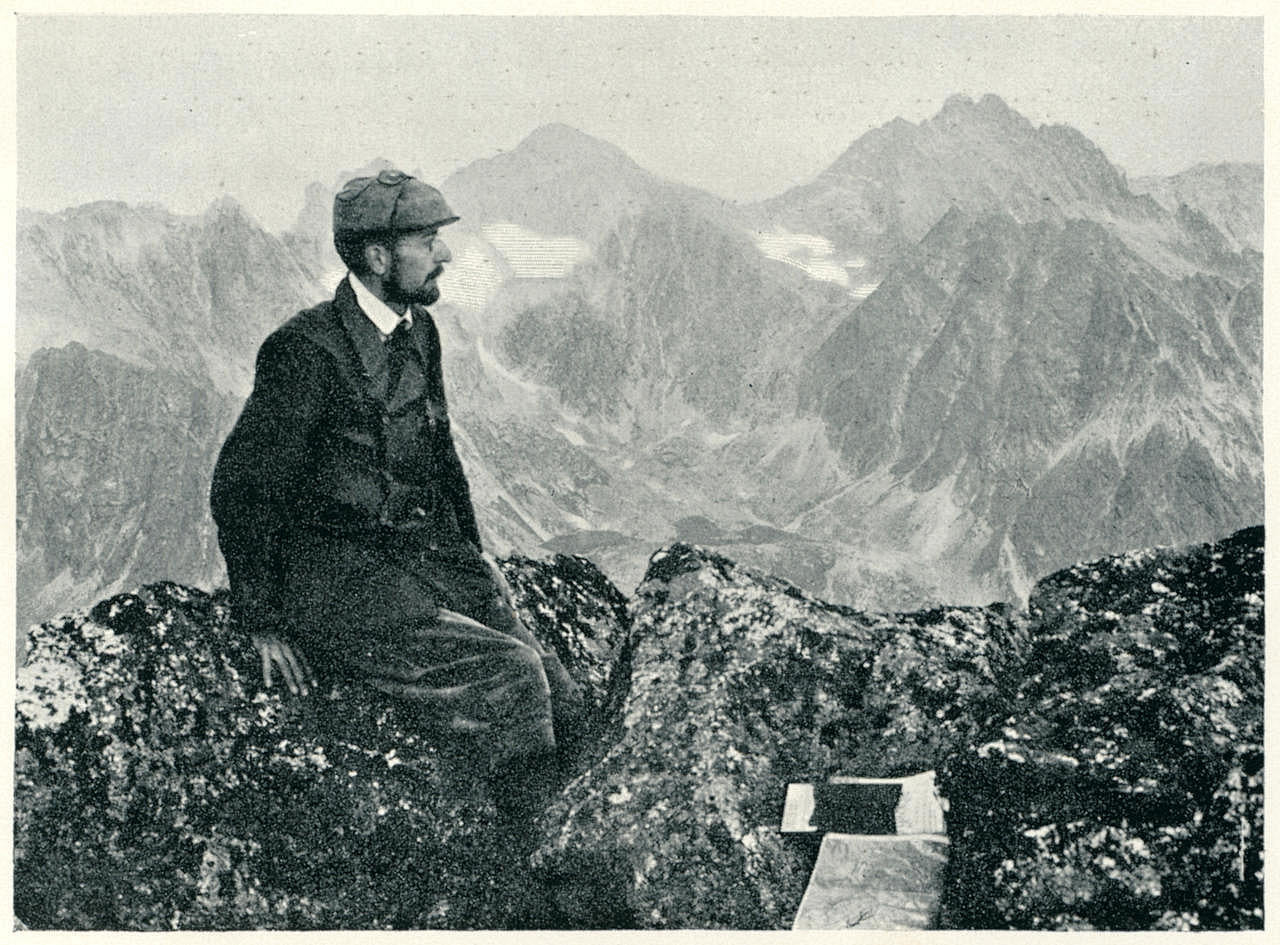
Karlowicz, by all accounts one of the gloomiest of composers, embraced an outlook and philosophy that might well be described as pessimism leavened with pantheism. In this melancholy world, all love is unfulfilled or doomed, all existence leads to tragedy and destruction. The only place the composer seemed to find solace was in his beloved Tatras. He once noted, “Atop a high mountain, I become one with the surrounding space. I cease to feel individual. I can feel the mighty, everlasting breath of eternal being.”
It is perhaps a kind of poetic justice that a life spent cultivating suicidal despair, and raising it to a level of high art, would be cut short, when Karlowicz was killed in an avalanche in 1909, aged only 32 years – a most fitting end for an orophile with fatalistic tendencies.
On the eve of Valentine’s Day’s, we’ll hear one of the six symphonic poems upon which Karlowicz’s reputation, in large part, is based. “Stanislaw and Anna Oswiecim,” inspired by a painting of Stanislaw Bergmann, evokes a tale of forbidden love between brother and sister, ending in inevitable tragedy.
Then it’s romance of different sort, with a violin concerto by Mlynarski.
Mlynarski was recognized both at home and abroad as a staunch champion of Polish musical causes. He directed the Warsaw Opera and spearheaded the drive to build Warsaw Philharmonic Hall. He conducted festivals of Polish music in Paris, commissioned Sir Edward Elgar to write “Polonia” for a wartime Polish Relief Concert, and conducted the world premiere of Karol Szymanowski’s opera “King Roger.” He was, in fact, voted Poland’s most popular conductor. (Parenthetically, he also became the father-in-law of Artur Rubinstein.)
Among his other achievements, he toured with the London Symphony Orchestra, became permanent conductor of the Scottish National Orchestra, shared concerts with Sir Thomas Beecham, and for a time was dean of the Curtis Institute of Music in Philadelphia.
He was also an outstanding violinist. He studied with Leopold Auer, toured widely, and won a major composition award with his First Violin Concerto.
Violinist Nigel Kennedy first encountered his music when he was handed a tape of Mlynarski’s Violin Concerto No. 2 by an anonymous Polish fan following a concert. Kennedy went on to make his own recording of the work. I think you’ll agree, it’s a very beautiful discovery.
I hope you’ll join me in dipping into the archive for an hour of Polish music, on “Pole Vault,” this Sunday night at 10:00 EST, on WWFM – The Classical Network and wwfm.org
PHOTO: Mieczyslaw Karlowicz, man of destiny
Leave a Reply to ร้านยาCancel reply